My book group decided a couple of months ago to have a go at reading a Shakespeare play. We decided on Much Ado About Nothing (the one with Beatrice and Benedick), possibly not the best choice we could have made, on reflection, but we fancied something light. We spent less time discussing it than any other book we have read in the three years or so we have been meeting. True, it was the same night we had scheduled in a viewing of The Children Act by Ian McEwan, a book we had all loved, so there was less discussion time than usual, but even if we had had the whole evening, I doubt we would have found much more to say. We were just rather underwhelmed. Now, don’t get me wrong, I’m a lover of Shakespeare, and have studied most of the plays, thanks to having done a degree in English literature. Many of the comedies don’t do much for me, but, even reading Much Ado About Nothing again, I could appreciate the cleverness and the writing. And it’s not even that it’s out of date – some of the shenanigans, yes, they stretch credibility to a modern audience, but, really, are they that different to what’s going on in Love Island or Friends, or any one of the countless melodramas teens watch?

I’ve given this a lot of thought recently as my children go through their GCSE Shakespeare texts. Generally, they’re a bit more exciting than Much Ado; my son studied The Merchant of Venice, which he found interesting, but not much more, and currently, my elder daughter is studying Macbeth, my personal favourite because it was my first encounter with the Bard, at the same age as she is now, but which she is finding rather laborious. Perhaps I was just lucky I had a wonderful English teacher (Mrs P. I hope you are reading this!), but kids just seem to find the whole process a bit dull, just as my book group seemed to reading Much Ado! And it’s not ‘kids of today’ – relatively speaking, Shakespeare is just as old as it was when I was studying over thirty years ago. And can it really all be down to the teaching?
Part of me concludes that Shakespeare is just not meant to be read. It can be like wading through treacle when the language is complex or you have to look up words no longer in use. Teaching Shakespeare does still seem to involve reading it through line by line in the classroom, which can be deathly dull, especially when you are not the one reading. Shakespeare was written to be performed and many of the nuances of direction and staging, (ie who might be hiding behind which arras) are simply lost in a straight reading. Actors are also paid to add something – they study their characters in depth so that they can interpret for the audience. They can also add tone of voice, facial expression, and body language which tells us much more about what is happening and has the potential to make the action and the themes much more relevant. Shakespeare’s themes are still relevant and we see his legacy in so much of what we read or watch – not least The Children Act. What about politicians’ behaviour around Brexit? The talk of Cabinet coups, challenges to leadership – it’s all so Shakespearean! And that is because Shakespeare’s themes come from his profound observations of the human condition – the scenery, the clothing, the words might change, but the events are essentially the same. And we lap it all up.
So, how to deal with Shakespeare going forward, for a younger readership. Yes, it’s a conundrum because you do need to sort of understand the language a bit before you can fully appreciate the play in performance. Bring back the travelling players, I say, to go around schools and perform that year’s GCSE text for the students, hold workshops with the kids, going through the more complex aspects. Not all children can afford to go to the theatre, but it’s essential they see it live in order to fully understand and appreciate it. And you never know, it might actually inspire a lifetime love of the man and his work, as it did for me, and a different perspective on what’s going on in the world today.
Would love to hear your thoughts – what has been your experience of either teaching or being taught Shakespeare?
If you have enjoyed this post, I would love for you to follow my blog.
 This sounds slightly like an up-to-date Stig of the Dump to me. Central character Landfill lives the life of a wild creature. He has contact only with animals and one other human, Babagoo, who says he has brought him up from a seed. Babagoo wants to protect Landfill from ‘Outside’ and from the unpredictable other humans about whom he paints a fearful picture. Landfill goes along with this until one day he spies a she-wolf giving birth to her cubs. He realises that animals do not come from seeds and wonders what else Babagoo may have lied to him about.
 Kid Normal and the Shadow Machine by Greg James and Chris Smith
 Work It Girl: Boss the bestseller list like J K Rowling by Caroline Moss and Sinem Erkas
 Joe Quinn’s Poltergeist by David Almond, illustrated by Dave McKean
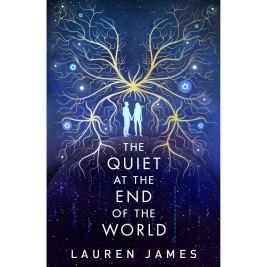 The Quiet at the End of the World by Lauren James
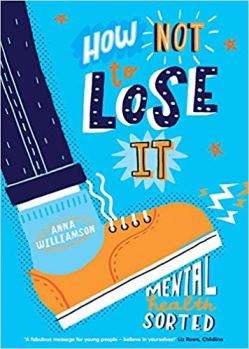 How Not to Lose It: Mental Health Sorted by Anna Williamson and Sophie Beer
 This month, I would like to recommend Catherine Doyle’s The Storm Keeper’s Island, published last year by Bloomsbury, as a fantastic choice for any young people you know who like modern adventure stories where the good guy wins. Catherine Doyle is a young writer (just 29 years old) and has published several YA novels already; The Storm Keeper’s Island is her first novel for what is called the “middle grade”, ie about 9-12 years, and it was a barn-storming debut, winning several prizes and accolades from established authors in this genre. A second novel, following the further adventures of the main character Fionn Boyle, is planned for this summer and I would expect it to feature heavily in recommended holiday reading lists in advance of the Summer Reading Challenge.
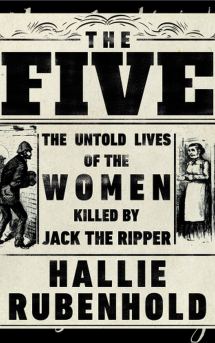 The Five by Hallie Rubenhold
 Bookworm: a memoir of childhood reading by Lucy Mangan
 Spring by Ali Smith
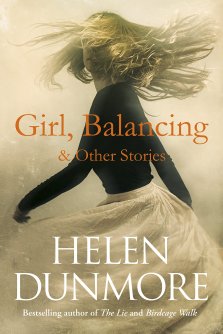 Girl, Balancing by Helen Dunmore
 Lanny by Max Porter
 The time span of the novel is the duration of Tish’s pregnancy, during which time the couple’s two families set about trying to free Fonny, liaising with his lawyer and pulling together all the money they can to pay Fonny’s legal costs. The lion’s share of this task falls to Tish’s family, who see it as their duty to support their daughter and the father of their grandchild. Fonny’s family, on the other hand is divided; his mother and sisters are deeply confused, ambivalent and disturbed by events effectively disown him. Fonny’s father does engage, supported by Tish’s father, but it is clear he is not really strong enough to cope with the pressure. It falls to Tish’s family to take charge and her mother, Sharon even goes to Peurto Rico, to where the raped woman has fled, to appeal to her to change her testimony, the suspicion being that Fonny was simply served up to her by corrupt police officers. As Tish’s pregnancy progresses, so we follow the legal machinations, the financial pressures faced by all concerned, the effect of prison on Fonny, the artistic soul tortured by his incarceration, and the toll that events take on both families.

 A dear friend gave me Helen Dunmore’s final novel, published posthumously, Birdcage Walk, for my birthday last year and I have only just got around to reading it. I had read some quite mixed reactions, some feeling it wasn’t her best or that it had not been as well edited as it might have been, which is understandable. I am not familiar with Dunmore’s other novels so don’t have a view on how it compares. It meant I approached it with some trepidation, however.
 Roll of Thunder, Hear My Cry is the first of three novels by Mildred D Taylor about the Logan family, black farmers in Mississippi, set in the 1930s. They are poor, but they own their own small piece of land, Grandfather Logan having bought it in the 1880s from local landowner Harlan Granger, much to the chagrin of some of the white locals who still cannot accept the social changes giving black people greater autonomy and rights. Grandfather Logan is now dead and the central character, Cassie, lives on the farm with her parents, her grandmother and three brothers. Despite owning 400 acres, the family still struggles to make ends meet, which is why Cassie’s father works away much of the year, on the railroad construction, and her mother works as a teacher at the local (black) school. All the family contributes to the running of the farm and the income it generates.
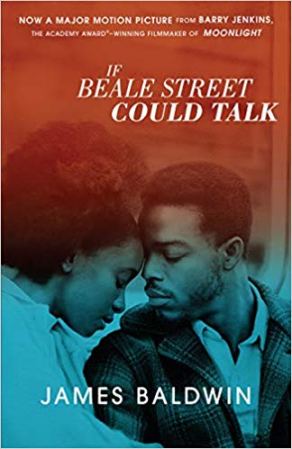 I’m always looking for the films with literary links and they are particularly scarce this year. If Beale Street Could Talk is the only novel-based film, that I could spot, and is based on the Harlem-set love story by James Baldwin, first published in 1974. I’ve just started reading it. The Spike Lee film BlacKkKlansman and the comedy Can You Ever Forgive Me? are both based on memoirs, the former a true story of a young African-American detective who set out to infiltrate and bring down the KKK, and the latter, starring Melissa McCarthy and Richard E Grant, also a memoir, about a celebrity biographer who finds herself out of work and changes tack to become a forger. This one also has a female director (too rare). I haven’t yet seen any of these films, but all of them appeal.
 Julia's books