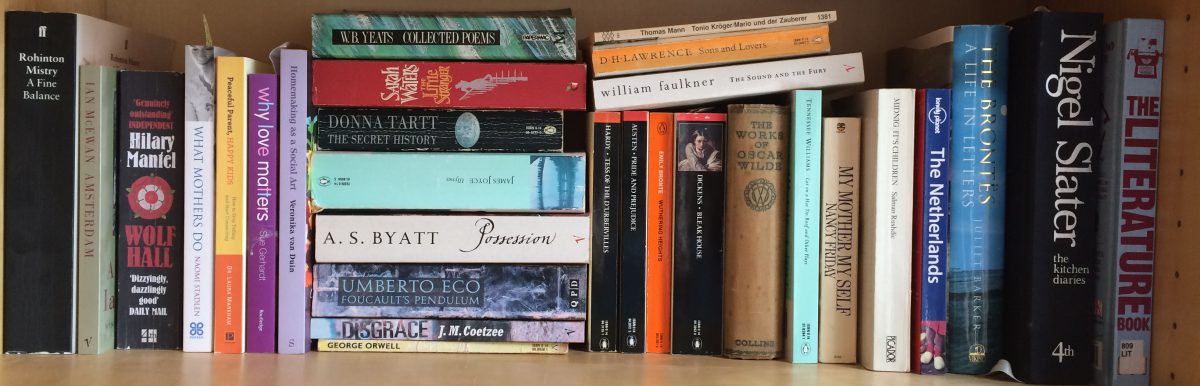
If you have read any of the book reviews I publish on this blog, you will note that I do not give star ratings, marks out of ten or anything like that. I will recommend or not (usually the former – even if I have not enjoyed something, I will try to think about who might like it) and, particularly in the case of the children’s books I review, I will say what age group I think it’s appropriate for and any issues parents might like to be aware of. For example, books marketed for, say, 11-13 year olds might contain references to violence or death, which will be okay for some kids, but not if they’ve just lost a pet, grandparent or are on the sensitive side. Star ratings, on the other hand, are a blunt instrument.
I am a keen member of the Goodreads website and I write short reviews of most things I read (haven’t caught up on the back catalogue I listed when I joined, though!). I hate giving the star rating and find even my own ratings are inconsistent from one book to the next, so how on earth can a reader compare a 4-star rating one person has given to a 2-star rating from someone else? If you read the review, I guess that gives you the reader’s justification for their rating, but the trouble with star ratings is that you are immediately drawn to the high level score rather than the longer-form explanation.


(The erotic thriller Fifty Shades of Grey gets the same score of 3.66 on Goodreads as Anne Bronte’s Agnes Grey! But are they comparable?)
What justifies a star-rating anyway? Is it how much you’ve enjoyed something? Or how GOOD you think it is? They are not necessarily the same thing. For example, I recently reviewed Gustave Flaubert’s Madame Bovary on this blog and on Goodreads, after I set it as the book for March on my Facebook Reading Challenge. I think it is fair to say that most people involved in the Challenge did not love the book, and yet it is one of the great classics of world literature. I loved it (but then I love the classics generally), but I cannot say, hand on heart, that I sat wrapt for every moment I was reading it. This 19th century novel was definitely hard work in places for a 21st century reader. Yet, there are plenty of books I’ve read recently which I could not put down. One that comes to mind is The Secret Life of Bees by Sue Monk Kidd, but you would probably not say it was a classic; it’s the sort of book you’ll find in the hospital League of Friends bookstall! The Goodreads rating for Madame Bovary is 3.65 and for The Secret Life of Bees is 4.02, but will the latter still be in print in 150 years time?
I’m not really sure what this very unscientific comparison tells us, except that readers’ tastes change all the time. I gave Madame Bovary 5 stars because I recognise it as a great book, and acknowledge its longevity and its place in world literature, but others who hated it will have given it 1 star. But my enjoyment of it was a different kind of pleasure to reading The Secret Life of Bees.
I recognise the inconsistencies in my own ratings too – I am more likely to give a book a higher rating if it has met my expectations or if it was appropriate for the time I was reading it. This would explain the 1 star I gave to George Saunders’s Man Booker Prize winning Lincoln in The Bardo and the 4 stars I gave to Jo Cox: More in Common by Brendan Cox – the latter struck a political chord and moved me, but it’s not literary. And when I’m reviewing a children’s book, I try to rate it from the point of view of how much I think the target audience might enjoy it. But children’s tastes can be difficult to predict!
So, the answer really is to ignore the star rating and read the review – would you agree?
If you have enjoyed this post, I would love for you to follow my blog. You can also connect with me on social media via the tabs above.
 The story begins near Aylesbury where the spivvy disgraced engineer Dr Absolom is trying to sell ‘mechanicals’. These are child robots which were initially created to perform tasks that society no longer wanted humans to do. We learn some vague details about how the experiment got out of hand when some rogue scientists tried to instil their creations with a soul. This was considered a step too far and laws were put in place to limit the capabilities of these creations, and, in particular, to forbid the building of adult-sized mechanicals. The environment we are observing, however, appears somewhat lawless, and it is clear that Absolom is operating on the margins and that there is a black market in mechanicals.
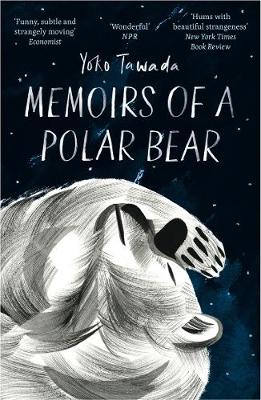 I’ll summarise the basic story of the novel. Part one is the most surreal and the most difficult. It is narrated by the nameless ‘grandmother polar bear’ (grandparent to Knut, star of part three). She has been reared as an attraction in the Soviet Union, by a cruel master, who, among other things, teaches her to stand on her back legs using what we would now regard as unethical methods. I think that by getting the bear to stand like a human the author justifies the morphing of her subject into something less animal. Throughout this part we are asked to suspend our disbelief: the bear escapes Soviet Russia, writes her memoirs, and flees to Germany, where she is ‘protected’ by an unscrupulous agent who simply wants to exploit her because her book has been so popular. The bear visits bookshops, makes human friends and animal enemies (the sea-lion publisher who makes ever more unreasonable demands). It’s all very tricky for us as adult readers.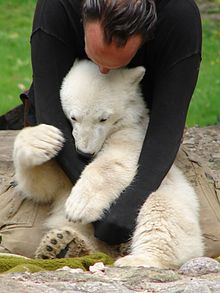
 This is a very hard-hitting YA novel for older teens. It is an important book, dealing with a very current issue, misogyny, sexual violence and rape, but as a parent I found it extremely challenging to read. The story is set in Prescott, Oregon, a medium sized-town in the northwest United States. It centres on a group of three girls in high school (so about 17 or 18 years old) Grace, Erin and Rosina. Grace has moved to Prescott after her mother (an evangelical preacher) was forced out of her position in their previous home in the southern US because of hostility from the congregation towards her views. Grace finds, in her bedroom in their new home, some cryptic words scratched into the woodwork. She discovers that the previous occupant of the room was a girl called Lucy who alleged that she was raped by fellow students. No charges were brought and Lucy and her family left the town.
 I had read this book previously, but many years ago as an undergraduate, so whilst I had remembered the basic story, I had forgotten much of the detail. I had forgotten for example just how brilliant the writing is and how very like Jane Austen Flaubert can be in his use of irony. By all accounts, Flaubert was a perfectionist and spent years on this book; it is certainly masterful and for me the writing was sublime. I had also forgotten how unlikeable all the characters are! Even Emma, our supposed “heroine”, is at times unpleasant, childish, selfish, superficial and self-obsessed. When I discussed it with my husband (who speaks fluent French and read it in the original) he was surprised that I did not find Charles Bovary, Emma’s husband, sympathetic. Interesting that he felt affection for the long-suffering, betrayed husband who loved his wife to the death, despite her many faults, whereas I found him ineffectual and basically unable to connect with his wife on any level, and that was part of the problem in their marriage.
 We spend our Spring break in the south of the province of


 It is extraordinary to think that this remarkable novel, still as popular and as shocking today as ever, was written when Mary was just 19 years old. The fact that she was such a literary talent is not surprising given that she was the offspring of the two famous intellectuals, Mary Wollstonecraft, philosopher and author of the seminal feminist work A Vindication of the Rights of Woman, and William Godwin, the radical political philosopher. In her lifetime, she was highly regarded as a radical writer and intellectual, as well as being the wife of the poet Percy Bysshe Shelley, whom she met and fell passionately in love with at the age of 17. Her reputation since her death, however, has been overshadowed by that of her husband’s, with whom she bore four children (three died in infancy), whose affairs and financial troubles she endured, and whose poems she edited both before and after his death. Percy Bysshe Shelley drowned at sea in 1822, just six years into their marriage when she was 25. She died at the age of 53 in London from a suspected brain tumour.
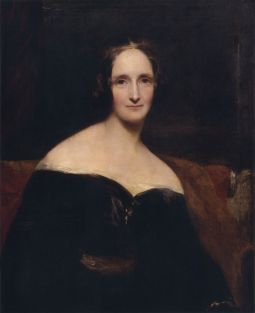 By any standards her life was remarkable and in the last few years her reputation has been revived and she has begun to be more widely considered as a formidable talent in her own right, rather than just a ‘one-book author’. Frankenstein has been a staple of English literature GCSE and A level syllabuses for years, but most of her other works have fallen out of print. A new biography, In Search of Mary Shelley: The girl who wrote Frankenstein, by Fiona Sampson was published earlier this year, some of which I caught when it was serialised in Radio 4 recently. What I heard sounded fascinating. Sadly it is not available on the BBC iPlayer at the moment.
 Last month, we battled our way through Madame Bovary, some enjoying it more than others, it has to be said. Our theme was a classic novel, and this can be a challenging genre. It can take you right back to schooldays and unhappy memories of working line by line through a text that had no relevance to your teenage life. And if you are out of the habit of reading classic, usually older, novels, the language can feel outdated, and hard work.
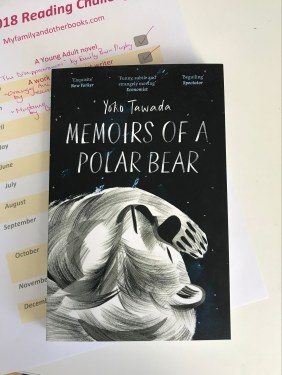 This months’s challenge is something altogether different – a children’s novel and I have chosen Memoirs of a Polar Bear by Yoko Tawada. This book first came to my attention before Christmas and I have been keen to read it ever since. It is written from the perspective of three different polar bears: the first , a female, who flees her homeland in Soviet Russia, the second, her daughter, a dancing bear in a Berlin circus, and the third, the most recent, born in captivity in Germany.
 Julia's books