 This book is set in a familiar country (England) but in a future time where life has changed and the world is very different: bus journeys cost hundreds of pounds, many routine tasks and jobs are carried out (not very well) by robots and everyone carries a QWERTY, which it seems is some next generation pocket computer. Auden Dare is an eleven year-old school boy who lives with his mother in Forest Gate in east London. When we first meet him we learn that his father is away fighting in the war in Europe. Climate change has taken hold and water is scarce. Indeed, water, or the lack of it, seems to be the root cause of the conflict in which Auden’s father is involved. Auden has a condition called achromatopsia, which means he is unable to see colours, only shades of grey.
Auden and his mother move to Cambridge when Auden’s uncle, Dr Jonah Bloom, his mother’s brother and a brilliant scientist, dies and leaves them his cottage. She sees it as an opportunity for them to make a fresh start. When they arrive at the cottage, however, they find that it has been ransacked, as have his rooms at Trinity College, where he worked. It is clear that there is something amiss. Auden makes a friend at his new school, Vivi, who, it turns out, also knew Dr Bloom very well. The two young people decide there is something suspicious about Jonah Bloom’s death and set about to uncover the mystery.
Very soon Auden and Vivi discover that Dr Bloom had invented a robot, Paragon, which they find in a secret chamber underneath the garden shed in the cottage garden. Initially, Auden believes that his uncle was in the process of inventing a machine that would enable Auden to see in full colour. However, it turns out that the robot, in fact, has a much higher purpose.
This book is part adventure story, part mystery and has all the usual tropes you would expect from a children’s book of that nature: a brave and bold character in Auden, a brilliant female mind in the form of Vivi, an external threat in the form of the Water Allocation Board, which also wants to get hold of Dr Bloom’s work and in particular the robot Paragon, and a race against time, with moments of high tension. There are underlying themes here around the power of friendship to overcome adversity and how individuals can take control of their own lives and defy the destiny society has decided for them. It is also about taking a stand and doing the right thing.
As a rule of thumb, kids like reading books about characters who are slightly older than them; Auden is 11, but I would say this is a book for 10-12 year olds, rather than 9-11s. For a start it’s quite long and the plot is at times quite complex. Also, some of the themes may be quite challenging for younger readers, for example, the vision of the future, a kind of police state where the head of the Water Allocation Board is hostile and threatening. There is also the suggestion that Dr Jonah Bloom has been illegally murdered by the state and that Auden’s father has been wrongfully imprisoned by a corrupt military authority. Echoes of 1984!
Spoiler alert….
Also, the robot, Paragon, who develops a strong personality and whom Auden grows to love, ‘dies’ when he self-destructs after fulfilling his purpose as a rainmaking machine. Younger children might find some aspects of the book challenging or unsettling.
In places it is really funny; it reminded me a little of Time-travelling with a Hamster by Ross Welford, so kids who enjoyed that book might like this one too (although for me it’s not quite as good or as well-written).
Recommended for 10-12 year olds who like an adventure mystery and can cope with some threat.
If you or your children have read this book, do you agree with my thoughts about the reading age?
If you have enjoyed this post, do subscribe to the blog by clicking on ‘Follow’. Thanks.





 Tin by Padraig Kenny
 The Light Jar by Lisa Thompson
 The Unpredictability of Being Human by Linni Ingemundsen
 The Final Six by Alexandra Monir
 Things A Bright Girl Can Do by Sally Nicholls
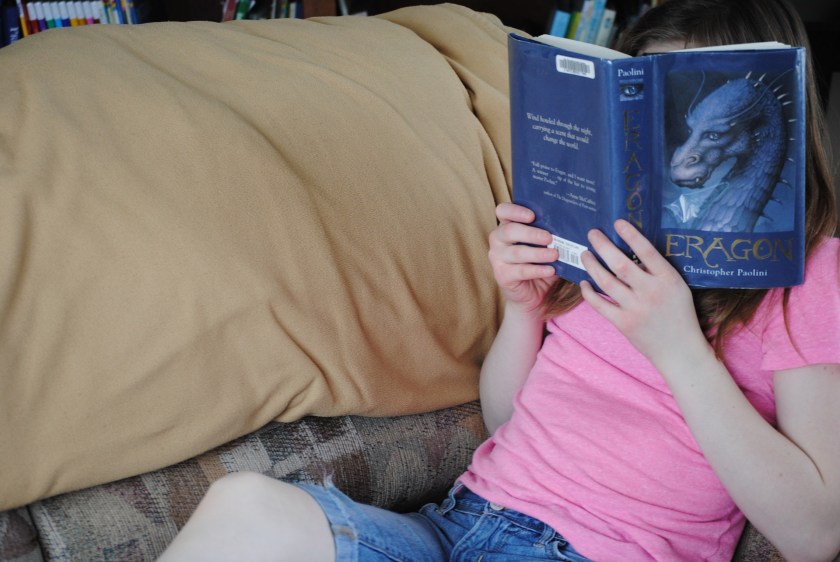 However, with autonomy comes power – if they are having an ‘at home’ day they can simply slip under the radar and spend a great deal of quality time with their phones and tablets (oh for the days when I only worried about how much Balamory they watched!) They can secrete themselves in their bedrooms while I lose myself in all my usual activity. At their age, sure I watched a lot of telly while my parents were out at work in the school holidays, but I also spent plenty of time with my nose in a book. Digital distractions were fewer and less powerful.

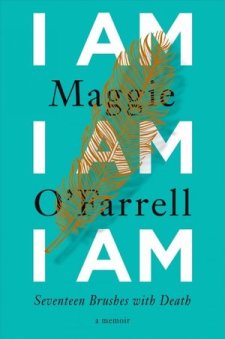 I Am, I Am, I Am by Maggie O’Farrell
 How to Stop Time by Matt Haig
 The book is set in Connecticut in 1942-43. Aila, is 16 years old when we first meet her and she has a younger brother Miles. Their mother, Juliet, has just died and their father has been called away to fight in the war. Aila and Miles are sent to live in Sterling (their mother’s birthplace) with Matilda Cliffton and her family; Matilda was Juliet’s childhood best friend. Aila is keen to take something of her mother’s with her and she finds a volume of Shakespeare’s complete works, much scribbled in, into the back of which has been placed an envelope, containing a ring Juliet always wore, and a mysterious note to an unknown person, Stefen, at the end of which Juliet signs herself ‘Viola’.
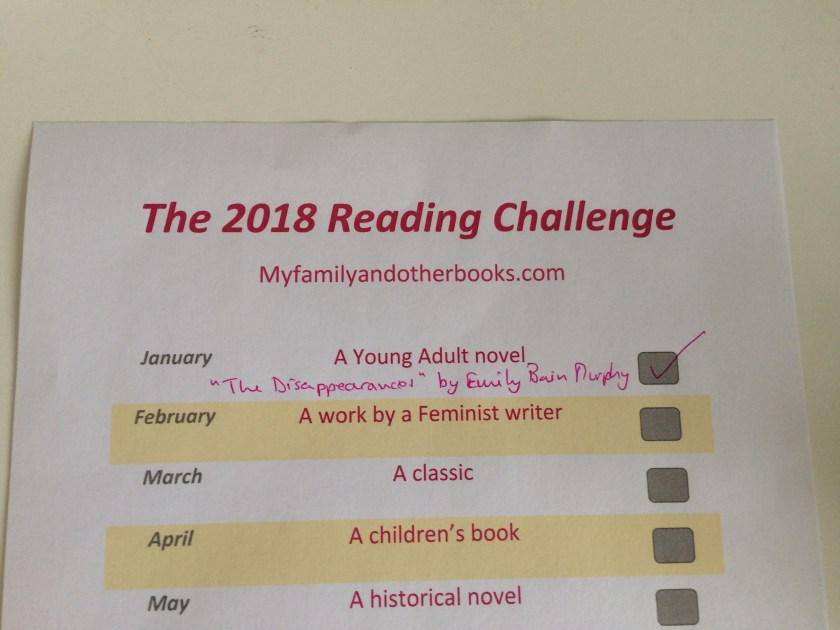 At the beginning of January I set up a
  If you’re interested in taking part in this Reading Challenge you can join the group
  I really liked this little book and it’s the third in the Invincibles series. The central characters are two friends, Nell and Freddie, and Mr Fluffy, a cat. Nell’s teenage brother Lucas, has a sleepover camping with his friends in the garden, which, of course, the younger ones want to be involved with. Through ‘Pester Power’ Nell manages to persuade her parents to let her and Freddie participate for a few hours. Noises in the woods (the waste ground next to the garden) terrify them all, but, of course, it turns out to be nothing more sinister than Mr Fluffy! It’s a great little story, with nice illustrations and a level of humour which children will love and adults will also identify with. Recommended.
 Similar in style to The Invincibles, this book is along the lines of The Addams Family – set in Nocturnia, a land of comic creatures, ghouls, vampires, mummies, etc. The central story is that Amelia’s parents are to throw their annual Barbaric Ball. They are keen for King Vladimir to come, but he has not been seen in public for years. The king decides he will attend with his son Prince Tangine, and, in preparation for getting to know the people, the Prince will attend the local school. He is of course, very haughty and unkind, and Amelia is particularly cross when he demands, and gets, her pet pumpkin Squashy. It turns out that Prince Tangine hides a devastating secret – he is half-fairy (terrifying creature of the light!), though his mother disappeared when he was young, leaving his father bereft. Amelia discovers this as she tries to rescue Squashy from the palace, and, when the truth is revealed, Tangine owns up to his faults and they all become friends. It’s a fun little story, and the toilet humour will appeal very much to the irreverent side of children. Lovely illustrations and plenty of contemporary references. It is basically about friendship, inclusiveness and being nice to people. Recommended though less in this one to keep parent readers interested.
 The central character is Jaz, a 12 year-old girl who is in Year 7 at secondary school. She is dyslexic, doesn’t care too much for school (“Boring!”) and lives with her Mum and three older brothers, their Dad having left shortly after Jaz was born. Jaz is a bit of a rebel with a big heart. She struggles a bit at school, she comes across as someone who finds it difficult to deal with the mainstream demands of sitting still, concentrating, and not least the focus on reading and writing; there does not seem to be much allowance made for her dyslexia. She also struggles a bit with friendship issues, having jealous feelings towards another girl who she feels is going to ‘steal’ her best friend Lily. So we see Jaz is a bit insecure too.
 Julia's books