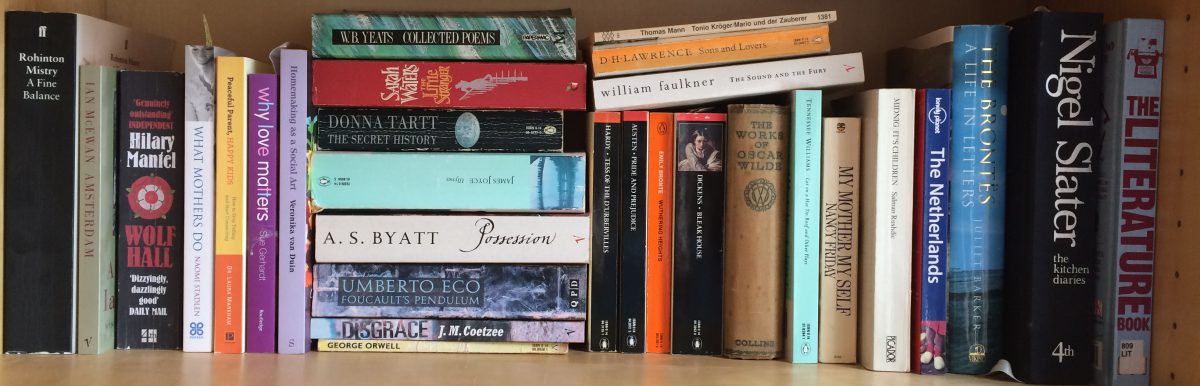
I launched my 2020 Facebook Reading Challenge earlier this week and the theme for January was one of the biggest books of the last decade. The book I chose was Gillian Flynn’s Gone Girl a huge bestseller published in 2014, but Margaret Atwood’s The Testaments, published just a few months ago, could easily go down as one of the books of the decade too. Being at the ‘literary’ rather than the ‘popular’ end of the market means it will not likely match the 20 million sales worldwide that Flynn’s novel enjoyed, but it was the most anticipated book I can remember in a very long while, its publication the most advertised, was immediately serialised on the BBC in the UK, won the Booker Prize (jointly with Bernardine Evaristo’s Girl, Woman, Other) and will definitely be dramatized at some point.
 It is truly a groundbreaking novel, but curiously, in my view, less in its own right than as an extension, a continuation of, the work started with the publication of The Handmaid’s Tale in 1985. What is also partly so extraordinary about The Testaments is how relevant its story remains over thirty years on from The Handmaid’s Tale. In spite of equality legislation, human rights legislation, more women in positions of power and authority, we still have world leaders able to express their misogyny openly and with impunity, and violence against women and girls seems as rife as ever. Atwood is Canadian, but her novel is a dystopian vision set in the United States, where, in the last year, we have seen the erosion of women’s reproductive and therefore health rights in some states and the substantial threat of more to come. This novel seems so urgent and necessary.
The Testaments is written from the perspectives of three women and is presented as an account of their experiences in what appears to be a declining Gilead. Atwood’s brilliant authorial technique of presenting the work as part of research seminars at the Symposium of Gileadian Studies (as she did with The Handmaid’s Tale, where Offred’s story was gleaned from a series of tape recordings discovered in an old property) means that we have separate accounts from three individuals. The opening ‘testament’ is from Aunt Lydia, the monstrous matriarchal figure in charge of the handmaids, whom we know well from the earlier book. Her power is at its peak and we learn that she know has a statue at Ardua Hall, the training centre for Gilead’s aunts. We learn more about her early career as a judge and how she came to be recruited to the army of aunts and rose to the top.
The second ‘witness’ is Agnes, the ‘child’ of one of the leading Commanders in Gilead and his first wife, Tabitha. Agnes, of course, is not their full biological child; as we know from the earlier novel, the role of the handmaids was simply as a gestational vehicle to produce offspring for the higher orders in Gilead. Nevertheless, Agnes was loved by her adoptive mother Tabitha, until the latter died of cancer. Commander Kyle’s new wife is unhappy with the presence of her step-daughter and quickly arranges for her to be married off. Unhappy with the choices offered, however, Agnes asks to be admitted to Ardua Hall to train as an aunt. She goes there along with some of her schoolfriends.
The final witness is Daisy, a feisty sixteen year-old living in Canada. Her parents, Neil and Melanie, run a charity shop and they are all well aware of events in nearby Gilead, not least because they are taught at school about their near-neighbour, about refugees from that state, about the talismanic significance of ‘Baby Nicole’, the child smuggled out of Gilead many years earlier by a handmaid and whom the authorities desperately want to find, and they see daily the so-called ‘Pearl Girls’, Gileadian missionary women whose role is to recruit young women to their cause. When Daisy’s parents are brutally killed by a car-bomb, Gileadian terrorism is suspected and Daisy is taken into hiding. Daisy is told that she is in fact the missing Baby Nicole and is asked to enter Gilead undercover, as a prospective recruit, to connect with an outsider there and help undermine the state.
Thus the scene is set for a gripping tale. At first, I thought it could not possibly be as jaw-dropping, or the execution of literary intent as magnificent, as The Handmaid’s Tale, which I re-read in anticipation of the publication of The Testaments, but I’m happy to say it is, but in a very different way. If anything, I would say the plot is stronger.

Margaret Atwood is now 80 years old. After The Handmaid’s Tale in the 1980s, she has published classics in every decade – Alias Grace in 1996, The Blind Assassin in 2000 (my personal favourite), Oryx and Crake in 2003, Hag-Seed in 2016, to name but a few – will this woman ever peak?! I hope not.
Highly recommended, perhaps essential reading.


 I remember when this book was published in 2006. It was widely acclaimed, but also controversial; there were some questions marks over its historical accuracy (one senior rabbi argued that nine year-old boys were not kept in concentration camps, all were gassed because they could not work and were therefore of no use, though this argument also been disputed) and others have questioned whether such a relationship, between a young inmate and the son of the camp commandant, could have gone on for so long undetected, particularly when Bruno slips under the fence. Whatever its problems, the book has sold millions of copies worldwide and was made into a successful film within two years of publication.
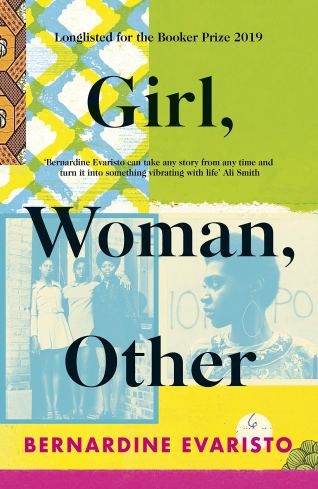 What I liked about it, however, was less this grander aspect, but rather the quality of its story-telling. I must admit that 50 or so pages in, I was not overwhelmed! There are twelve characters in the book, all women bar one (who is trans), all black or mixed race. They are broken down into four groups of three, and each threesome is strongly connected in some way (eg mother/daughter). Each group is also connected with the others, even if only in a tenuous way (eg teacher and former pupil) and almost all are in some way connected to Amma, the first character we meet. Amma has written a play which is having its debut performance at the National and this provides the framework of the novel. Many of the characters are present at the penultimate chapter of the book, the after-party, where the differences between them and their lives are laid bare. This is interesting because the author is not only trying to draw out the similarities between the characters and their life experiences, suggested by their common characteristic of being mixed race and female, but she is also, I think, railing against the notion of such women/people being homogeneous; they are all far more than just their race or gender.
 I’ve just finished a lovely little book The Umbrella Mouse by Anna Fargher. When I was browsing in my local bookshop a few months ago, one of the assistants recommended it to me and said it had had her in tears. I knew then it was a ‘must-read’! I got my copy secondhand online and it’s signed!
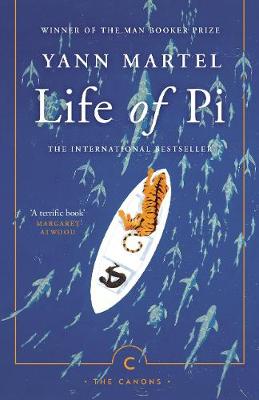 The story is well-known: a young Indian boy, Piscine “Pi” Patel (a name he adopts to get back at the school bullies who taunt him with the nickname ‘Pissing’) grows up in the territory of Pondicherry where his parents own a zoo. The first part of the story gives us a detailed account of the family’s life there, including enormous detail about life for the animals in a zoo setting (I was fascinated by this and it changed my perspective on zoos). We learn in particular about the fierce Bengal tiger, Richard Parker, who is the zoo’s prized possession. I love the use of ‘naming’ in this book – the story of how Richard Parker came to be given this name is brilliant and a sign of the author’s ingenuity and creativity. The other important feature of this part of the novel is that we learn of Pi’s deeply philosophical nature, his decision to adopt three religions (Hinduism, in which he has been brought up, Islam and Christianity), much to his family’s dismay, because he can see benefits in all of them.

 So now it is time top get back on track and announce the book for November. Our theme is a children’s book; we are winding down towards the end of the year, but I am not going to make it too easy, because this book is a challenging one – John Boyne’s The Boy in the Striped Pyjamas. I have been meaning to read this ever since it was published to great acclaim in 2006. My elder daughter read it recently and has been nagging me to follow suit. She found it very moving so I am looking forward to it.
 The book concerns two women, Rosemary, an 86 year-old widow, and Kate, a 26 year-old journalist, and how they are brought together by chance when the Brixton lido is threatened with closure. Their relationship evolves as together they mount a campaign to keep the pool open, drawing in other local people and reviving a community spirit that everyone involved thought had been lost. In some ways the two women could not be more different: Rosemary is nearing the end of her life, now alone having lost her beloved husband, and has lived in this area of South London all her life. Kate, on the other hand, is young and bright, and has moved to the city from Bristol to begin her journalistic career on the local paper. Kate too, though, is lonely; unlike Rosemary she has not lost anyone, but she has not found anyone either, and she grapples with panic attacks, anxiety and low self-esteem. She shares a house with a number of similarly isolated flatmates, none of whom she knows, and stays alive thanks to ready meals.
 Julia's books