Regular followers of this blog will know that I am passionate about children’s literature and that I frequently post reviews of great kids’ books I have read. I have decided to make this a more regular feature and will devote one week a month to reviewing children’s books and discussing issues about kids reading habits, an issue which I know is of concern to many of you, parents or otherwise. After all, most keen adult readers would, I think, say that their love of reading was fostered in childhood. Just the other day, I recommended Lucy Mangan’s new book Bookworm: A memoir of childhood reading, one of the books on my TBR list this spring which I feel sure will take me back to my own childhood and the many nights I spent reading under the covers, not with a torch, worse, by the light from the landing. It’s a wonder my eyesight wasn’t ruined!
 This month, I would like to recommend Catherine Doyle’s The Storm Keeper’s Island, published last year by Bloomsbury, as a fantastic choice for any young people you know who like modern adventure stories where the good guy wins. Catherine Doyle is a young writer (just 29 years old) and has published several YA novels already; The Storm Keeper’s Island is her first novel for what is called the “middle grade”, ie about 9-12 years, and it was a barn-storming debut, winning several prizes and accolades from established authors in this genre. A second novel, following the further adventures of the main character Fionn Boyle, is planned for this summer and I would expect it to feature heavily in recommended holiday reading lists in advance of the Summer Reading Challenge.
Fionn Boyle and his twin sister Tara are to spend the summer with their grandfather, Malachy Boyle, on the real-life island of Arranmore, just off the coast of Donegal in north-west Ireland. It is a sparsely-populated island where most of the inhabitants are native Irish speakers, but many tourists visit. It is an island the author knows well, her own grandparents having lived there, and her love of the place comes across strongly. The two children don’t seem to know their grandfather well; he is their paternal grandfather, and their own father died at sea before they were born. The children have been sent to their grandfather because their mother has had some sort of mental breakdown. We learn that she has never really recovered from her husband’s death.
Malachy Boyle soon proves to be a quirky character, about whom there is an air of mystery. His cottage is full of home-made candles with mysterious names, like “The Whispering Tree”, “Low Tide” and “Unexpected Tornado”. Malachy Boyle is in fact Arranmore’s ‘Storm Keeper’, a chosen one whose role is to preserve the memories and legends of the island and protect it from its ancient mythical enemy, Morrigan, and her foe, the good spirit, Dagda. Inevitably, Fionn, gets drawn into an adventure involving these mythical spirits; Tara’s island boyfriend (whom she met on a previous visit), the ghastly Bartley Beasley, a vain, self-centred, full-of-himself bully, is the grandson of Elizabeth Beasley, who wants her family to be the next in line for the storm-keeper role and hopes Bartley will be anointed when it becomes time for Malachy to pass the baton. The undercurrent of conflict between the Boyles and the Beasleys is a metaphor for the Morrigan/Dagda feud.
Led by Bartley, the children (ie him, Tara, and Bartley’s sister Shelby, but excluding Fionn) plan to search out the long-lost and mysterious Sea Cave, where it is said a wish can be made. Obviously, Bartley wants to use the wish to make himself the storm-keeper. They are warned away from it as it is said to be highly dangerous. Fionn wants to find it first, to prevent Bartley having his wish, but he is afraid. As time passes, his grandfather passes on to him the knowledge of the candles and how lighting one enables a kind of time travel, where those present can see, even be a part of, events of the past that have been captured in the candle. Using the candles, Fionn will eventually triumph and (spoiler alert!) become the new storm-keeper.
I am not normally a lover of fantasy fiction, and I fear the above makes it sound as if there is a lot of myth and legend here. There is, but there are also actually a lot of real-life issues, modern concerns that children will identify with – loneliness, bullying, sibling rivalry, grief and loss, emotional vulnerability, what is meant by fear and courage, and perseverance. Ultimately, the good triumphs over the bad, the bullies don’t win and they are be exposed and punished. All the kinds of messages we want kids to get from their reading. The island legends do underpin the novel but it is by no means the heart of the novel. Most of all the child characters are credible and human, and many kids will be able to identify with them.
There is excitement, adventure and mild peril here, but also a kind of escapism – the children are on their summer holidays in a remote island community, with freedom to roam and where candles are more useful than mobile phones. The book would suit a variety of young readers in the 9-12 year-old age group. Recommended.
What recently-published books would you recommend for the 9-12 age group?
If you have enjoyed this post, I would love for you to follow my blog. Let’s also connect on social media.

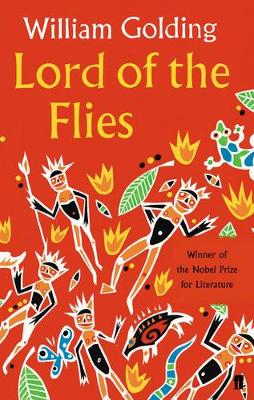

 This book caused something of a sensation when it was published last year. It is the extraordinary memoir of a young woman who grew up in rural Idaho, as part of a large Mormon family. Nothing too outlandish there until the author begins telling you about the father’s survivalist beliefs (he hoards supplies of food and fuel in their bunker for when catastrophe strikes, as he believes it inevitably will), his Christian fundamentalism (quite extreme beliefs about, for example, what women should wear, that even their fellow Church members find uncomfortable) and the obsessive control he exerts over the rest of the family. The unconventional nature of the family would be enough to make this a fascinating read, but what makes it shocking is the level of violence, of almost sadistic cruelty. Some of is quite hard to read and at times I found myself gasping out loud.
 The book begins in mid-eighteenth century Paris when the central character, Jean-Baptiste Grenouille, is born beneath a fish stall, to an indigent mother. She pauses her work briefly in order to give birth to him but then, believing or perhaps wishing him to be yet another of the many stillbirths she is said to have had, she leaves him for dead amongst the discarded fish guts. When he is discovered alive, his mother is tried for infanticide and executed. He is left to the mercy of the church, but proves a demanding and difficult baby, who, despite his unpromising start, appears to enjoy rude health. So much so that the wet-nurse hired to take care of him, returns him as he is drinking too much of her milk, making it impossible for her to take on any other infants and therefore make a living. The sense of his insatiable appetite and how he sucks the life out of those around him is established. As he goes through life, we learn that those who come into contact with him invariably meet a tragic end.
 The title I have chosen is To A Mountain in Tibet, partly, I’m afraid, because it is one of the slimmer volumes; I’m struggling to keep up with all my planned reading at the moment…where did March go? Ah yes, I know, I spent a lot of time with my mouth open glued to the news and political analysis programmes (the less said about that the better!). Reading the blurb and the reviews of this book, I also feel it encapsulates what I am looking for in a travel book, which is not only the author on a physical journey, but also on some kind of process of learning. In To A Mountain in Tibet Thubron is undertaking a pilgrimage well known to Hindus and Buddhists, but is also a story of him coming to terms with loss and bereavement.
 The Five by Hallie Rubenhold
 Bookworm: a memoir of childhood reading by Lucy Mangan
 Spring by Ali Smith
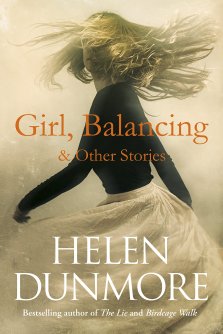 Girl, Balancing by Helen Dunmore
 Lanny by Max Porter
 The time span of the novel is the duration of Tish’s pregnancy, during which time the couple’s two families set about trying to free Fonny, liaising with his lawyer and pulling together all the money they can to pay Fonny’s legal costs. The lion’s share of this task falls to Tish’s family, who see it as their duty to support their daughter and the father of their grandchild. Fonny’s family, on the other hand is divided; his mother and sisters are deeply confused, ambivalent and disturbed by events effectively disown him. Fonny’s father does engage, supported by Tish’s father, but it is clear he is not really strong enough to cope with the pressure. It falls to Tish’s family to take charge and her mother, Sharon even goes to Peurto Rico, to where the raped woman has fled, to appeal to her to change her testimony, the suspicion being that Fonny was simply served up to her by corrupt police officers. As Tish’s pregnancy progresses, so we follow the legal machinations, the financial pressures faced by all concerned, the effect of prison on Fonny, the artistic soul tortured by his incarceration, and the toll that events take on both families.
 Julia's books