I’ve just finished listening to this, the third book from Ferrante’s Neapolitan novels. There are four volumes in total and I’ve chosen to listen to all of them on audio, mainly because I love the languid narration by Hilary Huber; she has really brought the characters alive for me and has managed to execute distinctly both the male and the female characters, something which I think is rare in an audiobook.
This is an extraordinary series and if you have not come across them yet (if you’re interested in books you will have been hard-pressed to avoid them since they were published to great acclaim between 2012 and 2015) I would definitely urge you to seek them out. As with the first two volumes, it has taken me some time to get through this book, mainly because I listen to it in 10-15 minute snatches on walks to the shops, etc. My enjoyment is none the worse for that, however; I would say in fact that it has added to my appreciation since this series is truly an epic saga than a set of novels, so broad is the sweep of time that they cover, so the long duration of my listening has given me a strong feeling for that.
 This third book picks up precisely where volume two left off, at a small book launch for Elena’s first book, a mildly sexual novel which has caused a stir, and where she is being questioned in a patronising way by an obnoxious critic. A familiar face from Naples walks into the room – Nino Sarratore – and Elena’s confidence is restored. Nino has been a friend since childhood, and there is a complicated triangular relationship between him, Elena and Lila, the main but elusive protagonist of all the books. Elena has been in love with Nino since they were young, but this has not been reciprocated. Like Elena, Nino proved to be a successful student, despite the disadvantages of background and upbringing, and would go on to achieve great things academically, though both know that neither is as brilliant as their mutual friend Lila, with whom Nino was once in a relationship, but who would never reach the academic heights of the other two.
In this volume we follow Elena’s blossoming career as a writer, her marriage to a young Professor, Pietro Airota, and therefore, finally, Elena’s apparent full admission to the bourgeois intellectual circles she has always craved. At the same time, Lila’s life is taking a very different turn – she has left her abusive husband, the vulgar shopkeeper Stefano Carracci, had a child, and leads a modest life. At times, Lila’s life seems extremely harsh, particularly the period when she is working for Bruno Saccavo at the sausage factory, exploited by him and disliked and abused by some of her fellow workers. As Elena’s fortunes are rising, so Lila’s seem to be at their lowest ebb.
As life events ebb, however, so must they also flow, and things reverse. After a period of ill-health, Lila finally manages to claw her way back when she gets a job working for IBM, alongside Enzo Scanno, where she quickly becomes indispensable and starts earning a high salary (the contrast here is that she has achieved this off her own bat, whereas for Elena, despite her academic achievements, her prosperity is largely due to her marriage). At the same time, Elena’s career as a writer stalls, coinciding with the births of her two daughters. She resents her husband for his lack of participation in the household, while she is deeply frustrated by the mediocrity of her daily life, and having to take a back seat while he focuses on his academic career.
The pace of the book becomes quite intense at the end as events spiral towards an inevitable conclusion, which I don’t want to spoil. The writing in this, as in the other two books in the series, is remarkable, and the acute observation of character detail is fascinating and deeply engaging. The dialogue is also some of the most authentic I have ever read. The books have been translated by Ann Goldstein who also deserves praise for her very fine work here.
I am looking forward to the fourth and final book in the series, and highly recommend these novels. Do start with the first one, My Brilliant Friend, and whilst the audio is fantastic, I have also found it useful to have a hard copy to hand to remind myself of the very wide cast of characters.
Have you read Ferrante’s Neapolitan novels – how do you rate them?
If you have enjoyed this post, I would love for you to follow my blog. Let’s also connect on social media.
 In summary, this book is set in the late ‘60s, early 70s and is about Freda and Brenda, two young women who work together in a London factory where Italian wine is bottled. They also live together in a pokey bedsit, and share a double bed at nights. Freda is blonde, buxom and outgoing, sexually frustrated and of a romantic inclination. She has the hots for Vittorio, the nephew of the factory’s Italian owner, and fantasises about being seduced by him, contriving situations to enable this. Brenda is a redhead, but mousey in personality, timid and sexually repressed. She has left her drunken husband Stanley in the Yorkshire farmhouse which they shared with his domineering mother. Freda and Brenda met after Brenda had a tearful outburst in a butcher’s shop. Freda took her in and got her a job at the factory. Freda can be kind but also cruel and the book is as much about the complex nature of relationships between women as anything else.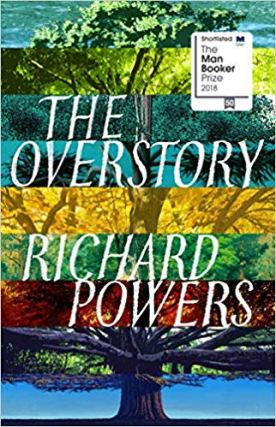



 My book club chose this for our pre-Christmas read (I’ve only just finished it!) and we all thoroughly enjoyed it. It’s long, and perhaps could have been edited somewhat, but I imagine the main buyers of this book will be Michelle-fans who want as much detail as possible. The first part of the book was, for me, the least engaging. My fellow readers and I were a little surprised to learn that Michelle Robinson did not in fact come from an affluent background. She was a ‘Southsider’ – from a part of Chicago that was fairly blue-collar and largely African-American, and became more so as she grew older and some of the white residents moved out. A picture is painted of a family with strong values around hard work, doing the right thing, caring for others and loyalty to family. Michelle excelled in school through hard work, determination and the support of her parents and attended both Princeton and Harvard Law School. She has never forgotten her humble beginnings, however, and this underpins her commitment to equality and social justice. However, I did feel this part of the book was most descriptive; in the context of the book as a whole I can see why it would have been important to her to put her politics in perspective, but it was a tiny bit…pedestrian?
 Despite being outside skiing all day I did get a fair bit of reading done and managed finally to break the back of a book I have been reading for some time now – The Overstory by Richard Powers, the final one of the
  Over the holiday I also completed Michelle Obama’s Becoming. This is a much faster read and very different, though also thoroughly enjoyable. Look out for my reviews of both books over the next couple of weeks.
 For little ones there’s We’re Going on a Bear Hunt on Christmas Eve on Channel 4 (might have to watch that even though mine are now teenagers!). Or the wonderful Paddington movie on 30th December on Channel 4.
 Thomas Hardy’s Far From the Madding Crowd (one of my favourite Hardy novels) is on BBC2 on 23 December, Jane Austen’s Emma (with Gwyneth Paltrow) is on BBC2 on 28 December, Pride and Prejudice (starring Keira Knightley) is on More4 on Christmas Day, and the brilliant 2011 version of Charlotte Bronte’s Jane Eyre (the one with Michael Fassbender as Mr Rochester) is on BBC1 on 2 January.

 Finally, for something a little more up to date, you could try
 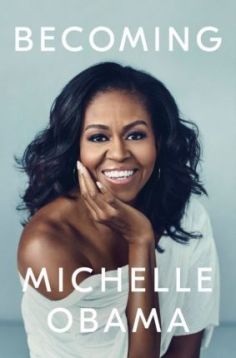 Becoming by Michelle Obama


 Ottolenghi Simple by Yotam Ottolenghi


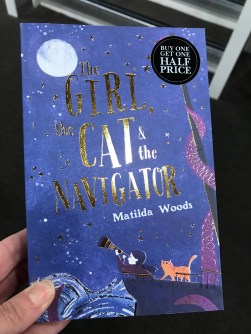 The Girl, the Cat and the Navigator – Matilda Woods
 Ladybird Tales of Adventurous Girls
  Dog Man Lord of the Fleas – Dav Pilkey
 Flamingo Boy – Michael Morpurgo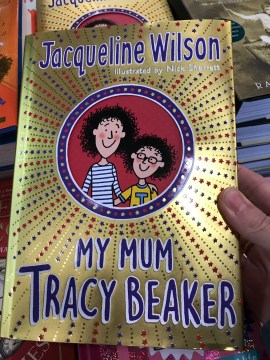


 Dumplin’ – Julie Murphy


