A few weeks ago I blogged about the 2019 Oscars and identified If Beale Street Could Talk as one of the few literary connections amongst this year’s crop of nominees. It was in fact nominated in the Best Adapted Screenplay category but lost out to Spike Lee’s BlackKklansman on the night. The book is widely considered to be a classic of 20th century African-American writing.
It is a love story and concerns the relationship between 19 year-old Tish and her 22 year-old lover Fonny, whose baby she is expecting. The couple grew up in Harlem, but Fonny has ambitions of becoming a sculptor and the couple plan to move to Greenwich Village to be among other artists. The story of their love is told mainly through flashbacks, however, as, when the novel opens, Fonny is in jail awaiting trial for rape, having been accused and then identified in a line-up by the Peurto Rican victim.
 The time span of the novel is the duration of Tish’s pregnancy, during which time the couple’s two families set about trying to free Fonny, liaising with his lawyer and pulling together all the money they can to pay Fonny’s legal costs. The lion’s share of this task falls to Tish’s family, who see it as their duty to support their daughter and the father of their grandchild. Fonny’s family, on the other hand is divided; his mother and sisters are deeply confused, ambivalent and disturbed by events effectively disown him. Fonny’s father does engage, supported by Tish’s father, but it is clear he is not really strong enough to cope with the pressure. It falls to Tish’s family to take charge and her mother, Sharon even goes to Peurto Rico, to where the raped woman has fled, to appeal to her to change her testimony, the suspicion being that Fonny was simply served up to her by corrupt police officers. As Tish’s pregnancy progresses, so we follow the legal machinations, the financial pressures faced by all concerned, the effect of prison on Fonny, the artistic soul tortured by his incarceration, and the toll that events take on both families.
It is a tragic story in many ways – no spoiler intended, but events don’t really resolve in the course of the novel – but has also been described as ultimately uplifting because it shows the power of love, not just between a man and a woman, but also within the community and within the family (notwithstanding the dysfunctional nature of Fonny’s family, although the inference here is that his mother’s religious fervour lies at the root of this). I have not seen the film so I’m not sure how it handles the open nature of the ending.
The other main theme of the novel is, of course, the black experience, and Baldwin was a key figure in mid-20th century civil rights activism in New York. He counted Nina Simone, Maya Angelou, Marlon Brando, Josephine Baker, Allen Ginsberg and Miles Davis among his many high-profile friends. It is clear that Fonny has simply been set-up to take the blame for the rape – the woman identified her attacker only as black, and in the line-up that was assembled, Fonny was the only black man present. The cops are clearly out to get him, and any other black man. The judicial system, the penal system and the social and financial system are all stacked against Fonny, against them all, a reflection of how Baldwin saw society at the time.
Although I enjoyed the book, I didn’t find it a particularly easy read. The writing felt a little spiky, uncontrolled (the type that a determined editor might address!), but on the other hand it is spontaneous and vernacular, heart-felt and real. I found the timings difficult to follow at times and the supporting characters not as well-developed as I would have liked. It helps, however, when you understand more about Baldwin and his life. Firstly, he was an essayist, poet, playwright and activist as much as he was a novelist, if not more so, and whilst I do not know his other work, I can see that way of thinking in this novel. I think there are also significant influences from Baldwin’s personal life experience which feature strongly – his relationship with his father (actually his step-father), his sexuality, his struggle to express his art in his youth, growing up as he did in the tough neighbourhood of Harlem, and his religious ambivalence.
This is an intriguing and important book, even though it wasn’t always the easiest read. The love story is powerful and moving and it has certainly made me keen to see the film and to read more of Baldwin’s work, particularly his essays and his semi-autobiographical novel Go Tell It on the Mountain.
Recommended.
Have you read the book or seen the film? What did you think?
If you have enjoyed this post, I would love for you to follow my blog. Let’s also connect on social media.


 A dear friend gave me Helen Dunmore’s final novel, published posthumously, Birdcage Walk, for my birthday last year and I have only just got around to reading it. I had read some quite mixed reactions, some feeling it wasn’t her best or that it had not been as well edited as it might have been, which is understandable. I am not familiar with Dunmore’s other novels so don’t have a view on how it compares. It meant I approached it with some trepidation, however.
 Roll of Thunder, Hear My Cry is the first of three novels by Mildred D Taylor about the Logan family, black farmers in Mississippi, set in the 1930s. They are poor, but they own their own small piece of land, Grandfather Logan having bought it in the 1880s from local landowner Harlan Granger, much to the chagrin of some of the white locals who still cannot accept the social changes giving black people greater autonomy and rights. Grandfather Logan is now dead and the central character, Cassie, lives on the farm with her parents, her grandmother and three brothers. Despite owning 400 acres, the family still struggles to make ends meet, which is why Cassie’s father works away much of the year, on the railroad construction, and her mother works as a teacher at the local (black) school. All the family contributes to the running of the farm and the income it generates.
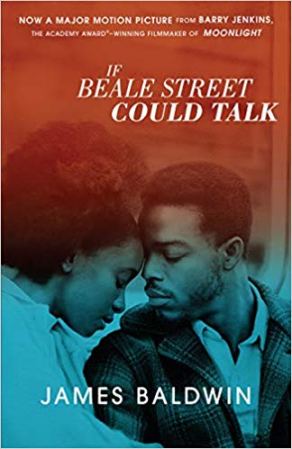 I’m always looking for the films with literary links and they are particularly scarce this year. If Beale Street Could Talk is the only novel-based film, that I could spot, and is based on the Harlem-set love story by James Baldwin, first published in 1974. I’ve just started reading it. The Spike Lee film BlacKkKlansman and the comedy Can You Ever Forgive Me? are both based on memoirs, the former a true story of a young African-American detective who set out to infiltrate and bring down the KKK, and the latter, starring Melissa McCarthy and Richard E Grant, also a memoir, about a celebrity biographer who finds herself out of work and changes tack to become a forger. This one also has a female director (too rare). I haven’t yet seen any of these films, but all of them appeal.
 This third book picks up precisely where volume two left off, at a small book launch for Elena’s first book, a mildly sexual novel which has caused a stir, and where she is being questioned in a patronising way by an obnoxious critic. A familiar face from Naples walks into the room – Nino Sarratore – and Elena’s confidence is restored. Nino has been a friend since childhood, and there is a complicated triangular relationship between him, Elena and Lila, the main but elusive protagonist of all the books. Elena has been in love with Nino since they were young, but this has not been reciprocated. Like Elena, Nino proved to be a successful student, despite the disadvantages of background and upbringing, and would go on to achieve great things academically, though both know that neither is as brilliant as their mutual friend Lila, with whom Nino was once in a relationship, but who would never reach the academic heights of the other two.
 In summary, this book is set in the late ‘60s, early 70s and is about Freda and Brenda, two young women who work together in a London factory where Italian wine is bottled. They also live together in a pokey bedsit, and share a double bed at nights. Freda is blonde, buxom and outgoing, sexually frustrated and of a romantic inclination. She has the hots for Vittorio, the nephew of the factory’s Italian owner, and fantasises about being seduced by him, contriving situations to enable this. Brenda is a redhead, but mousey in personality, timid and sexually repressed. She has left her drunken husband Stanley in the Yorkshire farmhouse which they shared with his domineering mother. Freda and Brenda met after Brenda had a tearful outburst in a butcher’s shop. Freda took her in and got her a job at the factory. Freda can be kind but also cruel and the book is as much about the complex nature of relationships between women as anything else.
 Julia's books