You’ve got to admire Graham Norton; he started out as a stand-up comic, first came to prominence in the classic TV comedy show Father Ted, making a handful of appearances as one of the many random priests on Craggy Island, and has since built a very successful career as a broadcaster on both radio and television, mostly in the UK. He has previously written three autobiographical books, but Holding is his first novel. People like Graham Norton are so annoying; they are really good at their chosen vocation, then they write a book…and they’re really good at that too! Most of us are just trying to be good at the one thing!


I do love Graham Norton, though, and this book does not disappoint. I listened to the Audiobook, which is narrated brilliantly by Graham himself, and I am certain this added to my enjoyment. He performs each role with such distinctiveness and brings the characters to life. The plot of the story is a straightforward whodunnit, but it has twists and turns which Norton handles deftly. The story is set in the seemingly sleepy town of Duneen in County Cork, Ireland, but beneath the surface, there stir unaccountable passions which have been and continue to be suppressed by culture and tradition.
Our central character is Sergeant PJ Collins, the local police officer, who is overweight, unmarried, and carries about him the burden of knowing that his life has been little lived. The small-town torpor is completely shaken up, however, by the discovery of human remains in a field which is being developed for a new housing estate. It is widely suspected to be the body of Tommy Burke, a young man who disappeared many years earlier in mysterious circumstances. Suspicions are immediately thrown upon two local women with whom he had romantic links: Brid Riordan, to whom he was engaged, but only, we learn, because she was set to inherit a farm when his own family’s fortunes were somewhat in decline. Brid is now middle-aged, unhappily married and an alcoholic. The other main suspect is Evelyn Ross, a spinster who lives with her two unmarried sisters in one of the largest houses in the town, who was Tommy’s true love at the time, but the relationship was largely unrequited.
Thus the scene is set and the plot thereafter takes on some impressively imaginative twists and turns. Graham Norton’s great talent, however, is clearly for character and he introduces us to a wide cast of individuals, from the swaggering and confident, but equally unfulfilled, Detective Linus Dunne from Cork (brought in to investigate the homicide), who initially patronises and sidelines PJ before gradually accepting and empathising with him, to the meek and mild Mrs Meaney, PJ’s housekeeper, who initially comes across as something of a busybody but who takes on greater depth as the story progresses. Listening to Graham Norton’s narration gave me an even more powerful sense of the cast of characters, I think, than if I had read the book, and, I repeat, he does it brilliantly!
The book is ultimately about what lies beneath, quite literally, in the body that is discovered on the building site, but also in the characters, the lives that go on behind closed doors, until a catastrophe comes along and forces them out into the open. It is also very much about the upending of old traditions (not all good), in a post-Celtic tiger, post-credit crunch world and its being replaced by new ways of being – not all of which are good either.
I loved this book – it had me driving slowly and sitting outside my house in the car, just so I could listen to the end of a chapter! It’s quite an accomplishment for a debut novel. Highly recommended.
Have you read this book? I’d love to hear your views.
If you have enjoyed reading this blog, you can follow me by clicking on the subscribe button below or to the right, depending on your device.


 What is so immediately intriguing about the title of the novel, of course, is that Holland is very, very flat. But In the Dutch Mountains imagines a world where the Netherlands extends much further south of its modern borders to northern Spain and the Pyrenees (hence the Dutch mountains). The narrator is himself a Spaniard, a civil servant who not only relates the story, but also philosophises on the processes of writing and story-telling: a story within a story. The main characters in the tale are Kai and Lucia, a slightly other-worldly circus couple, remarkable for their physical perfection, who are relieved of their jobs (because times have moved on and audience tastes have changed) and find themsleves travelling south to look for work. Kai is kidnapped and Lucia sets out on a journey to find him, accompanied by an old woman she meets on the way who agrees to drive her to find her lover.
 I’m off on a short holiday to the Netherlands so I’m planning to take some reading with me, of course, and have decided on another book from my
 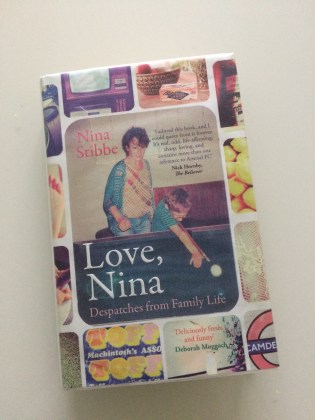 Nina is twenty when we meet her in the early 1980s. She lives with Mary-Kay Wilmers, editor of the London Review of Books, and her two young sons, Sam and Will, to whom she is a nanny. They live at 55 Gloucester Crescent NW1, an area that was also home to other literary types, among them Alan Bennett and Claire Tomalin, who also make appearances in the book, particularly ‘AB’ who is a great friend of ‘MK’.
 So, it gives me great pleasure to announce that I completed the March challenge and the pile is one volume smaller. I really enjoyed Just Kids and I’m pleased I finally got around to it. I’ve also given up book-buying for Lent so hopefully I will be better able to resist temptation in the future and tackle the unread books before buying new ones. Sometimes.
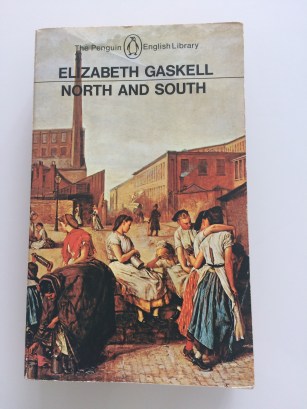 I am fortunate to live in Manchester, northern England, the setting of this book. It’s also where Gaskell spent much of her early life. You can visit
 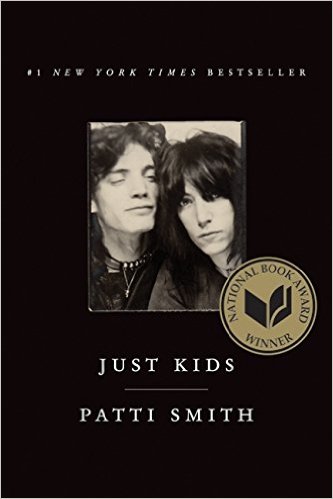 I’ve been an admirer of Patti Smith for a number of years now. I’m a bit young to have been a fan of hers when she first broke onto the music scene in the mid-1970s. I became aware of her much later when I picked up a sale copy of her debut album Horses. I was also aware of Robert Mapplethorpe, the late artist-photographer who was her lover and then close friend when they were both very young. Mapplethorpe died of AIDS in 1989 and it must have been in the 1990s that I saw an exhibition of his work in London (I had an interest in photography at the time). Later on again I learned about the connection between the two and how Patti had been, if you like, Mapplethorpe’s ‘muse’ when he was first discovering his art.
 Regular visitors to this blog will know that I am passionate about children’s literature. My children are part of the generation that grew up with Harry Potter. JK Rowling is one of my heroes, for a number of reasons, but primarily for all that she has done to get (and keep) children reading, particularly those who might otherwise not have done so. Harry Potter wasn’t the first literary character to bring wizarding and magic into children’s literary lives, however. The Snow Spider was first published 30 years ago and was a multiple award winner. It was originally published as a trilogy, but this anniversary volume has been issued as a stand-alone. I chose it for the book club I run at my daughter’s primary school.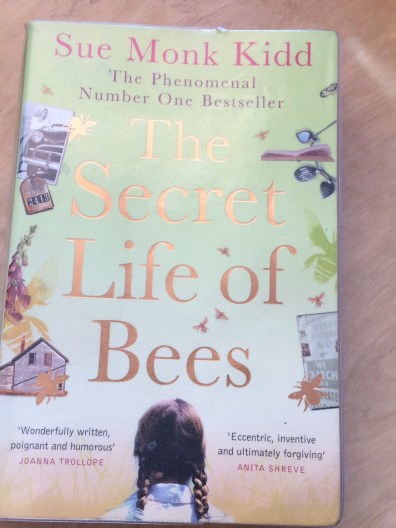


 So, the task for March on my
 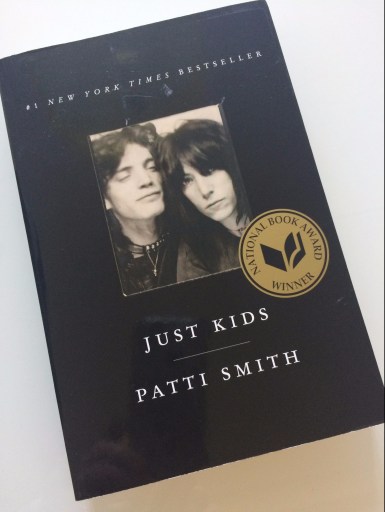 Patti Smith is a fascinating woman who has led a fascinating life. I have been meaning to read this book for years (it was published in 2010), so when I came across it in the Strand Bookshop whilst on my trip to, where else, New York last summer, it had to be bought! (It’s a very New York book.)
