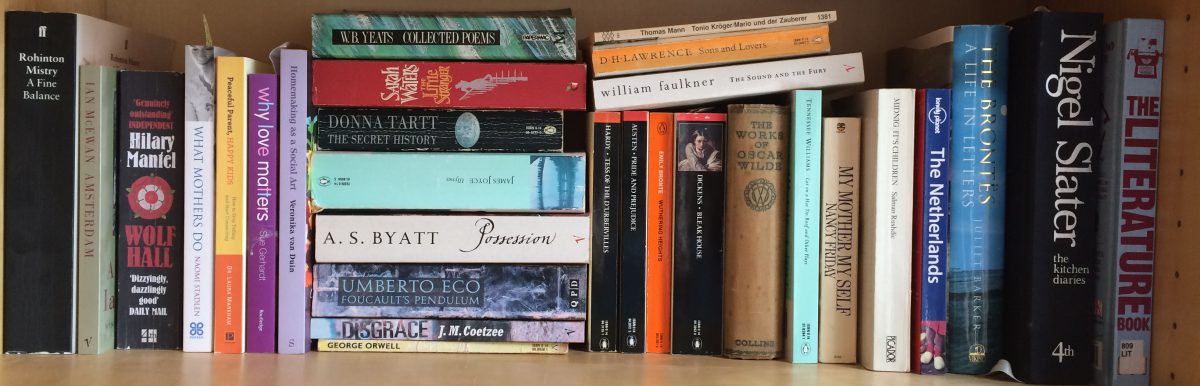
Regular followers of this blog will know that I am passionate about children’s literature and that I frequently post reviews of great kids’ books I have read. I have decided to make this a more regular feature and will devote one week a month to reviewing children’s books and discussing issues about kids reading habits, an issue which I know is of concern to many of you, parents or otherwise. After all, most keen adult readers would, I think, say that their love of reading was fostered in childhood. Just the other day, I recommended Lucy Mangan’s new book Bookworm: A memoir of childhood reading, one of the books on my TBR list this spring which I feel sure will take me back to my own childhood and the many nights I spent reading under the covers, not with a torch, worse, by the light from the landing. It’s a wonder my eyesight wasn’t ruined!
 This month, I would like to recommend Catherine Doyle’s The Storm Keeper’s Island, published last year by Bloomsbury, as a fantastic choice for any young people you know who like modern adventure stories where the good guy wins. Catherine Doyle is a young writer (just 29 years old) and has published several YA novels already; The Storm Keeper’s Island is her first novel for what is called the “middle grade”, ie about 9-12 years, and it was a barn-storming debut, winning several prizes and accolades from established authors in this genre. A second novel, following the further adventures of the main character Fionn Boyle, is planned for this summer and I would expect it to feature heavily in recommended holiday reading lists in advance of the Summer Reading Challenge.
Fionn Boyle and his twin sister Tara are to spend the summer with their grandfather, Malachy Boyle, on the real-life island of Arranmore, just off the coast of Donegal in north-west Ireland. It is a sparsely-populated island where most of the inhabitants are native Irish speakers, but many tourists visit. It is an island the author knows well, her own grandparents having lived there, and her love of the place comes across strongly. The two children don’t seem to know their grandfather well; he is their paternal grandfather, and their own father died at sea before they were born. The children have been sent to their grandfather because their mother has had some sort of mental breakdown. We learn that she has never really recovered from her husband’s death.
Malachy Boyle soon proves to be a quirky character, about whom there is an air of mystery. His cottage is full of home-made candles with mysterious names, like “The Whispering Tree”, “Low Tide” and “Unexpected Tornado”. Malachy Boyle is in fact Arranmore’s ‘Storm Keeper’, a chosen one whose role is to preserve the memories and legends of the island and protect it from its ancient mythical enemy, Morrigan, and her foe, the good spirit, Dagda. Inevitably, Fionn, gets drawn into an adventure involving these mythical spirits; Tara’s island boyfriend (whom she met on a previous visit), the ghastly Bartley Beasley, a vain, self-centred, full-of-himself bully, is the grandson of Elizabeth Beasley, who wants her family to be the next in line for the storm-keeper role and hopes Bartley will be anointed when it becomes time for Malachy to pass the baton. The undercurrent of conflict between the Boyles and the Beasleys is a metaphor for the Morrigan/Dagda feud.
Led by Bartley, the children (ie him, Tara, and Bartley’s sister Shelby, but excluding Fionn) plan to search out the long-lost and mysterious Sea Cave, where it is said a wish can be made. Obviously, Bartley wants to use the wish to make himself the storm-keeper. They are warned away from it as it is said to be highly dangerous. Fionn wants to find it first, to prevent Bartley having his wish, but he is afraid. As time passes, his grandfather passes on to him the knowledge of the candles and how lighting one enables a kind of time travel, where those present can see, even be a part of, events of the past that have been captured in the candle. Using the candles, Fionn will eventually triumph and (spoiler alert!) become the new storm-keeper.
I am not normally a lover of fantasy fiction, and I fear the above makes it sound as if there is a lot of myth and legend here. There is, but there are also actually a lot of real-life issues, modern concerns that children will identify with – loneliness, bullying, sibling rivalry, grief and loss, emotional vulnerability, what is meant by fear and courage, and perseverance. Ultimately, the good triumphs over the bad, the bullies don’t win and they are be exposed and punished. All the kinds of messages we want kids to get from their reading. The island legends do underpin the novel but it is by no means the heart of the novel. Most of all the child characters are credible and human, and many kids will be able to identify with them.
There is excitement, adventure and mild peril here, but also a kind of escapism – the children are on their summer holidays in a remote island community, with freedom to roam and where candles are more useful than mobile phones. The book would suit a variety of young readers in the 9-12 year-old age group. Recommended.
What recently-published books would you recommend for the 9-12 age group?
If you have enjoyed this post, I would love for you to follow my blog. Let’s also connect on social media.

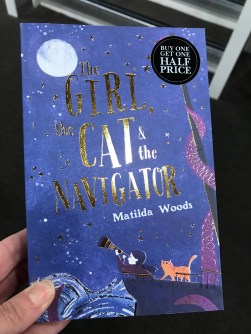 The Girl, the Cat and the Navigator – Matilda Woods
 Ladybird Tales of Adventurous Girls
  Dog Man Lord of the Fleas – Dav Pilkey
 Flamingo Boy – Michael Morpurgo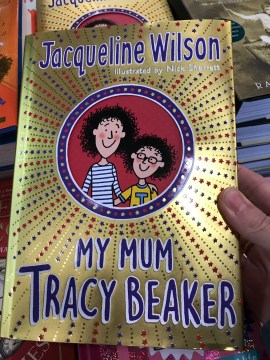


 Dumplin’ – Julie Murphy


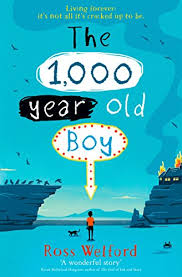 This book, like Welford’s others, is set in North Tyneside (where I used to live, so it resonates with me for that reason too), on the coast east of Newcastle. Alfie Monk is over 1,000 years old, having been born at the time of the Danish invasions of Britain. When he was young, his father was custodian of some ‘life pearls’ within which were stored an elixir of eternal life. To access the elixir the life pearls had to be smashed and the liquid consumed. Alfie’s father was involved in a fight with someone who tried to steal the life pearls, and he was killed. Alfie (unfortunately?) smashed two of them accidentally; he and his mother (and their cat!) drank the liquid, meaning they will never age and therefore never die of natural causes. The curse can only be lifted by drinking another dose of liquid, but there is only one life pearl left. This is hidden on a remote island off the Northumberland coast.


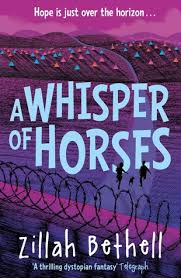 The novel is set in Lahn Dan, you’ll recognise the pun, but the place described in the book will be unfamiliar; it is practically a separate city-state within England, encircled by the ‘Emm Twenty-Five Wall’ that none of the inhabitants dare cross (told that there is only a deserted wilderness on the other side anyway). This is a time after ‘the Gases’ (a reference to climate change), the ‘Tems’ has deteriorated to a muddy flat and only the rich are able to live in the ‘crystal towers’ that afford them some natural light and allow them to live above the pollution layer. In a nod to Aldous Huxley’s Brave New World there is a strict hierarchy in the society: at the bottom are the Pbs, who do most of the work, then slightly higher up are the Cus, the professional classes, but true power lies only with the Aus. Give the child a prize who spots that these are chemical symbols and what this says about the social order! Lahn Dan is run by ‘the Minister’ a distant and slightly mythical figure, not unlike Big Brother, whose orders are carried out by Mordecai and his Secret Police. It all has echoes of 1984.
 Last month, we battled our way through Madame Bovary, some enjoying it more than others, it has to be said. Our theme was a classic novel, and this can be a challenging genre. It can take you right back to schooldays and unhappy memories of working line by line through a text that had no relevance to your teenage life. And if you are out of the habit of reading classic, usually older, novels, the language can feel outdated, and hard work.
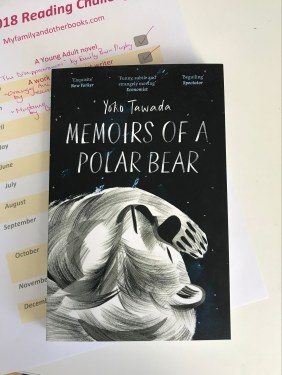 This months’s challenge is something altogether different – a children’s novel and I have chosen Memoirs of a Polar Bear by Yoko Tawada. This book first came to my attention before Christmas and I have been keen to read it ever since. It is written from the perspective of three different polar bears: the first , a female, who flees her homeland in Soviet Russia, the second, her daughter, a dancing bear in a Berlin circus, and the third, the most recent, born in captivity in Germany.
 Juno is a widely-published author, Queen of Teen 2014 and member of the LGBT community. The story begins with a funeral, for Eliza, girlfriend of central character, Samuel. Eliza was killed in a car accident in which Samuel was driving. He is grief-stricken and finds himself in conflict with his family, who do not understand his torment. Samuel seeks out the estranged sister of his vicar father, with whom he cut off contact after she began to dabble in the supernatural. Through his Aunt Marie, Samuel enters a world where he can bring Eliza back to life, but at a deadly price.
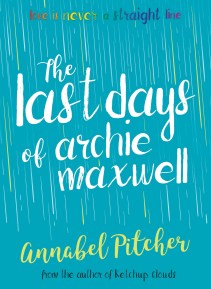 I found this grittier and rather more challenging than Grave Matter. It would suit teens who enjoy social realism or who may be coming to terms with difficult family relationships or with issues around sexuality. The book opens with Archie’s parents announcing they are to separate. Archie’s sister suspects it is because their father is gay. This is going on in the background, but Archie also has issues at school. He is part of a gang with some of the cooler kids, but who are actually unpleasant bullies. He befriends one of the more desirable girls at school, Tia, about which he is mercilessly teased by the other lads. Tia’s brother committed suicide on the railway line near Archie’s house, a year earlier, and he finds himself telling her that he saw her brother just before the day he killed himself, because she seems to need this to comfort her in her grief. As a result they become close. Thus, Archie finds himself sucked into lying, whilst his own home life seems to be falling apart.
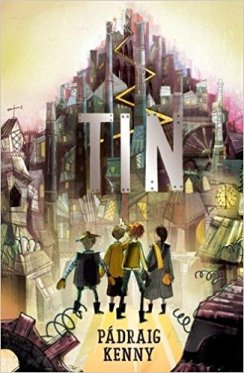 Tin by Padraig Kenny
 The Light Jar by Lisa Thompson
 The Unpredictability of Being Human by Linni Ingemundsen
 The Final Six by Alexandra Monir
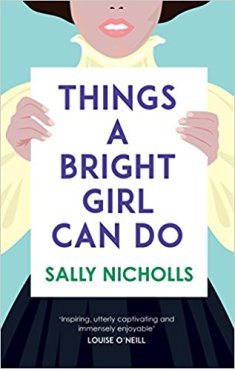 Things A Bright Girl Can Do by Sally Nicholls
 I really liked this little book and it’s the third in the Invincibles series. The central characters are two friends, Nell and Freddie, and Mr Fluffy, a cat. Nell’s teenage brother Lucas, has a sleepover camping with his friends in the garden, which, of course, the younger ones want to be involved with. Through ‘Pester Power’ Nell manages to persuade her parents to let her and Freddie participate for a few hours. Noises in the woods (the waste ground next to the garden) terrify them all, but, of course, it turns out to be nothing more sinister than Mr Fluffy! It’s a great little story, with nice illustrations and a level of humour which children will love and adults will also identify with. Recommended.
 Similar in style to The Invincibles, this book is along the lines of The Addams Family – set in Nocturnia, a land of comic creatures, ghouls, vampires, mummies, etc. The central story is that Amelia’s parents are to throw their annual Barbaric Ball. They are keen for King Vladimir to come, but he has not been seen in public for years. The king decides he will attend with his son Prince Tangine, and, in preparation for getting to know the people, the Prince will attend the local school. He is of course, very haughty and unkind, and Amelia is particularly cross when he demands, and gets, her pet pumpkin Squashy. It turns out that Prince Tangine hides a devastating secret – he is half-fairy (terrifying creature of the light!), though his mother disappeared when he was young, leaving his father bereft. Amelia discovers this as she tries to rescue Squashy from the palace, and, when the truth is revealed, Tangine owns up to his faults and they all become friends. It’s a fun little story, and the toilet humour will appeal very much to the irreverent side of children. Lovely illustrations and plenty of contemporary references. It is basically about friendship, inclusiveness and being nice to people. Recommended though less in this one to keep parent readers interested.
 The central character is Jaz, a 12 year-old girl who is in Year 7 at secondary school. She is dyslexic, doesn’t care too much for school (“Boring!”) and lives with her Mum and three older brothers, their Dad having left shortly after Jaz was born. Jaz is a bit of a rebel with a big heart. She struggles a bit at school, she comes across as someone who finds it difficult to deal with the mainstream demands of sitting still, concentrating, and not least the focus on reading and writing; there does not seem to be much allowance made for her dyslexia. She also struggles a bit with friendship issues, having jealous feelings towards another girl who she feels is going to ‘steal’ her best friend Lily. So we see Jaz is a bit insecure too.
 Julia's books