This was the March choice for my Facebook Reading Challenge, the theme of which was a book from Asia. I hadn’t realised the coincidence, that, of course, Mother’s Day is in March in the UK, so it was an even more appropriate choice than I planned! If you were looking for some sentimental celebration of the joys of maternal love, this was not it, however. It was, in its own way, though, a celebration of mothering.
 The premise of the story is very simple: So-nyo is a wife and mother to five children, all of whom are now grown-up and living their lives in different parts of the country (South Korea). So-nyo lives a very simple fairly rural life with her husband at the family home, where there are many privations. The place is almost a throwback to a bygone era. So-nyo’s eldest son, Hyong-chol, lives in Seoul with his wife and family and it is while his parents are on their way to visit him (to celebrate the father’s birthday) that his mother goes missing; she was holding her husband’s hand on the busy underground station platform one moment, then she seemed to slip from his grasp and just disappeared into the crowd.
We meet Song-nyo’s family one week after the disappearance. They are gathered at Hyong-chol’s house, trying frantically to come up with a strategy to find their missing mother. Police searches have so far turned up nothing and although there have been a couple of random sightings, when one or other of the siblings goes to investigate, they find the trail has gone cold. There is tension in the group, all of them, in their anxiety blaming the other for some oversight that has led to their mother’s disappearance. The following chapters are told from a number of different perspectives. Firstly, there is Chi-hon, the third of the five children, a successful novelist and So-nyo’s eldest daughter. Chi-hon is the first of the family members to begin to reflect on how she has taken her mother for granted all her life (as they all have) and is only just now realising this, now that mother has gone. She tries to recall when it was that she discovered her mother could not read, a fact she managed to conceal from the world because she was so ashamed.
Through Hyon-chol’s recollections we learn of how ambitious So-nyo was for her children and of how much she sacrificed for them, particularly her eldest son, traditionally the most prized child according to her culture, a fact resented by the others, particularly Chi-hon, who never understood it fully.
There is also the reflection and sense of regret from So-nyo’s husband, who, for a time, left his wife for another woman, but who came back eventually, though on somewhat different terms. Returning to the home they shared after leaving Seoul, some weeks after his wife’s disappearance, he is visited by a stranger who runs a nearby orphanage, and who is looking for So-nyo, the woman who was a frequent visitor to the home, who gave her time and money generously to the orphanage. So-nyo’s husband realises he barely knew the woman he was married to.
I don’t think it is giving too much away to say that So-nyo herself makes appearances in the novel, particularly in the later stages. She narrates a chapter about her younger daughter, now a woman married with three young children, a bright girl who went to college, but who is now a stay-at-home mother, much like So-nyo, and yet not like So-nyo at all. So-nyo regrets how she did not give her youngest daughter the support and encouragement she deserved, either when she was a young girl or when she became a mother herself.
Through their regrets and reflections we learn about So-nyo, about her commitment to the culture of her ancestors and of how for her children she was the only bridge to that past, which is now, it would seem, gone. As they consider that they may well have lost their mother forever, each of the main characters goes on their own journey, not just rethinking their attitude to their mother, realising the part she has played in their lives, but also learning much about themselves in the process.
This book was at times very difficult for me as it is only a few months since I lost my own mother. The first Mothering Sunday without her did not affect me too much as I was somewhat distracted by the lockdown that had only just been implemented, but it would have been her 77th birthday last Easter Monday, while this book was still fresh in my mind, and that was quite hard. I spent most of the day gardening, something she would have appreciated, I think. In the last few months, rather like the characters in this book, I have spent a lot of time reflecting on what my mother did for me. Perhaps we only truly grow up when we lose our parents.
Not the easiest read, but a powerful one and certainly one of the most unusual books I have read in a while.
Recommended.
If you have enjoyed this post, I would love for you to follow my blog.
 The book jumps back and forth in time between the present day and April 1990. In the present day we meet a middle-aged Danny Johnston, a long-in-the-tooth presenter of investigative television documentaries. He is past his peak professionally and clearly has some deep-rooted, well-suppressed emotional difficulties; the book opens with him crashing into a tree whilst drunk. He lives an empty life alone in London and is borderline alcoholic. His accident is well-publicised in the media and as a result he loses his television contract and is let go by his agent. With nothing to keep him in London he decides to return to the north, to Manchester where he grew up and where he began his career as a local radio reporter.
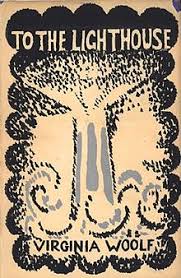 I had that very experience recently with my book club when we decided to read To The Lighthouse by Virginia Woolf. Some of us had read it before (though years earlier) others had not read it at all. But even those of us who had read it before could not remember very much about it! I read it when I was studying for my English degree 30 years ago; I would probably have got through most of Virginia Woolf’s books in a very short space of time, because that was what my degree entailed – reading lots and lots of books very quickly! I always remembered that To The Lighthouse was my favourite, but I could not honestly have told you what happens in it, except that the journey to the eponymous lighthouse was about something desired more than something fulfilled.
 I was tempted to go for Haruki Murakami – after reading
  The novel begins in 1969 with the four children of the Gold family – Varya, Daniel, Klara and Simon – visiting a fortune-teller in her grimy downtown New York apartment, who is said to be able to predict the date of a person’s death. The mystic consults each child privately about their fate. Their reactions vary; Daniel, the second oldest, for example, says he thinks it is all rubbish. The younger children seem more vulnerable and more preoccupied, particularly Simon, who at this point is only seven years old, and who is told that he will die young.
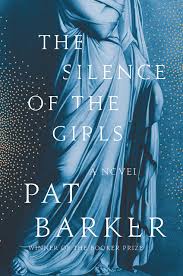 The Silence of the Girls has been critically-acclaimed and was shortlisted for last year’s Women’s Prize for Fiction. I really, really wanted to love this book, but I’m afraid I didn’t. It could be that the timing was wrong – December for me was mad busy so I read the book in short bursts over a longish period when I was quite stressed. I don’t think I gave it the time and attention it deserved. But then, neither did it really grab me when perhaps it ought to have done.
 This book grabbed me by the throat right from the outset; I listened to it on audio (fantastic performances from the actors Julia Whelan and Kirby Haborne, by the way) and simply could not ‘put it down’. I got a lot of exercise in January, because going for a walk became an excuse to listen to a few more minutes’ worth!
 In Winter, Ali Smith examines the ideas through the dynamics of a family thrown unwillingly together at Christmas. Sophia lives alone in a large house in Cornwall. She was a successful businesswoman but, now late in life, finds herself alone, estranged from her sister, not knowing what is going on in the life of her only son in London, and navigating with despair some of the dehumanising aspects of modern life. When we meet her at the start of the book, she is communicating with what I can only describe as a hallucination of a child’s head, which floats about with her. To the reader, this seems surreal at first, but it gradually becomes merely a manifestation of Sophia’s mental state – her deep loneliness and her disconnection from normal life and society. Arthur, Sophia’s son will have similar hallucinations later in the book. Sophia goes about her Christmas Eve business in the town with sadness, recalling the once vibrant high street that is now a series of boarded-up shops, frustrated at being unable to withdraw money from her own bank account and the inability of the young man in the bank to appreciate or meet her needs as a customer – she has nostalgia for the days of the friendly bank manager.
 A book I listened to at the end of last year was Ashes of London by Andrew Taylor. I borrowed it from the library when it was first published in 2017 but did not manage to get through it before I had to return it for someone else. It is a historical thriller set at the time of the Great Fire of London in September 1666 and is the first in Taylor’s Marwood & Lovett detective series. I have not yet read (or listened to) the second and third books in the series, both of which were published last year, but they sound intriguing.
