
 Last week I launched my 2020 Facebook Reading Challenge and promised I would post this week, my thoughts on the final book of 2019 – The Prime of Miss Jean Brodie by Muriel Spark. The theme for December was a novella – I wanted something short as I know it is a busy time of year and I never get as much reading done as I think I’m going to! In some ways, though, this does not do full justice to what is a highly complex, multi-layered and thematically dense piece of work. You simply have to read every word on its 127 pages and read them at the measured pace of how you imagine Miss Brodie might speak.
Dame Muriel Spark is considered one of the finest writers in English and one of Scotland’s finest writers. She won many glittering international literary awards in her life, and was made a Dame in 1993. She was married briefly, just prior to the outbreak of the Second World War, during which time she gave birth to a son, from whom she later became bitterly estranged. In the 1960s she lived in New York and in Rome, where she met her long-term female partner. The couple settled in Italy, where Dame Muriel died in 2006 at the age of 88. Quite a life!
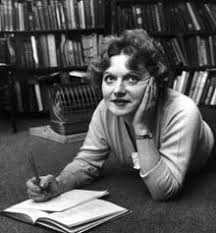
I think the author’s background makes this novella all the more interesting because it is such an ‘Edinburgh’ book – I say this as a non-Scot, so please forgive me if you disagree! – or at least, an Edinburgh of a certain time (pre-war). Spark left Scotland quite early in her adult life and her father was a Lithuanian Jew. Perhaps this makes her acute observation of Miss Brodie and her other characters even more profound.
You will probably know the basic plot of the book; the 1969 film starring Maggie Smith is widely considered a classic. There was also a television series made in the late ‘70s starring Geraldine McEwan, which I vaguely recall having seen, though I was very young at the time – I definitely would not have ‘got’ it; although the book is set in a girls’ school, Malory Towers it most definitely is not! Miss Brodie initially cuts a dominant and impressive figure – determined to influence a selected group of pre-pubescent girls about the broader aspects of life which she feels the school curriculum neglects, such as genuine appreciation of art, social and cultural awareness and matters of the heart (or, more accurately, matters of sex). The strictures of the girls’ school, with its emphasis on knowledge, facts required to pass the exam for the secondary level, and the protestant ethos are seen by Miss Brodie (so she tells us) as narrow and not a true preparation for life. She tells the girls:
“I have no doubt Miss Mackay [the headmistress] wishes to question my methods of instruction. It has happened before. It will happen again. Meanwhile, I follow my principles of education and give of my best in my prime. The word “education” comes from the root e from ex, out, and duco, I lead. It means a leading out. To me education is a leading out of what is already there in the pupil’s soul. To Miss Mackay it is a putting in of something that is not there, and that is not what I call education, I call it intrusion, from the Latin root prefix in meaning and the stem trudo, I thrust. Miss Mackay’s method is to thrust a lot of information into the pupil’s head; mine is a leading out of knowledge, and that is true education as is proved by the root meaning.”

At first, we may see these girls as lucky to have such a dynamic, interesting and strong female personality in their young lives who, for example, is prepared to take them to the theatre off her own bat. What we gradually learn, however, is that the girls are merely Miss Brodie’s ‘project’, that it is not altruism and genuine care that drive her, rather it is her ego. She manipulates the girls, in some cases to their tragic detriment, and they become a vicarious extension of her own ambitions and disappointments, particularly in the matter of sex. Here, she acts as little more than a ‘pimp’, though I am aware this may be a 21st century reading of what may have been regarded at the time as less shocking (a sexual relationship between one of the girls and the married one-armed art master with whom Miss Brodie is herself in love).
In the end we can only see Miss Brodie as disappointed, disappointing, manipulative and manipulated, a deceiver and ultimately deluded. She becomes increasingly troublesome morally, as she expresses her admiration for Mussolini and fascism, and the various fates of the girls she once sought to educate are laid out before us.
This is such a clever book which I would encourage anyone to read. And read again once you’ve got to the ending!
Recommended.
If you have enjoyed this post, I would love for you to follow my blog. Let’s also connect on social media.
 It is truly a groundbreaking novel, but curiously, in my view, less in its own right than as an extension, a continuation of, the work started with the publication of The Handmaid’s Tale in 1985. What is also partly so extraordinary about The Testaments is how relevant its story remains over thirty years on from The Handmaid’s Tale. In spite of equality legislation, human rights legislation, more women in positions of power and authority, we still have world leaders able to express their misogyny openly and with impunity, and violence against women and girls seems as rife as ever. Atwood is Canadian, but her novel is a dystopian vision set in the United States, where, in the last year, we have seen the erosion of women’s reproductive and therefore health rights in some states and the substantial threat of more to come. This novel seems so urgent and necessary.
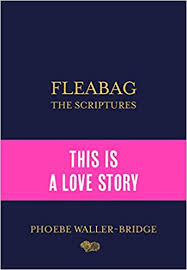 Fleabag: The Scriptures by Phoebe Waller-Bridge £20.00
 Who Am I Again? by Lenny Henry £20.00
 Wilding by Isabella Tree £9.99
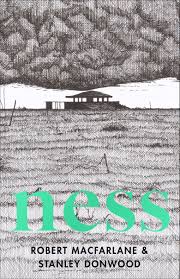 Ness by Robert Macfarlane and Stanley Donwood £14.99
 Twas the Nightshift before Christmas by Adam Kay £9.99
 The Jewish Cookbook by Leah Koenig £35.00
 Mother: A Human Love Story by Matt Hopwood £9.99
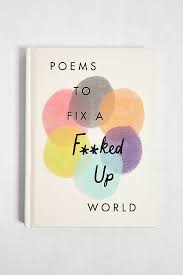 Poems to Fix a F**ked Up World by Various £9.99
 Fucking Good Manners by Simon Griffin £9.99
 The Lathe of Heaven was written in 1971, but was set in ‘the future’ – Portland Oregon in 2002. This future world is one in which the global population is out of control, climate change has wrought irreparable damage and war in the Middle East threatens geopolitical stability. The most alarming (and engaging) thing about the book, for me, was how prophetic it was; in 1971 did readers think this was some dystopian world? Worryingly, many of the problems envisaged by Le Guin are recognisable features of our environment in 2019.
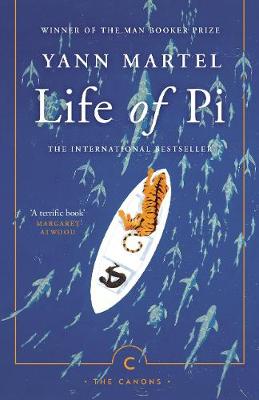 The story is well-known: a young Indian boy, Piscine “Pi” Patel (a name he adopts to get back at the school bullies who taunt him with the nickname ‘Pissing’) grows up in the territory of Pondicherry where his parents own a zoo. The first part of the story gives us a detailed account of the family’s life there, including enormous detail about life for the animals in a zoo setting (I was fascinated by this and it changed my perspective on zoos). We learn in particular about the fierce Bengal tiger, Richard Parker, who is the zoo’s prized possession. I love the use of ‘naming’ in this book – the story of how Richard Parker came to be given this name is brilliant and a sign of the author’s ingenuity and creativity. The other important feature of this part of the novel is that we learn of Pi’s deeply philosophical nature, his decision to adopt three religions (Hinduism, in which he has been brought up, Islam and Christianity), much to his family’s dismay, because he can see benefits in all of them.
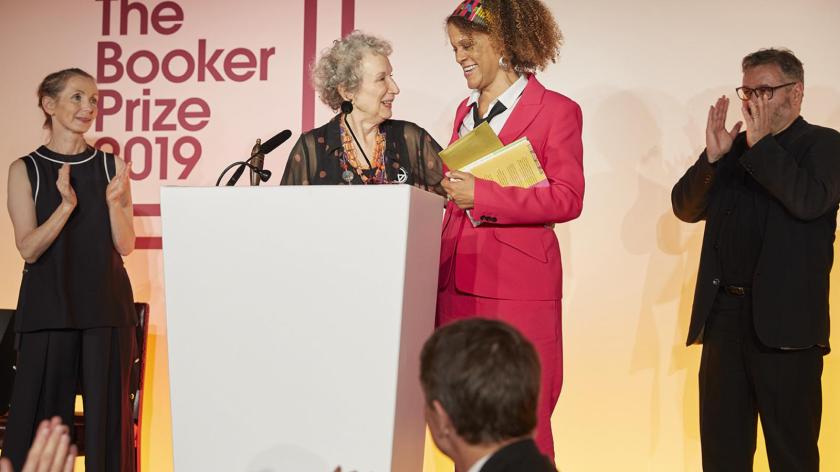 The Booker prize winner(s) were announced last week and for the first time in years, and against the explicit rules of the contest, the judges awarded the prize jointly to Margaret Atwood and Bernardine Evaristo. I have not read either book yet, though I am currently listening to The Testaments on the excellent BBC Sounds and enjoying it enormously, though it is extremely dark. There has been so much publicity around Atwood and The Testaments that I was wondering how on earth the Booker prize judges were going to be able to not award it to her! So, I think the judges probably made the right decision. By now, I would probably have worked my way through at least two thirds of the shortlist (I’ve never managed all six in the period between shortlist and winner), but, for obvious reasons, I have not read that much so far this year.
 It is somewhat and sadly ironic that I was reading Elif Shafak’s 10 Minutes 38 Seconds in This Strange World at the time of my mother’s death, a novel about a woman, Leila, an Istanbul prostitute known as Tequila Leila, who is brutally murdered in a back alley by street thugs. Rather than death being an instant occurrence, however, the author explores the idea of it as a transition from the world of the living to the ‘other’ (with a duration, for Leila, of ten minutes and thirty-eight seconds) during which time her whole life flashes before her. Leila’s life story is told through a series of recollections about her five closest friends, how and when she met them and what impact they have had on her life. We learn that Leila came from a relatively affluent family. Her father was anxious for heirs, but when his wife proved incapable of having any he took a second wife, Binnaz, a much younger woman from a lowly family, who gave birth to Leila. Binnaz was forced to give up the child to the first wife to bring up as if she were her own, whilst Binnaz, who never recovered mentally from the trauma of that event, was thereafter known to Leila as ‘Auntie’.
 The book concerns two women, Rosemary, an 86 year-old widow, and Kate, a 26 year-old journalist, and how they are brought together by chance when the Brixton lido is threatened with closure. Their relationship evolves as together they mount a campaign to keep the pool open, drawing in other local people and reviving a community spirit that everyone involved thought had been lost. In some ways the two women could not be more different: Rosemary is nearing the end of her life, now alone having lost her beloved husband, and has lived in this area of South London all her life. Kate, on the other hand, is young and bright, and has moved to the city from Bristol to begin her journalistic career on the local paper. Kate too, though, is lonely; unlike Rosemary she has not lost anyone, but she has not found anyone either, and she grapples with panic attacks, anxiety and low self-esteem. She shares a house with a number of similarly isolated flatmates, none of whom she knows, and stays alive thanks to ready meals.
 It seems appropriate that I should be posting a review of Normal People this week, a book so very much about Ireland, the challenges and contradictions at the heart of a nation that has transformed itself in recent years. It is not just about Ireland, but about what it means to be young in Ireland and about class. It is also about identity and, in common with some of the issues faced in the UK and many other societies I am sure, the draw away from regional towns and cities, towards a centre, a capital, where there is perceived to be more opportunity, and what that means both for the individual and for society in the wider sense.
 I have chosen a book which caught my eye a couple of months ago – The Lido by Libby Page. It concerns a friendship between two women, 86 year-old widow Rosemary and 26 year-old Kate, who strike up a bond when their local outdoor swimming pool in Brixton, south London, is threatened with closure. The two women have different reasons for wanting to campaign to keep the lido open, but they are brought together in a common cause.
