This was the first book I started in the new year and I am delighted to have read it in January, the deep British midwinter, when the light is scarce but the days pass by at what seems like a snail’s, or at least a hibernating creature’s pace. That seems about right to me – I can’t really understand the wave of bloggers and columnists who are currently bemoaning the slow passage of January; I don’t really want my life to flash by me! Whilst Winter is a complex and multi-layered novel, it does seem to me to be one of the dominant themes, that is, our tendency to be propelled ever faster (I’m deliberately avoiding the term ‘forward’) on to the next thing. This might mean that we fail to notice what is in front of us, the life we have and are in right now, and we are in grave danger of losing something precious as a result.
In the same way that the first part of Ali Smith’s seasonal quartet, the Man Booker-nominated Autumn, was a highly political book, written in 2016 and described as the first post-Brexit British novel, so the ‘winter’ of this book refers to the perilous times in which we find ourselves. For many of us, these are indeed dark times where the alienation of anything ‘other’ seems to be a movement gaining traction. Bernardine Evaristo explored similar themes in her Booker prize-winning Girl, Woman, Other.
 In Winter, Ali Smith examines the ideas through the dynamics of a family thrown unwillingly together at Christmas. Sophia lives alone in a large house in Cornwall. She was a successful businesswoman but, now late in life, finds herself alone, estranged from her sister, not knowing what is going on in the life of her only son in London, and navigating with despair some of the dehumanising aspects of modern life. When we meet her at the start of the book, she is communicating with what I can only describe as a hallucination of a child’s head, which floats about with her. To the reader, this seems surreal at first, but it gradually becomes merely a manifestation of Sophia’s mental state – her deep loneliness and her disconnection from normal life and society. Arthur, Sophia’s son will have similar hallucinations later in the book. Sophia goes about her Christmas Eve business in the town with sadness, recalling the once vibrant high street that is now a series of boarded-up shops, frustrated at being unable to withdraw money from her own bank account and the inability of the young man in the bank to appreciate or meet her needs as a customer – she has nostalgia for the days of the friendly bank manager.
Arthur, Sophia’s son, living in London, seems to have a similarly depressing existence. He works as a researcher for a legal firm, but has very little human contact with anyone there as all his work is done remotely. He also writes a blog, ‘Art in Nature’, but this has been sabotaged by his estranged girlfriend, Charlotte, who has also stolen his laptop, forcing him to work out of the local library, where he has to negotiate queues of others wanting to use the computers there. Arthur, or Art, is due to be spending Christmas in Cornwall with Charlotte and his mother, but Charlotte has now left him, and, unwilling to reveal this to his mother, he pays a young woman, Lux, whom he meets at a bus stop, £1000 if she will go to Cornwall with him and pretend to be Charlotte.
The third member of Sophia’s family to join the party is Iris, Sophia’s estranged sister. Whilst they were close growing up, they grew apart as Iris became more of an activist, involving herself at Greenham Common, living in squatting communities with artists and outsiders, going to Greece to help with the refugee crisis, all of which straight-laced and ‘proper’ Sophia despised.
Lux, the heavily pierced, highly educated non-British outsider, takes on the role of objective observer, reflector, and questioner, and becomes the catalyst for what is initially, a breaking down of the fragile family relations, which then makes way for a greater empathy, between siblings and between generations, and an opening up of previously taboo conversations. In Lux, we see how the outsider is in fact the one with the under-valued talents, with the insights which help everyone to drop their guard and open their hearts, and with the intelligence and knowledge which enables them to understand their own cultural inheritance.
There are times when I found this book challenging and disjointed – Sophia’s floating child’s head at the beginning was puzzling – but the more I read the more absorbed I became in its complex layering of themes and ideas. For one reason and another I read it quite slowly over a couple of weeks, but that was exactly the right pace because the sensation was completely in line with the long slow stretch of winter. I am looking forward to reading part three of the seasonal quartet Spring, which was published last year, and to the publication of the final novel in the series, Summer, due in July.
This is a challenging book but one which I recommend highly.
What sort of books do you like to read at this time of the year?
If you have enjoyed this post, I would love for you to follow my blog. Let’s also connect on social media.
 It is truly a groundbreaking novel, but curiously, in my view, less in its own right than as an extension, a continuation of, the work started with the publication of The Handmaid’s Tale in 1985. What is also partly so extraordinary about The Testaments is how relevant its story remains over thirty years on from The Handmaid’s Tale. In spite of equality legislation, human rights legislation, more women in positions of power and authority, we still have world leaders able to express their misogyny openly and with impunity, and violence against women and girls seems as rife as ever. Atwood is Canadian, but her novel is a dystopian vision set in the United States, where, in the last year, we have seen the erosion of women’s reproductive and therefore health rights in some states and the substantial threat of more to come. This novel seems so urgent and necessary.
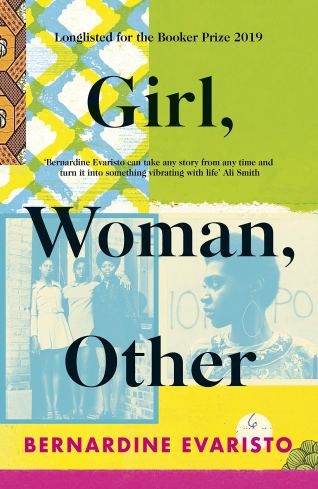 What I liked about it, however, was less this grander aspect, but rather the quality of its story-telling. I must admit that 50 or so pages in, I was not overwhelmed! There are twelve characters in the book, all women bar one (who is trans), all black or mixed race. They are broken down into four groups of three, and each threesome is strongly connected in some way (eg mother/daughter). Each group is also connected with the others, even if only in a tenuous way (eg teacher and former pupil) and almost all are in some way connected to Amma, the first character we meet. Amma has written a play which is having its debut performance at the National and this provides the framework of the novel. Many of the characters are present at the penultimate chapter of the book, the after-party, where the differences between them and their lives are laid bare. This is interesting because the author is not only trying to draw out the similarities between the characters and their life experiences, suggested by their common characteristic of being mixed race and female, but she is also, I think, railing against the notion of such women/people being homogeneous; they are all far more than just their race or gender.
 The story is well-known: a young Indian boy, Piscine “Pi” Patel (a name he adopts to get back at the school bullies who taunt him with the nickname ‘Pissing’) grows up in the territory of Pondicherry where his parents own a zoo. The first part of the story gives us a detailed account of the family’s life there, including enormous detail about life for the animals in a zoo setting (I was fascinated by this and it changed my perspective on zoos). We learn in particular about the fierce Bengal tiger, Richard Parker, who is the zoo’s prized possession. I love the use of ‘naming’ in this book – the story of how Richard Parker came to be given this name is brilliant and a sign of the author’s ingenuity and creativity. The other important feature of this part of the novel is that we learn of Pi’s deeply philosophical nature, his decision to adopt three religions (Hinduism, in which he has been brought up, Islam and Christianity), much to his family’s dismay, because he can see benefits in all of them.
 The Booker prize winner(s) were announced last week and for the first time in years, and against the explicit rules of the contest, the judges awarded the prize jointly to Margaret Atwood and Bernardine Evaristo. I have not read either book yet, though I am currently listening to The Testaments on the excellent BBC Sounds and enjoying it enormously, though it is extremely dark. There has been so much publicity around Atwood and The Testaments that I was wondering how on earth the Booker prize judges were going to be able to not award it to her! So, I think the judges probably made the right decision. By now, I would probably have worked my way through at least two thirds of the shortlist (I’ve never managed all six in the period between shortlist and winner), but, for obvious reasons, I have not read that much so far this year.
 It is somewhat and sadly ironic that I was reading Elif Shafak’s 10 Minutes 38 Seconds in This Strange World at the time of my mother’s death, a novel about a woman, Leila, an Istanbul prostitute known as Tequila Leila, who is brutally murdered in a back alley by street thugs. Rather than death being an instant occurrence, however, the author explores the idea of it as a transition from the world of the living to the ‘other’ (with a duration, for Leila, of ten minutes and thirty-eight seconds) during which time her whole life flashes before her. Leila’s life story is told through a series of recollections about her five closest friends, how and when she met them and what impact they have had on her life. We learn that Leila came from a relatively affluent family. Her father was anxious for heirs, but when his wife proved incapable of having any he took a second wife, Binnaz, a much younger woman from a lowly family, who gave birth to Leila. Binnaz was forced to give up the child to the first wife to bring up as if she were her own, whilst Binnaz, who never recovered mentally from the trauma of that event, was thereafter known to Leila as ‘Auntie’.
 The story begins when 15 year-old Michael, off school for many months after contracting hepatitis, seeks out Hanna Schmitz, a woman who had been passing when he found himself being sick in the street and who had helped him. Once he is well again, Michael’s mother sends him off to find the mystery good Samaritan in order that he can thank her. Hanna is twenty years Michael’s senior and employed as a bus conductor, but despite the social and age gap between them, they begin a passionate affair, both parties equally consenting. One of the more intimate aspects of their relationship is that Michael reads aloud to Hanna, after sex and in the bath mainly, although never the other way around. Michael never questions Hanna’s desire to have him read to her, he just accepts it. This makes up the first part of the book and perhaps it is a testament to events that have occurred since the time of its writing that all of us (mothers of teenagers!) found the prose rather discomfiting, and not a little implausible. Hanna disappears mysteriously out of Michael’s life, leaving him heartbroken and perhaps also rather damaged.
 The book begins in mid-eighteenth century Paris when the central character, Jean-Baptiste Grenouille, is born beneath a fish stall, to an indigent mother. She pauses her work briefly in order to give birth to him but then, believing or perhaps wishing him to be yet another of the many stillbirths she is said to have had, she leaves him for dead amongst the discarded fish guts. When he is discovered alive, his mother is tried for infanticide and executed. He is left to the mercy of the church, but proves a demanding and difficult baby, who, despite his unpromising start, appears to enjoy rude health. So much so that the wet-nurse hired to take care of him, returns him as he is drinking too much of her milk, making it impossible for her to take on any other infants and therefore make a living. The sense of his insatiable appetite and how he sucks the life out of those around him is established. As he goes through life, we learn that those who come into contact with him invariably meet a tragic end.
 The time span of the novel is the duration of Tish’s pregnancy, during which time the couple’s two families set about trying to free Fonny, liaising with his lawyer and pulling together all the money they can to pay Fonny’s legal costs. The lion’s share of this task falls to Tish’s family, who see it as their duty to support their daughter and the father of their grandchild. Fonny’s family, on the other hand is divided; his mother and sisters are deeply confused, ambivalent and disturbed by events effectively disown him. Fonny’s father does engage, supported by Tish’s father, but it is clear he is not really strong enough to cope with the pressure. It falls to Tish’s family to take charge and her mother, Sharon even goes to Peurto Rico, to where the raped woman has fled, to appeal to her to change her testimony, the suspicion being that Fonny was simply served up to her by corrupt police officers. As Tish’s pregnancy progresses, so we follow the legal machinations, the financial pressures faced by all concerned, the effect of prison on Fonny, the artistic soul tortured by his incarceration, and the toll that events take on both families.
 Julia's books