I am thoroughly enjoying November’s reading challenge choice – The Girl with the Louding Voice by Abi Daré. I have not yet completed it (nothing new there then!), but it is reminiscent of our June choice, which was of course The Secret Lives of Baba Segi’s Wives by Lola Shoneyin. That’s not a problem as I loved that one too. The Girl with the Louding Voice is a slower read because it is narrated by Adunni, the fifteen year old central character, and therefore written very much in the natural style of her speech. A non-African reader may find this takes a bit of getting used to, but the richness of the narrative is very rewarding.
Chimamanda Ngozi Adiche wins the Women’s Prize ‘Best of the Best’
Both the above novels are set in Nigeria and it is great to see that country at the head of literary news at the moment, with voters in the Women’s Prize for Fiction awarding the prize of prizes to Half of A Yellow Sun by Chimamanda Ngozi Adiche (it got my vote – one of the best novels I’ve ever read). I have a complete girl crush on this woman – she is incredible! For many fiction readers she has put Nigeria on the literary map, but of course that nation has a rich literary history in the likes of Wole Soyinka, Ken Saro-Wiwa and Ben Okri. I feel sure that Abi Daré will be adding her name to that list in the near future. But more of that next week when I finish and review the book.
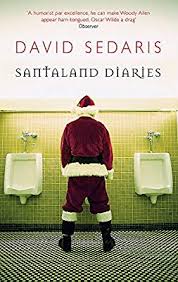
What of this month’s choice? Well, the theme is a book for winter. I wanted to avoid the theme of a book for Christmas. I don’t know about you but by the time we get to the middle of December I am sometimes a little bit ‘over’ Christmas already. Christmas this year, however, has felt somewhat on hold up to now, due to Lockdown 2.0, and definitely lower key. We have had some very serious books recently so I think it’s time for a bit of a Christmas laugh. I’ve chosen a humorous seasonal book by North American comedian David Sedaris. You may have heard him on his occasional Radio 4 show. He is extremely funny.
I’ve chosen Santaland Diaries (some editions called Holidays on Ice), which is a slimmish volume of six essays about his experiences as ‘Santa’ working in Macy’s. I think I’m going to go for this one on audio – I could do with a chuckle as I head out on my morning runs this month! I love Sedaris’s deadpan delivery and it will take my mind of the cold and wet!
I hope you will join me on the challenge this month. I think it will be a fun one.
In previous years I have set myself the task of trying to read the Booker Prize shortlist between the time that it is released, usually mid-September, and the announcement of the winner. This is usually a month or so later in mid-October, so it is a tall order – six books in a little over four weeks. I have never succeeded in this endeavour – I’m usually still working my way through the list at Christmas. How do the judges get through so many books in the time that they do? I doubt they are even paid much to do it!
Last year, the Booker Prize was far from the forefront of my mind as my mother died in mid-September and her funeral coincided with the week of the announcement of the winner. I did subsequently read both of the books that won the prize jointly (remember that extremely unusual outcome?) – Bernardine Evaristo’s Girl, Woman, Other and Margaret Atwood’s The Testaments – as well as Elif Shafak’s 10 Minutes 38 Seconds in This Strange World. I still have Salman Rushdie’s Quichotte and Lucy Ellman’s Ducks, Newburyport on my TBR list.
This year the announcement of the winning book is a month later than usual. I assume this is all down to ‘the pandemic’ though I’ve heard of no official reason being given. Perhaps the committee has decided to be a bit kinder to the judges this year. Once again, I decided against trying to get through the shortlist, but have in fact read two of the books, one of which I loved and one of which has left me wondering if I missed something!
The book I loved was Douglas Stuart’s Shuggie Bain, a superb debut novel. Set in early 1980s Glasgow it is a visceral account of a young boy growing up in an atmosphere of poverty and his beloved mother’s alcoholism. The working-class community in which he lives is being ground down by the searing devastation of the Thatcherite era. Shuggie is ‘unusual’ – he is effeminate and naive, but his relationship with his mother is an portrait of love stretched to its very limits by the strain of addiction. I plan to write a longer review of this book so I will say no more at this stage. Let’s see if it wins!
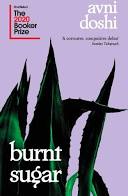
The other book I read, and which I’m afraid I didn’t love, was Burnt Sugarby Avni Doshi. It is the story of a strained mother-daughter relationship. The mother, Tara, has dementia and her daughter, Antara, is finds she is forced increasingly to care for the woman who failed to care for her properly as a child. Tara left her husband with her daugher to join an ashram when the child was still very young. Their ‘bohemian’ lifestyle included some time spent begging, and also living with an artist who it is clear did not really care for either Tara or her young child. Antara experienced a degree of neglect as a child, for example receiving very little formal early education, and her mother’s attitude to her has been one largely of indifference.
As a mature woman, Antara struggles with the demands placed upon her by her mother. Tara can be cruel – is that the disease or is that how she has always behaved towards her daughter? She is engaged to be married to Dilip, an Indian-American, who cannot fully empathise with Antara’s dilemma. This book reminded me a little of Everything Under by Daisy Johnson, which has a similar storyline and which I also struggled to enjoy (though I think it was a better book). Everything Under was shortlisted for the Booker in 2018. Burnt Sugar has also been compared to Deborah Levy’s Hot Milk – I cannot concur . I loved that book. I’m afraid that, for me, what Burnt Sugar lacks is a story. Even after reading it, I’m afraid I’m not sure what it is really about, or what it is trying to say, apart from dementia is a horrible disease that throws family relationships into turmoil. Even the ending leaves you hanging. There is no narrative question that is resolved, which, for me, is one of the fundamentals of fiction.
I don’t like giving negative reviews and I have seen so many positive statements about this book; am I missing something? This one just did not do it for me. And my fellow book club members seem to agree – a pretty resounding thumbs-down! Perhaps it is just that Shuggie Bain is such a fabulous story, that this book felt wanting.
I am about to start another book on the shortlist – The New Wilderness by American author Diane Cook, another novel about motherhood, but this time in the shadow of climate change.
We will see what happens at the announcement tonight. One thing is for sure, it will not be the usual black-tie dinner!
To conclude this series of posts on my #KeepKidsReading theme I would like to tell you about two moments of joy I had last week, one of the head and one of the heart. Last weekend, I sat and read a little book that has been on my TBR shelf for a few months, Why you should read children’s books, even though you are so old and wise by “children’s” author Katherine Rundell. This is a little number that was sitting on the counter when I was in my local bookshop a while back – the literary equivalent of chocolate bars at the checkout! Given my interest in children’s literature I was bound to pick it up, plus I had not long read Katherine Rundell’s wonderful book The Explorer about a group of children stranded in the rainforest when the light plane they are travelling in crashes.
Rundell makes the grown-up case for reading children’s literature not just as a child (or perhaps because of a child) but for its own sake. I have to say that reading it in the middle of the current pandemic and after, frankly, the drama and protracted uncertainty of the US Presidential election, children’s books offer us not so much escapism, as a way of dealing with challenges. Good children’s characters discover a resourcefulness they usually didn’t know they had and develop a resilience which can give all of us an idea of how to ‘be’ in the world. It may not offer us the perfect happy ending but it can show us how to come to terms with reality; in the book review I posted earlier this week of Michelle Magorian’s Goodnight Mister Tom, yes it has a happy ending, but let’s not forget there was carnage along the way – a war, child abuse, a dead mother and baby, a friend killed, and a lost wife and child. But somehow, William, and indeed Tom, learn how to accept and grow from their experiences. Tragedy and loss will, at some point, befall all of us and somehow we need to learn how to cope with it. The best of children’s literature can show us some ways.
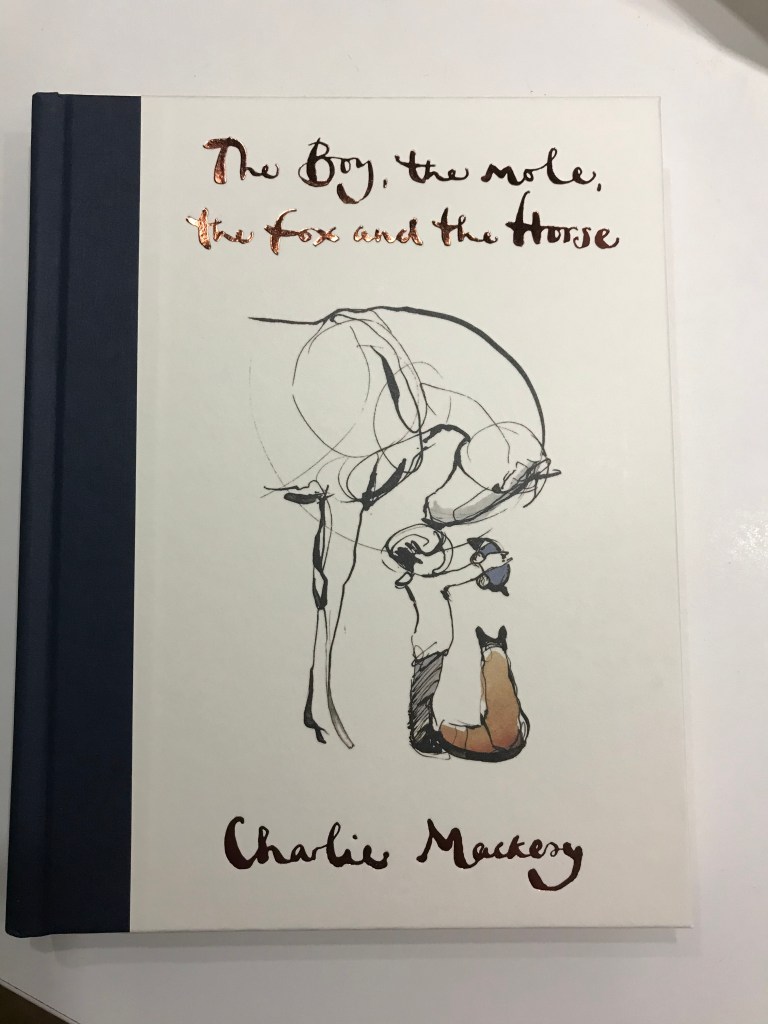
So, now for the heart moment. A few months ago I bought a copy of The Boy, The Mole, The Fox and The Horse by Charlie Mackesy, which was heavily promoted in bookshops after it was named Waterstones Book of the Year in 2019. I bought a copy because I’d heard such good things about it and liked the illustration style and the quotes I’d read. Somehow, though, I never got around to reading it, which is a terrible shame because it is magical and wondrous. It’s a gentle and moving tribute to the values of kindness and compassion, and an exhortation to embrace the differences between us. At its heart lies a belief in the magical power of love to lift us out of any darkness. And I can’t think of a sentiment more appropriate to our times than that. It has the power to induce a kind of inner silence, you will smile, and your heart rate will drop. It is also very beautiful to look at and to touch.
Just two of the beautiful illustrations from Charlie Mackesy’s wonderful book
If you haven’t already got a copy, please get one and read this extraordinary book. It will take no more than half an hour of your time, although you may find, like me, that it keeps drawing you back. Please give copies of it as gifts this Christmas. We associate this time of year with peace and joy, and this book embodies it.
I can think of no finer book than The Boy, The Mole, The Fox and The Horse to endorse Katherine Rundell’s thesis. We should all be reading more children’s books.
This book was my October choice for my Facebook Reading Challenge, the theme of which was a children’s book. I read it during half term, when I also posted one of my occasional #KeepKidsReading series on building a children’s library. This book had been on my radar for years; I think my son read it in school so we have had a copy around the house for some time. It is set around the time of the outbreak of the Second World War and so I imagined it dated from the 1950s or ‘60s, but in fact it was first published in 1981 and won a number of prizes around the world, including the Guardian Children’s Fiction Prize. It was made into a film starring John Thaw in 1998 which I am told is excellent – I have just bought the DVD and can’t wait to watch it.
A scene from the 1999 film adaptation starring John Thaw
When you read the book you quickly see how it could not have been written much before the 1980s, although even then it would have been quite ground-breaking; it deals with child abuse, amongst other things, pretty remarkable in a children’s book.
Londoner William Beech is eight years old when he first arrives at the home of ageing widower Tom Oakley. The novel is set in the rural village of Little Weirwold, but the county is not specified. I imagined Sussex or Hampshire – not too far from the capital. War has not yet broken out, though it seems inevitable, and children are being evacuated as a precautionary measure in anticipation of Nazi bombing. William is thin, sickly and covered in bruises, a timid, frightened character with poor literacy for his age. We soon learn why. His mother, a single parent, is an extremely religious woman who has controlled William through severe physical punishment and has kept him from school because she believes it to be a godless place. He lacks any confidence and self-belief because he has been told all his life that he is worthless. Tom Oakley is a gentle, patient man and seems instinctively to know how to deal with William’s problems, such as his persistent bed-wetting, which he handles with calm and grace. He quickly realises how fragile his young charge is and when William reveals, quite innocently, the way his mother has treated him, Tom is shocked but also determined that he will show him a different kind of life.
As William begins to thrive, so we learn a little more about Tom’s fragility too. As a young man, he lost his wife and their baby to scarlatina, a loss that affected him so deeply that he became almost a recluse, living in a small cottage beside the village graveyard with his dog Sam. His growing fondness for William leads him not only back into the arms of the Little Weirwold community, but also to question his continued self-imposed isolation. William is growing in confidence as he catches up academically and, for the first time in his life, makes a group of firm friends, particularly the flamboyant Jewish boy Zach, a fellow-evacuee, whose parents work in the theatre.
Some months into his stay with Tom, William receives a letter from his mother saying that she wants him to return home to London for a visit. William is reluctant and full of trepidation, but Tom persuades him that it is important he sees her, even though he has his own doubts about the wisdom of such a visit.
SPOILER ALERT:
If you want to give this to your children to read, it is important you know what happens in the story, but if you’re reading the book for yourself and prefer the suspense, don’t read any further.
On his return to London, William’s mother behaves strangely and after an initial, encouraging show of slight warmth, she soon returns to her old critical and abusive habits. When they finally return to the house in Deptford William learns that his mother has given birth to a baby girl while he’s been away. While going out to collect William she left the baby alone in the flat with her mouth taped so the neighbours did not hear her crying. It is bleak and upsetting at this point.
Meanwhile, Tom, preoccupied with worry about William, decides, on an impulse, to go to London, sensing the boy might be in danger. It is an arduous journey, but he finally finds William. After a spell in hospital, where we learn that William’s mother has taken her own life, Tom effectively ‘kidnaps’ William after being told that the boy will most likely have to go into a children’s home following his discharge.
There is another sad thread to the plot involving Zach, something else to be aware of, but I’ll save that one from here.
I read the second half of this book in practically one sitting; I could not put it down! It is a tough read, though it does have a happy ending. It is quite dark in parts, but not in a frightening way. It will give young readers an insight into what life was, IS, like for some children, and an idea of the different ways abuse can manifest itself. It also shows that children can develop resilience and hope, and find happiness after even the most difficult start.
For that reason, I would recommend for no younger than 10-11, and to read it with your child, or at least in advance so you can handle any questions they might have. Twelve to thirteen year olds might like it too. It is plainly written with accessible language.
I thoroughly enjoyed October’s choice for the Facebook Reading Challenge, the theme of which was children’s fiction. I chose Michelle Magorian’s prize-winning 1981 novel Goodnight Mister Tom which had me in tears in more than one place. Beautifully written, dealing with difficult subjects for children, in a sensitive and straightforward way. I’ll post a more detailed review later in the week in the concluding posts in my #KeepKidsReading themed series.
As it’s already 5th November, however, I wanted to post this month’s choice for the Facebook Reading Challenge. Our theme is a book from the new decade; you may recall that back in January my theme was something from the last decade. I chose Gillian Flynn’s Gone Girl which I absolutely loved. There seem to have been some truly landmark books published this year, some of which I have already read, for example Hilary Mantel’s The Mirror and the Light, Maggie O’Farell’s Hamnet (look out for my review of that one soon), and some that are on my TBR list, such as the final part in Ali Smith’s seasonal quartet Summer and Elena Ferrante’s The Lying Life of Adults. There have also been a clutch of very exciting first novels, and it is one of these that I have chosen for this month on the reading challenge.
Abi Daré’s The Girl with the Louding Voice was published at the beginning of October, so it’s pretty hot off the presses (but happily already available in paperback). It has had some fantastic reviews and keeps popping up on my suggested reads from various bookseller’s newsletters I subscribe to. I normally eschew these as intensive sales pitches, but I think this one will be worth it. The main character is Adunni, a 14 year old Nigerian girl living in a small village, who dreams of getting an education and creating the life she wants for herself. As a young girl, however, she is considered little more than property to be traded in this patriarchal society, and is sold by her father to an older man in Lagos who abuses her sexually and where she is enslaved in his household. It is a story of how she escapes from this seemingly impossible situation through courage and tenacity.
This book is an international bestseller already and has had some amazing reviews, so it is one I cannot overlook. In these challenging times, when people of colour are having to fight for their rights and are doing so under the banner of the #BlackLivesMatter movement and where women cannot rest on their laurels, assuming equality has been won, this feels like an important book. Globally (according to the UN), little more than a third of girls receive a secondary education, one of the key drivers of public health and economic growth. This cause has been somewhat forgotten in the high-octane news environment we are living in right now, but the problem has by no means gone away. Perhaps stories can keep it at the top of the agenda.
So, I will step down from my soapbox now and go back to some quiet reading.
Do join me in this month’s challenge – I think it’s going to be another good one!
It’s over a year since I started this series of posts and it seems a particularly good week to be picking them up again. It is half term in my area, as I think it is across most of the country, and with so many entertainment options closed, play dates banned, travel plans abandoned and family visits off the agenda, parents may be at their wit’s end wondering how to entertain their children. Oh, and the weather is not that great either! Books come into their own at a time like this, especially when accompanied by hot chocolate after a walk kicking the leaves or collecting conkers. My kids still love this kind of stuff even though they are teenagers. So, if you are thinking about adding to your children’s library or looking for some classics to get them into this half term holiday, here is my list of suggestions for 6-8 year olds. I have posted previously about books for younger ones.
Regular readers of my blog will know that I am passionate about children’s books and my approach to children’s reading is rather like my approach to parenting – as a parent you are not raising kids, you are raising the world’s future adults (decision-makers, carers, teachers, leaders) – no pressure there then! – and building a good reading habit is not just about entertaining or educating them, it’s about fostering a habit that will serve them their whole lives. The mental health benefits of reading are well-known (and I have written about them on here many times) – it’s relaxing, it reduces stress, helps sleep, etc, etc. There is nothing not to like about reading. And it might just be the cheapest activity your children engage in! Libraries may not be too accessible at the moment, but secondhand bookshops are and, like most retailers on the high street, are crying out for your business.
My last post on this topic looked at books for 4-7 year olds and I emphasised the fact that at that age, there may well be some precocious readers who can cope with chapter books (particularly at the older end of the spectrum), but they still benefit hugely from pictures. By the time we get to the 6-8 year olds they are generally moving out of the ‘infant’ and into the ‘junior’ stages at school (or years two to three in more modern parlance!). They are also taking tests at the end of year two, and moving from Key Stage 1 to Key Stage 2, so there is a bit of a step change.
Between the ages of six and eight, your child will probably be moving onto wordier books, perhaps with some chapters and definitely still with pictures. You will also notice the books getting slightly smaller and feeling a little cheaper (and hopefully they are a little cheaper!). They are more likely to be books your children read once, rather than repeatedly. They will read much more independently BUT, and this is a big one, they will STILL, yes STILL benefit from being read to – being read to, is not just about the text, the vocabulary and the ability to read, it’s about so much more: one to one time with a loved one, physical closeness and shared interest.
Many books for this age group, as I say, are likely to be read once or a couple of times, but still there are some classics for this age group, which will be ‘keepers’. Please also note that many of these books have some wonderful film and TV adaptations that can supplement the reading. Here are my suggestions:
1. The Secret Seven (1949) by Enid Blyton – the first in a fifteen book series. I know there are plenty of Blyton detractors, but I guarantee this is one that the grandparents will love reading with them!
2. Horrid Henry (1994) by Francesca Simon – the first in a twenty-five book series. NB: the film adaptation of this is possibly one of the worst films I have ever seen, so avoid!
3. The Sheep-Pig (1983) by Dick King-Smith – the book upon which the film Babe was based
4. The BFG (1982) by Roald Dahl
5. Charlotte’s Web (1952) by EB White
6. Pippi Longstocking (1945) by Astrid Lindgren – several books in the series
7. The Worst Witch (1974) by Jill Murphy – first in a series of eight books
8. The Wind in the Willows (1908) by Kenneth Grahame – surely no children’s library is complete without this book?
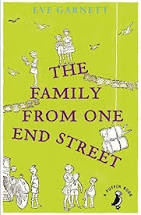
9. The Family from One End Street (1937) by Eve Garnett – one of the earliest examples of social realism in children’s literature
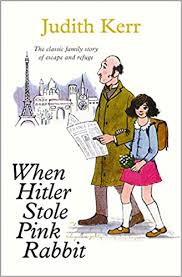
10. When Hitler Stole Pink Rabbit (1971) by Judith Kerr
All of the above provide a starting point, of course, and even as I finish typing there are authors and titles popping into my mind that are not listed. But you have to start somewhere!
What would you add to my list of classic books for 6-8 year olds?
As I write this, it looks very much as if Greater Manchester, where I live, will be placed in the highest, Tier 3, level of restrictions in the coming days. There’s a lot of politics about, but let me tell you there is also a lot of frustration and anger about too. There is also a lot of division, differing perspectives, conflicting interpretations of data and statistics. But around me the human cost is evident – businesses are closing, I know people who have lost work, people under strain from not seeing their loved ones, and others paralysed by fear of the virus. One person’s asymptomatic response is another’s death sentence. We find ourselves at a difficult moment and we all have to find our way through this conundrum as best we can.
In the midst of all this confusion and anxiety, I took myself back in time last week to one of my favourite places in Manchester, but one which I have not visited for some time – the former home of Elizabeth Gaskell in Plymouth Grove, Rusholme, Manchester. It is close to the Manchester Royal Infirmary, The University of Manchester, and the Pankhurst Centre, a little house, in the middle of the hospital campus, that was the birthplace of the Suffragette movement (also now a museum).
Elizabeth Gaskell’s house is a fairly modest property that has had a chequered history. Elizabeth’s unmarried daughters Meta and Julia lived there until they died, and after Meta’s death in 1913, an attempt to preserve it as a memorial to the author was unsuccessful and it was sold and its contents dispersed. It continued to be occupied as a family home until it was bought by Manchester University in 1968 who used it as accommodation for overseas students. It fell into some disrepair (though thankfully not too much irreversible ‘renovation’ was done) but was finally purchased by the Manchester Historic Buildings Trust in 2004 and a project was set up to restore it as a museum to Elizabeth Gaskell.
It is still a work in progress and it is really only the ground floor rooms that have been set up as they would have been in Gaskell’s time. While I was there, I was shown work underway to restore what is believed to have been Elizabeth’s bedroom, but other rooms have been given over to research, educational spaces and meeting rooms. There is currently a very interesting exhibition about John Ruskin on display until the end of the year. The rooms have been painstakingly restored and furniture and artefacts either belonged to the family or are the Trusts’s best guess at what they would have had around them.
I was looking for some peace, tranquility and inspiration there and I found it. I was the only visitor that afternoon, and whilst it saddens me that so few people are going out to see the many interesting and beautiful places that remain open to visitors and safe, I had to admit that having the place to myself felt like a treat. Numbers are controlled and all the volunteer guides are well protected with PPE. You have to book your slot online and the £5.50 admission price gives you access for a full year. There is a tea room and a huge selection of secondhand books for sale.
Most of all there is a sense of dedication, to the memory of the author and her remarkable achievements (she died suddenly at the age of 55).
I recommend a visit to this wonderful house. The arts and culture are suffering terribly at this difficult time with opening restrictions, the cost of being Covid-safe, and reduced (or in many cases zero) numbers. Book a visit, you won’t regret it.
I’m on an audiobook roll; earlier this week I posted about The Last Protector, the fourth in Andrew Taylor’s Marwood & Lovett series, all of which I have listened on on audio and all of which I have loved. Today I am, by coincidence, reviewing another audiobook, The Beekeeper of Aleppo. I had known about this one for some time and wanted to read it, then it came up as a suggestion from one of my fellow Book Club members. It is read by Art Malik, whose voice is sublime, absolutely perfect for this story, so it was an easy choice to turn to the audiobook.
Although it is a work of fiction the author writes in her afterword about her time spent working with refugees fleeing the war in Syria, and that the book represents an amalgam of various peoples’ experiences. Although it is a tragic and heartbreaking story, even a superficial awareness of what has been happening in Syria for almost ten years now will render it entirely believable. Aleppo was particularly badly affected by the civil war in Syria; over 30,000 people are said to have been killed between 2012-16, when fighting there was at its most intense. A further half a million people were displaced and much of the city was left in ruins.
The story is narrated by Nuri, a beekeeper who lives a peaceful life in Aleppo with his wife Afra, an artist, and their young son Sami. Nuri runs his successful beekeeping business with his partner Mustafa, the more charismatic of the two men.
[Slight spoiler alert in the next paragraph]
Nuri and Afra are devoted to their homeland, but they watch in despair as their city is torn apart and they witness horrific acts in the increasingly vicious civil war. Their turmoil reaches a climax when their young son is killed by a mortar. Mustafa decides to flee Syria, determined to head for the United Kingdom, and encourages Nuri and Afra to do the same. Nuri is persuaded, but Afra cannot find it within her to leave. Deeply traumatised by her son’s death she does not want to, as she sees it, leave him behind. As events spiral out of their control and the gulf between them, caused by their grief, seems impossibly large, Nuri finds that his wife, the artist, has become blind.
Nuri persuades, virtually forces, Afra to leave Syria; presenting her with a stark choice – it is that or death. Afra would rather die, but Nuri has to nurture the last tiny remaining bit of the human survival instinct that he has, for both of them. What follows is an account of the couple’s journey from Syria, across Europe and finally to England. They spend many weeks in Athens, sleeping in a public park with many others in a similar position, dependent on the kindness of strangers, volunteers and NGO workers to bring them food. They face many dangers, their lives are at risk on many occasions and they are cruelly robbed and cheated by criminals and gangsters who seek to profit from the plight of desperate people. As a reader you know this story is not fantastical. It is heartbreaking to see how these cultured, educated gentle people are brutalised, dehumanised and forced into danger and a level of criminality themselves by their situation.
This is not an easy read. It is heart-wrenching throughout and the ending is both dramatic and surprising. I would also say the ending is clever, but that seems a rather inappropriate word to apply to a story such as this. For an insight into what it is like to be a refugee, an outsider, this book is superb.
I recommend this book highly.
The book has won international acclaim, but sadly it does not seem to have changed the world’s attitude to refugees. Perhaps that is too much to ask when almost every country in the world is now battling a global pandemic. But just as we can’t let Covid cause us to forget the many other problems and causes of suffering in our own society (cancer, domestic violence, homelessness are not on hold), neither can we let ourselves forget the unimaginable plight of refugees across the globe. UNHCR estimates that around 1% of the world’s population, about 80 million people, are currently displaced. Of these, 40%, about 32 million, are children.
Regular readers of this blog will know that I am an audiobook enthusiast – having long-eschewed the move to digital formats (ie e-readers – I have one, but I rarely use it), I find the audiobook adds a dimension to the experience of ‘reading’; you get the interpretation of a skilled actor/narrator and the sense of connection, as if someone else is enjoying the experience alongside you. The e-reader, on the other hand, for me, takes away; paper just feels more authentic between my fingers than glass and plastic, and the ‘swipe’ is a distraction that removes me from the narrative. I get that it’s convenient (not to mention space-saving!), but it’s just not really for me. The audiobook doesn’t work every time – of the books I have listened to over the last few years, there are some where the narrator annoyed me. One that comes to mind is Paula Hawkins’s The Girl on the Train where the Rachel character just grated every time she spoke.
Andrew Taylor’s Marwood & Lovett books (now four titles) are books that I have enjoyed immensely on audio. I listened to the first book, The Ashes of London, during the summer last year and followed up very quickly with the second book, The Fire Court, both of which I loved. I listened to the third book The King’s Evil, in the early part of this year, and then the fourth and most recent addition, The Last Protector, I downloaded pretty much as soon as it was published in April. It was my companion to my 5-10km running programme during the early weeks of the Covid-19 pandemic. It was perfect escapism and a timely reminder that we are not the only generation to live through ‘plague’.
In this book, James Marwood, now well-known at court as an effective ‘investigator’ and ‘fixer’ is firmly established in his slightly shadowy ‘civil servant plus’ role; the James Bond of his day, perhaps! His fortune is fairly secure and his household is growing in size; a man of compassion he has gathered around him a group of waifs and strays who have become his trusted and loyal servants. As his successes have increased, however, so have his enemies, some of them very powerful, most notably the Duke of Buckingham, a scheming, two-faced and clever courtier, direct threat to the King himself. With each new book, the stakes for Marwood get ever higher. Cat Lovett is the other constant character in the books, long-time associate of Marwood, intimately connected by their past dealings, and between whom a frisson of energy fizzes, a fact which often puts them at loggerheads.
Cat is now married, rather unhappily, to the ageing and sickly architect, Hakesby so her contact with Marwood is limited, but they are thrown together again by a seemingly chance meeting between Cat and a childhood friend, Elizabeth Cromwell. Elizabeth is the daughter of Richard Cromwell, son of the more famous Oliver, who was reluctantly thrust into the position of ‘Protector’ after his father’s death. He fled to France after the restoration of the monarchy and has now returned to England; he misses his homeland, but is also destitute and needs funds. Cromwell himself is not a threat to the King, but he has become a poster-boy for the still-nascent enthusiasm for the time of Cromwell (Hakesby is among such a group and does not conceal his delight at the return of a Cromwell, much to Cat’s dismay, who, given her own family history, must keep a low profile). His financial needs also make him vulnerable to exploitation by those who do indeed seek to disrupt the existing order (ie Buckingham) and capitalise on the widespread dissatisfaction with the royal court.
Richard Cromwell seeks to retrieve a package that his indomitable late mother had hidden in a sewer beneath St James’ Palace where she once resided. We do not know what exactly is in this package, but Cromwell believes it will answer all his problems. He needs, however, to ingratiate himself to Hakesby, the architect who undertook much of the remodelling at the palace in the years since the restoration, in order to get access to the sewer.
As usual, a simple premise sets off a train of events that lead to violence and duplicity, intrigue and death. Marwood becomes embroiled, once again at the request of the King and senior courtiers, and events seem to spiral out of his control. Once again, however, Marwood (and Cat), through ingenuity, resourcefulness and wit, manage to come through.
Everything about this book, and the earlier volumes, delivers. Great plot (logical enough to be credible, and complex enough to entertain whilst being just about understandable), well-rounded believable characters, and, very importantly, a level of historical authenticity that suggests deep and painstaking research.
I recommend this and the rest of the series highly. For best results, read in the right order!
Hey, get me! Two posts in one week – can’t remember the last time I managed that! Perhaps I am emerging from the Covid doldrums and rediscovering my motivation again. I like to dip into so-called ‘self-help’ or motivational books from time to time. It can give you a bit of a refresh, an opportunity to reflect on the way you do or approach things, and there is never any harm in that. Earlier this year (yes, during THAT period when time lost all meaning) I read Women Who Run With Wolves by Clarissa Pinkola Estés and it has had the most profound effect on me. I dip into it every now and then (I have marked and highlighted so many pages that inspired me) and it continues to provide a unique kind of nourishment.
Recently I discovered on one of our less visited bookshelves at home, a copy of Stephen Covey’s 7 Habits of Highly Effective People. It’s not the kind of book I would usually go for (though at one time when I was all about my career I definitely would have done) and neither my husband or I have any idea where it came from. I expected to read a chapter or two and then toss it aside, assuming it would be all business-y and ’80s, but I’m actually really enjoying it and getting some useful ideas from it. Yes, there is a lot about management in it, but primarily it’s about personal mastery, and who couldn’t use a bit of that from time to time.
I digress, since this post is meant to be about October’s choice for my Facebook Reading Challenge. I have posted my less than enthusiastic review of last month’s choice (The Unbearable Lightness of Being) and after struggling with the rather heavy philosophical content, I am delighted that this month’s theme is classic children’s fiction! Yay! I love children’s books and try to read at least one every month or two. I haven’t read one for a while – perhaps that is another reason I’ve been feeling under par – so I am very much looking forward to this one.
The book I have chosen is Goodnight Mister Tom by Michelle Magorian. Published in 1981, it is set during the Second World War and concerns the relationship between William, a young boy from London, evacuated from his home, where he has been ill-treated by his mother, and Tom, a widower in his sixties, in whose care William is placed. It was made into a film in 1998, starring John Thaw as Mister Tom, which has been recommended to me too.
So, that is definitely going to be a treat during what is, in my view, the most beautiful time of the year.
Conkers – one of my very favourite things! (Image by Elsemagriet from Pixabay)