At last, January is out of the way! The mornings are getting lighter, the sun is shining as I write this and things are starting to sprout in the garden; there are definite signs of Spring. Christmas is huge for the publishing world, for obvious reasons, so the new year can seem very quiet – no-one is spending any money, and we are all curled up on the sofa watching the telly! (I’ve been working my way through all the seasons of Breaking Bad and Mad Men forever and I made some pretty good progress last month!)
By February, publishers are getting itchy, however, and it seems to me there is a rush of great books coming out this month and in the next few weeks, all aimed at grabbing our attention for Spring reading. Perhaps you are going away for February half term or will be looking forward to some days off at Easter and relaxing with a book?
Here are some of the titles that have caught my eye that I think you might enjoy.

The Immortalists by Chloe Benjamin
This American author’s first novel, The Anatomy of Dreams was a prize-winner so the follow-up is much-anticipated. The Immortalists follows the lives of four siblings who visit a psychic, who forecasts the exact dates of each of their deaths. The novel explores some very topical themes including what part so-called ‘fate’ and choice play in our lives. Interesting given the promise, surely, in the next few years that gene-mapping will be able to determine what diseases individuals might be at risk of getting in their old age. Great cover too!
Feel Free by Zadie Smith
Personally, I’ve struggled with Zadie Smith’s work over the years and have never yet managed to finish one of her novels, but I am determined to persevere at some point as she is so widely-acclaimed. This might do the trick as it’s something a little different from her, a collection of essays, some of which have been published before on other fora. The questions posed by the essays are characteristically provocative and diverse, such as asking whether it is right that we have let Facebook and wider social media penetrate our lives so profoundly, and how we will justify to our grandchildren our failure to tackle climate change. With titles as intriguing as Joy and Find Your Beach this might just be the book that finally does it for me and Zadie!
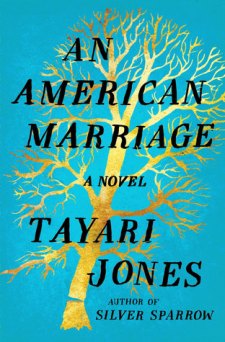
An American Marriage by Tayari Jones
Described as a ‘novel of the new South’ this is a novel in a new genre that is attempting to recalibrate our assumptions about the modern American south. Set in Georgia, Celestial and Roy are newlyweds whose lives seem to be on the up, when Roy is convicted of a crime he did not commit and sentenced to twelve years in jail. The novel explores the impact on their still young relationship of such a devastating event. Roy is finally released after five years but it is not clear they will ever be able to go back to what they were. Looks like a fascinating read.
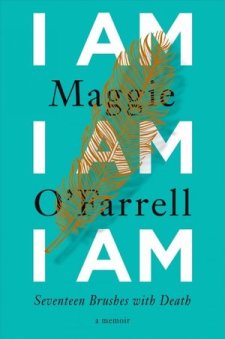 I Am, I Am, I Am by Maggie O’Farrell
A memoir this time from a great British novelist, written as a tribute to her young daughter who suffers from eczema so severe that it impacts on every aspect of her daily life and her safety. This book is an account of a number of incidents the author has experienced in her life where she has come close to death, such as a life-threatening childhood illness and an encounter with a stranger in a remote location. She reflects on how we are never more alive than when we come close to death and so the book is ultimately life-affirming.
 How to Stop Time by Matt Haig
Matt Haig’s 2015 non-fiction publication Reasons to Stay Alive was a sensation in the way it tackled the author’s experience of living with depression. How to Stop Time is Haig’s latest novel, first published last year, but now being reissued, is a science fiction love story. Tom Hazard, an apparently normal 41 year-old, is part of a small but exclusive group of unusual people who have been alive for centuries. They are protected by the Albatross Society on one strict condition: they must never fall in love. Tom lives in London as a high school history teacher, but then a romantic relationship with a colleague means he must choose between the past and the future, or, quite literally, between eternal life and death.
Next Year in Havana by Chanel Cleeton
And finally, a bit of historical fiction. I love a good historical novel set somewhere exotic; I find it compensates for the limited amount of travel I can do at this stage in my life! Miami-based writer Marisol Ferrera visits Cuba to fulfil the final wishes of her late grandmother Elisa, who wanted her ashes scattered in the place of her birth. Elisa escaped Cuba at the time of the revolution. Marisol returns to the land of her roots, tracing the history of her grandmother’s youth and uncovering long-hidden family secrets. I think this might be the one to read on a long journey! Tantalising.
What are you planning to read this Spring? I’d love to hear your suggestions.
If you have enjoyed this post, do subscribe to the blog, but clicking on the ‘Follow’ button. Let’s also hook up on social media.
 The book is set in Connecticut in 1942-43. Aila, is 16 years old when we first meet her and she has a younger brother Miles. Their mother, Juliet, has just died and their father has been called away to fight in the war. Aila and Miles are sent to live in Sterling (their mother’s birthplace) with Matilda Cliffton and her family; Matilda was Juliet’s childhood best friend. Aila is keen to take something of her mother’s with her and she finds a volume of Shakespeare’s complete works, much scribbled in, into the back of which has been placed an envelope, containing a ring Juliet always wore, and a mysterious note to an unknown person, Stefen, at the end of which Juliet signs herself ‘Viola’.
 The book starts with 18 year-old Allie Kennaway, and her friends heading out for their college prom night. They are at Allie’s home with her father Steve and younger sister Teagan. Steve is a single parent, his wife, the girls’ mother, Sarah, having died a couple of years earlier from cancer. Allie, we learn is a transgender woman, formerly Aled.
 To my shame, I have not read anything by Agatha Christie before, although I have stayed at the Old Swan Hotel in Harrogate, to which Agatha famously disappeared for nearly two weeks in 1926 after a row with her husband! She is quite extraordinary when you look at the stats: said to be the best-selling author of all time, her books have sold around two billion copies (yes two billion!) worldwide, second only to Shakespeare and the Bible. She wrote 72 novels, 14 short story collections, and one play, The Mousetrap, the longest-running in the world. Miss Marple and Hercule Poirot are perhaps two of the best-known literary characters of all time, and her work has been adapted for film and television countless times. She is truly a literary giant.

 The first book in the challenge (the theme is a Young Adult novel) will I hope be a nice one to start with – The Disappearances by Emily Bain Murphy. It’s part science fiction/fantasy, part coming to terms with love and loss.

 I plan to spend the time eating, sleeping, walking, watching movies, playing games and, of course, reading. I’m planning to tackle the enormous 4321, the Man Booker nominated tome by Paul Auster, and the only one on the shortlist I have not yet managed to read.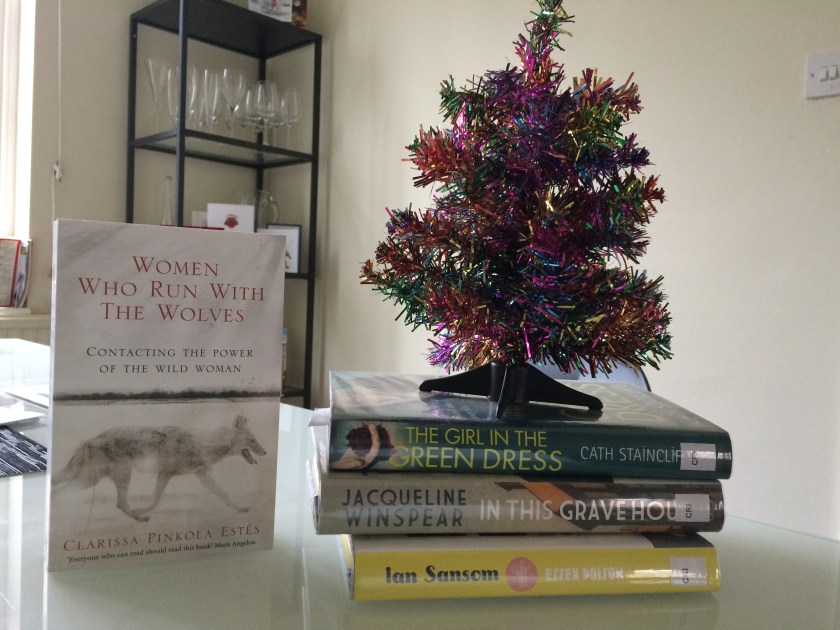
 So, it’s my final reading challenge post of 2017, and this month it’s a short story. Just as well, because there isn’t very much month left! The reason I picked this genre for December is that I predicted, correctly, that it would be a busy month and my reading would slacken off. It is taking me ages to get through the book I am currently reading (the book club’s choice of Norwegian Wood by Haruki Murakami).


 The Disappearances by Emily Bain Murphy – suitable for 12-14 year olds
 Do You Speak Chocolate? by Cas Lester – suitable for 10-12 year olds
