I saw Ruta Sepetys speak at the Hay Festival in May and I’m so glad I did, because otherwise this book may not have crossed my radar. It’s being marketed as a Young Adult novel (though DO NOT let that put you off) and there were many young people in the audience with whom Ruta was gracious, charming and generally lovely.
 This book is magnificent and I urge you to read it. It was my book club read this month and we all loved it. It concerns a period in hsitory that is seldom openly discussed – the brutality of the Russian advance into Germany at the end of the WW2. One of the earliest books I reviewed on this blog was A Woman in Berlin (Anonymous author) which was an account, reputedly a true story, of the siege of that city and its final capture by Russian troops who, half-starved and brutalised themselves, set about rape and pillage of the native population (which by that stage was mostly women, children, older men and the infirm) on an industrial scale. It is tough reading. My WW2 history is not great so correct me if I’m wrong, but these events are not widely recognised and discussed because of course Stalin was part of the Allied group which defeated Hitler. There was, and, arguably, continues to be, a reluctance to openly acknowledge anything which might tarnish the glory of that victory. We all know that the Allies committed many atrocities in the name of war, but somehow these have been brushed over.
Enough of the political history because Salt to the Sea is so much more than that; it concerns an event that almost no-one knows about, the sinking of the civilian ship Wilhelm Gustloff in 1945 by a Russian submarine, resulting in the largest loss of life at sea in maritime history, My children at school know all about the Titanic, thanks to the movie and the 100th anniversary of its sinking in 2012. A little over 1,500 people died in that disaster. Nine thousand died on the Wilhelm Gustloff, over half of them children and almost all of them desperate refugees.
It is a story beautifully and skilfully told through the eyes of four characters – Joana, a young Lithuanian nurse, Florian, A Prussian who worked for but then subsequently fled from the Nazi art theft effort, Emilia, a Polish girl from Lwow, whose parents sent her away from home to live with a German family with whom they thought she would be safe, and Alfred, a young German soldier, conceited, inept and deluded. Joana, Florian and Emilia are part of a small group, which includes an elderly shoemaker nicknamed ‘Poet’, a young boy, Klaus, a young blind girl, Ingrid, and Eva, a bold and forthright German woman. The raggle-taggle group has come together on the road, along with thousands of others, and is making its way to Gotenhafen, fleeing the brutal Russian advance, in the hope of boarding a ship which will take them further west and to what they hope will be relative safety.
It is the end of the war and they all know the Nazi Reich is close to collapsing, but the military remains in charge and committed to the Fuhrer’s cause. The group is also well aware of the fates of others who have fallen into the hands of Russian soldiers, some of them having direct experience of Russian violence. The group is facing multiple threats, not just from the Nazis and the Russians, but also from starvation and sickness. We follow the group as they trek across Prussia, learning about their back-stories, and the relationships between the group’s members evolve.

Once they reach Gotenhafen, they feel relief and begin to feel safe. Although the town has become a ghetto, with thousands of desperate people trying to escape on a handful of ships, they are hopeful and begin to imagine a future once again. Alfred is one of the sailors on the ship and by the time the group meets him we have learned much about his earlier life. He will become an important character in the events our group is about to face, and his back-story is important to understanding the motivation behind his actions.
For the reader, the tension here is excruciating because although the characters are hopeful and relieved, we know that tragedy will strike the ship. It is just a question of who, if any of them, will survive.
Sometimes, knowledge of the general outcome of a story can have a profound effect on your reading experience. This was very much the case for me here. The tentative joy, so long held-back and so fragile, that the characters experience, contrasted so deeply with the doom and dread that I felt for them.
This is a Young Adult novel and I would suggest that it is appropriate for 14 years and upwards. Even then, some younger teens might find it quite challenging. I would liken it to The Book Thief. The characters are fictional, but the events portrayed in this book are real and we have a duty to acknowledge what happened in the past rather than to airbrush it.
I cannot recommend this book highly enough.
 I chose this book for my 2018 Facebook Reading Challenge. The June theme was an autobiography, a tricky category since enjoyment can often depend on your feelings about the author. I also wanted to avoid titles that would most likely have been ghost-written. After thinking about it for some time, I chose this, the first volume in Angelou’s memoir series, and the one which is often considered to be the best. It can be read as a stand-alone.


 I have learnt my lesson and carve-out reading time for myself in the day. My bedtime reading is usually reserved for lighter books, entertainment. I have recently discovered the Maisie Dobbs series by British-American writer
 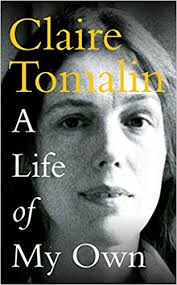 Browsing in the bookshop last year, I noticed that she had published her own autobiography, at the age of 83 – I note with some pleasure that her 84th birthday is in fact today! Many happy returns! Reading the blurb whetted my appetite – I was not aware of her life as a groundbreaking Literary Editor at the Sunday Times, or that she had five children, including one boy who died as a baby, and another son who was born with severe disabilities, nor that her first husband, fellow journalist Nicholas Tomalin, was killed in 1973, when her children were still very young. It sounded like a very interesting read.
 The novel is set in Renaissance Florence; the sense of time and place is profound. You can almost smell the streets wafting from the pages! Dunant is a meticulous researcher and the novel feels very authentic. The central character is Alessandra, the fifteen year-old daughter of a wealthy cloth merchant. Much to the frustration of her family Alessandra is a precociously intelligent young woman, a talented artist, a strong personality and has a deep desire to be out in the world. These are all traits which are highly inconvenient for the family and not compatible with the kind of life she will be expected to lead.


 I am a firm believer that all reading material is good, just keep them at it, and adults should not judge if their kids want to read comics and picture books when they might think they ‘should’ be reading something more mature. If this sounds like a child you know, I’ve found a great little series they might find interesting. Hamish and the Baby Boom by Danny Wallace and illustrated by Jamie Littler is the fourth book in a series. Hamish Ellerby is the central character, a 12 year-old boy and leader of the Pause Defence Force in the town of Starkley. Hamish’s father is some sort of secret agent, ever engaged in defending earth against the evil Scarmash. Hamish has inherited some of his father’s abilities and leads his small group of friends in the PDF against strange and hostile happenings in the town of Starkley.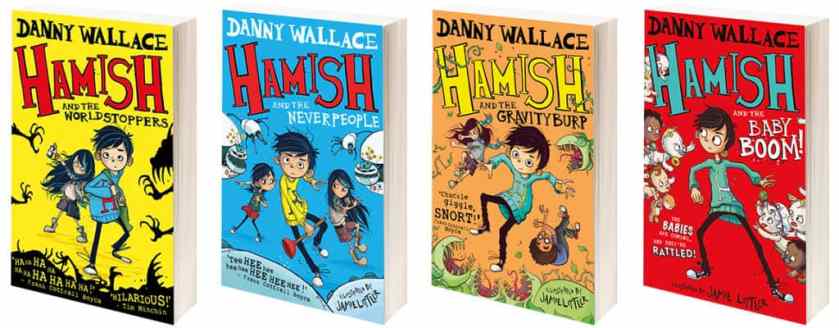
 Julia's books