Book review: “Just Fly Away” by Andrew McCarthy

I posted earlier in the week about getting your teenagers reading in the school holidays. Well, here’s a book they might like, and the author brings back memories of my own teenage years! Andrew McCarthy is better known as an actor and director (Pretty in Pink, St Elmo’s Fire), but in recent years has turned his hand to writing. This is his second book and his first work of fiction and is aimed at teenage readers. As regular readers of this blog will know I have launched an online reading challenge through Facebook, with a different genre or theme for each month. January’s was a YA novel, for which we read The Disappearances by Emily Bain Murphy. My book club decided to follow suit and we selected Just Fly Away. Just to warn you, this review contains spoilers, as I’m writing this for parents who might be looking for reading material for their teenagers and want to know what the book is about.

Just Fly Away img2

The central character in the novel is Lucy Willows, a 15 year-old living in New Jersey with her parents and younger sister, Julie. The novel opens with the family enjoying a day out at an amusement park on the Jersey Shore. It is a normal happy existence and Lucy’s life appears to be like that of any other teenager, a mixture of the humdrum and the special where family relationships go through the usual ups and downs. Then Lucy overhears a conversation between her parents about someone her father “would be proud of” and her fear and curiosity are aroused. She confronts her parents about it and they decide it is time to reveal to their daughters that Lucy’s father had an affair some years earlier which resulted in the woman having a child. The boy, Thomas, is now eight years old and lives in the same town.

Lucy’s world is turned upside down. It is important to note at this point that whatever issues there may have been between Lucy’s parents, they have put the matter behind them, and Lucy’s mother appears to be completely reconciled to her husband’s past infidelity and to have forgiven him. It is in fact she who started the conversation with her husband about Thomas. As an adult reader, I was inclined therefore to think a) it’s the couple’s business not Lucy’s, and b) so what? If they are over it, Lucy should accept it and move on too. But that is to miss the point, and one of the aspects of the book I really liked, the fact that the story is told entirely from Lucy’s point of view. Any parents of teenagers will know that they tend to see the world entirely from their own perspective, their capacity for empathy at this stage in their development can often be quite low, particularly where their parents are concerned! Therefore it is entirely credible that Lucy should react so strongly to the news and to have the reactions she does to her parents. She hates her father at this time and seems also to despise her mother for not having left him!

An important sub-plot to the novel, and which will broaden the appeal to young people is that Lucy develops a relationship with Simon, the older brother of a school friend. Simon is ‘different’; he has some sort of learning difficulty that is not fully explained, and goes to a different school. Simon is handsome, charming, warm, sensitive, and caring. He proves to be a great support to Lucy.

Lucy is curious about Thomas and finds out where he lives. She persuades Simon to go with her and the two make contact with him, without revealing the connection. Lucy thinks this encounter might help but instead it throws her into a tailspin. One day, whilst heading out to the shops, she decides on a whim to take the train to New York City and from there to travel to her grandfather’s house in Maine, whom she has met only once previously as there has clearly been a difficult relationship between him and Lucy’s father. Her journey is more than just a series of scary late night encounters and bus rides, it is a metaphor for her growing up and away from her parents, making it on her own, with limited funds and a new-found resourcefulness. Through the contact she then has with her grandfather, she glimpses some of the challenges to be faced in parent-child relationships and it helps her to reframe the situation she finds herself in with her own parents.

Spoiler alert…

Whilst Lucy is staying with her grandfather he has a massive stroke. Lucy’s father travels to Maine both to collect Lucy and to visit his Dad. Upon his arrival, Lucy’s father starts to ‘tell her off’ but it is clear that Lucy has grown out of this sort of admonishment and his reprimand seems hollow and out of step. Grandfather dies and this is an emotional element to the book, but I think this will be tolerable to teen readers because he is elderly and his peers seem to accept it as natural and not untimely. The event also serves to bring the family back together and into a new phase. Simon also makes the trip to be at the funeral for Lucy, and so he gets to meet her parents, and they seem to approve of him and accept their daughter’s maturity.

Lucy is a great character and not too feminine so I think even young male readers could identify with her. It’s a good story, easy to read and whilst Lucy, to an adult reader, might seem to overreact at times, it is a reminder that, as a parent it is important to realise that what may seem ‘small stuff’ to us can be ‘big stuff’ to them.

There is some light sexual content and occasional swearing. Recommended for 14-17 year olds and a nice read for grown-ups too!

Do you have any suggestions for YA novels for older kids to read?

If you have enjoyed this post, please follow the blog to receive notifications of future posts. 
How to get their noses in a book this half term

When my children were young, I found it relatively easy to entertain them during school holidays; they still liked going to parks (sighs wistfully!), did not roll their eyes when I suggested a museum or gallery (usually running a school holiday activity), even a bus or train ride was a novelty! And if I needed to work or just needed a break, there were always organised activities, sports clubs, etc. Now, two of my children are teenagers, and the third is there in spirit if not in chronological years. They can entertain themselves, often making their own arrangements with friends, requiring only transport assistance from me, and this is great; they are independent and there is a lower impact on my writing life.

girl-672267_1920However, with autonomy comes power – if they are having an ‘at home’ day they can simply slip under the radar and spend a great deal of quality time with their phones and tablets (oh for the days when I only worried about how much Balamory they watched!) They can secrete themselves in their bedrooms while I lose myself in all my usual activity. At their age, sure I watched a lot of telly while my parents were out at work in the school holidays, but I also spent plenty of time with my nose in a book. Digital distractions were fewer and less powerful.

I’m not looking back with rose-tinted specs thinking ‘if only their lives could be like mine…’ no way; I know I would have loved the internet! However, now I’m a 21st century parent I can see how easily it is for the reading, no, the whole cultural habit to slip away and get lost in the mire of competing forms of entertainment. So, what can be done? Well, if the scenario outlined above sounds familiar and, like me, you would like your young people to engage more with paper and page-turning rather than screens and swiping, here are some thoughts for you:

  1. Don’t panic and don’t give up – even the most avid readers have dry periods and the teenage years are unique and short-lived. They have many things to contend with and reading may not be top of their list. Hang on in there and see below.
  2. Let them see you reading – I work mostly from home and my kids are fascinated by what I do all day! When they are off school I make sure they see me switching off the phone and the computer and reading; don’t save your reading until bedtime. Ten minutes reading in front of your kids is far more powerful than all your verbal exhortations to read – they listen to nothing you say but they watch everything you do. Model the desired behaviours.
  3. Bring books into their life – yesterday I went out with one of mine and treated them to a hot chocolate…in the bookshop cafe! And afterwards we had a browse. Later in the week I may find I need to call into the library while we are out.
  4. Seek out literary-themed days out – you may have at least one planned day out while your kids are off. Did a favourite author live nearby, whose home you could visit? Is there some literary link to a local beauty spot? I live in Manchester in north-west England and we are very fortunate to have a rich local literary heritage – Elizabeth Gaskell’s house, four fascinating libraries (Central library, John Ryland’s, Chetham’s and the Portico), and the Lake District is nearby (Charles Dickens, Beatrix Potter, Arthur Ransome).
  5. In fact, any culture will do – museums, galleries? Many are still free so there is no pressure to spend all day there, just hang out for an hour or so. Engagement with any kind of cultural activity will demonstrate to your teens that life exists beyond the screen and even if they start bored, they will probably have to read something, even if its only the descriptions of the exhibits.
  6. Watch a movie adaptation together – the key word here is ‘together’. If it’s their choice, maybe an adaptation of a YA novel, so much the better. If they like the film, but haven’t read the book, suggest getting it for them.
  7. Revisit a once-loved childhood classic together – were there books they loved reading as children? Perhaps dig out an old favourite, they’ll enjoy the nostalgia. My eldest still goes back to Harry Potter from time to time.
  8. Buy newspapers and magazines – all reading is good.
  9. Finally, leave all kinds of reading material lying around, in every room, even the kitchen and bathroom. When they’re off school and they’ve more time on their hands they may be inclined to linger.

The key thing is to show an interest and not to judge. I consider myself an avid reader these days and I did read a lot of classics when I was young, but I read some ‘trash’ too, and I loved comics and teen magazines. Value their choices, even if you secretly wish they’d read something different, and talk to them about what they’re reading.

What do you do to try and get your kids reading, particularly the older ones? 

If you have enjoyed this post, you might like to subscribe to the blog by clicking on the ‘Follow’ button. Let’s also connect on social media. 


Hot new books for Spring

At last, January is out of the way! The mornings are getting lighter, the sun is shining as I write this and things are starting to sprout in the garden; there are definite signs of Spring. Christmas is huge for the publishing world, for obvious reasons, so the new year can seem very quiet – no-one is spending any money, and we are all curled up on the sofa watching the telly! (I’ve been working my way through all the seasons of Breaking Bad and Mad Men forever and I made some pretty good progress last month!)

By February, publishers are getting itchy, however, and it seems to me there is a rush of great books coming out this month and in the next few weeks, all aimed at grabbing our attention for Spring reading. Perhaps you are going away for February half term or will be looking forward to some days off at Easter and relaxing with a book?

Here are some of the titles that have caught my eye that I think you might enjoy.

30288282

The Immortalists  by Chloe Benjamin

This American author’s first novel, The Anatomy of Dreams was a prize-winner so the follow-up is much-anticipated. The Immortalists follows the lives of four siblings who visit a psychic, who forecasts the exact dates of each of their deaths. The novel explores some very topical themes including what part so-called ‘fate’ and choice play in our lives. Interesting given the promise, surely, in the next few years that gene-mapping will be able to determine what diseases individuals might be at risk of getting in their old age. Great cover too!


Feel Free by Zadie Smith9781594206252

Personally, I’ve struggled with Zadie Smith’s work over the years and have never yet managed to finish one of her novels, but I am determined to persevere at some point as she is so widely-acclaimed. This might do the trick as it’s something a little different from her, a collection of essays, some of which have been published before on other fora. The questions posed by the essays are characteristically provocative and diverse, such as asking whether it is right that we have let Facebook and wider social media penetrate our lives so profoundly, and how we will justify to our grandchildren our failure to tackle climate change. With titles as intriguing as Joy and Find Your Beach this might just be the book that finally does it for me and Zadie!

33590210

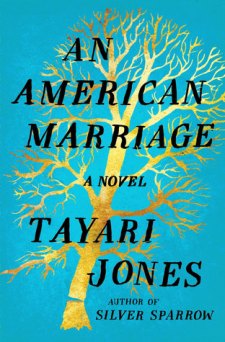
An American Marriage by Tayari Jones

Described as a ‘novel of the new South’ this is a novel in a new genre that is attempting to recalibrate our assumptions about the modern American south. Set in Georgia, Celestial and Roy are newlyweds whose lives seem to be on the up, when Roy is convicted of a crime he did not commit and sentenced to twelve years in jail. The novel explores the impact on their still young relationship of such a devastating event. Roy is finally released after five years but it is not clear they will ever be able to go back to what they were. Looks like a fascinating read.


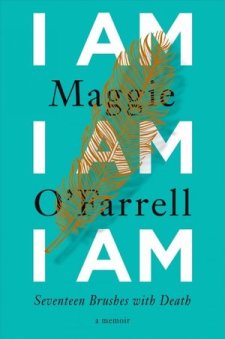
9780525520221_custom-1b66fc1d3f41e6340606905dfa87fccab46e79f7-s300-c85I Am, I Am, I Am by Maggie O’Farrell

A memoir this time from a great British novelist, written as a tribute to her young daughter who suffers from eczema so severe that it impacts on every aspect of her daily life and her safety. This book is an account of a number of incidents the author has experienced in her life where she has come close to death, such as a life-threatening childhood illness and an encounter with a stranger in a remote location. She reflects on how we are never more alive than when we come close to death and so the book is ultimately life-affirming.


35411685How to Stop Time by Matt Haig

Matt Haig’s 2015 non-fiction publication Reasons to Stay Alive was a sensation in the way it tackled the author’s experience of living with depression. How to Stop Time is Haig’s latest novel, first published last year, but now being reissued, is a science fiction love story.  Tom Hazard, an apparently normal 41 year-old, is part of a small but exclusive group of unusual people who have been alive for centuries. They are protected by the Albatross Society on one strict condition: they must never fall in love. Tom lives in London as a high school history teacher, but then a romantic relationship with a colleague means he must choose between the past and the future, or, quite literally, between eternal life and death.


Next Year in Havana by Chanel Cleeton34374628

And finally, a bit of historical fiction. I love a good historical novel set somewhere exotic; I find it compensates for the limited amount of travel I can do at this stage in my life! Miami-based writer Marisol Ferrera visits Cuba to fulfil the final wishes of her late grandmother Elisa, who wanted her ashes scattered in the place of her birth. Elisa escaped Cuba at the time of the revolution. Marisol returns to the land of her roots, tracing the history of her grandmother’s youth and uncovering long-hidden family secrets. I think this might be the one to read on a long journey! Tantalising.


What are you planning to read this Spring? I’d love to hear your suggestions.

If you have enjoyed this post, do subscribe to the blog, but clicking on the ‘Follow’ button. Let’s also hook up on social media.


Book review: “The Disappearances” by Emily Bain Murphy

At the start of this year I set up a Facebook reading group, based on a challenge I undertook for myself last year where I read a book with a different theme each month. I have been delighted with the response and that so many people are keen to push their reading boundaries a little. The theme for January was a YA book and I chose The Disappearances by Emily Bain Murphy, a first-time American novelist. This book has had rave reviews and I’ve come across a few vlogs where the reviewers have spoken passionately about how much they loved it. I was keen to see what all the fuss was about!

The Disappearances imgThe book is set in Connecticut in 1942-43. Aila, is 16 years old when we first meet her and she has a younger brother Miles. Their mother, Juliet, has just died and their father has been called away to fight in the war. Aila and Miles are sent to live in Sterling (their mother’s birthplace) with Matilda Cliffton and her family; Matilda was Juliet’s childhood best friend. Aila is keen to take something of her mother’s with her and she finds a volume of Shakespeare’s complete works, much scribbled in, into the back of which has been placed an envelope, containing a ring Juliet always wore, and a mysterious note to an unknown person, Stefen, at the end of which Juliet signs herself ‘Viola’.
 

When Aila and Miles arrive in Sterling it quickly becomes clear that things are not as they should be. First of all, Aila notices that other townspeople seem quite hostile towards her, and that this has something to do with Juliet. She also quickly observes that there are no stars and no smells in Sterling, and that the inhabitants have no reflections. Matilda Cliffton reveals to her the curse that struck Sterling (and its two nearby ‘sister’ towns Corrander and Sheffield) some years before which means that every seven years something in their life disappears (ie stars, reflections, smells). They are due another Disappearance shortly. Over the years, Matilda’s husband, Dr Cliffton, has been instrumental in developing ‘Variants’, powders which temporarily restore the losses, and these are traded in the market in town. Thus the scene is set and Aila and her brother settle into life in Sterling. We see Aila making friends at the local high school, particularly George, Beas and Will, the Cliffton’s son, and a few enemies, namely Eliza, who has a thing for Will and whose indifference to Aila borders on antipathy.

Interspersed between the events in Sterling are short italicised chapters where we meet the dark characters of Stefen and his father Phineas. Phineas is a former grave-robber, and has served time in jail for this. He is also dying. We know that Stefen wants to find ‘the Stone’ to try and save Phineas’s life though it is not clear how it would do so. Stefen is also obsessed by birds and at the start of each of these chapters is a short description of a bird species, and its characteristics give the reader clues to the action that is taking place in Sterling.

A kind of chase commences, as Stefen goes in search of Juliet’s ring, and Aila tries to understand the root cause of the curse (suspecting that it is somehow connected with her mother). She is convinced she can also find a way to lift it, and believes clues to the mystery lie within the Shakespeare volume of her mother’s. The plot is complex and I have to confess that some elements of it left me slightly confused. However, I loved the characters, particularly Aila, who is well-developed and very credible. I also loved the handling of the relationships among the young people, particularly the dynamic between Aila and Will. The book is beautifully written and the Shakespeare references are lovely and very cleverly incorporated. It is well-researched and well-thought through. I liked the ‘fantasy’ element less, but perhaps that is because I am not a particular fan of that genre, though I can see how it would appeal to a YA reader. Also, the twist at the end (which many of the YouTube vloggers loved) left me feeling a bit cold. I just couldn’t believe in it. The pace of the book is also a little uneven; the reader is thrown into the action and the plot quite quickly, but then it slows right down and becomes less engaging before the sprint at the end. Those things aside, it’s a good read that I would recommend and I think if you do find it a bit slow, stick with it because you will be rewarded. Hence, I’m not giving spoilers on this one!

For younger readers I would recommend the 14-17 age group. The plot is complex and not likely to appeal to those under 14, and there is some romance more suited to slightly older teens.

Have you read The Disappearances? Did you think it lived up to the hype?

If you have enjoyed this post, I would love for you to follow my blog. You can do so by clicking on the ‘Follow’ button. Let’s also connect on social media, channels to the right (or possibly below!).

Julia’s 2018 Reading Challenge

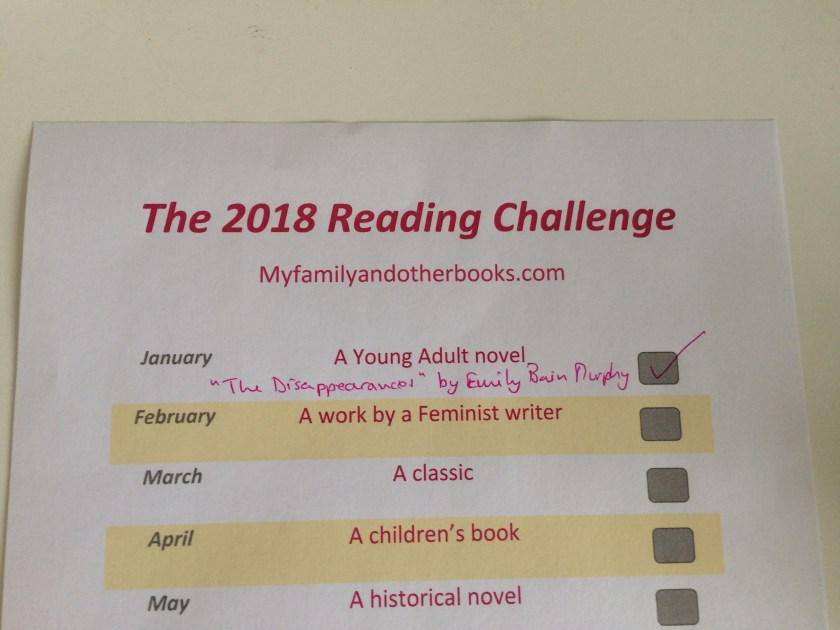
2018-02-01-10-47-18.jpgAt the beginning of January I set up a Facebook group for a reading challenge. I was motivated to do this after I set myself the task last year of stepping outside my usual genres and reading choices. I enjoyed it so much and posted all my book reviews on this blog. Some friends and contacts suggested there might be some interest in sharing this more widely. I set a theme/genre for each month with a view to selecting a title at the start of the month. In January we read The Disappearances  by Emily Bain Murphy, the theme being a YA novel.

Not surprisingly there was a mixed response; some absolutely loved it, others found the pace a bit slow or the fantasy element a little hard to buy into. But what I loved was the discussion it provoked. It was so nice to have a literary conversation!

Oranges are not the only fruitIf you’re interested in taking part in this Reading Challenge you can join the group here or else just read the titles selected. I’ll be posting all about them on the blog. Our theme for February is a title by a feminist writer, celebrating the centenary of the extension of voting rights to women over 30 this week. The title we are reading is Oranges Are Not The Only Fruit by Jeanette Winterson.


It would be great to get as many people as possible involved in the Facebook group so hop on over and take a look.


Children’s fiction: some books for primary readers

Last week I posted about public libraries and how they provide an indispensable resource for children and parents/carers. They offer an opportunity to do something cheap, easy and local with your kids. They provide much needed downtime for children who these days seem to be leading ever more busy lives. And they get kids looking at, thinking about and engaging with books, because, frankly, that’s pretty much what you have to do when you have a room full of books! And borrowing books is FREE!

At the beginning of January, I did a scan of some of the new titles in my local library and I want to share with you the ones that caught my eye. This week, I’m looking at titles for primary school age children, around 7-10. Both have short chapters, large print and illustrations so are probably more suited to the younger end of the spectrum, or reluctant readers at the older end.

 The Invincibles: The Beast of Bramble Woods by Caryl Hart & Sarah Warburton

2018-01-31 12.16.32I really liked this little book and it’s the third in the Invincibles series. The central characters are two friends, Nell and Freddie, and Mr Fluffy, a cat. Nell’s teenage brother Lucas, has a sleepover camping with his friends in the garden, which, of course, the younger ones want to be involved with. Through ‘Pester Power’ Nell manages to persuade her parents to let her and Freddie participate for a few hours. Noises in the woods (the waste ground next to the garden) terrify them all, but, of course, it turns out to be nothing more sinister than Mr Fluffy! It’s a great little story, with nice illustrations and a level of humour which children will love and adults will also identify with. Recommended.

Amelia Fang and the Barbaric Ball by Laura Ellen Anderson

2018-01-31 12.16.44Similar in style to The Invincibles, this book is along the lines of The Addams Family – set in Nocturnia, a land of comic creatures, ghouls, vampires, mummies, etc. The central story is that Amelia’s parents are to throw their annual Barbaric Ball. They are keen for King Vladimir to come, but he has not been seen in public for years. The king decides he will attend with his son Prince Tangine, and, in preparation for getting to know the people, the Prince will attend the local school. He is of course, very haughty and unkind, and Amelia is particularly cross when he demands, and gets, her pet pumpkin Squashy. It turns out that Prince Tangine hides a devastating secret – he is half-fairy (terrifying creature of the light!), though his mother disappeared when he was young, leaving his father bereft. Amelia discovers this as she tries to rescue Squashy from the palace, and, when the truth is revealed, Tangine owns up to his faults and they all become friends. It’s a fun little story, and the toilet humour will appeal very much to the irreverent side of children. Lovely illustrations and plenty of contemporary references. It is basically about friendship, inclusiveness and being nice to people. Recommended though less in this one to keep parent readers interested.

Next week I’ll be looking at books for 11-13 year olds.

Do you have any recommendations for young readers?

If you have enjoyed this post, please subscribe to the blog by clicking the ‘Follow’ button.

Children’s book review: “Do you speak chocolate?” by Cas Lester

I promised you earlier in the week that I was going to do more on looking at children’s fiction this year. Well, here’s a lovely little book that I really want to tell you about – Do You Speak Chocolate? by Cas Lester. I wasn’t expecting to like it as much as I did as I’m afraid I didn’t find the cover particularly appealing, but I have to say that, even as a grown-up, I was gripped. I loved the characters, the writing style, the themes and the storyline, so it would be a great one to read along with your kids, so you can chat about it with them.

Do you speak chocolate imgThe central character is Jaz, a 12 year-old girl who is in Year 7 at secondary school. She is dyslexic, doesn’t care too much for school (“Boring!”) and lives with her Mum and three older brothers, their Dad having left shortly after Jaz was born. Jaz is a bit of a rebel with a big heart. She struggles a bit at school, she comes across as someone who finds it difficult to deal with the mainstream demands of sitting still, concentrating, and not least the focus on reading and writing; there does not seem to be much allowance made for her dyslexia. She also struggles a bit with friendship issues, having jealous feelings towards another girl who she feels is going to ‘steal’ her best friend Lily. So we see Jaz is a bit insecure too.

 

Jaz is asked to take care of Nadima, a new girl in school, recently arrived from Syria as a refugee. She does not speak English but the two find common ground over their love of confectionery. They also find innovative ways to communicate, such as using text emojis! Over time, Jaz and Nadima’s relationship develops, but is not without the occasional bump in the road. For example, Jaz gets to know Nadima’s family, and realises what a difficult time they have had, escaping their home country and how little money they now have in the UK. When the school organises a charity fund-raising event, which Jaz and her team win, she stands up in front of the whole school and announces that she thinks the charity money should go to Nadima’s family because they are so poor. Jaz’s intentions are good, but, clearly, she has no idea how embarrassing this is to Nadima and how patronising it seems. Jaz learns quickly and is horrified, but it takes time to rebuild the bridges.

It has a happy ending of course – Jaz and Nadima do make friends again, and they also have a huge success in their drama class at school with an interpretative performance they create, about the situation in Syria. So, even at school, Jaz comes out on top in the end.

Jaz is 12 and in Year 7 so this book will appeal to 10-12 year olds in particular, and although Jaz is a girl, there is something slightly androgynous about her, so I think the book could easily appeal to boys as well. There are plenty of boys in the book (it’s not girly), although some of the friendship issues Jaz has are, in my experience, more common amongst groups of girls than boys. Jaz’s dyslexia is also an important element of her personality and her non-self-pitying discussion about her difficulties is illuminating and sensitively handled.

I love the mix of themes in this book – friendship issues, both the petty jealousies and the bigger fallings-out (subjects which some of us might think of as trivial, but which are really important to kids on a daily basis), are dealt with alongside HUGE issues such as religious and cultural tolerance, the war in Syria and the refugee crisis. The author deals with all these issues without being patronising or preachy and in ways that kids will understand. An achievement indeed.

I’ve passed this on to my 11 year-old to read immediately! Highly recommended.

What’s new in the children’s library?

One of my objectives for the blog this year is to focus a lot more on children’s books. Those of you who read my posts regularly will know that I am passionate about children’s literacy and ensuring that, in this electronic age, reading remains an activity that all kids do. We know that reading improves a child’s mind in many ways, improves their vocabulary, writing skills, and academic outcomes, to name just a few of the benefits. But it’s still something that I know many parents struggle with. There are just so many distractions – for adults and children alike!

girl-3038974_1920

Books are also not cheap: you can expect to pay £6-7 for the average paperback, and often more for the hardback and picture books that are so vital when they are younger. A book every week or two is therefore a big ask for parents on a budget, especially if it comes with a bit of a risk – what if they don’t like it after 20 pages? Money wasted?

The answer for many is the public library. As we know, many local libraries are under threat, so it is a case of “use it or lose it”, I’m afraid. In my local borough, under 13s can borrow up to 20 books and four audiobooks at any one time. The loan period is 3 weeks and can be extended many times before you have to return (unless someone else has reserved the title). You can reserve books, search the online catalogue and renew online as well. What’s not to love? And all for free.

The only downside is fines – 6p per day per book for children, 15p for adults – so you need to keep on top of the due dates. However, my local library service sends emails a few days ahead of time to remind me what is due back when. It can be easy though if you build in a visit to the library every 2-3 weeks. I guarantee your kids will look forward to it and it’s time you get to spend with them, talking about, handling and looking at books.

I spent some time earlier this month scanning the new releases on my local library service online catalogue and picked up a few very interesting looking titles.

2018-01-24 10.52.43

I’m going to be reviewing these over the next few weeks, starting with titles for primary school age children.

So, why not make it a goal to spend more time at the library with your children this year. Give it a try, there’s nothing to lose!

If you are a parent, what do you think are the biggest challenges to getting (and keeping!) your children reading?

If you have enjoyed this post, please subscribe to the blog by clicking on the ‘Follow’ button.

Book review: “The Girl in the Green Dress” by Cath Staincliffe

Last week I posted a review of Agatha Christie’s Murder on the Orient Express, the first of two crime fiction novels I read over the Christmas holidays. The Girl in the Green Dress could hardly be more different, despite also being a crime novel and it is indicative of how the way we entertain ourselves has changed in the eighty odd years that separate the publication of these two books. Where Agatha Christie provided escapism, upper class characters, exotic locations and traditional murder mystery with the big reveal at the end, Cath Staincliffe’s book provides gritty realism, some repellent characters, familiar locations and a limited amount of mystery. There is no job here for the reader to play the detective, spot the clues and guess the outcome. The job of the reader is to engage with the characters at a deep level.

The girl in the green dress imgThe book starts with 18 year-old Allie Kennaway, and her friends heading out for their college prom night. They are at Allie’s home with her father Steve and younger sister Teagan. Steve is a single parent, his wife, the girls’ mother, Sarah, having died a couple of years earlier from cancer. Allie, we learn is a transgender woman, formerly Aled.

We meet the other characters who will form the main part of the drama, in quite quick succession: Donna, the workaholic Detective Inspector, who has four children and a less than happy marriage; Jade, a new detective, Asian, and whose mental health problems are hinted at early on; Martin, a long-standing colleague of Donna’s, a horny-handed old-fashioned copper. The murder takes place quite early on; Allie’s body is discovered in a deserted street near the nightclub where the prom was being held. Soon after, we meet Sonia, single mother of the feckless youth Oliver, who spends his days eating junk food, hanging out with his mates and playing online games. His culpability for the crime is fairly obvious.

If we know whodunnit, then what is the story about? Well, there is a fairly major and dramatic plot twist, which, of course, I shan’t reveal. Mostly, though, it’s about the characters and their internal lives, their hopes, dreams, motivations and frustrations. The police (Donna, Jade and Martin) are all flawed in their own individual ways and are trying to deal in a systematic and process-orientated way with a terrible event, trying to set aside their personal selves, and yet completely unable to do so. Work and ‘home’ cross over in the most challenging ways. Much like the crime shows I watch on television (I’m thinking Happy Valley, Morse, Prime Suspect), the issues of the central character are part of and not separate from the story. Although, for Agatha Christie, Poirot’s personality is key to the narrative, it does not form part of the plot in the way that more modern crime fiction does. Or perhaps you would disagree?

There is also the storyline of transgender young people and their experiences, which the author handles deftly with great care and sensitivity. It is a huge and topical issue to tackle and the result is commendable.

I struggled to get into this at first. The clipped writing style, which reminded of the way police officers narrate radio dramas, ie not in fully-formed sentences, was off-putting to me, and I found the structure, short chapters within chapters focussing on a different character in turn, meant it did not flow so easily. Having just read Agatha Christie, however, knowing the murderer from the outset seemed odd and I wondered what on earth the rest of the book was going to be about! There is that twist, of course, and as I got to know the characters, so I began to engage with them and their stories more.

I did get hooked and enjoyed the book immensely. It’s a quick read, though its grittiness makes it hard-going in places; the reader is not spared any detail! I’d recommend this book, though, and I will definitely read more of Cath Staincliffe’s work.

If you are a reader of crime fiction do you prefer the modern or the more old-fashioned Christie-style writing?

If you have enjoyed this post, I would love for you to subscribe to the blog by clicking on the ‘Follow’ button. Let’s also connect on social media.

Book review: “Murder on the Orient Express” by Agatha Christie

I am not a big reader of crime fiction, but I read two over the Christmas holidays, as I feel this has been something of a gap in my education. I read Murder on the Orient Express by Agatha Christie, first published in 1934, and The Girl in the Green Dress by Cath Staincliffe who gave an excellent talk at the Northern Lights Writers Conference which I attended last year. Separated in terms of their publication by over 80 years the two titles are so different they could hardly be said to be part of the same genre but I don’t know enough about crime fiction to understand the path that links the two. I enjoyed both, but for very different reasons. I’ll start by reviewing the older of the two books.

Murder on the Orient Express img  To my shame, I have not read anything by Agatha Christie before, although I have stayed at the Old Swan Hotel in Harrogate, to which Agatha famously disappeared for nearly two weeks in 1926 after a row with her husband! She is quite extraordinary when you look at the stats: said to be the best-selling author of all time, her books have sold around two billion copies (yes two billion!) worldwide, second only to Shakespeare and the Bible. She wrote 72 novels, 14 short story collections, and one play, The Mousetrap, the longest-running in the world. Miss Marple and Hercule Poirot are perhaps two of the best-known literary characters of all time, and her work has been adapted for film and television countless times. She is truly a literary giant.

Murder on the Orient Express was released as a film once again last year, directed by and starring Kenneth Branagh, and a clutch of other huge names including Johnny Depp, Judi Dench and Penelope Cruz, although it has not been well-received critically. The release of the film prompted my book club to give this title a go. We subsequently watched the 1974 film adaptation starring Albert Finney as Poirot, and an equally stellar cast including Lauren Bacall, Ingrid Bergman and Sean Connery. The film was very close to the book and we thoroughly enjoyed it. It was true escapism.

The book, also, was true escapism, though I’m glad I read it before watching the film. The structure is linear and to us would seem quite old-fashioned, but it’s a joy. It is split into three distinct parts: the facts, which sets the scene on the train, and gives us the background to the tragic Armstrong child abduction and killing case in America five years earlier. In part two Poirot hears evidence from each of the characters on the train, one of whom MUST have committed the crime, and the final part is Poirot’s analysis and conclusion, a set-piece beautifully played out in the film.

The plot is genius (I don’t want to reveal any spoilers, though I think most people who know anything about the book will know the ending – this will not detract from your enjoyment), but the way that Poirot makes his intellectual leaps is at times, totally contrived. For example, I am still not clear how he could have made the connection with the Armstrong case on such an insignificant piece of evidence. This matters not a jot, however, because it is Poirot’s cross-examinations, his exposition of ‘the facts’ and his closing revelatory monologue, which provide the real pleasure for the reader. The writing is also joyous, laced with irony, brilliant characterisation and the evocation of place….sublime! On this latter point this was the real escapism for me. I have always fantasised about travelling on the Orient Express in the golden age of steam (as long as I can travel fist class!) and this book took me right there. The opening scene of the book is set in Aleppo, which was rather poignant.

I’ll definitely be reading more Agatha Christie. This was quite a quick read, in just a couple of sittings, because it flows so beautifully and once you start it is hard to put down. Highly recommended.

If you are a fan of Christie, which of her books would you recommend I read next?

If you have enjoyed this post, please subscribe to the blog by clicking on the ‘Follow’ button. Let’s also connect on social media.