I posted earlier in the week about getting your teenagers reading in the school holidays. Well, here’s a book they might like, and the author brings back memories of my own teenage years! Andrew McCarthy is better known as an actor and director (Pretty in Pink, St Elmo’s Fire), but in recent years has turned his hand to writing. This is his second book and his first work of fiction and is aimed at teenage readers. As regular readers of this blog will know I have launched an online reading challenge through Facebook, with a different genre or theme for each month. January’s was a YA novel, for which we read The Disappearances by Emily Bain Murphy. My book club decided to follow suit and we selected Just Fly Away. Just to warn you, this review contains spoilers, as I’m writing this for parents who might be looking for reading material for their teenagers and want to know what the book is about.

The central character in the novel is Lucy Willows, a 15 year-old living in New Jersey with her parents and younger sister, Julie. The novel opens with the family enjoying a day out at an amusement park on the Jersey Shore. It is a normal happy existence and Lucy’s life appears to be like that of any other teenager, a mixture of the humdrum and the special where family relationships go through the usual ups and downs. Then Lucy overhears a conversation between her parents about someone her father “would be proud of” and her fear and curiosity are aroused. She confronts her parents about it and they decide it is time to reveal to their daughters that Lucy’s father had an affair some years earlier which resulted in the woman having a child. The boy, Thomas, is now eight years old and lives in the same town.
Lucy’s world is turned upside down. It is important to note at this point that whatever issues there may have been between Lucy’s parents, they have put the matter behind them, and Lucy’s mother appears to be completely reconciled to her husband’s past infidelity and to have forgiven him. It is in fact she who started the conversation with her husband about Thomas. As an adult reader, I was inclined therefore to think a) it’s the couple’s business not Lucy’s, and b) so what? If they are over it, Lucy should accept it and move on too. But that is to miss the point, and one of the aspects of the book I really liked, the fact that the story is told entirely from Lucy’s point of view. Any parents of teenagers will know that they tend to see the world entirely from their own perspective, their capacity for empathy at this stage in their development can often be quite low, particularly where their parents are concerned! Therefore it is entirely credible that Lucy should react so strongly to the news and to have the reactions she does to her parents. She hates her father at this time and seems also to despise her mother for not having left him!
An important sub-plot to the novel, and which will broaden the appeal to young people is that Lucy develops a relationship with Simon, the older brother of a school friend. Simon is ‘different’; he has some sort of learning difficulty that is not fully explained, and goes to a different school. Simon is handsome, charming, warm, sensitive, and caring. He proves to be a great support to Lucy.
Lucy is curious about Thomas and finds out where he lives. She persuades Simon to go with her and the two make contact with him, without revealing the connection. Lucy thinks this encounter might help but instead it throws her into a tailspin. One day, whilst heading out to the shops, she decides on a whim to take the train to New York City and from there to travel to her grandfather’s house in Maine, whom she has met only once previously as there has clearly been a difficult relationship between him and Lucy’s father. Her journey is more than just a series of scary late night encounters and bus rides, it is a metaphor for her growing up and away from her parents, making it on her own, with limited funds and a new-found resourcefulness. Through the contact she then has with her grandfather, she glimpses some of the challenges to be faced in parent-child relationships and it helps her to reframe the situation she finds herself in with her own parents.
Spoiler alert…
Whilst Lucy is staying with her grandfather he has a massive stroke. Lucy’s father travels to Maine both to collect Lucy and to visit his Dad. Upon his arrival, Lucy’s father starts to ‘tell her off’ but it is clear that Lucy has grown out of this sort of admonishment and his reprimand seems hollow and out of step. Grandfather dies and this is an emotional element to the book, but I think this will be tolerable to teen readers because he is elderly and his peers seem to accept it as natural and not untimely. The event also serves to bring the family back together and into a new phase. Simon also makes the trip to be at the funeral for Lucy, and so he gets to meet her parents, and they seem to approve of him and accept their daughter’s maturity.
Lucy is a great character and not too feminine so I think even young male readers could identify with her. It’s a good story, easy to read and whilst Lucy, to an adult reader, might seem to overreact at times, it is a reminder that, as a parent it is important to realise that what may seem ‘small stuff’ to us can be ‘big stuff’ to them.
There is some light sexual content and occasional swearing. Recommended for 14-17 year olds and a nice read for grown-ups too!
Do you have any suggestions for YA novels for older kids to read?
If you have enjoyed this post, please follow the blog to receive notifications of future posts.
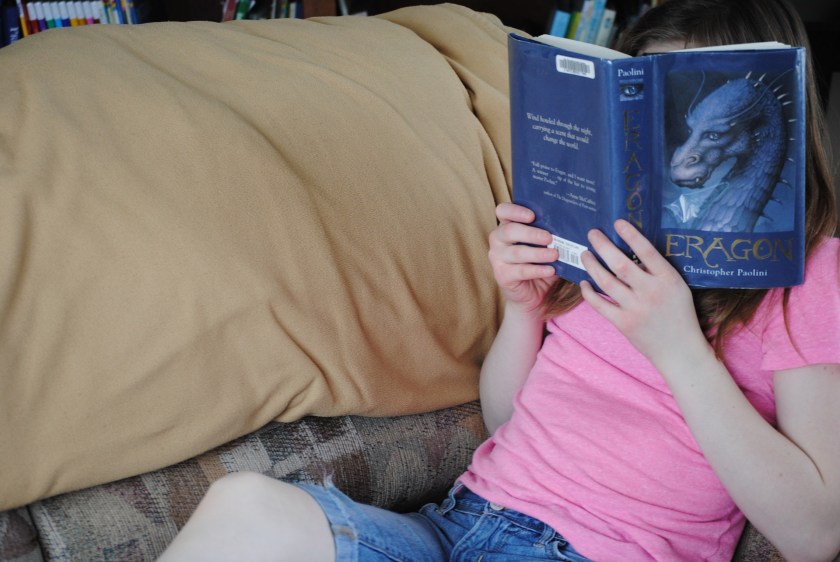 However, with autonomy comes power – if they are having an ‘at home’ day they can simply slip under the radar and spend a great deal of quality time with their phones and tablets (oh for the days when I only worried about how much Balamory they watched!) They can secrete themselves in their bedrooms while I lose myself in all my usual activity. At their age, sure I watched a lot of telly while my parents were out at work in the school holidays, but I also spent plenty of time with my nose in a book. Digital distractions were fewer and less powerful.

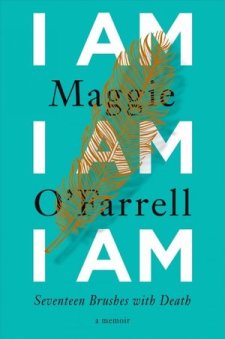 I Am, I Am, I Am by Maggie O’Farrell
 How to Stop Time by Matt Haig
 The book is set in Connecticut in 1942-43. Aila, is 16 years old when we first meet her and she has a younger brother Miles. Their mother, Juliet, has just died and their father has been called away to fight in the war. Aila and Miles are sent to live in Sterling (their mother’s birthplace) with Matilda Cliffton and her family; Matilda was Juliet’s childhood best friend. Aila is keen to take something of her mother’s with her and she finds a volume of Shakespeare’s complete works, much scribbled in, into the back of which has been placed an envelope, containing a ring Juliet always wore, and a mysterious note to an unknown person, Stefen, at the end of which Juliet signs herself ‘Viola’.
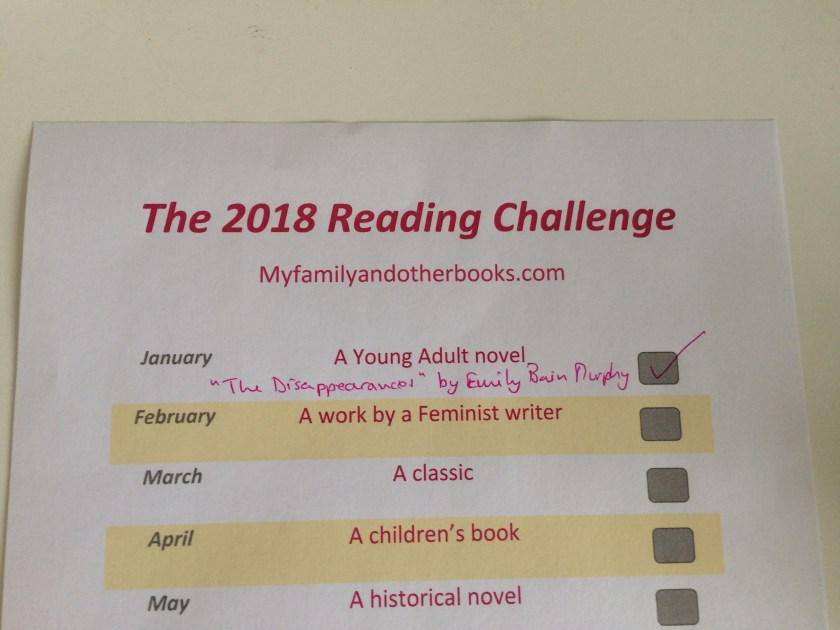 At the beginning of January I set up a
  If you’re interested in taking part in this Reading Challenge you can join the group
  I really liked this little book and it’s the third in the Invincibles series. The central characters are two friends, Nell and Freddie, and Mr Fluffy, a cat. Nell’s teenage brother Lucas, has a sleepover camping with his friends in the garden, which, of course, the younger ones want to be involved with. Through ‘Pester Power’ Nell manages to persuade her parents to let her and Freddie participate for a few hours. Noises in the woods (the waste ground next to the garden) terrify them all, but, of course, it turns out to be nothing more sinister than Mr Fluffy! It’s a great little story, with nice illustrations and a level of humour which children will love and adults will also identify with. Recommended.
 Similar in style to The Invincibles, this book is along the lines of The Addams Family – set in Nocturnia, a land of comic creatures, ghouls, vampires, mummies, etc. The central story is that Amelia’s parents are to throw their annual Barbaric Ball. They are keen for King Vladimir to come, but he has not been seen in public for years. The king decides he will attend with his son Prince Tangine, and, in preparation for getting to know the people, the Prince will attend the local school. He is of course, very haughty and unkind, and Amelia is particularly cross when he demands, and gets, her pet pumpkin Squashy. It turns out that Prince Tangine hides a devastating secret – he is half-fairy (terrifying creature of the light!), though his mother disappeared when he was young, leaving his father bereft. Amelia discovers this as she tries to rescue Squashy from the palace, and, when the truth is revealed, Tangine owns up to his faults and they all become friends. It’s a fun little story, and the toilet humour will appeal very much to the irreverent side of children. Lovely illustrations and plenty of contemporary references. It is basically about friendship, inclusiveness and being nice to people. Recommended though less in this one to keep parent readers interested.
 The central character is Jaz, a 12 year-old girl who is in Year 7 at secondary school. She is dyslexic, doesn’t care too much for school (“Boring!”) and lives with her Mum and three older brothers, their Dad having left shortly after Jaz was born. Jaz is a bit of a rebel with a big heart. She struggles a bit at school, she comes across as someone who finds it difficult to deal with the mainstream demands of sitting still, concentrating, and not least the focus on reading and writing; there does not seem to be much allowance made for her dyslexia. She also struggles a bit with friendship issues, having jealous feelings towards another girl who she feels is going to ‘steal’ her best friend Lily. So we see Jaz is a bit insecure too.

 The book starts with 18 year-old Allie Kennaway, and her friends heading out for their college prom night. They are at Allie’s home with her father Steve and younger sister Teagan. Steve is a single parent, his wife, the girls’ mother, Sarah, having died a couple of years earlier from cancer. Allie, we learn is a transgender woman, formerly Aled.
 To my shame, I have not read anything by Agatha Christie before, although I have stayed at the Old Swan Hotel in Harrogate, to which Agatha famously disappeared for nearly two weeks in 1926 after a row with her husband! She is quite extraordinary when you look at the stats: said to be the best-selling author of all time, her books have sold around two billion copies (yes two billion!) worldwide, second only to Shakespeare and the Bible. She wrote 72 novels, 14 short story collections, and one play, The Mousetrap, the longest-running in the world. Miss Marple and Hercule Poirot are perhaps two of the best-known literary characters of all time, and her work has been adapted for film and television countless times. She is truly a literary giant.
