This was the title I chose for May in my Facebook Reading Challenge, the theme of which was classic crime fiction. I’ve read a few Agatha Christie’s in the last couple of years, having never much delved into this genre for most of my reading life. I loved the escapism of Death on the Nile and Murder on the Orient Express and I wanted to see if I would enjoy just as much a murder mystery set in the more prosaic location of London. I had also seen a little of the television adaptation from 2018 starring John Malkovich (though I think I only caught a couple of episodes) and it seemed altogether more grounded in the grim reality of its criminal subject. I’d love to watch it, actually, now that I’ve read the book, but sadly it’s not available at the moment. The film and television adaptations I have watched of Agatha Christie works have been more like costume dramas with more than a hint of comedy. I think I might prefer that to the darker readings of more recent years (rather like my late grandmother who was a voracious reader and loved nothing more than losing herself for a day in “a good murder”!)
 In The ABC Murders Poirot is involved in a cat and mouse game with a serial killer, someone who warns in advance where and when he will strike, taunting our Belgian hero; the murderer begins with middle-aged shopkeeper Mrs Alice Ascher in Andover, then flirty young waitress Betty Barnard in Bexhill-on-sea, and so on. In this novel Poirot is past his career peak and his approach is challenged as somewhat old-fashioned in the form of Inspector Crome, an ambitious young detective who prefers more modern methods in his investigation. The murderer, however, pits himself squarely against our ageing Belgian hero; it is, unusually for the Poirot novels (it seems to me), a psychological game between perpetrator and hunter.
I also found Christie much more philosophical here than in the other Poirot novels I have read, on the criminal mind and on human nature and society more generally, such as in the following quote from Poirot:
“Speech, so a wise old Frenchman said to me once, is an invention of man’s to prevent him from thinking. It is also an infallible means of discovering that which he wishes to hide.”
I thoroughly enjoyed this book. Like so many before me I have come to love the character of Poirot, though in my mind, I can only ever see him as David Suchet! This was the quintessential book to curl up in a chair with and lose myself for an hour or so. As such, it was the perfect antidote to the continuous grim news about Coronavirus which dominated this Spring for most of us. Every time I read a Christie novel I want to run away and just read more. That might take me years since she was so prolific! I have been exploring the official Agatha Christie website with interest and it has fantastic recommendations on screen adaptations of her work, though I might need another lockdown to get through them!
If you are an Agatha Christie fan, what are your favourite novels and screen adaptations?
 Last month, the theme of the Reading Challenge was ‘Something from Africa’ and I picked the debut novel of contemporary Nigerian writer Lola Shoneyin The Secret Lives of Baba Segi’s Wives. If you were able to read along with me, I hope you enjoyed the book – I loved it! Shoneyin, previously a published poet, released this novel in 2010 and it was longlisted for the Orange Prize for Fiction in 2011. Described as a feminist author, I thought the book was clever in the way it portrayed the patriarch Baba Segi and his polygamous household where, though he is referred to by his wives as “Lord” and “King”, he is in fact a fool deceived by the much cleverer women around him. The book begins in comedy, but its ending is much more sober and ambivalent.
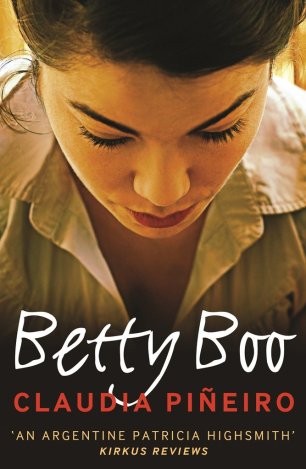 July’s theme is ‘Something from the Americas’. I always had South America in mind here and it was hard as there is so much to choose from among the great classics by Isabel Allende, Mario Vargas Llosa or Gabriel Garcia Marquez, to name but a few. However, I really want to explore something more contemporary and less of a household name outside South America. I’ve chosen a book by Argentinian crime and mystery novelist Claudia Pineiro – Betty Boo. This was first published in 2011 in the original Spanish and then in English translation in 2016. It’s available in paperback and on Kindle.
 I really enjoyed Zennor in Darkness. It is a great story, two stories really, which become intertwined. Clare Coyne is the only daughter of widowed Francis Coyne, and the pair live together in the small town of Zennor in Cornwall. Clare’s mother was born there and the family moved from London when Clare was a baby in order to be near family. Clare’s father’s family had a higher social status, and Clare is clearly ‘different’ from her Cornish cousins, grandparents and aunts, with whom she has spent so much time, but Clare is largely disconnected from her paternal grandparents. Francis Coyne is an ineffectual character, a botanist who earns very little money from his publishing, who spends more time with his books than with his daughter, and who does not seem to understand her on any level. Clare has artistic ability and is a talented artist. She spends her time looking after her father, keeping house, and drawing plants for his latest book project.
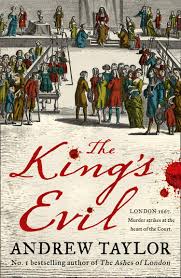 This is the third book in Andrew Taylor’s series of Marwood & Lovett novels. I have thoroughly enjoyed the first two books,
 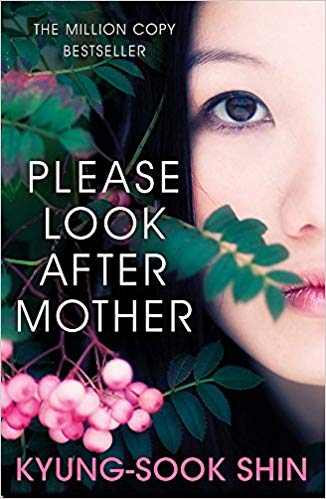 The premise of the story is very simple: So-nyo is a wife and mother to five children, all of whom are now grown-up and living their lives in different parts of the country (South Korea). So-nyo lives a very simple fairly rural life with her husband at the family home, where there are many privations. The place is almost a throwback to a bygone era. So-nyo’s eldest son, Hyong-chol, lives in Seoul with his wife and family and it is while his parents are on their way to visit him (to celebrate the father’s birthday) that his mother goes missing; she was holding her husband’s hand on the busy underground station platform one moment, then she seemed to slip from his grasp and just disappeared into the crowd.
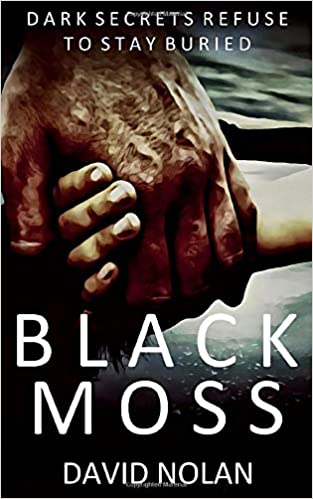 The book jumps back and forth in time between the present day and April 1990. In the present day we meet a middle-aged Danny Johnston, a long-in-the-tooth presenter of investigative television documentaries. He is past his peak professionally and clearly has some deep-rooted, well-suppressed emotional difficulties; the book opens with him crashing into a tree whilst drunk. He lives an empty life alone in London and is borderline alcoholic. His accident is well-publicised in the media and as a result he loses his television contract and is let go by his agent. With nothing to keep him in London he decides to return to the north, to Manchester where he grew up and where he began his career as a local radio reporter.
 I had that very experience recently with my book club when we decided to read To The Lighthouse by Virginia Woolf. Some of us had read it before (though years earlier) others had not read it at all. But even those of us who had read it before could not remember very much about it! I read it when I was studying for my English degree 30 years ago; I would probably have got through most of Virginia Woolf’s books in a very short space of time, because that was what my degree entailed – reading lots and lots of books very quickly! I always remembered that To The Lighthouse was my favourite, but I could not honestly have told you what happens in it, except that the journey to the eponymous lighthouse was about something desired more than something fulfilled.
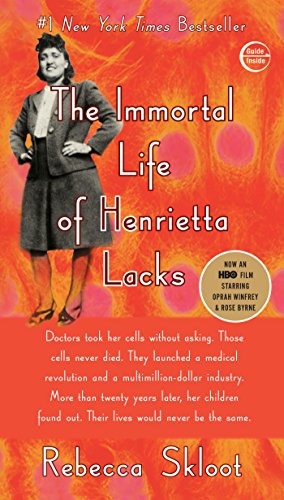 This may have been unremarkable and probably happened more than we care to imagine, but for what happened next: Henrietta’s surgeon had noticed how rapidly her cancer cells had grown, but when George Gey, the scientist to whom he had sent the cells, received them, he found that they divided and reproduced at a rapid rate, and, most remarkably, seemed extraordinarily robust outside their host, unlike all other cells he had dealt with. Gey soon forwarded cells to other colleagues working in the field and they too found the ability of these cells to thrive truly remarkable. HeLa (the name given to the cells) was born and they quickly became an essential part of research worldwide into therapies not just for cancer but for polio and HIV to name but a few. It is thought that around 50 million tonnes of HeLa cells have been cultivated since 1951.
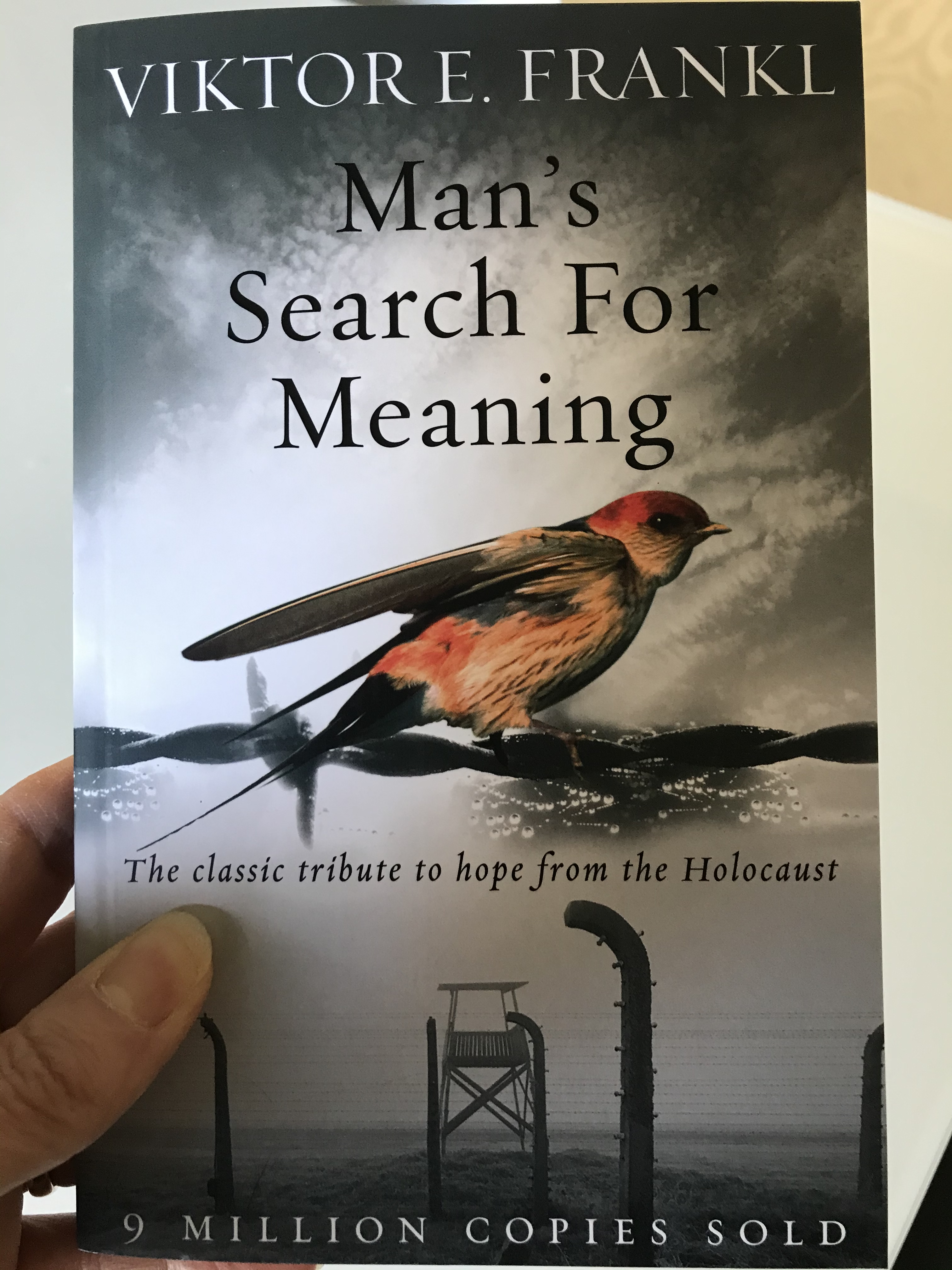 Viktor E Frankl was a psychiatrist who is credited with developing one of the most important theories in the field human psychology (logotherapy) since Freud. He was developing his theory before he was captured by the Nazis but his time in the concentration camp enabled him to observe human beings in extreme conditions and further evolve his ideas.
 Julia's books