The winners of the Women’s Prizes were announced a couple of weeks ago and I was delighted to see that Virginia Evans’s The Correspondent won the Fiction award – I have just completed the book and enjoyed it very much so look out for my review of that one soon. The Non-fiction award went to Lyse Doucet, the outstanding BBC international correspondent whom I have long admired and have seen speaking on many occasions. Her prize-winning debut book, The Finest Hotel in Kabul, has been on my TBR list since it was published last year. But a shout-out must go to the amazing Kate Mosse, co-founder of the Women’s Prize, an extraordinary force for good in the literary world. I have come to her books relatively late, but enjoy them enormously, and have reviewed the Languedoc trilogy on here (I have reviewed Labyrinth and Sepulchre, but not yet Citadel though I have read it.)
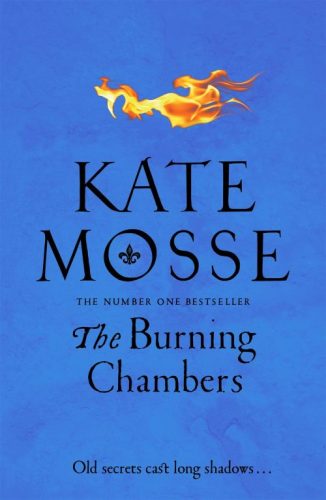
I read The Burning Chambers for a bit of light relief when I was having a deal too much of Proust (!), and it was, quite frankly, just what I needed to get a bit of energy back into my reading. It is the first in her series of the Joubert Family Chronicles and begins in Carcassonne in 1562 at the time of the religious wars between the Catholics and the Hugenots. The central character is Minou Joubert, the nineteen year-old daughter of bookseller Bernard Joubert. Bernard’s wife is dead and so Minou’s primary role in the family is to care for her younger siblings Aimeric and Alis. It is noted that Minou does not resemble her brother and sister; for example, her hair is red, flame-coloured, unlike the dark and curly hair of her siblings. This also gives some hint to her character.
The Joubert family is Catholic, in line with the ruling elite in that area at the time, but Bernard’s insistence on religious tolerance has got him into trouble and the business is suffering. While he is away, Minou receives a sealed letter, sealed with a distinctive family crest, bearing only five words: “She knows that you live”. This is the start of a chain of events which will set Minou on a dangerous path. At about the same time she meets, by chance, Piet Reydon, a Dutchman and a Protestant, who has travelled to the area to support a possible uprising against the oppression of the Catholic church. The couple are immediately attracted to one another, but, of course, their initial exchanges are not auspicious. Piet is a wanted man and Minou helps him flee the city; even though she is a Catholic, she has inherited her father’s passionate commitment to freedom of worship. Before he escapes, Piet leaves a valuable religious relic in her safekeeping. Soon after this Minou returns home one day to find that her young sister Alis, a sickly child, vanished whilst the servant had briefly left the house. Minou feels she has no choice but to go in search of Alis, sensing a connection with the mysterious letter, and the ancient religious relic.
Violence erupts in the region and Minou’s flight and search for her sister take place against this backdrop. Mosse is a consummate plotter and alongside the quest and the burgeoning love story between Minou and Piet there is the ever-present threat of capture by Vidal, the former associate of Piet’s now turned cruel and ambitious Cardinal, who intends to eliminate whatever (and whomever) he perceives as a threat to his ascent.
This is a gripping page-turner of a book that I enjoyed thoroughly and I look forward to reading the next book in the series The City of Tears, which by happy coincidence, I picked up recently in a secondhand bookshop whilst on my travels!
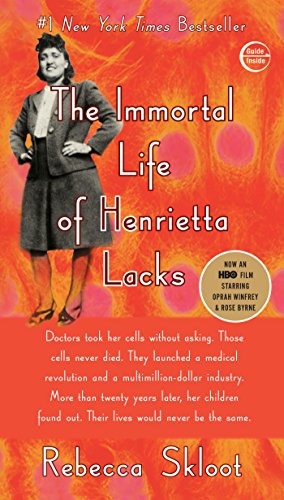 This may have been unremarkable and probably happened more than we care to imagine, but for what happened next: Henrietta’s surgeon had noticed how rapidly her cancer cells had grown, but when George Gey, the scientist to whom he had sent the cells, received them, he found that they divided and reproduced at a rapid rate, and, most remarkably, seemed extraordinarily robust outside their host, unlike all other cells he had dealt with. Gey soon forwarded cells to other colleagues working in the field and they too found the ability of these cells to thrive truly remarkable. HeLa (the name given to the cells) was born and they quickly became an essential part of research worldwide into therapies not just for cancer but for polio and HIV to name but a few. It is thought that around 50 million tonnes of HeLa cells have been cultivated since 1951.
