My Facebook Reading Challenge 2018 is well underway and March’s theme was a classic. I chose Madame Bovary, Gustave Flaubert’s 1857 classic, because it seemed to fit well with a lot of the women’s issues around and being discussed at the moment, particularly gender equality and sexual exploitation. It is fair to say that it had a mixed reception among the readers on the Facebook group!
 I had read this book previously, but many years ago as an undergraduate, so whilst I had remembered the basic story, I had forgotten much of the detail. I had forgotten for example just how brilliant the writing is and how very like Jane Austen Flaubert can be in his use of irony. By all accounts, Flaubert was a perfectionist and spent years on this book; it is certainly masterful and for me the writing was sublime. I had also forgotten how unlikeable all the characters are! Even Emma, our supposed “heroine”, is at times unpleasant, childish, selfish, superficial and self-obsessed. When I discussed it with my husband (who speaks fluent French and read it in the original) he was surprised that I did not find Charles Bovary, Emma’s husband, sympathetic. Interesting that he felt affection for the long-suffering, betrayed husband who loved his wife to the death, despite her many faults, whereas I found him ineffectual and basically unable to connect with his wife on any level, and that was part of the problem in their marriage.
I don’t think even Flaubert liked his characters and I think it was the intention of the author that we stand with him and examine the people he puts before us, with all their flaws. I believe he wants us also to dig a little deeper and examine the French provincial society that gave rise to Emma. As a young woman she lives a dull and uninteresting life with her widowed father on a farm, until the day she marries Charles, a physician in a neighbouring town, and goes to live a dull and uninteresting life with him. Passed from one man’s home to the next. Emma would not have had expectations, but she was an intelligent woman and the kind of life she was forced to lead did not fulfil her deeper needs. She is a woman of deep passions, but there is no outlet for them, apart from the romantic novels she devours. Certainly, Charles does not really do it for her! “Charles’s conversation was as flat as any pavement.”
Flaubert hints that Emma’s lack of fulfilment may be dangerous when he observes, after she and Charles were invited to an aristocratic ball, where she glimpses how the other half live and begins to fantasise:
“This life of hers was as cold as an attic that looks north; and boredom, quiet as the spider, was spinning its web in the shadowy places of her heart.”
What a sentence! Emma is naïve and inexperienced, however. Her life has been limited and she sees events in the most superficial of ways:
“She confused in her desire, sensual luxury with true joy, elegance of manners with delicacy of sentiment.”
Flaubert doesn’t expect us to like Emma very much, but I think he wants us to see her as a product of a time and a place, not as wilful and malicious.
Seduced by romantic fantasy, Emma takes lovers, both of whom are equally selfish and unpleasant. Whilst she is clearly a willing participant in her adultery, there is no doubt that both Leon and Rodolphe exploit Emma. When Emma’s reckless behaviour leads her to run up unsustainable debts, the town’s notary, from whom she has been borrowing money, also exploits her. When he requests sexual favours in return for his continued discretion we can see how deeply lost Emma’s situation is and how as a woman she has almost no power or autonomy. Her response to him, is when we begin to see for the first time something more admirable in her spirit:
“You are taking insolent advantage of my distress, monsieur. I may be in a pitiful state, but I am not up for sale!”
Parts of the book are heavy going, but it is in Part Three that we see the tragic coming-together of events, the closing-in on Emma of all the consequences of her misguided actions, her falsehoods, and the tremendous dislike she accrued. She is not a nice woman – she betrayed her husband, who did not understand her, but loved her in his own way, rejected her daughter and treated those about her with contempt. She was the architect of her own downfall, but she was also a victim of heartless men, of social norms and conventions that failed women like her and gave them no outlet.
She is a difficult heroine for us, but one who makes us think, for sure. Recommended because it’s just one of those books you have to read!
Do you find it hard to connect with the classics? What is your favourite?
If you have enjoyed this post, do subscribe to my blog by clicking on the ‘Follow’ button, and let’s connect on social media.
 It is extraordinary to think that this remarkable novel, still as popular and as shocking today as ever, was written when Mary was just 19 years old. The fact that she was such a literary talent is not surprising given that she was the offspring of the two famous intellectuals, Mary Wollstonecraft, philosopher and author of the seminal feminist work A Vindication of the Rights of Woman, and William Godwin, the radical political philosopher. In her lifetime, she was highly regarded as a radical writer and intellectual, as well as being the wife of the poet Percy Bysshe Shelley, whom she met and fell passionately in love with at the age of 17. Her reputation since her death, however, has been overshadowed by that of her husband’s, with whom she bore four children (three died in infancy), whose affairs and financial troubles she endured, and whose poems she edited both before and after his death. Percy Bysshe Shelley drowned at sea in 1822, just six years into their marriage when she was 25. She died at the age of 53 in London from a suspected brain tumour.
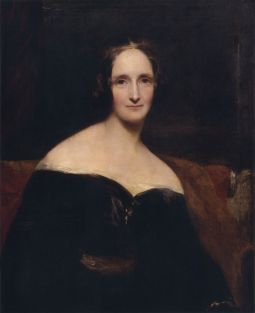 By any standards her life was remarkable and in the last few years her reputation has been revived and she has begun to be more widely considered as a formidable talent in her own right, rather than just a ‘one-book author’. Frankenstein has been a staple of English literature GCSE and A level syllabuses for years, but most of her other works have fallen out of print. A new biography, In Search of Mary Shelley: The girl who wrote Frankenstein, by Fiona Sampson was published earlier this year, some of which I caught when it was serialised in Radio 4 recently. What I heard sounded fascinating. Sadly it is not available on the BBC iPlayer at the moment.
 We decided for our March meeting we’d read Graham Norton’s 2014 memoir The Life and Loves of a He Devil. We wanted to read an autobiography and felt that among the many “celebrity” memoirs out there, Graham’s might have more to offer than most. We all like him as a broadcaster and personality and thought it might be fun. We were not wrong! But when we came to meet and discuss it, we had very little to say. We’d exchanged a number of messages on our WhatsApp group in the preceding weeks, with many laughter emojis, asking each other if we’d come across the dog and condom anecdote yet, or the Dolly Parton story. Some sections of this book, which I read most of whilst on a train journey to London, were laugh-out-loud, or rather “try to suppress a laugh because I’m in public”, moments. It’s a romp and Graham writes the way he speaks, with wit, authenticity and complete honesty. His writing style is similar in his novel
  This was February’s choice for my
 The book is set in Connecticut in 1942-43. Aila, is 16 years old when we first meet her and she has a younger brother Miles. Their mother, Juliet, has just died and their father has been called away to fight in the war. Aila and Miles are sent to live in Sterling (their mother’s birthplace) with Matilda Cliffton and her family; Matilda was Juliet’s childhood best friend. Aila is keen to take something of her mother’s with her and she finds a volume of Shakespeare’s complete works, much scribbled in, into the back of which has been placed an envelope, containing a ring Juliet always wore, and a mysterious note to an unknown person, Stefen, at the end of which Juliet signs herself ‘Viola’.
 I really liked this little book and it’s the third in the Invincibles series. The central characters are two friends, Nell and Freddie, and Mr Fluffy, a cat. Nell’s teenage brother Lucas, has a sleepover camping with his friends in the garden, which, of course, the younger ones want to be involved with. Through ‘Pester Power’ Nell manages to persuade her parents to let her and Freddie participate for a few hours. Noises in the woods (the waste ground next to the garden) terrify them all, but, of course, it turns out to be nothing more sinister than Mr Fluffy! It’s a great little story, with nice illustrations and a level of humour which children will love and adults will also identify with. Recommended.
 Similar in style to The Invincibles, this book is along the lines of The Addams Family – set in Nocturnia, a land of comic creatures, ghouls, vampires, mummies, etc. The central story is that Amelia’s parents are to throw their annual Barbaric Ball. They are keen for King Vladimir to come, but he has not been seen in public for years. The king decides he will attend with his son Prince Tangine, and, in preparation for getting to know the people, the Prince will attend the local school. He is of course, very haughty and unkind, and Amelia is particularly cross when he demands, and gets, her pet pumpkin Squashy. It turns out that Prince Tangine hides a devastating secret – he is half-fairy (terrifying creature of the light!), though his mother disappeared when he was young, leaving his father bereft. Amelia discovers this as she tries to rescue Squashy from the palace, and, when the truth is revealed, Tangine owns up to his faults and they all become friends. It’s a fun little story, and the toilet humour will appeal very much to the irreverent side of children. Lovely illustrations and plenty of contemporary references. It is basically about friendship, inclusiveness and being nice to people. Recommended though less in this one to keep parent readers interested.
 The book starts with 18 year-old Allie Kennaway, and her friends heading out for their college prom night. They are at Allie’s home with her father Steve and younger sister Teagan. Steve is a single parent, his wife, the girls’ mother, Sarah, having died a couple of years earlier from cancer. Allie, we learn is a transgender woman, formerly Aled.
 To my shame, I have not read anything by Agatha Christie before, although I have stayed at the Old Swan Hotel in Harrogate, to which Agatha famously disappeared for nearly two weeks in 1926 after a row with her husband! She is quite extraordinary when you look at the stats: said to be the best-selling author of all time, her books have sold around two billion copies (yes two billion!) worldwide, second only to Shakespeare and the Bible. She wrote 72 novels, 14 short story collections, and one play, The Mousetrap, the longest-running in the world. Miss Marple and Hercule Poirot are perhaps two of the best-known literary characters of all time, and her work has been adapted for film and television countless times. She is truly a literary giant.
 Julia's books