
Regular readers of this blog will know that I am a big fan of audiobooks. Having said that, it doesn’t work every time for me; the narrator is vital and I struggled listening to 1984 as I could not get beyond the fact that the reader was Andrew Winnicot…or Adam Macy from the The Archers, which I listen to avidly! Recently, I have enjoyed The Handmaid’s Tale on audio, I listened to all of Elena Ferrante’s Neapolitan series, with the sublime Hilary Huber, and I am currently listening to Gone Girl, the January book in my Facebook Reading Challenge, (which I am finding totally gripping, by the way).
 A book I listened to at the end of last year was Ashes of London by Andrew Taylor. I borrowed it from the library when it was first published in 2017 but did not manage to get through it before I had to return it for someone else. It is a historical thriller set at the time of the Great Fire of London in September 1666 and is the first in Taylor’s Marwood & Lovett detective series. I have not yet read (or listened to) the second and third books in the series, both of which were published last year, but they sound intriguing.
James Marwood works as a junior reporter on a newssheet, situated at the centre of courtly London life. Marwood lives with his elderly and increasingly senile father, a former printer and ‘Fifth Monarchist’ (a Protestant sect which believed the monarchy would fall and Christ would return to earth to rule), whose followers were considered criminals after the triumph of the Monarchists in the English Civil Wars. Marwood is asked to report on the aftermath of the Great Fire in various parts of the city and the rebuilding projects, but he soon becomes embroiled in the case of a missing person, the niece of a gentleman, Cat Lovett.
Cat Lovett, is a young woman sent to live with her uncle and step-aunt in Holborn, after her father, a convicted regicide (plotter against the monarch), became a fugitive. She is due to be married to an odious dandy, and much older man, but then her step-aunt’s son rapes her. She fights back, mortally wounding him, and, realising the danger she is now in, decides to escape and take her chances on the streets of London, hoping eventually to track down her father. An elderly servant, who had known Cat from childhood, is presumed guilty of the attack on the son and is flogged to death.
When James Marwood and Cat Lovett’s paths cross, inadvertently and fleetingly, he finds he is drawn by personal curiosity into the search for her. He realises early on that all is perhaps not what it seems in the household with the uncle and step-aunt. He suspects foul play and when he is then sent to investigate the cases of two bodies dumped in the Thames, he comes to believe that all these events are linked.
What follows is a complex thriller with a multi-layered plot, strong characters and the weaving-in of comprehensive historical knowledge of the period. I learnt a lot! It all leads to a thrilling denouement – not ideal when you’re listening whilst driving! – in the half-built St Paul’s Cathedral. I absolutely loved this book and recommend it highly. I’m delighted to inform you that it is also available for free on Kindle Unlimited!
I’m looking forward to reading or listening to the next two books in the series, The Fire Court and The King’s Evil.
PS The narrator on this one was great!
If you have enjoyed this post, I would love for you to follow my blog. Let’s also connect on social media.
 Last week I launched my

 It is truly a groundbreaking novel, but curiously, in my view, less in its own right than as an extension, a continuation of, the work started with the publication of The Handmaid’s Tale in 1985. What is also partly so extraordinary about The Testaments is how relevant its story remains over thirty years on from The Handmaid’s Tale. In spite of equality legislation, human rights legislation, more women in positions of power and authority, we still have world leaders able to express their misogyny openly and with impunity, and violence against women and girls seems as rife as ever. Atwood is Canadian, but her novel is a dystopian vision set in the United States, where, in the last year, we have seen the erosion of women’s reproductive and therefore health rights in some states and the substantial threat of more to come. This novel seems so urgent and necessary.


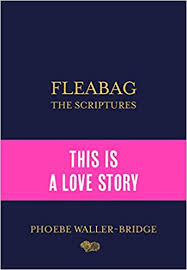 Fleabag: The Scriptures by Phoebe Waller-Bridge £20.00
 Who Am I Again? by Lenny Henry £20.00
 Wilding by Isabella Tree £9.99
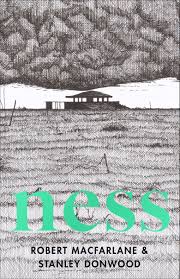 Ness by Robert Macfarlane and Stanley Donwood £14.99
 Twas the Nightshift before Christmas by Adam Kay £9.99
 The Jewish Cookbook by Leah Koenig £35.00
 Mother: A Human Love Story by Matt Hopwood £9.99
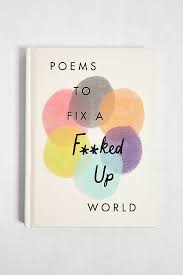 Poems to Fix a F**ked Up World by Various £9.99
 Fucking Good Manners by Simon Griffin £9.99
 The Boy, the Mole, the Fox and the Horse by Charlie Mackesy £16.99
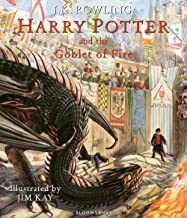 Harry Potter and the Goblet of Fire (Illustrated edition) by JK Rowling and Jim Kay £32.00

 Diary of a Dyslexic School Kid by Alais Winton and Zac Millard £9.99


 The Book of Dust Volume Two: The Secret Commonwealth by Philip Pulman £20.00
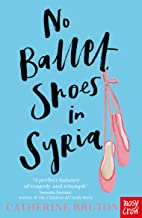 No Ballet Shoes in Syria by Catherine Bruton £6.99
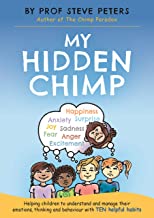 My Hidden Chimp by Steve Peters £12.99
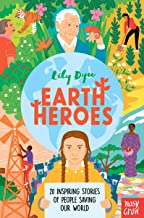 Earth Heroes: Twenty Inspiring Stories of People Saving Our World by Lily Dyu £9.99
 I remember when this book was published in 2006. It was widely acclaimed, but also controversial; there were some questions marks over its historical accuracy (one senior rabbi argued that nine year-old boys were not kept in concentration camps, all were gassed because they could not work and were therefore of no use, though this argument also been disputed) and others have questioned whether such a relationship, between a young inmate and the son of the camp commandant, could have gone on for so long undetected, particularly when Bruno slips under the fence. Whatever its problems, the book has sold millions of copies worldwide and was made into a successful film within two years of publication.
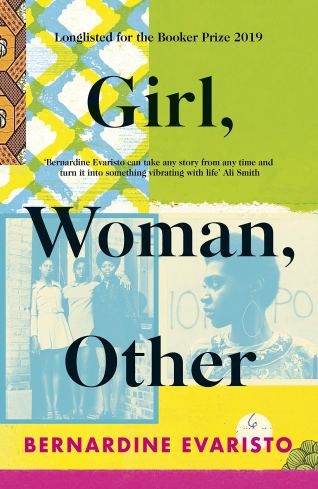 What I liked about it, however, was less this grander aspect, but rather the quality of its story-telling. I must admit that 50 or so pages in, I was not overwhelmed! There are twelve characters in the book, all women bar one (who is trans), all black or mixed race. They are broken down into four groups of three, and each threesome is strongly connected in some way (eg mother/daughter). Each group is also connected with the others, even if only in a tenuous way (eg teacher and former pupil) and almost all are in some way connected to Amma, the first character we meet. Amma has written a play which is having its debut performance at the National and this provides the framework of the novel. Many of the characters are present at the penultimate chapter of the book, the after-party, where the differences between them and their lives are laid bare. This is interesting because the author is not only trying to draw out the similarities between the characters and their life experiences, suggested by their common characteristic of being mixed race and female, but she is also, I think, railing against the notion of such women/people being homogeneous; they are all far more than just their race or gender.
 I’ve just finished a lovely little book The Umbrella Mouse by Anna Fargher. When I was browsing in my local bookshop a few months ago, one of the assistants recommended it to me and said it had had her in tears. I knew then it was a ‘must-read’! I got my copy secondhand online and it’s signed!
 Julia's books