Audiobook review – “The Goldfinch” by Donna Tartt

I have probably spent more time listening to audiobooks in the last twelve months than in all of the previous four years of subscribing to an audiobook service put together! There were in fact times in those previous four years when I suspended my membership because I was building up so many credits. I mainly listened to them on long drives alone and these were relatively infrequent. Last year, however, I found myself, like many people, going out for a walk or run daily. I haven’t walked more in the last twelve months than I did before, but my walking these days is less about purpose (going somewhere to get something) and more about pleasure, nature and exercise, and, well, let’s be honest, because when something is rationed you realise how important it is to you.

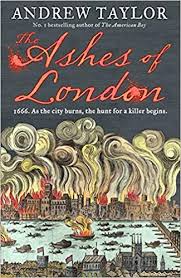
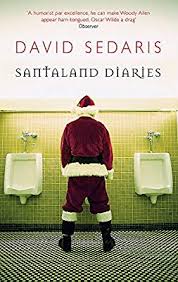
I’ve reviewed a number of my particular favourite audiobooks on here: Andrew Taylor’s Ashes of London series (I listened to three out of the four last year), Douglas Stuart’s Booker Prize-winning Shuggie Bain, and of course David Sedaris’s Santaland Diaries. I have yet to review the audiobook that was the absolute standout for me in 2020, though, and which I listened to in the autumn – The Goldfinch by Donna Tartt. I can only put my reticence in posting a review down to being in complete awe of Tartt’s genius as a writer, and the feeling that I could never write anything that would in any way do justice to the mastery on display in this book.

I will try and summarise the plot as briefly as possible. We first meet the main character Theodore “Theo” Decker when he is thirteen years old. He lives with his mother, who works on an art journal, in New York City, his alcoholic father having left the family some years earlier. Theo is in some difficulty at school and he and his mother have an appointment with the Principal. To kill time before the meeting, Theo’s mother takes him to the Metropolitan Museum of Art. A terrorist bomb explodes while they are there, killing Theo’s mother and many others, and devastating the building. In the middle of the wreckage Theo spots an elderly man, whom he had noticed earlier on in the visit because he was accompanied by a sullen, but ephemeral looking young girl of about Theo’s age, carrying an instrument case. Theo goes to the old man, who is dying from his injuries. The old man gives Theo a ring from his finger and a curious message which it will later transpire refers to an antique shop that he Welty Blackwell, ran with his partner James “Hobie” Hobart. During their brief time together, in what was a room devoted to Dutch paintings from the 17th century, Theo finds himself captivated by a tiny picture by Carel Fabritius called The Goldfinch. Welty notices Theo’s fascination and with his dying breath seems to encourage Theo to take it. The explosion scene is compulsive listening, jaw-dropping.

Theo takes the painting and manages to find his own way out. He takes cover back at home, not knowing if his mother is alive or dead. Eventually, the authorities track him down and he is placed in temporary care with the family of a school friend, Andy Barbour, a slightly sickly, precociously intelligent boy, who, like Theo, does not quite fit in at school. Andy’s family is from the Upper East Side – wealthy, formal, slightly odd, and more than a little dysfunctional. But after a period of adjustment Theo and the family gradually get used to one another, until, at the point the Barbours announce that they would like formally to adopt Theo, the boy’s life takes a dramatic turn.

I wish to say nothing more of the plot, because it is simply too delicious and too clever and if you have not read the book yourself and are tempted to do so, I want you to enjoy every single moment of shock and drama.

The Goldfinch by Carel Fabritius dated 1654

Theo does not reveal that he has the painting for many years. And it burns in his conscience, influences almost all his actions and decisions. The plot is a joy, an absolute roller-coaster, and the character of Theo is complex and brilliantly-drawn. He is in turns damaged and damaging through the book, but all the while the two things that constantly influence his life are the catastrophic loss of his beloved mother in such traumatic circumstances, and the concealment of the painting, an extremely valuable internationally renowned piece, which becomes the subject of a worldwide search. Theo’s increasing paranoia in relation to the painting, has echoes of The Picture of Dorian Gray. In addition to Theo there are a clutch of other superb characters: Boris, his Nevada schoolfriend who becomes a major influence on events in his life; Hobie, the business partner of the old dying man in the museum who Theo tracks down; Pippa, the young girl with the music case, Welty’s granddaughter; and, of course, Theo’s mother, who, although she dies early, is a constant presence in the narrative.

This book has everything: brilliant characters, brilliant plot, action, reflection, literary merit. It won the Pulitzer Prize for Donna Tartt in 2014 (my second Pulitzer Prize-winner reviewed in a week!) and was adapted for screen in 2019. I’m not sure I want to see the film. There is surely no way it could do justice to the book? Although I note that it has Nicole Kidman and Sarah Paulson among the cast so I’m tempted.

I have no idea why I have not read this before; The Secret History, Donna Tartt’s debut novel, published in 1992, is one of my favourite books of all time, a masterpiece, so you would have thought I’d be hanging on everything she has ever written. She is hardly prolific though – her second book, The Little Friend, did not come until ten years after her first, in 2002. That was the start of my childbearing, aka reading wilderness, years, so I’m not really surprised I didn’t get around to that one. Tartt’s books are long – The Goldfinch is 880 pages, or 32 hours of listening joy, and The Little Friend is almost 600 pages – there was no way I would have got through that with a two year old!

The Goldfinch is highly, highly recommended. And the painting, a fragment of which is shown on the cover of the book, is utterly beautiful. That’s it, I’m out of superlatives.

How reading can keep you going right now

Image by cromaconceptovisual from Pixabay

I started the new year with hope and positivity. Yes, further tight restrictions were being imposed, but the vaccine was being rolled out and the Christmas decorations were still up. I even wrote about my feelings of optimism on here!

Since then, my mood has fluctuated wildly. I’ve had some domestic stresses in the form of day-job demands and administrative wheels turning incredibly slowly at the moment which have had some knock-on effects (too boring to talk about here). The Covid death toll is breaking new grim records every day it seems and I truly fear for the mental and physical health of NHS and care home staff at the very sharp end. If you are lucky enough to be untouched by Covid now, we are all going to be impacted by its ramifications somehow in the coming months. The weather is currently awful – torrential rain here in suburban Manchester as I write, making it incredibly dark even in the middle of the day. But despite this terrible backdrop, I don’t think it fully explains my mood. I think everything is just very frightening right now. Inside each of us is a little child who just wants to be told that it will all be okay. At this point, my adult self does not feel quite up to the job of providing the necessary reassurance.

I think there is also something about spiritual resources. Perhaps if you have a faith of some sort, you can get spiritual nourishment through prayer and your god. If you do, I hope sincerely that it is working for you. I don’t have that, so I find myself turning to books. Over the last couple of weeks, for one reason and another, there have been days when I have not had a chance to read, and that has been a mistake. Reading is my escape, my antidote to worldly anxieties, my source of wisdom and my assistant to sleep!

I am frequently asked for reading recommendations. I always give them with the caveat that taste is such an individual thing. Looking back over my reading since I started this blog, I thought it might be useful to post some suggestions here of books that have nourished me, as they might help if you are feeling anything similar to my ups and downs at the moment. The following are not all ‘cheerful’ (I don’t read many cheerful books!), but they should all enable a degree of escape and/or entertainment, which I think might just about be enough for many of us at the moment.

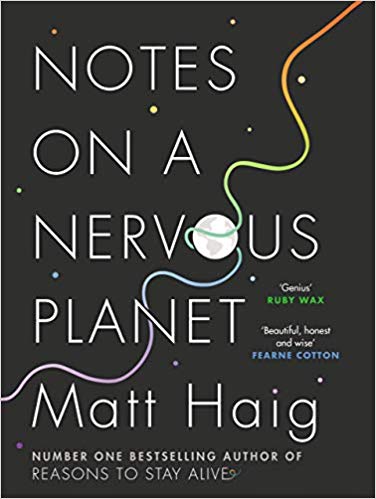
  1. Notes on a Nervous Planet by Matt Haig – published just before the pandemic struck, but with plenty of analysis and tips on the challenges of modern life which apply perfectly in 2020/21.
  2. The Music Shop by Rachel Joyce – lovely story, perfect ending, good solid rainy day reading stuff.
  3. My Brilliant Friend by Elena Ferrante – if you have not yet discovered Ferrante’s Neapolitan novels, you are missing out. Superb, very Italian.
  4. The Birth of Venus by Sarah Dunant – also Italy, but Renaissance this time. Cracking story and several centuries from here. A reminder that things used to be much worse!
  5. Ashes of London by Andrew Taylor – another brilliant series, also set a long time ago. Edge of the seat reading.
  6. Holding by Graham Norton – brilliantly funny, and a brilliant writer too. Norton evokes rural Ireland with love and with great wit.
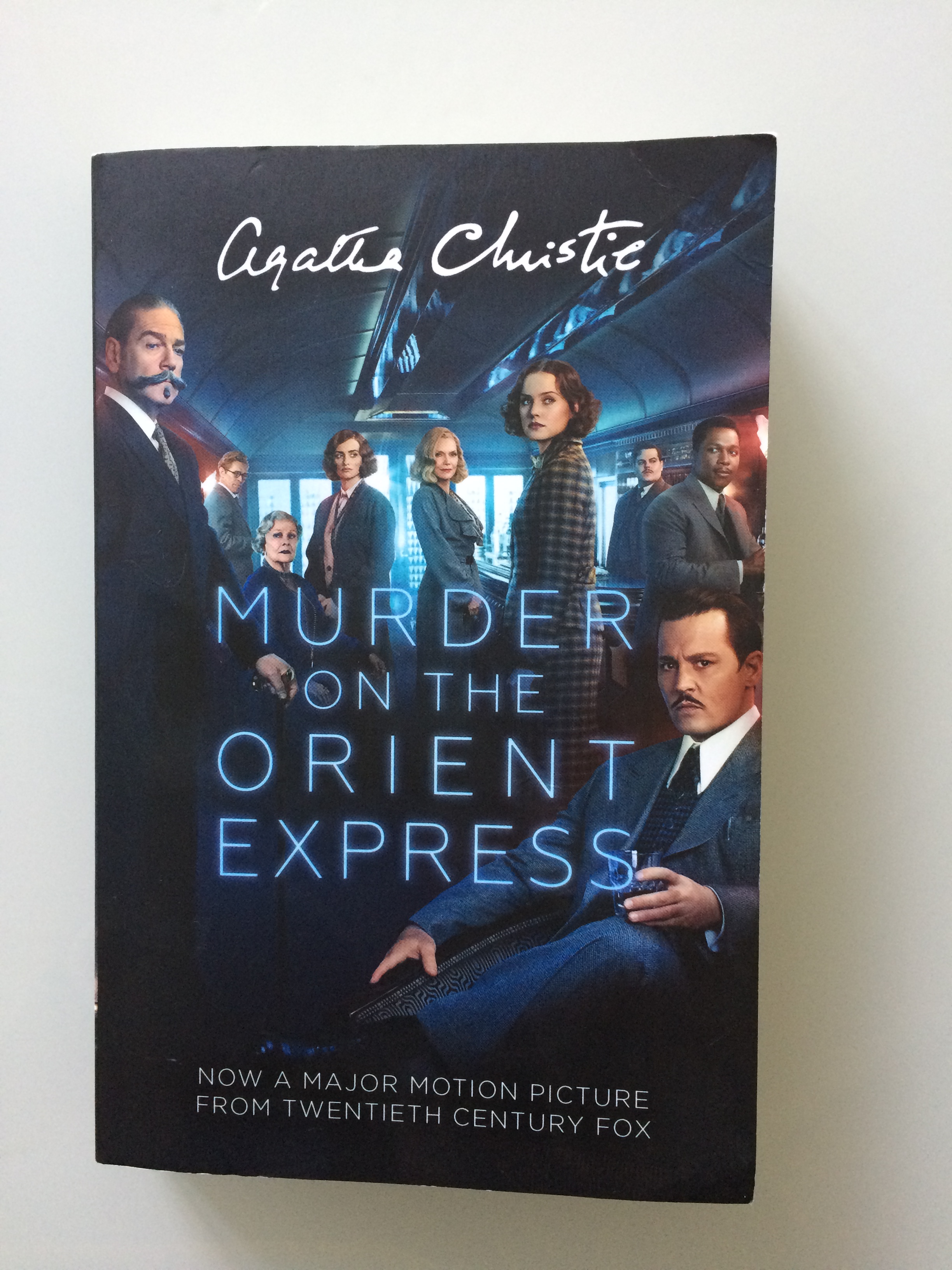
  7. Murder on the Orient Express by Agatha Christie – a trip on the Orient Express is on my bucket list, so this one was perfect escapism for me, but Death on the Nile would do just as well.
  8. A Whisper of Horses by Zillah Bethel- brilliant uplifting book written mainly for children which I loved.
  9. The Revenant by Michael Punke – if you think it’s a bit chilly out…. Nothing like someone else’s life-threatening terrors to make you feel gratitude for central heating and supermarkets.
  10. Becoming by Michelle Obama – I write this blog on a historic day, and am gratefully reminded that American presidents can and will be so much better.

And if that isn’t enough to be getting on with may I recommend a book I bought just before Christmas, which I haven’t reviewed on here yet, but which I am thoroughly enjoying dipping into, The Book of Hopes edited by Katherine Rundell.

Oh and just one more! The Boy, The Mole, The Fox and the Horse by Charlie Mackesy which is a joy from start to finish and is guaranteed to lift your spirits.

What are you reading to keep yourself sane at the moment?

Audiobook review – “The New Wilderness” by Diane Cook

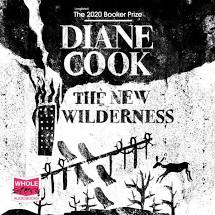
In my final book review of last year I wrote of my delight that Douglas Stuart’s Shuggie Bain won the 2020 Booker Prize. It was one of only two of the shortlisted books I managed to complete before the prize winner was announced (the other one I read, Burnt Sugar, I liked somewhat less and have also reviewed here). I had another of the shortlisted books ‘in progress’ at the time the winner was announced, The New Wilderness by first-time author Diane Cook, which I listened to on audio. It was utterly compelling and was beautifully read by Stacey Glemboski. It reminded me very much of a previously shortlisted book, The Overstory, by Richard Power, which was nominated in 2018 and remains one of the best books I have read in recent years.

The New Wilderness is set in what seems, frighteningly, a not too distant future in America. Environmental decline has wreaked havoc on ordinary life, such that urban living is barely sustainable, and there are few alternative spaces left for citizens to inhabit. The government has authorised a research project to allow a small group of twenty people to inhabit one of the last remaining wild areas, but there are strict rules that they must observe, including having no contact with the outside world, and leaving no trace of their habitation on the environment, which means not staying in one place too long or building a camp. (The irony is not lost.) The group is closely monitored by Rangers, who enforce the regulations, and the group is required to attend stations every few months to register births, deaths and significant events. The story is told through the eyes of the leading character, Bea, whose partner Glen was one of the academics leading the research. Bea had volunteered for the project in order to remove her daughter Agnes from the city which was killing her slowly. Agnes suffered from a range of unnamed conditions which have been cured by life in the wilderness. Agnes is about ten or eleven when we meet her although no-one has really been keeping track; time is marked by seasonal change not the calendar.

When the book opens the group has already been living in the wilderness for some years. It opens dramatically with the deaths of two members of the group in a hazardous river crossing, in which a valuable rope is also lost. What is immediately striking to the reader is how the loss of the rope is mourned nearly as much as the loss of the companions, indicating how the group has become more focused on survival than finer human emotions. Further death occurs early on when Bea gives birth, alone in the forest, to a dead baby, which she buries quietly and away from the rest of the group. The dead child will be a recurring motif throughout the book; Bea left the city to save her daughter, and lost another because she was in the wilderness.

Life is extremely challenging and there are clearly tensions in the group, which the author takes great care to illustrate in skilful detail, particularly over ‘leadership’ – Glen, as one of the project’s initiators, was once looked to as a kind of informal leader. Glen becomes sick, however, and another of the group members, the strong more dominant alpha male-type, Carl, sees an opportunity to weigh in. Bea has also emerged as a strong leader in the group and Carl, in an attempt to fully oust Glen from his unofficial position, goes about bringing her to his side as well. Here the community is disintegrating; it’s like Lord of the Flies with grown-ups. Further chaos ensues when a small group of newcomers – city refugees who were on a ‘waiting list’ to join the original group in the wilderness – is encountered. To anyone who knows anything about group psychology – forming, storming, norming and all that – this is fascinating. It is also fascinating to see the way the two distinct groups spar with one another, with whom individual members place their loyalties, and how readily the original population integrates with the ‘immigrants’. There are also more young people among the newcomers, teenagers, and Agnes, now a teenager herself, has the opportunity the develop relationships with people her own age for the first time. But the differences between them in terms of their life experiences to date makes it difficult for Agnes to navigate her way among them. With the teenagers a further faction in the group emerges.

Author Diane Cook

What the author creates in The New Wilderness is a microcosm of our problematic human society, where Utopia cannot exist, where the human condition leads to inevitable decline. The wilderness is not the ideal society that the participants hoped it would be; yes, it is ‘natural’ and (mostly) unpolluted, but it is also brutal, and even the most idealistic among them hanker after a shower, some easy food, a haircut. Most strikingly however, is the failure of the community, socially, although the strict policing of the rules by the overweening and power-drunk Rangers (some more than others) does not help.

I have only scratched the surface of the book in this review – it is a highly complex novel and I fear I have not done it justice. It is a dystopian novel, which predicts a bleak future (do not read this if you want something uplifting!) where the opportunity to influence climate change has passed. It is also a novel about motherhood; Bea left the city to save her daughter’s life. In the middle of the novel she also flees the wilderness for a time (abandoning her daughter) when she learns that her own mother has died. The mother who begged her not to go.

All of the Booker-shortlisted novels I have read so far are about mothers or motherhood. Is that a coincidence?

Highly recommended.

Audiobook review – “Santaland Diaries” by David Sedaris

When I posted my new Facebook Reading Challenge earlier this week, I completely forgot to mention the final book of my 2020 reading challenge, which was The Santaland Diaries by David Sedaris. I chose it because I just felt a bit of a laugh was in order at the end of what had been a challenging and intense few months. I decided to go for this one on audiobook because I love Sedaris’s unique style of delivery; he is mostly quite deadpan, but that just gives his occasional bursts of comic energy all the more impact.

The book is a series of sketches loosely based on Christmas themes. The longest of these, and the one which opens the book, is an account of the author’s time working as a Christmas elf at Santaland in Macy’s department store in New York city (the veracity is disputed, but who cares?). I made the mistake of starting to listen to this on one of my morning runs. I have to tell you that I had to stop several times, doubled over with breathless laughter and my chuckles got me some strange glances from passers-by! In the caricatures of ghastly parents, children, his fellow elves and the mostly overly self-important ‘Santas’ we can all recognise tiny little bits of ourselves. These pieces were first aired on various media in the early 1990s, but it is extraordinary how much of it remains punishingly accurate today. In the awful, domineering parents bullying their kids into posing for photos with Santa bearing gleeful smiles (regardless of their true feelings) he foreshadows instagram parenting which values the posting of an experience more highly than the experience itself. You could easily believe that Sedaris had been made completely cynical by his seasonal work experience but he ends the piece with an uplifting account of one of the truly magical Santas who really did enchant the children who came to see him.

The next couple of essays I found more clever than funny- one is a woman reading out her round robin Christmas letter in which she gives an account of her husband’s illegitimate Vietnamese daughter turning up at the family home, and ends very darkly when her own daughter’s baby dies, it turns out, at the hands of the narrator, who has tried to pin the blame for the crime on the Vietnamese ‘interloper’. Macabre humour indeed.

My favourite essay was called ‘6 to 8 Black Men’. It is one of the funniest things I have ever heard. It sounds very un-PC, but it is actually extremely self-deprecating and pokes fun at north American Christmas customs and the culture more generally (including the systemic racism), as compared to their European counterparts. I have had a couple of repeat listens of this piece and watched it on YouTube and it made me laugh just as much second and third time around. Sedaris’s humour is edgy at times, but I think the best comedy tends to makes you slightly uncomfortable.

This was a wonderful little collection, suitable for any time of year, and a perfect introduction to Sedaris, if you have not come across him before.

Highly recommended.

Happy New Year! (Must be time for a reading challenge?)

Hello, happy new year, happy Epiphany! I am late to the new year party this year. 2020 caused many of us to look at our lives somewhat afresh and ask what on earth we are doing and what is really important. One of the smallish things that I identified was an attachment to making Christmas something a bit more meaningful, in the absence of a religious faith, and I found myself taking an interest in some of the ancient secular traditions of the season. I tried not to do anything that looked too much like work between the winter solstice on the 20th/21st December (I watched the live sunset over Stonehenge broadcast on the English Heritage Facebook page and it was amazing) and twelfth night on 5th January (yes, I know many say it’s the 6th- depends when you start counting).

It was an odd period this time around for so many people. I was lucky; I collected my son from university in mid-December and with my husband and two daughters the five of us hunkered down, watched films, cooked, ate, walked, relaxed and generally had one of the nicest Christmasses ever. I’m not trying to be smug, especially if, denied the company and contact of loved ones, yours was s**t (and I know plenty of people for whom it was), I suppose all I’m saying is that we felt freer than usual of many of the normal Christmas pressures. And it was really very nice.

Our tree will come down today after a sterling four weeks of service. I switched off my Christmas lights for the last time yesterday night and I will miss them. I switched them on every morning when I came down to breakfast, still in the dark, and they were enormously cheering. I’ll need to find an alternative I think until the mornings are light again. I also lit candles in my front window every evening at dusk. That was nice too and I’m going to keep doing that until the evenings get a bit lighter.

So, today it’s back to work. My son scooted back to university at the weekend, relieved I think to have made the break for the border before Lockdown 3.o and the new travel restrictions came into force. My teenage daughters have diligently embraced the opportunities of online home learning – no more battling on public transport every day, no going out in the cold and dark, no school uniform and no classroom distractions from the handful of kids whose learning loss over the past few months has been so grave that they have forgotten how to behave in a classroom or towards their teachers. Sad, distressing and deeply worrying. Teachers, you have my utmost utmost respect for what you have done, achieved and had to put up with in 2020. I am lucky to have motivated children, old enough not to need supervision, able enough not to need much support and a household with enough tech and enough broadband to support a family of four online for most of the day. I am very very aware of my good fortune. It is a scandal that so many do not enjoy the last two things in order to cope with the first three.

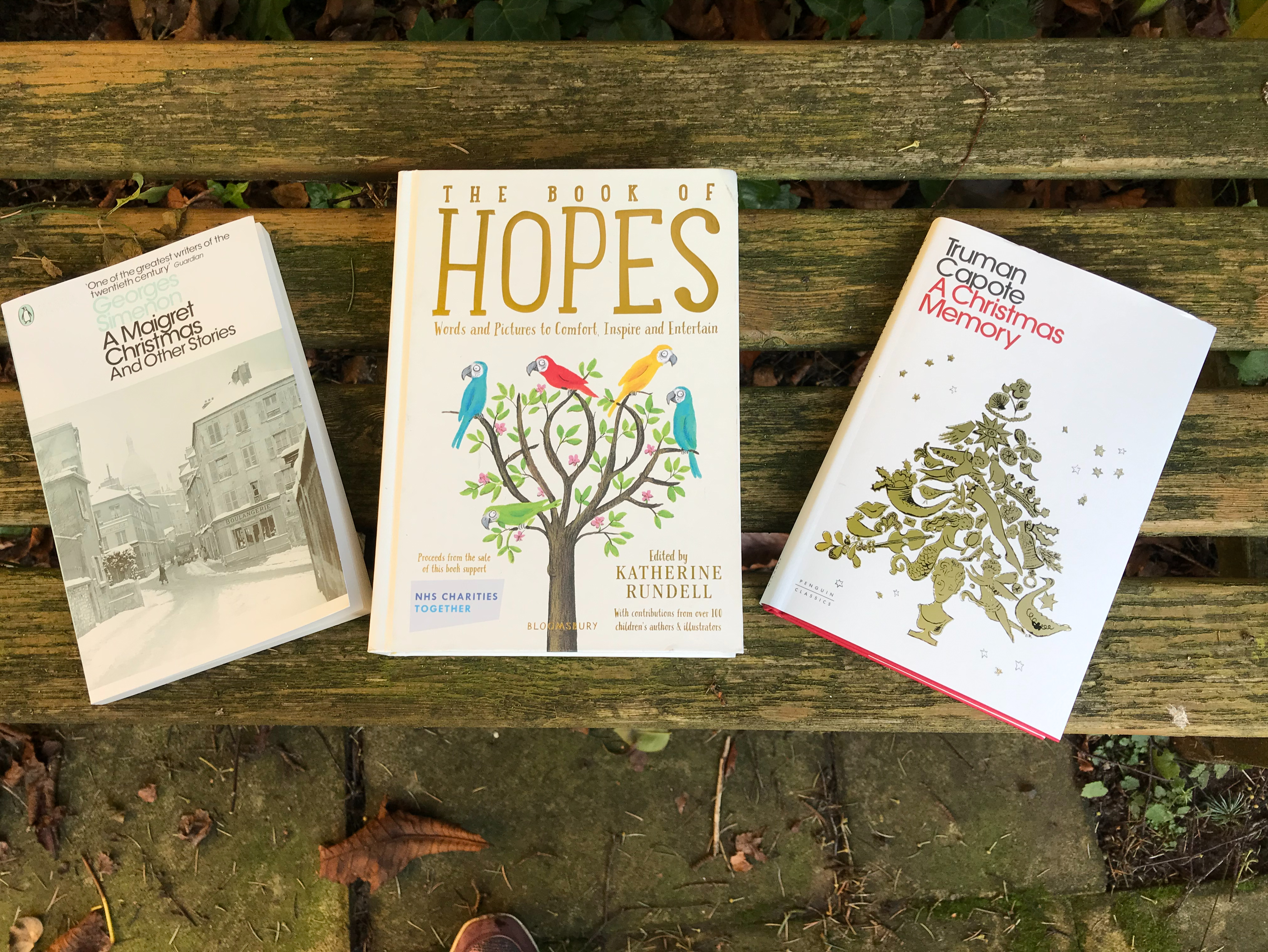
I spent a lot of time reading over the Christmas break (goodness is it really four weeks since I last posted?!), but not my usual fare. I read a load of short stories; I bought most of my Christmas gifts in my local bookshops, one of which is a chain with a loyalty scheme. I built up quite a nice bunch of points so on Christmas Eve I treated myself to the following books:

I’ve been working my way through these and it was a joy to dip in and out. More on these soon.

Now it is time to look forward, and 2021 promises much. The vaccine, oh the vaccine. Surely the scientific miracle of our age. Let us hope governments deliver. The inauguration of a new President in the United States, whom we hope will, alongside his stellar Vice-President-elect, lead the world, as only his country can do, in paying long overdue serious attention to climate change, and addressing social injustice in all its forms. Only fourteen more days to go. I think the rest of the world is counting.

Plus of course, there are the dozens of wonderful books we are due, and lots of cultural events coming up. And, on a more parochial note, there is of course my 2021 Facebook Reading Challenge! It’s been tough this time, coming up with themes (I’ve done the genres and I’ve done countries and continents), so I’m just doing a hybrid of previous years and re-using most of the themes in a different order or with a twist! Why not? It has thrown up some really wonderful reading choices that I would not otherwise have made so what is not to like?

My first book of the year, on the theme of an American classic, is a re-read for me, and not too long, since we are already nearly a week into the month – The Color Purple by Alice Walker. I would love for you to join me on my Facebook Reading Challenge this year. You can print out and keep my reading challenge pro forma below (:D) if you’d like to get involved, and join my Facebook group.

Happy reading everyone!

Book review – “Shuggie Bain” by Douglas Stuart *Booker Prize Winner*

I was delighted when it was announced in November that Shuggie Bain had won the Booker Prize. I had only read two of the shortlisted books, and this was one of them, which made me feel very ‘on top of literary events’! I had chosen this one to tackle first from the shortlist purely because it was the longest and I planned to listed on audio so I thought I’d have a good chance of getting through it. I have not done well with previous Booker nominees who have written very long books – it took me weeks to finish The Overstory by Richard Powers (shortlisted in 2018), although I absolutely loved that book and slightly preferred it to the winner (which was Milkman); I never finished Paul Auster’s 4 3 2 1 from 2017; and I haven’t yet even got around to buying Ducks, Newburyport by Lucy Ellman, nominated last year. I really want to read it, but I’m not sure I have space in my life for over 1,000 pages of unbroken prose at the moment (45 hours on audio!)!

Anyway, back to Shuggie Bain. It is brilliant. It is conventionally written (which, actually, is quite nice) and it is a cracker of a story with beautifully drawn characters, a wonderful sense of place (the rougher ends of 1980s Glasgow) and the most real, colourful and vivid passages of dialogue I have come across in a long while. The audiobook was read brilliantly by Angus King – the range of voices he conjures is quite exceptional.

Shuggie, short for Hugh, is the third and youngest child of Agnes Bain. She is married to Shug (also Hugh) Bain, a philandering taxi driver, and has two other children, Catherine and Leek, from her earlier marriage to a safe and steady Catholic. Agnes left her first husband because he never excited her enough. Agnes is beautiful and vivacious and her guiding philosophy in life is always to present her best face to the world. This remains true for her even in the darkest of times, of which there are many.

When we first meet the family they are living with Agnes’s parents in a tower block. Shuggie and his mother are extremely close. He adores her. Shuggie himself is something of a misfit in this part of the world. He is delicate, sensitive and effeminate and has inherited his mother’s fastidious attention to outward appearance, her attraction to beautiful things. Agnes loves to dress Shuggie in smart new clothes from the catalogue, which she can ill afford, and, knowing that her boy is ‘different’ to his peers, she encourages him to at all times hold his head high and to rise above the jealousies of others.

It becomes clear from quite an early stage that Shug has become uninterested in a future life with Agnes and the children. He promises to organise a new home for the family, which he does, in a pleasant suburb of the city, which they are all excited about. For Agnes, this will be to live the dream she had always imagined for herself. As they are driving through the streets of the new suburb, however, the car fails to stop at any of the neat little houses with their manicured gardens. Instead, they continue through to a far-off collection of dreary run-down properties around a declining coal pit. The gap between expectation and reality could not be greater and the high-tension scene is brilliantly written. As the family enters their new home, Agnes realises that it does not have enough bedrooms for them all, which is what Shug had promised. Shug also chooses this moment to announce to Agnes that he is leaving her. The realisation that they are on their own, they have been abandoned, dumped in a grimy hell-hole, is shocking.

From here on in we observe Agnes’s ‘drink problem’ develop into full-blown alcoholism. Her ‘man problem’ becomes equally demeaning and self-destructive. Her older children leave her eventually too. Only Shuggie, much younger though he is, stays. Shuggie has his own problems, and we explore this too – in our more diverse and open-minded society (mostly) we forget what it was like for children like Shuggie, children who were a bit different, to be growing up in these brutalised, deprived, closed communities. The violent bullying he endures is shocking, but he somehow learns a kind of resilience to this from his mother. It is the agony of the relationship he has with Agnes that is actually much harder for him to bear.

This novel is at once heartbreaking and uplifting. It is beautifully constructed and written and I cannot think of a better one I have read this year.

Highly recommended.

Facebook Reading Challenge – December Choice

I am thoroughly enjoying November’s reading challenge choice – The Girl with the Louding Voice by Abi Daré. I have not yet completed it (nothing new there then!), but it is reminiscent of our June choice, which was of course The Secret Lives of Baba Segi’s Wives by Lola Shoneyin. That’s not a problem as I loved that one too. The Girl with the Louding Voice is a slower read because it is narrated by Adunni, the fifteen year old central character, and therefore written very much in the natural style of her speech. A non-African reader may find this takes a bit of getting used to, but the richness of the narrative is very rewarding.

Chimamanda Ngozi Adiche wins the Women’s Prize ‘Best of the Best’

Both the above novels are set in Nigeria and it is great to see that country at the head of literary news at the moment, with voters in the Women’s Prize for Fiction awarding the prize of prizes to Half of A Yellow Sun by Chimamanda Ngozi Adiche (it got my vote – one of the best novels I’ve ever read). I have a complete girl crush on this woman – she is incredible! For many fiction readers she has put Nigeria on the literary map, but of course that nation has a rich literary history in the likes of Wole Soyinka, Ken Saro-Wiwa and Ben Okri. I feel sure that Abi Daré will be adding her name to that list in the near future. But more of that next week when I finish and review the book.

What of this month’s choice? Well, the theme is a book for winter. I wanted to avoid the theme of a book for Christmas. I don’t know about you but by the time we get to the middle of December I am sometimes a little bit ‘over’ Christmas already. Christmas this year, however, has felt somewhat on hold up to now, due to Lockdown 2.0, and definitely lower key. We have had some very serious books recently so I think it’s time for a bit of a Christmas laugh. I’ve chosen a humorous seasonal book by North American comedian David Sedaris. You may have heard him on his occasional Radio 4 show. He is extremely funny.

I’ve chosen Santaland Diaries (some editions called Holidays on Ice), which is a slimmish volume of six essays about his experiences as ‘Santa’ working in Macy’s. I think I’m going to go for this one on audio – I could do with a chuckle as I head out on my morning runs this month! I love Sedaris’s deadpan delivery and it will take my mind of the cold and wet!

I hope you will join me on the challenge this month. I think it will be a fun one.

Happy reading!

Book review – “Hamnet” by Maggie O’Farrell

I could not have been more delighted at the announcement last week that Shuggie Bain, the debut novel by Douglas Stuart (a Scottish fashion designer who now lives in New York city), had won the Booker Prize. I posted last week about how I had enjoyed the book. I did not exactly predict the winner; I’d only read two of the books on the shortlist and the other one I didn’t really like! I felt more a part of the ceremony this year than ever before. It was incorporated into the Radio 4 arts programme Front Row, whereas usually there is a fancy-pants dinner, and Will Gompertz, in his black tie, appears at the end of News at Ten, to tell us, briefly, who has won. The rest of us, the actual real-life readers and book-buyers, are left out of the glittery literati event. Not this time though; sitting at home, like all the nominated authors, I was on tenterhooks too.

It was the same with the Women’s Prize, back in the summer. It was such a treat to attend all the virtual pre-prize interviews, hosted by author Kate Mosse, with the worldwide audience posting their questions and comments on the Zoom rolling chat. We would never have been able to do that before, when such things would all have taken place in London. I hope that is one aspect of life that we keep, going forward. The winner of the Women’s Prize this year was Hamnet by Maggie O’Farrell. I had not read at the time it was awarded the prize, but it was on my TBR list. I have subsequently read it and, if you haven’t already heard, it was a joy to read. It is one of the most profoundly moving books I have read in a very long time; Maggie O’Farrell is an author at the top of her game and she is still only 48.

Hamnet is the story of a marriage and a child. The marriage is that between William Shakespeare (though he is never actually named in the novel) and his wife Agnes (we know her better as Anne Hathaway of course, but her birth name was actually Agnes). The novel does not pursue a linear narrative; it begins with the eleven year old boy Hamnet searching frantically for his twin sister Judith, who is dangerously sick with fever. The house belongs to his grandparents, his father’s parents. His father is away working in London and the family has lived with them since his parents married. The grandfather is a glove-maker and both produces and sells his gloves from the home, where there is a window that faces out on to the Stratford street. The grandfather is a violent bully who believes his playwright son is a hapless good-for-nothing.

Hamnet’s mother is older than his father by some seven or eight years, and they married after a brief and passionate courtship which led to Agnes falling pregnant. This was partly the intention; Agnes, whose mother had died when she was a child, is a wildish creature whom her vulgar stepmother treats with suspicion and contempt. For Agnes, the pregnancy is a wish-fulfilment, and the hasty marriage a way out of her father’s home, which is now dominated by his second wife and a new set of offspring.

Agnes gives birth, as she expects, to a girl, Susannah. Agnes has a deep knowledge of plants and herbs and people come to her for healing. She is also said to have powers of premonition. These qualities are said to be inherited from her mother. When she falls pregnant for a second time Agnes is puzzled and distressed as she feels instinctively that something is wrong or that some ill fate awaits the child, but she cannot pinpoint what it is. Her confusion over whether the baby is a boy or girl troubles her. In the end she gives birth to twins, a girl and a boy, and her husband laughs off her confusion.

While the children are growing, the playwright pursues his career and, encouraged, by Agnes, goes to London, ostensibly to sell his father’s gloves, but actually to explore what opportunities there might be for him there. Dazzled by the theatre and by the thespians he meets, he decides that he should stay in order to make enough money to support his family. He does this with his wife’s blessing although she does not realise, at this stage, how far apart the separation will drive them.

SPOILER ALERT…ish (you have probably already have heard what happens):

Back in Stratford, Judith contracts the plague and becomes dangerously ill. Agnes believes her child will die. There is a shocking turn of events, however, when Judith suddenly recovers, but, exhausted by the sleepless worry and the caring for her daughter, Agnes fails to notice the rapid deterioration in her son Hamnet, who suddenly contracts the disease. It is a brilliant and devastating few pages as we regain Judith and lose Hamnet. O’Farrell has said that she could not write this scene until her own son had passed the age of eleven. It seems it was as profound an experience writing it as it is to read.

Hamnet’s father does not make it back in time for his son’s last breath and this sets the tone of the remainder of the book. Hamnet’s death occurs about halfway through and the rest of the novel explores the grief experienced by husband and wife. Each feels their loss in a different way and their inability to find comfort in each other in such a terrible moment almost breaks them, both as a couple and as separate individuals.

The ending of the book is interesting, I won’t explain how it pans out, except to say that the playwright writes a play called Hamlet in which a young man dies, but, for me, the emotional peak is much earlier on with Hamnet’s death. The rest is a fascinating study of grief but not as intense.

A wonderful book, brilliantly conceived, brilliantly executed. A worthy winner, despite being up against the very brilliant The Mirror and the Light by Hilary Mantel. I think it’s more accessible and a little more human than Mantel’s book, which I also loved, by the way.

Very highly recommended.

#KeepKidsReading book review – “Goodnight Mister Tom” by Michelle Magorian

This book was my October choice for my Facebook Reading Challenge, the theme of which was a children’s book. I read it during half term, when I also posted one of my occasional #KeepKidsReading series on building a children’s library. This book had been on my radar for years; I think my son read it in school so we have had a copy around the house for some time. It is set around the time of the outbreak of the Second World War and so I imagined it dated from the 1950s or ‘60s, but in fact it was first published in 1981 and won a number of prizes around the world, including the Guardian Children’s Fiction Prize. It was made into a film starring John Thaw in 1998 which I am told is excellent – I have just bought the DVD and can’t wait to watch it.

A scene from the 1999 film adaptation starring John Thaw

When you read the book you quickly see how it could not have been written much before the 1980s, although even then it would have been quite ground-breaking; it deals with child abuse, amongst other things, pretty remarkable in a children’s book.

Londoner William Beech is eight years old when he first arrives at the home of ageing widower Tom Oakley. The novel is set in the rural village of Little Weirwold, but the county is not specified. I imagined Sussex or Hampshire – not too far from the capital. War has not yet broken out, though it seems inevitable, and children are being evacuated as a precautionary measure in anticipation of Nazi bombing. William is thin, sickly and covered in bruises, a timid, frightened character with poor literacy for his age. We soon learn why. His mother, a single parent, is an extremely religious woman who has controlled William through severe physical punishment and has kept him from school because she believes it to be a godless place. He lacks any confidence and self-belief because he has been told all his life that he is worthless. Tom Oakley is a gentle, patient man and seems instinctively to know how to deal with William’s problems, such as his persistent bed-wetting, which he handles with calm and grace. He quickly realises how fragile his young charge is and when William reveals, quite innocently, the way his mother has treated him, Tom is shocked but also determined that he will show him a different kind of life.

As William begins to thrive, so we learn a little more about Tom’s fragility too. As a young man, he lost his wife and their baby to scarlatina, a loss that affected him so deeply that he became almost a recluse, living in a small cottage beside the village graveyard with his dog Sam. His growing fondness for William leads him not only back into the arms of the Little Weirwold community, but also to question his continued self-imposed isolation. William is growing in confidence as he catches up academically and, for the first time in his life, makes a group of firm friends, particularly the flamboyant Jewish boy Zach, a fellow-evacuee, whose parents work in the theatre.

Some months into his stay with Tom, William receives a letter from his mother saying that she wants him to return home to London for a visit. William is reluctant and full of trepidation, but Tom persuades him that it is important he sees her, even though he has his own doubts about the wisdom of such a visit.

SPOILER ALERT:

If you want to give this to your children to read, it is important you know what happens in the story, but if you’re reading the book for yourself and prefer the suspense, don’t read any further.

On his return to London, William’s mother behaves strangely and after an initial, encouraging show of slight warmth, she soon returns to her old critical and abusive habits. When they finally return to the house in Deptford William learns that his mother has given birth to a baby girl while he’s been away. While going out to collect William she left the baby alone in the flat with her mouth taped so the neighbours did not hear her crying. It is bleak and upsetting at this point.

Meanwhile, Tom, preoccupied with worry about William, decides, on an impulse, to go to London, sensing the boy might be in danger. It is an arduous journey, but he finally finds William. After a spell in hospital, where we learn that William’s mother has taken her own life, Tom effectively ‘kidnaps’ William after being told that the boy will most likely have to go into a children’s home following his discharge.

There is another sad thread to the plot involving Zach, something else to be aware of, but I’ll save that one from here.

I read the second half of this book in practically one sitting; I could not put it down! It is a tough read, though it does have a happy ending. It is quite dark in parts, but not in a frightening way. It will give young readers an insight into what life was, IS, like for some children, and an idea of the different ways abuse can manifest itself. It also shows that children can develop resilience and hope, and find happiness after even the most difficult start.

For that reason, I would recommend for no younger than 10-11, and to read it with your child, or at least in advance so you can handle any questions they might have. Twelve to thirteen year olds might like it too. It is plainly written with accessible language.

Highly recommended for adult readers!

#KeepKidsReading – Building your children’s library #3 – 6-8 year olds

It’s over a year since I started this series of posts and it seems a particularly good week to be picking them up again. It is half term in my area, as I think it is across most of the country, and with so many entertainment options closed, play dates banned, travel plans abandoned and family visits off the agenda, parents may be at their wit’s end wondering how to entertain their children. Oh, and the weather is not that great either! Books come into their own at a time like this, especially when accompanied by hot chocolate after a walk kicking the leaves or collecting conkers. My kids still love this kind of stuff even though they are teenagers. So, if you are thinking about adding to your children’s library or looking for some classics to get them into this half term holiday, here is my list of suggestions for 6-8 year olds. I have posted previously about books for younger ones.

Regular readers of my blog will know that I am passionate about children’s books and my approach to children’s reading is rather like my approach to parenting – as a parent you are not raising kids, you are raising the world’s future adults (decision-makers, carers, teachers, leaders) – no pressure there then! – and building a good reading habit is not just about entertaining or educating them, it’s about fostering a habit that will serve them their whole lives. The mental health benefits of reading are well-known (and I have written about them on here many times) – it’s relaxing, it reduces stress, helps sleep, etc, etc. There is nothing not to like about reading. And it might just be the cheapest activity your children engage in! Libraries may not be too accessible at the moment, but secondhand bookshops are and, like most retailers on the high street, are crying out for your business.

My last post on this topic looked at books for 4-7 year olds and I emphasised the fact that at that age, there may well be some precocious readers who can cope with chapter books (particularly at the older end of the spectrum), but they still benefit hugely from pictures. By the time we get to the 6-8 year olds they are generally moving out of the ‘infant’ and into the ‘junior’ stages at school (or years two to three in more modern parlance!). They are also taking tests at the end of year two, and moving from Key Stage 1 to Key Stage 2, so there is a bit of a step change.

Between the ages of six and eight, your child will probably be moving onto wordier books, perhaps with some chapters and definitely still with pictures. You will also notice the books getting slightly smaller and feeling a little cheaper (and hopefully they are a little cheaper!). They are more likely to be books your children read once, rather than repeatedly. They will read much more independently BUT, and this is a big one, they will STILL, yes STILL benefit from being read to – being read to, is not just about the text, the vocabulary and the ability to read, it’s about so much more: one to one time with a loved one, physical closeness and shared interest.

Many books for this age group, as I say, are likely to be read once or a couple of times, but still there are some classics for this age group, which will be ‘keepers’. Please also note that many of these books have some wonderful film and TV adaptations that can supplement the reading. Here are my suggestions:

1. The Secret Seven (1949) by Enid Blyton – the first in a fifteen book series. I know there are plenty of Blyton detractors, but I guarantee this is one that the grandparents will love reading with them!

2. Horrid Henry (1994) by Francesca Simon – the first in a twenty-five book series. NB: the film adaptation of this is possibly one of the worst films I have ever seen, so avoid!

3. The Sheep-Pig (1983) by Dick King-Smith – the book upon which the film Babe was based

4. The BFG (1982) by Roald Dahl

5. Charlotte’s Web (1952) by EB White

6. Pippi Longstocking (1945) by Astrid Lindgren – several books in the series

7. The Worst Witch (1974) by Jill Murphy – first in a series of eight books

8. The Wind in the Willows (1908) by Kenneth Grahame – surely no children’s library is complete without this book?

9. The Family from One End Street (1937) by Eve Garnett – one of the earliest examples of social realism in children’s literature

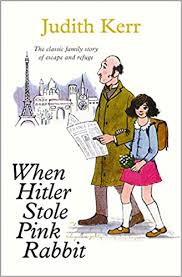
10. When Hitler Stole Pink Rabbit (1971) by Judith Kerr

All of the above provide a starting point, of course, and even as I finish typing there are authors and titles popping into my mind that are not listed. But you have to start somewhere!

What would you add to my list of classic books for 6-8 year olds?