Last week I posted my suggestions for some fantastic books to buy for kids this Christmas. Now it’s time for adults – see how I resisted writing “adult books to give this Christmas” as a title even though it might get me many more clicks!
I love giving books to friends and family at Christmas, though it can be tricky. Sometimes it can come across as a bit patronising; if you give something highbrow to someone it’s like you are suggesting they need to raise their reading game. Secondhand books are, in my view, definitely okay to give, especially if you and the friend are on the same wavelength about recycling and reusing. Even though it’s tempting to give a book that you might like, my advice is always to try and think of what the other person would enjoy, that shows real thought. Non-fiction books, television or film adaptations are always good ideas too.
There is no shortage of books on the market at this time of year, strongly orientated towards the gift market, but here are some that have caught my eye, which you probably won’t find on the supermarket 3-for-2 shelves.
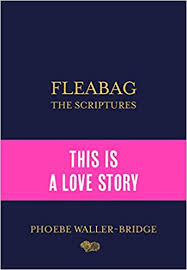 Fleabag: The Scriptures by Phoebe Waller-Bridge £20.00
I would be very happy indeed to find this under my Christmas tree! Phoebe Waller-Bridge, writer, comedian, all-round brilliant person, so clever, so funny and Fleabag is truly exceptional. Here are the TV show scripts with directions, plus some additional material. A bargain at twenty quid, I think.
 Who Am I Again? by Lenny Henry £20.00
There are very many autobiographies around at this time of the year. This one is the most worth reading, for my money. Absolute national treasure, Sir Lenny, a man worth listening to, and I doubt this is ghost-written.
 Wilding by Isabella Tree £9.99
Nature writing at its finest, this book was highly commended by the jury of the Wainwright Prize. This is a memoir about the author and her partner’s journey in attempting to return a farm in Sussex to nature, using free-grazing livestock to create new habitats for wildlife. This has had fantastic reviews and is just the sort of story of hope we need in these bleak times.
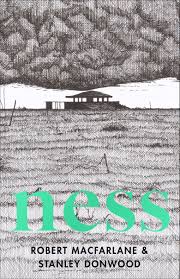 Ness by Robert Macfarlane and Stanley Donwood £14.99
Another book I’d be very happy to see under my Christmas tree! This is a beautiful book that defies description. Part poetry, part prose, stunning illustrations, it is a modern myth that defies description. Macfarlane is one of the most original and imaginative writers today and Donwood, long-time artistic collaborator with Radiohead, has provided the artwork.
 Twas the Nightshift before Christmas by Adam Kay £9.99
From the author of the bittersweet bestselling This is Going to Hurt, Adam Kay gives us another fascinating insight into the life of a hospital doctor in the NHS. At once hilarious and poignant, this book is a tribute to the NHS staff who will be working flat out over the holidays to look after the sick and injured among us.
 The Jewish Cookbook by Leah Koenig £35.00
Cookery books are often a favourite to give at Christmas and this one would make a very stylish gift. It’s pricey, but it’s packed full of interesting recipes, gorgeous photos and is bound to elicit an “oooh” from anyone lucky enough to receive it.
 Mother: A Human Love Story by Matt Hopwood £9.99
A collection of true accounts spanning the whole gamut of what it means to mother in our world today. In these difficult and divisive times these stories remind us of the deep feminine nurturing spirit that unites us all.
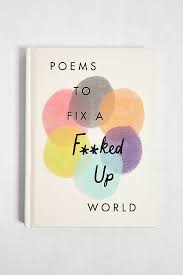 Poems to Fix a F**ked Up World by Various £9.99
And talking of difficult times this little anthology would make a perfect gift for anyone struggling with the events of 2019 and recent years more generally. The skill of the poet is to capture a moment in a succinct and accessible way, and the works in this book certainly do that.
 Fucking Good Manners by Simon Griffin £9.99
I hope you will forgive all the fruity language in today’s post, but I had to include this as it had me laughing out loud in the bookshop. Written with a clever wit and irony that is a delight and surely something to lift the spirits…though maybe not one for your Grandpa!
I would love any/all of these for Christmas, should Santa be reading this!
What books of 2019 will you be buying for loved ones this Christmas?


 In Winter, Ali Smith examines the ideas through the dynamics of a family thrown unwillingly together at Christmas. Sophia lives alone in a large house in Cornwall. She was a successful businesswoman but, now late in life, finds herself alone, estranged from her sister, not knowing what is going on in the life of her only son in London, and navigating with despair some of the dehumanising aspects of modern life. When we meet her at the start of the book, she is communicating with what I can only describe as a hallucination of a child’s head, which floats about with her. To the reader, this seems surreal at first, but it gradually becomes merely a manifestation of Sophia’s mental state – her deep loneliness and her disconnection from normal life and society. Arthur, Sophia’s son will have similar hallucinations later in the book. Sophia goes about her Christmas Eve business in the town with sadness, recalling the once vibrant high street that is now a series of boarded-up shops, frustrated at being unable to withdraw money from her own bank account and the inability of the young man in the bank to appreciate or meet her needs as a customer – she has nostalgia for the days of the friendly bank manager.
 A book I listened to at the end of last year was Ashes of London by Andrew Taylor. I borrowed it from the library when it was first published in 2017 but did not manage to get through it before I had to return it for someone else. It is a historical thriller set at the time of the Great Fire of London in September 1666 and is the first in Taylor’s Marwood & Lovett detective series. I have not yet read (or listened to) the second and third books in the series, both of which were published last year, but they sound intriguing.
 Last week I launched my


 The Boy, the Mole, the Fox and the Horse by Charlie Mackesy £16.99
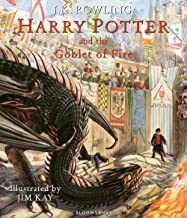 Harry Potter and the Goblet of Fire (Illustrated edition) by JK Rowling and Jim Kay £32.00

 Diary of a Dyslexic School Kid by Alais Winton and Zac Millard £9.99


 The Book of Dust Volume Two: The Secret Commonwealth by Philip Pulman £20.00
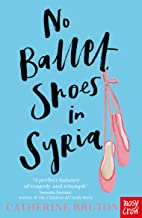 No Ballet Shoes in Syria by Catherine Bruton £6.99
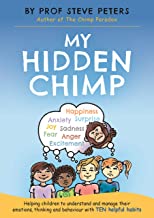 My Hidden Chimp by Steve Peters £12.99
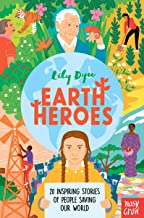 Earth Heroes: Twenty Inspiring Stories of People Saving Our World by Lily Dyu £9.99
 I remember when this book was published in 2006. It was widely acclaimed, but also controversial; there were some questions marks over its historical accuracy (one senior rabbi argued that nine year-old boys were not kept in concentration camps, all were gassed because they could not work and were therefore of no use, though this argument also been disputed) and others have questioned whether such a relationship, between a young inmate and the son of the camp commandant, could have gone on for so long undetected, particularly when Bruno slips under the fence. Whatever its problems, the book has sold millions of copies worldwide and was made into a successful film within two years of publication.
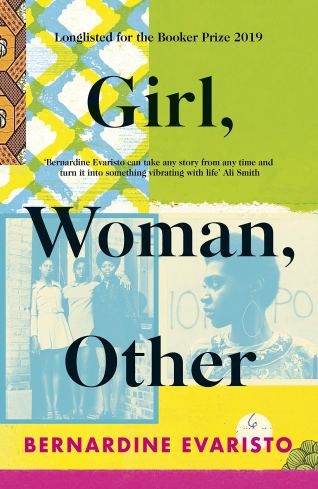 What I liked about it, however, was less this grander aspect, but rather the quality of its story-telling. I must admit that 50 or so pages in, I was not overwhelmed! There are twelve characters in the book, all women bar one (who is trans), all black or mixed race. They are broken down into four groups of three, and each threesome is strongly connected in some way (eg mother/daughter). Each group is also connected with the others, even if only in a tenuous way (eg teacher and former pupil) and almost all are in some way connected to Amma, the first character we meet. Amma has written a play which is having its debut performance at the National and this provides the framework of the novel. Many of the characters are present at the penultimate chapter of the book, the after-party, where the differences between them and their lives are laid bare. This is interesting because the author is not only trying to draw out the similarities between the characters and their life experiences, suggested by their common characteristic of being mixed race and female, but she is also, I think, railing against the notion of such women/people being homogeneous; they are all far more than just their race or gender.
 Julia's books