Book review – “Rebecca” by Daphne du Maurier

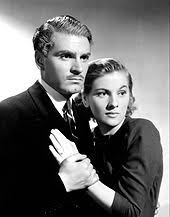
Last week I posted my review of Tinker Tailor Soldier Spy, the February book in my Facebook Reading Challenge. The theme was something that had been adapted for screen and I had been torn between that book and Rebecca. This was famously adapted by Hitchcock, of course, in 1940 (starring Laurence Olivier and Joan Fontaine) and now there is a new production on Netflix, starring Lily James, Armie Hammer and Kristin Scott Thomas. With Tinker Tailor Soldier Spy I watched the film (the 2011 version, not the television series) first. With Rebecca, however, I did it the other way around and I am so glad to have done so. It is such an extraordinary novel and the impact of the plot and the narrative are thrilling – I would have so missed out on so much if I had known the ending.

Rebecca opens with the well-known words “Last night I dreamt I went to Manderley again.” A short chapter, where our main female protagonist (whom we only ever know as Mrs De Winter) is recounting a dream she had of her first time visiting her husband’s family estate. She recalls, in particular, the long drive through the park, the plants and trees, which seem hostile, almost monstrous, and the setting of the house itself, in an imposing position high above the rocky Cornwall coast. It is described less in terms of realism and more in terms of how it made her feel. But our protagonist’s dream is very much past tense. We know that she is no longer there.

The second chapter goes back a number of years to the Hotel Cote D’Azur in Monte Carlo where Mrs De Winter (at this point a young spinster, though we never know her name, she is without her own identity) is serving as a ‘ladies companion’ to wealthy American Mrs Van Hopper, a vulgar, bully who shows complete contempt for her young employee.

Mrs Van Hopper hears that English aristocrat Maxim De Winter is in residence and is eager to renew her acquaintance with him. De Winter is recently widowed and Mrs Van Hopper explains that he has never got over his wife’s death. Mrs Van Hopper is suddenly taken ill which means that her companion finds herself with some spare time alone. Mr De Winter notices her one day and invites her to lunch. They embark on a whirlwind affair while Mrs Van Hopper convalesces, which ends with Maxim proposing marriage when it appears that his lover will be whisked off to New York with her employer. They marry, quickly and quietly while Mrs Van Hopper is nothing short of appalled at the match and promises her young friend that she will live to regret the decision.

The new Mrs De Winter returns to Cornwall with her husband, to his ancestral home, Manderley.  She is introduced into a household where the influence, of her predecessor, Rebecca, the first Mrs De Winter is everywhere. Her memory is kept alive by the housekeeper, Mrs Danvers, a cool and sinister figure, whom we come to learn was devoted to her mistress, having served her since she was a child. The new Mrs De Winter finds Rebecca’s presence everywhere, from her clothing in the boot room, to her notepaper in the morning room, and the expectations of the staff at Manderley who expect the new Mrs De Winter to simply pick up things as they were left, whether that be menus, social events or flowers in the house.

Although it is painful to her, Mrs De Winter becomes increasingly obsessed with finding out more about Rebecca, whilst also loathing how she continues to dominate the domestic sphere, the society, even her marriage. It is as if she is picking at a scab. We learn that Rebecca, an experienced sailor, drowned in her small boat. Mrs De Winter comes upon Rebecca’s small cottage on the beach, still filled with all her things and her discoveries and questions cause tension in her relationship with her husband. She comes to the conclusion that Maxim is still in love with Rebecca, that Mrs Danvers is scheming somehow to get rid of her and that she can never match her predecessor for beauty, accomplishment, charm or status. The myth of Rebecca takes over her completely.

I cannot say any more without giving away too much. Each new revelation and plot twist in the novel is delivered with jaw-dropping skill. This book had me reading far too much, far too late at night because I couldn’t put it down. It is also an emotional roller-coaster as the reader is forced to confront and re-confront assumptions, prejudices, expectations and moral values. It is a book that will leave you questioning what is right and wrong, who you are rooting for and who is the baddie. It’s an extremely complex and challenging novel that is far more than just its story, but what a story! British author Clare Mackintosh is quoted on the book jacket saying “It’s the book every writer wishes they’d written” and I could not agree more.

Highly recommended. And now for the film!

Book review – “Tinker Tailor Soldier Spy” by John Le Carré

Oh my goodness, Rebecca is taking some very strange and unexpected turns – I wish I could write about them here but that would be unkind to anyone who hasn’t read the book or seen the film. I’m not sure how I feel about the plot twists, at this point, but I’m like a junkie in my reading of it, just dying to get the next ‘fix’! But back to something much more sober – Tinker Tailor Solider Spy, a book that has been described as Le Carré’s “masterpiece”, and which you will recall was my Facebook Reading Challenge choice for February. A Cold War novel for a cold month!

Tinker Tailor Solider Spy is the first in Le Carré’s so-called Karla trilogy in which he pits our hero, retired senior Secret Service operator and later chief, George Smiley, against his Russian opposite number and great nemesis, codenamed Karla. The novel opens at a minor public boys school to which former spy Jim Prideaux has been retired following a botched operation in Czechoslovakia where he was shot, captured and tortured by the Soviets.

The head of the Secret Service in London, known as Control, long suspected there was a mole in the outfit and shared some of his suspicions with Prideaux – the fateful mission to Czechoslovakia was partly intended to try and flush out the mole; Control has whittled down the candidates to a handful of the key operators in the Service whom he names Tinker, Tailor, Soldier and so on.

Control dies of a heart attack, but more senior officials have learned of his suspicions and call in George Smiley from his rather bleak life of retirement to investigate secretly. Smiley has his own troubles; his wife has left him and it turns out she was having an affair with one of Smiley’s former colleagues (the inference is that she was lively and vivacious while George has become plump, tired and dull). Smiley is given support from an insider, a trusted current employee, Peter Guillam, to help him pursue the investigation that Control was never able to finish and they set up an undercover base operating out of a small hotel.

What ensues is a cat and mouse chase where Smiley gradually explores the motives and capacities of each of the suspects – Percy Alleline, Toby Esterhaze, George Haydon and Roy Bland. The investigation has to be conducted covertly to ensure none of the individuals learns of the suspicion surrounding the work of the Service. For Smiley, the investigation involves not only figuring out methods to get the information he needs and to reach the people who may be able to shed light on the murky inner workings of the organisation, but a sometimes painful reliving of past events which have brought him to his present state of lonely and purposeless existence.

The investigation also, of course, has the potential to breathe new life into Smiley and restore him to a position of status and importance. If he succeeds.

The plot of this novel is sometimes complex and difficult to follow – you really have to pay attention! I found it slow to start with, but then I got very sucked in and found it extremely compelling. The theme of last month’s reading challenge was something that has been adapted for screen and I had watched the film before reading the book. This was the wrong way around! As I was reading, the characters in my mind were the actors from the film and when these actors are Toby Jones, Gary Oldman, Colin Firth, Tom Hardy, Benedict Cumberbatch and Kathy Burke, to name but a few, it is hard to forget them. The characters in the film did not quite match up with the way they were portrayed in the book, which was frustrating. Also, some elements of the plot were changed for the film (including the ending, and Benedict Cumberbatch’s sexuality!), presumably to make it a bit easier to squeeze into two hours, so that was confusing for me.

However, all in all, a very good read. In a previous life I worked for the Civil Service in Whitehall (nothing as exciting as diplomacy or intelligence, I’m afraid), and the book caused me to reminisce about those days a little. The atmosphere created in the book was one I recognised even though it was set over twenty years before my time (things don’t change very fast).

Tinker Tailor Soldier Spy is the first in a trilogy, and there are many other Le Carré novels that feature George Smiley and many more screen adaptations to explore. Having previously not felt too interested in Le Carré I have to say that this book has whetted my appetite!

Recommended.

Facebook reading challenge – March choice

In the last week or so of the month, I usually start to give some thought to the book that I am going to choose next for my Facebook Reading Challenge. I will remind myself of the theme. Sometimes, I already have a title or two in mind. And sometimes I have to do a bit of searching. This invariably throws up two or three choices and I will spend a few days ruminating before making a decision and posting on here.

Last month’s theme was “something that had been adapted for screen” and I had two titles in mind. I chose John Le Carre’s Tinker, Tailor, Soldier, Spy because I had just seen the 2011 Gary Oldman adaptation and had enjoyed it. After a few opening doubts (the plot of the book seemed much more complicated than the film), I really got into the book and loved it. I finished it quite quickly, so I decided to try and read my February reserve choice as well, Daphne Du Maurier’s 1938 classic Rebecca. I had seen the trailer for the new film version starring Lily James, Kristin Scott Thomas and Armie Hammer, which looks really good, but I wanted to read the book first. I haven’t quite finished it yet, but, oh my, HOW have I not read this before!? I cannot put it down. Look out for my reviews of both books soon.

This month’s theme is “something for spring” in keeping with the fact that meteorological spring started yesterday on the 1st. In the three years or so that I have been doing this challenge, I have never had more difficulty choosing a book. There are a couple of obvious choices – Ali Smith’s Spring or Karl Ove Knaussgard’s Spring – but they were too obvious for my liking. I brainstormed: growth, renewal, uplifting, Mother’s Day, World Book Day, International Women’s Day, Mars, gardening, baby birds… But, alas, this bore very little fruit. There is Penelope Fitzgerald’s The Beginning of Spring, but, hmm, set in Russia in 1913…this does not feel sufficiently optimistic to me, and I feel we need some positivity at this point.

So, my choice has only a very tenuous link to spring – Matt Haig’s The Midnight Library. My rationale? Well, it’s World Book Day this Thursday (4th March). Books can be found in libraries. It has been described as ‘uplifting’. Tick. Plus I really like Matt Haig. The central character is Nora, whose life is not going well. On the stroke of midnight of her last day on earth she finds herself transported to a library where she is given the opportunity to explore all the alternative lives she might have lived. If nothing else, one good thing that has come out of this pandemic is that many of us have reflected on our lives and thought about what we might want to change. And spring is a great time for change.

So, I think that’s a wrap! Looking forward to this one.

Now, back to Rebecca

Book review – “Queenie” by Candice Carty-Williams

Most of my reviews recently seem to have been of quite high-brow books. I wouldn’t want to give the impression that I’m any kind of snob when it comes to reading it’s just that it has all been quite literary of late. I’m currently reading Claudia Winkelman’s Quite in the crevices of my life (when the complex plotting of Tinker, Tailor, Soldier, Spy starts to make my head hurt!), my book club’s choice  and which one of my friends described as ‘hubba bubba’! If you are old enough to remember what that is, well, it is describes the book perfectly! Look out for my review of that soon.

A novel I read recently, which was at the more popular end of the spectrum (no judgement intended), was Queenie, the debut novel by Candice Carty-Williams. It was shortlisted for a number of prizes, including the Waterstones Book of the Year and the Costa First Novel Award, was longlisted for the Women’s Prize last year and won in two categories of the British Book Awards in 2020 – Book of the Year and Debut Book of the Year. So, it was quite a sensation, and its thirty-two year old author seemed to be everywhere!

Rightly so, because it is a super book, very readable. In my head I thought it was a YA novel, the cover and the marketing scream YA, but it’s really quite adult; I’m not sure I’d be giving it to my 16 year-old for another year or so, for example. Lots of quite graphic sex.

Queenie Jenkins is a twenty-something Londoner of Jamaican origin and the novel begins with her break-up from long-term (white, middle-class) boyfriend Tom. He initially tells her it is a “break” but it becomes quite clear that he is simply trying to let her down gently. Or failing to be honest with her, depending on your perspective.

Queenie’s life soon spirals out of control. She has to move out of the apartment she shared with Tom into a much more shabby and smaller room in a house. She also finds herself engaging in a series of brief and bruising sexual encounters. Some are literally bruising – one affair with a junior doctor leaves her with a physical damage and a STD. Almost worse, however, is the work colleague who seems nice, approaches her with sensitivity and understanding, but, guess what? He just wants the sex and turns out to have…other commitments!

This is more than just a break-up novel, however. The book has been described by some as the ‘black Bridget Jones’, but it is far more complex than that. Queenie experiences gaslighting of the nastiest kind, and you can’t help but notice the racial dimension to that. But it’s not exactly a ‘race’ novel either…it is more complex than that too! It is a novel about sisterhood because it is friendship that gives Queenie the leg-up she needs to get her life back on track, her relationships with ‘The Corgis’ – the title of the Whatsapp group she invites her three closest confidantes to join. 

This book is a good read. I don’t want to say ‘fun’ (like Bridget Jones) because it is at times deeply harrowing, although the author has a deft comic touch that quickly lifts you out of the gloom. It’s snappily written, with a style that a younger readership will recognise and engage with, but which is not too beyond the comprehension of this middle-aged reader either!

So, proof – I’m not just into classics and high-brow!

Recommended.

Audiobook review – “The Goldfinch” by Donna Tartt

I have probably spent more time listening to audiobooks in the last twelve months than in all of the previous four years of subscribing to an audiobook service put together! There were in fact times in those previous four years when I suspended my membership because I was building up so many credits. I mainly listened to them on long drives alone and these were relatively infrequent. Last year, however, I found myself, like many people, going out for a walk or run daily. I haven’t walked more in the last twelve months than I did before, but my walking these days is less about purpose (going somewhere to get something) and more about pleasure, nature and exercise, and, well, let’s be honest, because when something is rationed you realise how important it is to you.

I’ve reviewed a number of my particular favourite audiobooks on here: Andrew Taylor’s Ashes of London series (I listened to three out of the four last year), Douglas Stuart’s Booker Prize-winning Shuggie Bain, and of course David Sedaris’s Santaland Diaries. I have yet to review the audiobook that was the absolute standout for me in 2020, though, and which I listened to in the autumn – The Goldfinch by Donna Tartt. I can only put my reticence in posting a review down to being in complete awe of Tartt’s genius as a writer, and the feeling that I could never write anything that would in any way do justice to the mastery on display in this book.

I will try and summarise the plot as briefly as possible. We first meet the main character Theodore “Theo” Decker when he is thirteen years old. He lives with his mother, who works on an art journal, in New York City, his alcoholic father having left the family some years earlier. Theo is in some difficulty at school and he and his mother have an appointment with the Principal. To kill time before the meeting, Theo’s mother takes him to the Metropolitan Museum of Art. A terrorist bomb explodes while they are there, killing Theo’s mother and many others, and devastating the building. In the middle of the wreckage Theo spots an elderly man, whom he had noticed earlier on in the visit because he was accompanied by a sullen, but ephemeral looking young girl of about Theo’s age, carrying an instrument case. Theo goes to the old man, who is dying from his injuries. The old man gives Theo a ring from his finger and a curious message which it will later transpire refers to an antique shop that he Welty Blackwell, ran with his partner James “Hobie” Hobart. During their brief time together, in what was a room devoted to Dutch paintings from the 17th century, Theo finds himself captivated by a tiny picture by Carel Fabritius called The Goldfinch. Welty notices Theo’s fascination and with his dying breath seems to encourage Theo to take it. The explosion scene is compulsive listening, jaw-dropping.

Theo takes the painting and manages to find his own way out. He takes cover back at home, not knowing if his mother is alive or dead. Eventually, the authorities track him down and he is placed in temporary care with the family of a school friend, Andy Barbour, a slightly sickly, precociously intelligent boy, who, like Theo, does not quite fit in at school. Andy’s family is from the Upper East Side – wealthy, formal, slightly odd, and more than a little dysfunctional. But after a period of adjustment Theo and the family gradually get used to one another, until, at the point the Barbours announce that they would like formally to adopt Theo, the boy’s life takes a dramatic turn.

I wish to say nothing more of the plot, because it is simply too delicious and too clever and if you have not read the book yourself and are tempted to do so, I want you to enjoy every single moment of shock and drama.

The Goldfinch by Carel Fabritius dated 1654

Theo does not reveal that he has the painting for many years. And it burns in his conscience, influences almost all his actions and decisions. The plot is a joy, an absolute roller-coaster, and the character of Theo is complex and brilliantly-drawn. He is in turns damaged and damaging through the book, but all the while the two things that constantly influence his life are the catastrophic loss of his beloved mother in such traumatic circumstances, and the concealment of the painting, an extremely valuable internationally renowned piece, which becomes the subject of a worldwide search. Theo’s increasing paranoia in relation to the painting, has echoes of The Picture of Dorian Gray. In addition to Theo there are a clutch of other superb characters: Boris, his Nevada schoolfriend who becomes a major influence on events in his life; Hobie, the business partner of the old dying man in the museum who Theo tracks down; Pippa, the young girl with the music case, Welty’s granddaughter; and, of course, Theo’s mother, who, although she dies early, is a constant presence in the narrative.

This book has everything: brilliant characters, brilliant plot, action, reflection, literary merit. It won the Pulitzer Prize for Donna Tartt in 2014 (my second Pulitzer Prize-winner reviewed in a week!) and was adapted for screen in 2019. I’m not sure I want to see the film. There is surely no way it could do justice to the book? Although I note that it has Nicole Kidman and Sarah Paulson among the cast so I’m tempted.

I have no idea why I have not read this before; The Secret History, Donna Tartt’s debut novel, published in 1992, is one of my favourite books of all time, a masterpiece, so you would have thought I’d be hanging on everything she has ever written. She is hardly prolific though – her second book, The Little Friend, did not come until ten years after her first, in 2002. That was the start of my childbearing, aka reading wilderness, years, so I’m not really surprised I didn’t get around to that one. Tartt’s books are long – The Goldfinch is 880 pages, or 32 hours of listening joy, and The Little Friend is almost 600 pages – there was no way I would have got through that with a two year old!

The Goldfinch is highly, highly recommended. And the painting, a fragment of which is shown on the cover of the book, is utterly beautiful. That’s it, I’m out of superlatives.

In praise of short stories

Last week, I wrote on here about the difficulties so many of us are having dealing with the pandemic and all its ramifications, and how reading can provide an antidote to that. I had some nice responses to that piece so I’m glad it struck a chord with a few people. This week in the UK we have surpasses the total of 100,000 lives lost to Covid-19 (although some argue that the data show we actually reached it two weeks ago). And it seems there are likely to be many more deaths before the pandemic is over and many more people whose lives will have been altered by contracting the virus.

I don’t know about you but one of the things that I have found most challenging in the last year is a shortened attention span. That has at times included my reading too, and, talking to a friend earlier this week, who shared my feeling on this, I think it’s down to being surrounded by fear and a sense of danger. We are in ‘fight or flight’ mode so much of the time, feeling uneasy in the presence of an unseen threat that could be deadly to ourselves or our loved ones. Our biology is not allowing us to relax into all the spare time we have because we need to be constantly alert.

So, don’t feel guilty if, like me, you cannot focus on anything for very long, haven’t cleared out the loft yet or completed that novel! And if a big chunky novel is beyond you, why not try something more petite? Over Christmas, (which was also crazy busy, for me, felt like I was feeding the five thousand, not five!) I did something I rarely do – I read a load of short stories! It is not a genre I have embraced very much, to be honest, and I realise now what I have been missing. They can be perfect little gems that give you exactly what you need in a small package without weighing too heavily, like one of those lovely little snacks you get in Italian coffee shops.

I read the following and loved them!

A Christmas Memory by Truman Capote

This was a revelation! Of course, I knew about Capote – Breakfast at Tiffany’s is one of my favourite books, seeing the film for the first time years ago gave me a lifelong girl-crush on Audrey Hepburn, and I loved also the late Philip Seymour Hoffman in the biopic Capote, which covers the period during which the author wrote In Cold Blood. I have learned the term ‘Southern gothic’ which Capote is said to write, and the stories in this volume are superb! An absolute joy to read any time of the year. My favourite was Jug of Silver, written in 1945, about a poor young boy from the wrong side of the small town of Valhalla in Alabama, who takes part in a competition at a local drugstore to guess how much is in a glass jug. The boy pays his fee to take part and tension builds over several weeks as he sits and stares at the jug, his little sister convinced he is going to win the prize. I won’t tell you what happens, but it will warm your heart! There are four other stories in this collection and they are all excellent.

The Adventures of Sherlock Holmes by Arthur Conan Doyle

I’m not a huge murder-mystery fan (though I am a recent convert to Agatha Christie!) so have never got around to reading any Conan Doyle, but I loved these. Perfect little nuggets to sit down with if you have a spare half hour. You can get lost in the Victorian setting. There are twelve stories in this collection and you can pick volumes up very cheaply (particularly on Kindle). Some of the scenarios are very contrived, but that just makes them fun. The best part of them is the development of the characters of Holmes and Watson and their relationship. I am minded to move onto one of the full-length novels now, to see how this plays out in a longer form. I have also lined up the television series Sherlock on my streaming list!

A Maigret Christmas & Other Stories by Georges Simenon

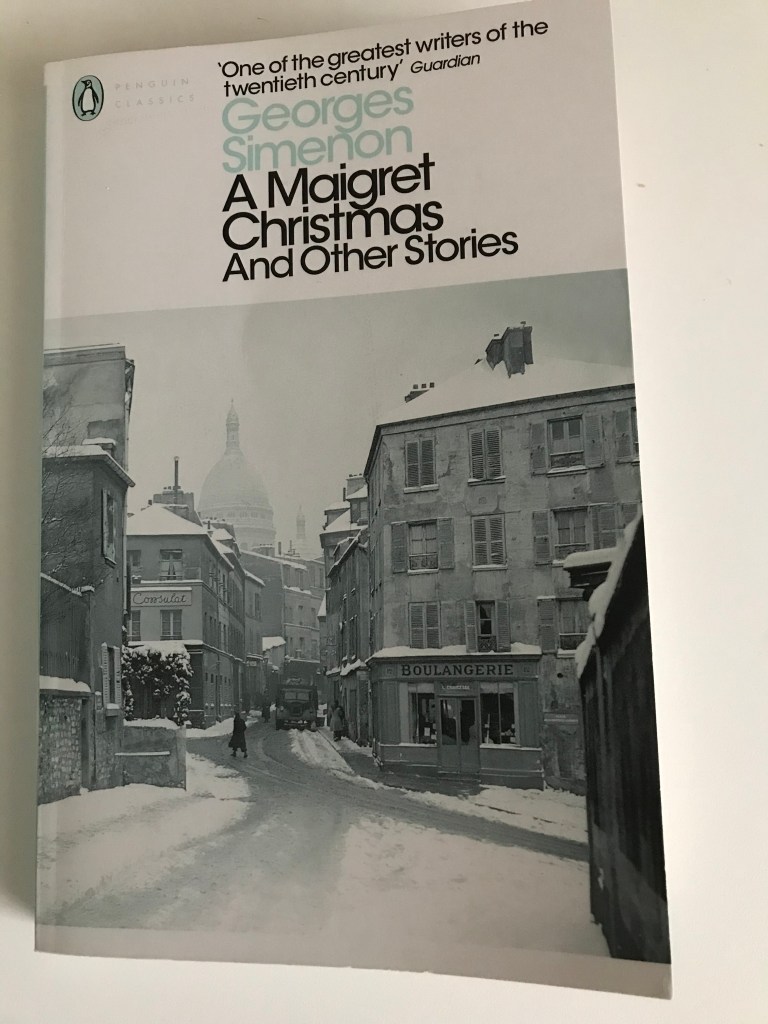
My husband is a French speaker and a Simenon fan, and I have read many reviews on the Red Lips and Bibliomaniacs blog which have piqued my interest. There are three stories here, all set around Christmas-time, evoke brilliantly a seamier side of Paris, especially one cold and deserted for the festive season. Simenon explores the dark underbelly of society in these stories. Only the first of the three is a Maigret story and I would like to read more, though this wasn’t my favourite in the volume. I liked Seven Small Crosses in a Notebook where the central character is a rather geeky loner, under-estimated, but whose vigilance solves a crime where his own nephew is a missing person and his brother is accused of murder. It’s clever, portrays the characters and their relationship really empathically, and has a nice ending.

After dabbling with these, I will definitely read more short stories. It was nice to be able to sit and read something quite short, without it being a huge commitment and feeling a sense of both achievement and satisfaction at completing a story in one sitting.

Highly recommended.

Audiobook review – “The New Wilderness” by Diane Cook

In my final book review of last year I wrote of my delight that Douglas Stuart’s Shuggie Bain won the 2020 Booker Prize. It was one of only two of the shortlisted books I managed to complete before the prize winner was announced (the other one I read, Burnt Sugar, I liked somewhat less and have also reviewed here). I had another of the shortlisted books ‘in progress’ at the time the winner was announced, The New Wilderness by first-time author Diane Cook, which I listened to on audio. It was utterly compelling and was beautifully read by Stacey Glemboski. It reminded me very much of a previously shortlisted book, The Overstory, by Richard Power, which was nominated in 2018 and remains one of the best books I have read in recent years.

The New Wilderness is set in what seems, frighteningly, a not too distant future in America. Environmental decline has wreaked havoc on ordinary life, such that urban living is barely sustainable, and there are few alternative spaces left for citizens to inhabit. The government has authorised a research project to allow a small group of twenty people to inhabit one of the last remaining wild areas, but there are strict rules that they must observe, including having no contact with the outside world, and leaving no trace of their habitation on the environment, which means not staying in one place too long or building a camp. (The irony is not lost.) The group is closely monitored by Rangers, who enforce the regulations, and the group is required to attend stations every few months to register births, deaths and significant events. The story is told through the eyes of the leading character, Bea, whose partner Glen was one of the academics leading the research. Bea had volunteered for the project in order to remove her daughter Agnes from the city which was killing her slowly. Agnes suffered from a range of unnamed conditions which have been cured by life in the wilderness. Agnes is about ten or eleven when we meet her although no-one has really been keeping track; time is marked by seasonal change not the calendar.

When the book opens the group has already been living in the wilderness for some years. It opens dramatically with the deaths of two members of the group in a hazardous river crossing, in which a valuable rope is also lost. What is immediately striking to the reader is how the loss of the rope is mourned nearly as much as the loss of the companions, indicating how the group has become more focused on survival than finer human emotions. Further death occurs early on when Bea gives birth, alone in the forest, to a dead baby, which she buries quietly and away from the rest of the group. The dead child will be a recurring motif throughout the book; Bea left the city to save her daughter, and lost another because she was in the wilderness.

Life is extremely challenging and there are clearly tensions in the group, which the author takes great care to illustrate in skilful detail, particularly over ‘leadership’ – Glen, as one of the project’s initiators, was once looked to as a kind of informal leader. Glen becomes sick, however, and another of the group members, the strong more dominant alpha male-type, Carl, sees an opportunity to weigh in. Bea has also emerged as a strong leader in the group and Carl, in an attempt to fully oust Glen from his unofficial position, goes about bringing her to his side as well. Here the community is disintegrating; it’s like Lord of the Flies with grown-ups. Further chaos ensues when a small group of newcomers – city refugees who were on a ‘waiting list’ to join the original group in the wilderness – is encountered. To anyone who knows anything about group psychology – forming, storming, norming and all that – this is fascinating. It is also fascinating to see the way the two distinct groups spar with one another, with whom individual members place their loyalties, and how readily the original population integrates with the ‘immigrants’. There are also more young people among the newcomers, teenagers, and Agnes, now a teenager herself, has the opportunity the develop relationships with people her own age for the first time. But the differences between them in terms of their life experiences to date makes it difficult for Agnes to navigate her way among them. With the teenagers a further faction in the group emerges.

Author Diane Cook

What the author creates in The New Wilderness is a microcosm of our problematic human society, where Utopia cannot exist, where the human condition leads to inevitable decline. The wilderness is not the ideal society that the participants hoped it would be; yes, it is ‘natural’ and (mostly) unpolluted, but it is also brutal, and even the most idealistic among them hanker after a shower, some easy food, a haircut. Most strikingly however, is the failure of the community, socially, although the strict policing of the rules by the overweening and power-drunk Rangers (some more than others) does not help.

I have only scratched the surface of the book in this review – it is a highly complex novel and I fear I have not done it justice. It is a dystopian novel, which predicts a bleak future (do not read this if you want something uplifting!) where the opportunity to influence climate change has passed. It is also a novel about motherhood; Bea left the city to save her daughter’s life. In the middle of the novel she also flees the wilderness for a time (abandoning her daughter) when she learns that her own mother has died. The mother who begged her not to go.

All of the Booker-shortlisted novels I have read so far are about mothers or motherhood. Is that a coincidence?

Highly recommended.

Book review – “The Girl with the Louding Voice” by Abi Daré

I chose this book for my 2020 Facebook Reading Challenge in November and totally forgot to post my review! What happened to me just before Christmas, I don’t know! The theme in November was a book from the new decade (we had something from the last decade in January) and I chose this book because it had caught my eye a few times and because it has been an international success for its first-time author. Abi Daré was born in Lagos, but now lives in the UK having studied for her degree here. The book is dedicated to her mother, the first professor of taxation in Nigeria, whom she thanks for the sacrifices she made for her daughter’s education. The importance of education for girls is a theme that dominates the novel. (If you read no further please go to the stats at the end of this post.)

The book is narrated by Adunni, a fourteen year old girl from a small village. She lives with her father and two brothers (one older, one younger), their mother having died from an unnamed illness, but is likely to have been tuberculosis. Adunni still grieves for her beloved mother, who always promised her daughter that she would receive an education. Adunni’s father does not think the same way; the family is poor and, in order to pay their rent, he decides to sell his daughter to an older man in another village, who seems to have a penchant for young wives. Adunni will be his third wife and her job is to produce a son for him as soon as possible. The elder wife bore the first daughter and is wicked and jealous and beats Adunni. The second wife, Khadija, is also very young and has already borne three daughters and is pregnant with her fourth child, whom she hopes will be a boy. Khadija is kind to Adunni and helps her to manage the advances of their lecherous husband.

Tragedy strikes, however, when Khadija dies in premature labour. Adunni, who was the only one with her at the time, fears she will be blamed, so she decides to run away. She tracks down an old friend of her mother’s who introduces her to her son, the mysterious Mr Kola, who the woman says can find her work as a housemaid and that the owner will pay for Adunni to be educated. This is everything that Adunni wants and so she goes with Mr Kola. He takes her to a rich household in a Lagos suburb. Adunni has never been to Lagos before and she is overwhelmed by the size of the city and its chaos.

‘Big Madam’ is a successful entrepreneur, owner of a company selling luxury fabric, and she lives in a gated property with fancy cars, servants and her (also lecherous) husband. Adunni is treated badly – she has effectively been sold into slavery by Mr Kola. She is never paid for her work, is beaten by Big Madam and it looks as though the hoped-for education is never going to happen. I don’t want to reveal any spoilers so will cease my plot description there.

Adunni’s journey and her wide-eyed and innocent commentary on the events that befall her is at once charming and horrific. The courage and ingenuity she shows in the most testing of circumstances are truly heroic, that is the uplifting bit, but the brutality of the treatment she receives, from rape, to physical abuse, to theft and exploitation, are out and out shocking. If it were not for Adunni’s charm the book would be barely readable. Adunni’s ‘louding voice’ refers to her growing courage, her determination to speak up and speak out against her abusers.

I thoroughly enjoyed this book. The author has tackled some truly grave themes with creativity and humour. We are reminded throughout that we are talking about present day Nigeria, not something from a bygone era before feminism and human rights; no, this is still happening. References are made to Boko Haram and the kidnapping of 276 schoolgirls in Chibok in 2014. This book reveals the reality of life in the 21st century for too many girls and young women in this vast country of over 200 million people.

It is a sobering read, but a good one and I recommend it highly. Please note the statistics below.

“Around the world, 132 million girls are out of school, including 34.3 million of primary school age, 30 million of lower-secondary school age, and 67.4 million of upper-secondary school age. In countries affected by conflict, girls are more than twice as likely to be out of school than girls living in non-affected countries.

Image by David Mark from Pixabay

Only 66 per cent of countries have achieved gender parity in primary education. At the secondary level, the gap widens: 45 per cent of countries have achieved gender parity in lower secondary education, and 25 per cent in upper secondary education.”

Source: Unicef, https://www.unicef.org/education/girls-education

Booker Prize 2020 – winner announced tonight!

In previous years I have set myself the task of trying to read the Booker Prize shortlist between the time that it is released, usually mid-September, and the announcement of the winner. This is usually a month or so later in mid-October, so it is a tall order – six books in a little over four weeks. I have never succeeded in this endeavour – I’m usually still working my way through the list at Christmas. How do the judges get through so many books in the time that they do? I doubt they are even paid much to do it!

Last year, the Booker Prize was far from the forefront of my mind as my mother died in mid-September and her funeral coincided with the week of the announcement of the winner. I did subsequently read both of the books that won the prize jointly (remember that extremely unusual outcome?) – Bernardine Evaristo’s Girl, Woman, Other and Margaret Atwood’s The Testaments – as well as Elif Shafak’s 10 Minutes 38 Seconds in This Strange World. I still have Salman Rushdie’s Quichotte and Lucy Ellman’s Ducks, Newburyport on my TBR list.

This year the announcement of the winning book is a month later than usual. I assume this is all down to ‘the pandemic’ though I’ve heard of no official reason being given. Perhaps the committee has decided to be a bit kinder to the judges this year. Once again, I decided against trying to get through the shortlist, but have in fact read two of the books, one of which I loved and one of which has left me wondering if I missed something!

The book I loved was Douglas Stuart’s Shuggie Bain, a superb debut novel. Set in early 1980s Glasgow it is a visceral account of a young boy growing up in an atmosphere of poverty and his beloved mother’s alcoholism. The working-class community in which he lives is being ground down by the searing devastation of the Thatcherite era. Shuggie is ‘unusual’ – he is effeminate and naive, but his relationship with his mother is an portrait of love stretched to its very limits by the strain of addiction. I plan to write a longer review of this book so I will say no more at this stage. Let’s see if it wins!

The other book I read, and which I’m afraid I didn’t love, was Burnt Sugar by Avni Doshi. It is the story of a strained mother-daughter relationship. The mother, Tara, has dementia and her daughter, Antara, is finds she is forced increasingly to care for the woman who failed to care for her properly as a child. Tara left her husband with her daugher to join an ashram when the child was still very young. Their ‘bohemian’ lifestyle included some time spent begging, and also living with an artist who it is clear did not really care for either Tara or her young child. Antara experienced a degree of neglect as a child, for example receiving very little formal early education, and her mother’s attitude to her has been one largely of indifference.

As a mature woman, Antara struggles with the demands placed upon her by her mother. Tara can be cruel – is that the disease or is that how she has always behaved towards her daughter? She is engaged to be married to Dilip, an Indian-American, who cannot fully empathise with Antara’s dilemma. This book reminded me a little of Everything Under by Daisy Johnson, which has a similar storyline and which I also struggled to enjoy (though I think it was a better book). Everything Under was shortlisted for the Booker in 2018. Burnt Sugar has also been compared to Deborah Levy’s Hot Milk – I cannot concur . I loved that book. I’m afraid that, for me, what Burnt Sugar lacks is a story. Even after reading it, I’m afraid I’m not sure what it is really about, or what it is trying to say, apart from dementia is a horrible disease that throws family relationships into turmoil. Even the ending leaves you hanging. There is no narrative question that is resolved, which, for me, is one of the fundamentals of fiction.

I don’t like giving negative reviews and I have seen so many positive statements about this book; am I missing something? This one just did not do it for me. And my fellow book club members seem to agree – a pretty resounding thumbs-down! Perhaps it is just that Shuggie Bain is such a fabulous story, that this book felt wanting.

I am about to start another book on the shortlist – The New Wilderness by American author Diane Cook, another novel about motherhood, but this time in the shadow of climate change.

We will see what happens at the announcement tonight. One thing is for sure, it will not be the usual black-tie dinner!

Audiobook review – “The Beekeeper of Aleppo” by Christy Lefteri

I’m on an audiobook roll; earlier this week I posted about The Last Protector, the fourth in Andrew Taylor’s Marwood & Lovett series, all of which I have listened on on audio and all of which I have loved. Today I am, by coincidence, reviewing another audiobook, The Beekeeper of Aleppo. I had known about this one for some time and wanted to read it, then it came up as a suggestion from one of my fellow Book Club members. It is read by Art Malik, whose voice is sublime, absolutely perfect for this story, so it was an easy choice to turn to the audiobook.

Although it is a work of fiction the author writes in her afterword about her time spent working with refugees fleeing the war in Syria, and that the book represents an amalgam of various peoples’ experiences. Although it is a tragic and heartbreaking story, even a superficial awareness of what has been happening in Syria for almost ten years now will render it entirely believable. Aleppo was particularly badly affected by the civil war in Syria; over 30,000 people are said to have been killed between 2012-16, when fighting there was at its most intense. A further half a million people were displaced and much of the city was left in ruins.

The story is narrated by Nuri, a beekeeper who lives a peaceful life in Aleppo with his wife Afra, an artist, and their young son Sami. Nuri runs his successful beekeeping business with his partner Mustafa, the more charismatic of the two men.

[Slight spoiler alert in the next paragraph]

Nuri and Afra are devoted to their homeland, but they watch in despair as their city is torn apart and they witness horrific acts in the increasingly vicious civil war. Their turmoil reaches a climax when their young son is killed by a mortar. Mustafa decides to flee Syria, determined to head for the United Kingdom, and encourages Nuri and Afra to do the same. Nuri is persuaded, but Afra cannot find it within her to leave. Deeply traumatised by her son’s death she does not want to, as she sees it, leave him behind. As events spiral out of their control and the gulf between them, caused by their grief, seems impossibly large, Nuri finds that his wife, the artist, has become blind.

Nuri persuades, virtually forces, Afra to leave Syria; presenting her with a stark choice – it is that or death. Afra would rather die, but Nuri has to nurture the last tiny remaining bit of the human survival instinct that he has, for both of them. What follows is an account of the couple’s journey from Syria, across Europe and finally to England. They spend many weeks in Athens, sleeping in a public park with many others in a similar position, dependent on the kindness of strangers, volunteers and NGO workers to bring them food. They face many dangers, their lives are at risk on many occasions and they are cruelly robbed and cheated by criminals and gangsters who seek to profit from the plight of desperate people. As a reader you know this story is not fantastical. It is heartbreaking to see how these cultured, educated gentle people are brutalised, dehumanised and forced into danger and a level of criminality themselves by their situation.

This is not an easy read. It is heart-wrenching throughout and the ending is both dramatic and surprising. I would also say the ending is clever, but that seems a rather inappropriate word to apply to a story such as this. For an insight into what it is like to be a refugee, an outsider, this book is superb.

I recommend this book highly.

The book has won international acclaim, but sadly it does not seem to have changed the world’s attitude to refugees. Perhaps that is too much to ask when almost every country in the world is now battling a global pandemic. But just as we can’t let Covid cause us to forget the many other problems and causes of suffering in our own society (cancer, domestic violence, homelessness are not on hold), neither can we let ourselves forget the unimaginable plight of refugees across the globe. UNHCR estimates that around 1% of the world’s population, about 80 million people, are currently displaced. Of these, 40%, about 32 million, are children.