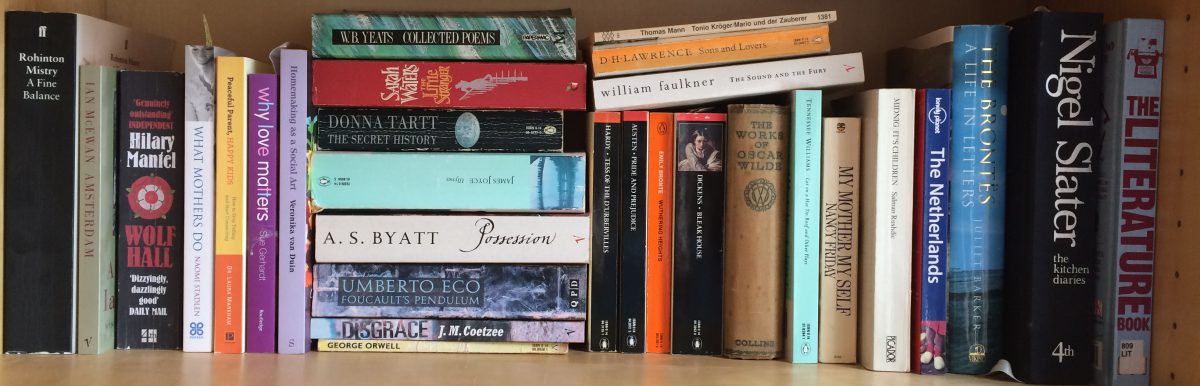
This was my January pick for my 2019 Facebook Reading Challenge, the theme for this month being a humorous novel. I hadn’t read any Bainbridge before and had read that this was considered a comic masterpiece and was in fact shortlisted the Booker Prize in 1974 when it was first published (Bainbridge had no less than four novels shortlisted). This book also won the Guardian Fiction Prize.
So, the book has a pedigree and I had high expectations. I enjoyed it, but I’m afraid to say that I didn’t enjoy it as much as I expected. Perhaps it’s partly timing; I posted a review last week of The Overstory, a book which I found breathtakingly good, and which I completed just before starting this one and I fear that it suffered somewhat in comparison. Perhaps I wasn’t ready for humour after that! I seem to remember having similar feelings about the books I read immediately after completing Hanya Yanagihara’s A Little Life a couple of years ago. There are some books which just need a little more time to sit with you before you launch into something else.
 In summary, this book is set in the late ‘60s, early 70s and is about Freda and Brenda, two young women who work together in a London factory where Italian wine is bottled. They also live together in a pokey bedsit, and share a double bed at nights. Freda is blonde, buxom and outgoing, sexually frustrated and of a romantic inclination. She has the hots for Vittorio, the nephew of the factory’s Italian owner, and fantasises about being seduced by him, contriving situations to enable this. Brenda is a redhead, but mousey in personality, timid and sexually repressed. She has left her drunken husband Stanley in the Yorkshire farmhouse which they shared with his domineering mother. Freda and Brenda met after Brenda had a tearful outburst in a butcher’s shop. Freda took her in and got her a job at the factory. Freda can be kind but also cruel and the book is as much about the complex nature of relationships between women as anything else.
Almost all the other factory workers are Italian, expect Patrick, an Irishman who seems to be quite protective towards Brenda. The first quarter or so of the book is spent setting the scene before the ‘outing’ takes place. The outing, which was supposed to be by coach to a stately home, was Freda’s idea and was simply one of her plots to try and get Vittorio to declare his passion for her. Inevitably, things start to go wrong when the expected coach does not arrive and some workers have to go home while others pile into cars, and the outing turns into farce. It is a cold and bleak October day, so Freda’s fantasy of a sunlit picnic and strolling through romantic gardens with her hoped-for lover were never going to be realised. The other side-plot is that Brenda is being relentlessly pursued by the (older and married) Rossi, manager of the factory. At work he is always trying to get her into compromising situations.
The outing occupies most of the rest of the book. Inevitably, not all goes to plan and there is a dramatic and unexpected twist, which I won’t spoil by sharing with you. There is definitely humour, but it is very dark. By coincidence, there was a BBC radio broadcast of the story (abridged of course) in mid-January, where the wonderful Maxine Peake and Diane Morgan took the parts of Freda and Brenda, respectively, and Sue Johnstone (masterful) narrates. They drew out both the humour and the tenderness very effectively. In fact I enjoyed the broadcast slightly more than the book! I think this was because the ironic interpretation came across more strongly (the process of abridging perhaps?) and that felt more satisfying for a 21st century reading. Clearly we still have quite a way to go when it comes to gender equality, but you forget how bad things were only 40-50 years ago. In the context of the #MeToo movement, sexual harassment of women in the workplace is more difficult to find funny. Perhaps I am being far too earnest!
I enjoyed the book, but must confess that reading it did at times make me a bit uncomfortable. Which is a shame because I think it is a far more complex novel than a first (post-Overstory) reading allows. I think I need to read it again!
Hmm, what do you think?
If you have enjoyed this post I would love for you to follow my blog. Let’s also connect on social media.


 For little ones there’s We’re Going on a Bear Hunt on Christmas Eve on Channel 4 (might have to watch that even though mine are now teenagers!). Or the wonderful Paddington movie on 30th December on Channel 4.
 Thomas Hardy’s Far From the Madding Crowd (one of my favourite Hardy novels) is on BBC2 on 23 December, Jane Austen’s Emma (with Gwyneth Paltrow) is on BBC2 on 28 December, Pride and Prejudice (starring Keira Knightley) is on More4 on Christmas Day, and the brilliant 2011 version of Charlotte Bronte’s Jane Eyre (the one with Michael Fassbender as Mr Rochester) is on BBC1 on 2 January.

 Finally, for something a little more up to date, you could try
 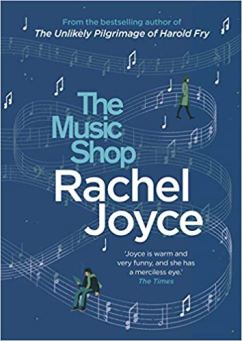 The books open in 1988 when the central character Frank opens a music shop in a rundown area (Unity Street) of an unnamed city. Frank is passionate about music, something that was instilled in him by his late mother, the eccentric Peg. It is probably the only the good thing that Frank got from her, and as the book goes on, we learn much about the lack of love and security in his childhood. This is important as it helps us to understand Frank’s actions later on. The other thing that Frank is passionate about is vinyl; he refuses to sell either cassette tapes or the new-fangled CDs in his shop, much to the chagrin of the salesmen who tell him he is a dinosaur and will have to change with the times. They gradually abandon him.
 The story concerns Romy Hall, a young woman whom we first meet in a prison van en route to Stanville Women’s Correctional Facility, somewhere in California. Romy was convicted of a brutal murder and has been given two life sentences plus six years. Romy worked as a lap dancer at The Mars Room nightclub in San Francisco and it was a former customer at the nightclub that she killed. Romy is at once similar but different to her fellow convicts. For one thing she has a seven year old child, Jackson, whose welfare she becomes increasingly concerned about during her incarceration, and she also completed high school, so she is considerably more educated than many of those around her.
 So much so that I had to have a break from all the heaviness to read something a little more uplifting and which didn’t tax my brain quite so much. I wasn’t very well last week and simply couldn’t face into The Mars Room (next on my Man Booker list) – if you have heard it is bleak, well it is! So far (not quite finished it yet). So, with my blanket, hot water bottle and cups of tea to hand I settled onto the sofa and read Rachel Joyce’s The Music Shop cover to cover in one day. I simply could not put it down.
 This book came to my attention last year. I really liked the sound of it and recommended it in one of my ‘what to look our for this season’ blogs, so it was on my TBR list. Then I saw Rachel speak at a Writers & Artists Conference I was at in September. She was such a wonderful speaker, really warm, authentic and engaging, that I had to get a copy of this book and have been eager to start it. It was a joy and just what I needed, when I was feeling unwell and when my brain was starting to hurt from the Man Booker. Look out for my review of The Music Shop next week.
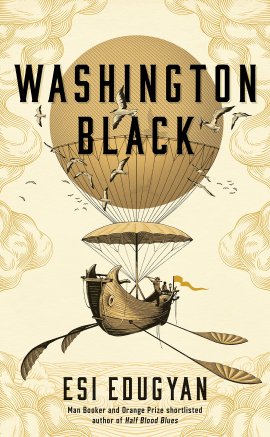 Washington Black’s life is turned around, however, when Erasmus’s younger brother, Christopher, or ‘Titch’, arrives at the plantation. He is an inventor, a man of science like his father, who does not share his brother’s views on slavery. Titch has come to Barbados in order to work on a flying machine he has designed and asks his brother for a helper. Erasmus loans him Washington Black and the boy goes to live in Titch’s quarters, helping him with drawings and experiments as well as practical household tasks. Titch discovers that Washington has considerable artistic talent as well as abilities which will be useful in his science projects and he teaches him to read. This change in Wash’s circumstances means he can probably never go back to being with the other slaves and the question is posed whether Titch has served his protégé well.
 Milkman is set in Belfast during the Troubles in Northern Ireland and the central character and narrator is a young Catholic woman who finds herself drawn unwillingly into a relationship with a local paramilitary leader. It is not clear when the book is set, but I am guessing around the late 1970s, early ‘80s. Northern Ireland is known to be socially conservative, but the general sense of the place of women in society suggests to me that it dates back quite some time. Our central character (not named, I’ll come onto this) is from a large family. Her father is dead and she has several siblings, both older and younger. She is in a “maybe-relationship” with a local young man, who she has been seeing for about a year, though they have not made a commitment to one another. She is keen on running as a hobby and shares this with “third brother-in-law”. Whilst out running one day in a local park she finds that she is observed by a man in a white van. Over subsequent weeks he infiltrates her life by stealth, indicating that he expects her to have a relationship with him. He is known only as “Milkman”. It becomes clear to her that he is quite a powerful local figure in the paramilitary world, so not only does she have little choice about whether to become involved with him or not, it is made quite clear to her that as long as she goes along with him no harm will come to her “Maybe-boyfriend”.
 One thing that is so impressive about Chevalier is how beautifully she creates the historical setting: the two novels I have read so far have been set in 17th century Holland and 15th century Paris and Brussels and I can only begin to imagine the amount of research she has to undertake. The Last Runaway is set in the United States in the mid-nineteenth century when parts of the country were only just being settled. Honor Bright, our main character is a young Quaker woman from Dorset in England. She has led a modest and sheltered life, but her world was turned upside down when her fiancé left her and their close-knit Quaker community for another woman. This was not only a scandal but it left Honor distraught and in a very difficult position. When her sister, Grace, is persuaded by her fiancé that they should move to America, Honor decides she must go with her, not only to support her sister, but to escape the oppression of her situation and have some chance of making a life for herself.
 Julia's books