Summer holiday reading suggestions

The 2017 Man Booker longlist was released yesterday and there are a number of books on the list this year which most avid readers and observers of the book world will recognise. A wide mix of well-known and debut authors, women and men, and diverse countries. So, if you’re looking for some summer reading suggestions, you could do worse than browse the list. I’ve only read Sebastian Barry’s Days Without End, which I reviewed here back in June, and which I absolutely loved, but there are plenty of the others in the list that are on my TBR pile, including Arundhati Roy, Mohsin Hamid and Colson Whitehead.

However, I think it is fair to say that when it comes to holiday reading, most of us are usually looking for something a little lighter? (Which Days Without End certainly is not!) Something you can read and enjoy on the beach with one eye on the kids? Something you wouldn’t mind leaving on your holiday rental’s bookshelf? If these are your criteria, I would suggest the following from my most recent reads (the title links through to the reviews).

Firstly, Holding by Graham Norton, which I enjoyed on audiobook (you will too), but which would be equally good as a hard copy and which, for me, is perfect holiday reading. Secondly, Sometimes I Lie by Alice Feeney, a decent thriller which I enjoyed, despite it not being my favourite genre. Thirdly, The Secret Life of Bees by Sue Monk Kidd, which is a lovely life-affirming book.

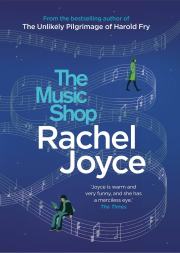
The Music ShopThere are of course, a lot of titles published in the Spring and early Summer, marketed specifically for the holiday reading market. I’ve been perusing the titles and these are the ones that have stuck out for me. The Music Shop by Rachel Joyce, is a love story set in the 1980s about Frank, a record store owner, and Ilse, a German woman whom Frank meets when she happens to faint outside his shop. It’s had good reviews and Rachel Joyce’s earlier novel, The Unlikely Pilgrimage of Harold Fry, did very well.
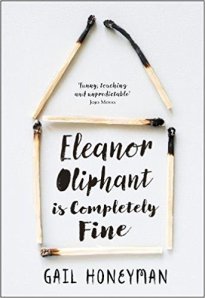
 

Eleanor OliphantEleanor Oliphant is Completely Fine by Gail Honeyman is on my summer reading list. Set in Glasgow, it’s about the emotional and psychological journey of a young woman from shy introvert with a dark past to living a more fulfilling and complete life through friendship and love. I’m looking forward to it.
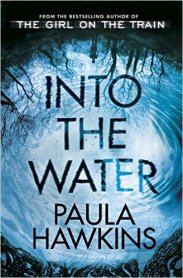


Into the water imgPaula Hawkins’s new novel Into the Water is everywhere, following the phenomenal success of The Girl on the Train which I’ve just finished listening to on audiobook. I had to find out what all the fuss was about! I enjoyed it, but I found most of the characters a bit irritating (that could be the influence of the actors reading, however) and, as I said, thrillers are not my favourite genre. Into the Water is another psychological thriller about a series of mysterious drownings. Like The Girl on the Train, I think, it’s as much about the internal dramas experienced by the characters as it is about ‘events’ so I’m sure it’s gripping.
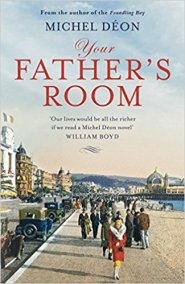
Your father's roomFinally, a little-known book that has caught my eye is Your Father’s Room by Michel Deon. Set in 1920s Paris and Monte Carlo (perfect if you’re off to France for your hols!) it is a fictionalised memoir based on the author’s own life. Looking back on his childhood in an unconventional bohemian family during the interwar period, the elderly narrator recounts how the events of his early life, including family tragedy, affected him growing up. I really need to read this; I’m writing a book myself partly based on my grandmother’s life in East London in the same period so I think I could learn a lot from how the author approaches this genre.


I hope you have found these suggestions helpful. If you have any of your own, I’d love to hear them. 

If you have enjoyed reading this post, I would love for you to follow my blog by clicking on the subscribe button below or to the left. You can choose to receive a weekly digest of my posts (I usually write twice a week), or get notifications direct to your Inbox as soon as I publish.


My life with Jane Austen

Today marks the 200 year anniversary of the death of Jane Austen. She died at the age of 41 in Winchester, having moved there whilst ill to spend her final days with her beloved sister Cassandra. She lived almost all of her too-short life in Hampshire. She first lived in the village of Steventon, where her father was the local vicar. After her father’s death she spent some time in Southampton, but it is Chawton near Alton with which she is most closely associated and where, between 1809 and 1817, she wrote most of her great works. Her former home is now the Jane Austen museum and provides a centre for scholarship of her work as well as a place of pilgrimage for her many millions of fans across the globe.

Like many women writers of her time, Jane did not achieve fame and fortune for her work in her lifetime. It was only in the second half of the 19th century, many decades after her death, that she grew in renown, although many at the time still did not favour her writing. It was considered too subtle for Victorian tastes, lacking in powerful sentiment and extravagant prose. It was only really as literary taste evolved that she was more widely appreciated in the 20th century as being way ahead of her time.

2017-07-18 12.56.38I fell in love with Jane Austen in my teens, and I have never fallen out of love with her. The first book I read was Pride and Prejudice, and I remember I much preferred this colourful collection of sisters to Louisa May Alcott’s in Little Women! But it wasn’t until I read Emma for my English Literature A level that I really ‘got’ Jane Austen and I was blown away. Even now when I read Austen I still see her writing as impossibly brilliant. And then when you think about the life she led, her modest rural upbringing, her insight into human character is barely plausible. After Emma I quickly gobbled up all of Austen’s work (sadly, there is too little of it) and my favourite is probably Mansfield Park.

At times, I have felt rather unfashionable saying that Austen is in my top three favourite authors (another being Emily Bronte, who only wrote one book, and was said not to be a fan of Austen). Many people, who have not read Austen deeply, assume she is rather staid and formal and for the middle-class and middle-aged. But to me she is an icon, a woman doing what she was good at in an era when women writers were virtually non-existent and if they were published it was under a masculine pseudonym. Yes, you can argue the range of her subject matter is limited, but she is so much more than that. She tells truth.

In this bicentenary year, there are many celebrations planned, many of them in Hampshire, unfortunately for me! You can find out about the various events planned here. She will also grace the new British £10 note to be issued by the Bank of England in September:

Austen note

The anniversary of Jane Austen’s death provides an opportunity to celebrate her great achievements as a writer. For me, she deserves to stand alongside Shakespeare as one of the literary greats at the heart of British arts and culture.

What is your favourite Austen novel?

If you have enjoyed this post, I would love for you to follow my blog and for us to connect on social media. Click on the ‘Subscribe’ button. 

Book review: The Essex Serpent by Sarah Perry

This book was everywhere when it first came out last year, surprising since it was written by a little known author and published by a relatively small independent publisher. It became a bestseller, was shortlisted for the 2016 Costa Novel Award and was the Waterstones Book of the Year. I was very keen to read it but it seemed to take a long time to be issued in paperback, so I’ve been hanging on for a while.

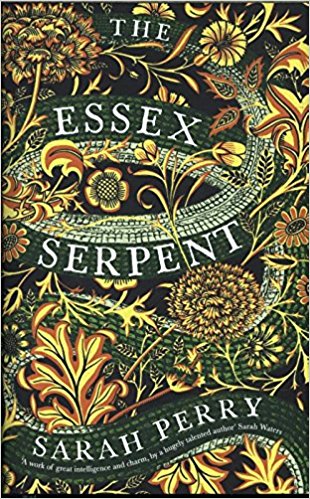
The Essex Serpent imgThe book is set mostly in the fictional Essex village of Aldwinter in the 1890s and the action takes place over the course of a year. The central dynamic of the plot is the relationship between Cora Seaborne, a woman approximately in her late 30s, who at the start of the novel is newly widowed, and William (Will) Ransome, the local minister. Will is happily married to Stella and they have three children, while Cora is happily widowed! It seems hers was a fairly loveless marriage in which she felt constrained and imprisoned and her husband appears to have been somewhat older than her. The lack of intimacy in the marriage is indicated by the fact they had only one child, Francis, and that he is an unusual boy (for Cora “nothing shamed her as much as her son”), who is almost certainly autistic.
Once she becomes widowed, Cora is able to follow her passion for natural science, and she moves out of London to Essex. There she becomes captivated by a local myth, a mysterious serpent that villagers feel is responsible for unnatural happenings, including unexplained deaths, crop failures, madness and distressed livestock. Cora first encounters Will on one of her forest walks, when the two rescue a sheep from a bog. They later meet socially and thereafter strike up an increasingly intimate friendship. The book becomes about the development of their relationship against a backdrop of events connected with the serpent, with the illness of Will’s wife, and Cora’s relationships with other friends, including that of Luke Garrett, a brilliant surgeon who is clearly in love with her.

Whilst the book is essentially about relationships and the nature of love (it is explored in many forms) it is also about a clash of worlds. Firstly, the old versus the modern – it is no coincidence the book is set on the eve of the 20th century – and science versus religion, where Cora and Will have some of their most passionate debates. There is also reason versus superstition; the villagers fear the Essex Serpent, whereas Will finds his parishioners’ fears almost pagan in tone, and Cora wants to prove the existence of the serpent, as some sort of lost creature.

Perry also explores the position of women, from Cora, the scientist, for whom marriage had “so degraded her expectations of happiness” and for whom widowhood and thus the single life had “freed her from the obligation to be beautiful”, to Stella the model dutiful Victorian wife and mother, afflicted by a quintessentially 19th century illness. There is also Martha, Cora’s maid (although her exact position in the household slightly defies definition!), also a political activist who utilises the connections she has made through Cora to further her Marxist leanings. In many ways the themes of the novel are very modern indeed – Martha’s campaigning for suitable social housing for the poor of London is resonant of a very 21st century problem. It’s also a very erotic novel, in the Gothic sense, without being explicit; there are many tensions below the surface and some of these do not get fully resolved, which is actually quite true to life when you think about it.

I thoroughly enjoyed this book and would recommend it highly. It gripped me to the end. It’s a novel rich in themes, rich in its descriptive power and rich in its evocation of time and place.

If you have read this much talked-about book, I’d love to know what you thought of it.

If you have enjoyed this post please follow the blog, and let’s connect on social media.

July reading challenge – something from the library

You know summer is on its way when the local library announces the annual Summer Reading Challenge! Aimed at children of primary school age in the UK it is a great way of getting kids engaged in books (any books!) and giving them rewards for achieving certain reading goals. I love the way the organisers come up with different themes each year, and interesting activity packs that provide a surprising amount of diversion. This year the theme is Animal Agents and it’s being launched next week, so do look out for it if you have primary age children. I’ll be writing more about it once it’s launched so look out for a future blog on the topic.

2017-07-06-09-53-13.jpg

In the meantime, it’s the beginning of the month so it must be time for this month’s reading challenge! With the holiday season upon us, June’s challenge was to read a literary travel book. I chose On a Shoestring to Coorg by Dervla Murphy, and posted my review earlier this week, which you can read here.

This month’s challenge is to go to the local library and pick out a book (the challenge will be to keep it to just one!) and to read it before its due date. I have had a deep passion for libraries since I was a child (I was lucky that my mother took me regularly) and believe firmly that they provide an essential service. I am a compulsive book-buyer, but there is no doubt books can be expensive and what if you’re not sure whether you’re going to like the book? For the old and the young and for those on fixed or low incomes, libraries may be the only viable source of books. Not only that, but libraries provide a host of other services: librarians are information specialists and can help you find things out, they are often at the centre of a community providing reading groups, children’s book clubs, places to sit when it’s cold, places to study where it’s quiet, access to computers (not everyone has one at home) and of course reference books which you may not necessarily want to buy. Need I go on?

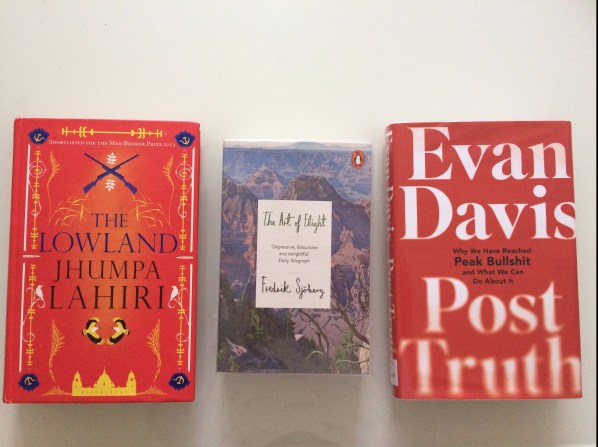
You will gain much from a visit to your local library. I came away with a whole bunch of leaflets about things to do over the summer, theatre guides, etc, a couple of guidebooks on Portugal (where I’ll be heading in August) as well as three books:

2017-07-07-15-04-05.jpg

The Lowland by Jhumpa Lahiri was shortlisted for the Man Booker in 2013, and caught my eye as I love Indian literature, and having just read about Devla Murphy’s travels in the south of the country, my interest was piqued anew. It’s set in Calcutta in the 1960s and ’70s and is about two brothers, very close as children, whose lives take dramatically different paths as historical events unfold around them. I was also drawn to The Art of Flight by Frederik Sjoberg which I think is a kind of memoir, structured as a number of short essays and prose pieces about the natural world. Sjoberg is a Swedish writer I’ve never heard of, but the book looks interesting. Finally, I had reserved a copy of Evan Davis’s newly-published book Post-truth: why we have reached peak bullshit and what we can do about it, after spotting it in the bookshop recently. Evan Davis has for years been one of my favourite journalists because he is warm, watchable, connects well with the viewer and is fantastically clever. He has an ability to cut to the essence of an issue and frequently outsmarts even the most nimble interviewees, so I’m interested in his take on this cultural shift we seem to be experiencing in politics.

I want to read all of these now, so I’m not sure which I will take on for the July challenge. I’m off on a train journey to London tomorrow, so it might well be the one which weighs least!

Have you picked up anything interesting from the library recently?

If you have enjoyed this post, then please subscribe to my blog by clicking on the button below or to the left, depending on your device. Let’s also connect on social media and Goodreads.

#IBW 2017 – Independent Bookshop Week 24 June – 1 July

IBW 2017We’re all on a budget and we’re all busy, so why would you make the effort to go to an independent bookshop when, with a couple of clicks, you can get what you want from the comfort of your armchair and have it delivered, and probably for a discount on the jacket price? Well, as they say, use it or lose it!
The bigger they get the more powerful they become

Most of us would be uncomfortable with the idea of only one major supermarket or only one petrol station. We all recognise that competition means consumers get the best deal. If there were only one supermarket around, you would not see the BOGOFs, the price reductions, the CHOICE. Don’t get me wrong, I use A****n along with everyone else, but I try to spread my spending. And when you work it out, it usually is not that much cheaper. As for choice, well, I am plagued by daily emails recommending heavily-marketed titles to me, but what about the books that are not pushed my way, and the authors that have written them? There’s nothing qute like discovering something new, a title you haven’t heard about. Bookshops can give you those surprises.

If it’s cheap you value it less

Anything that is cheap and plentiful we tend to treat with less respect than something that is scarce or more expensive. In my household, cheap food is much more likely to go to waste or pass its ‘use by’, whereas we are undoubtedly more disciplined about expensive organic or free range products. I think the same is true of other items we consume in our households; if we’ve paid more for a book, we may be more inclined to value it.

You don’t get much buzz with a ‘click’

For me, there is nothing quite like the smell of a bookshop, or the pleasure of browsing the shelves, spending time properly choosing, reading the first couple of pages, feeling the weight of a book in may hands. An online purchase just does not give me that same experience. I know some people like to choose in the shop and then go home and buy online, to get the discount, but, really, for a book? If you’re there in the shop, you’ve made the effort to go there, is it really worth the one or two pounds you might save by buying  it online? And then you’ve to wait until it’s delivered!

Real-life independent bookshops provide an experience, and the good ones (and it’s mainly the good ones that have survived) often provide spaces for you to sit and read, or to hang out with your kids. A Saturday afternoon activity that will cost you less than a tenner! For a child this is exciting, and will encourage them to read much more than a brown package arriving through the post, two or three days later.

You are dealing with people who are passionate

It’s hard running a small shop in today’s often under-crowded high streets, but it’s even harder running an indie bookshop when you consider what they’re up against. Bookshop owners definitely don’t do it for the money! If you love books you have to love indie bookshops and for my money their passion, expertise and sheer tenacity deserve our support.

So, check out your nearest indie bookshop here and make an effort to take yourself along some time this week. You won’t regret it.

Do you live near a great indie bookshop? If so, give them a shout out here.

If you have enjoyed this post, please subscribe to my blog to read future posts.

Book review: “Sometimes I Lie” by Alice Feeney

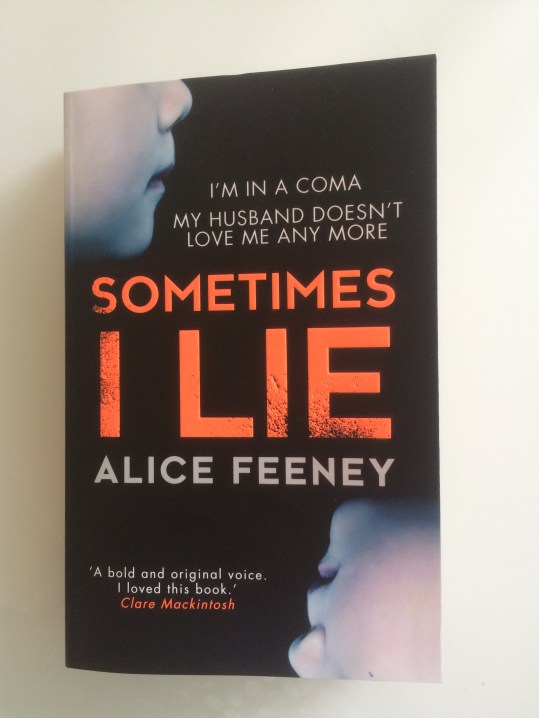
I don’t read many thrillers. They’re not usually my ‘thing’. Sometimes I think it’s simply because the covers put me off! They seem invariably to have neon writing with a black background (as in fact, does this book) and sensational taglines designed to suck you in. The tagline here reads “I’m in a coma. My husband doesn’t love me anymore.” I’m afraid that, in my experience, books that promise much on the front cover deliver somewhat less between the pages. And, yes, that could indeed be true of life in general!

2017-06-14 12.37.04

So, I approached this book with some apprehension. I probably would not have chosen it myself, but it was suggested by my book club. That said, I was open-minded, having been equally sceptical about Disclaimer by Renee Knight (also neon writing on a black background), which was suggested by a book club I used to belong to, and which I thoroughly enjoyed. (You can read my review of that book here.)

The central character is Amber, a married woman in her mid-30s, who when we first meet her, on Boxing Day 2016, is lying in hospital in a coma. She is also our narrator. The chapters alternate between ‘Now’, ie Amber lying in her hospital bed, ‘Then’, looking back over the days of the previous week and the events which have brought Amber to this position, and ‘Before’, looking back at Amber’s childhood. It is clear that Amber has been involved in some sort of car accident, although the circumstances are mysterious. As the narrative progresses we are drip-fed information about the other characters in the story and the part they have each played in bringing about Amber’s near-death.

Amber works in radio on a popular morning show called Coffee Morning with the very unpleasant but very powerful Madeline Frost, who is nothing short of a bully towards everyone else involved in the show, but who is loved by her audience. Amber is married to Paul, a struggling author, whose movements in the pre-Christmas week are suspicious. She also has a sister, the rather too-perfect Claire, who is attractive, confident, and a mother of twins, where Amber is under-achieving, stuck in a career rut and apparently infertile. There is also the sense that the relationship between Amber and Claire is not all that it seems at first; increasingly we see Claire as controlling and rather too controlled. It is clear that this dynamic has had some sort of impact on Amber’s present situation. A further character enters the book part-way through, Edward, a former boyfriend of Amber’s who she bumps into in London one evening. There is the suggestion that perhaps Amber chose the wrong guy when she married Paul.

Thus the scene is set, with our vulnerable central character and a full complement of secondary figures, each of whom could have dunnit. It’s a complex plot, which at times I found difficult to follow; perhaps this is my problem with thrillers – complexity seems to be prized above all else. There is cleverness in the way some parts of it are handled, however, I also felt there was rather too much going on. For example, not wishing to give anything away, I felt the Edward sub-plot was superfluous, and Amber’s OCD was unnecessary and rather randomly included.

I did enjoy the book, it’s certainly a page-turner, but the ending left me vaguely dissatisfied. Perhaps it is fashionable to have ambiguous conclusions, or perhaps the author is planning a sequel, but in a thriller, a genre where questions are continuously posed, I want answers, I want loose ends tied up, and I don’t want to be left hanging.

It’s a decent beach read if you’re off on your holidays soon.

‘The Vegetarian’ by Han Kang

This might be one of the strangest books I’ve ever read and certainly one of the most unsettling reads in a while. It’s the sort of book where you find yourself shifting uncomfortably in your seat as you observe some very disturbing behaviour.

The Vegetarian imgIt’s basically a book about sickness, and the various forms it takes; the sickness of the troubled central character, Yeong-hye, whose decision to renounce meat from her diet is the catalyst to a catastrophic sequence of events; the sickness of some of her relatives who simply cannot accept Yeong-hye’s decision or who use it to perpetrate their own base acts; and the sickness in the society which degrades and dehumanises Yeong-hye. The insidious and malevolent control meted out to Yeong-hye over a period of many years (a control that was legitimised by social and cultural norms) leads to her attempting to starve herself in a desperate attempt to assert her autonomy, and this has explosive consequences

The novel is written in three parts (originally each was published separately). The first part is narrated by Mr Cheong, Yeong-hye’s husband. Mr Cheong is a selfish, misogynistic fool who is completely indifferent to his wife. There is no trace of affection in their relationship. Any fondness that may have existed has disappeared and Mr Cheong is now bitter that Yeong-hye makes no effort to be the good wife: she embarrasses him in front of his boss, fails to wear a bra and does not keep the house tidy. Mr Cheong rapes his wife repeatedly and sees nothing wrong in ensuring his physical needs are met in this way. And yet, so desperate is Yeong-hye’s family to save face in what in their eyes is a good marriage, they turn against her when she decides to stop eating meat, seeing it as a kind of protest which must be seen to be crushed. There is a very disturbing family dinner scene.

The second part is narrated by Yeong-hye’s brother-in-law, her sister’s husband. At first he appears more sensitive than Mr Cheong and shows some kindness towards Yeong-hye, particularly after the events at the family dinner party. He is an artist and claims he has always been fascinated by his sister-in-law’s fragility, both physical and emotional. At first he seems to be helping her, enabling her to express herself in a new way. But, ultimately, he too will exploit and damage her.

The final part concerns the relationship between Yeong-hye and her sister, In-hye. She emerges as the strongest character in the book and through her we have a reliable witness to the events of the novel. She reflects on the period since her sister became a vegetarian and how her world, and her family’s world has turned upside down. But rather than see it as her sister’s fault (as her parents do) she understands how Yeong-hye’s mental illness has been brought about by the abuse she has experienced.

The Vegetarian img 2

This book won the Man Booker International Prize in 2016 and has had universal acclaim. It is a very poetic novel, beautifully translated by Deborah Smith; the motif of Yeong-hye’s dream and her desire to transform into a plant provides a powerful element of fantasy, although for me this was not always coherent. However, it is also deeply troubling. Not one for the faint-hearted!

‘North and South’ by Elizabeth Gaskell

I last read this book when I was doing my English degree at University. At that time, the classics were my ‘thing’, indeed I’d spent my teenage years devouring the classics and, such was my love of them, it’s mostly why I went on to study English. By the time I graduated, I was so full of books that I shunned reading anything for quite a long time. When I got back into the habit, I turned my attention more to contemporary fiction as I realised there was a huge gap in my knowledge. One of the satisfying things about favouring the classics is that they are a largely finite resource; in a few years of effort you could basically read most of them! With contemporary fiction, on the other hand, you never get caught up. So, almost all my reading in recent years has been a desperate endeavour to keep up with all the amazing books published today, and as a result I have not turned back to my beloved classics very much. So, April’s reading challenge was to re-read a classic.

2017-03-30 11.25.47

I’ve been wanting to read this novel again ever since I moved to Manchester 5 years ago and even more so after visiting Elizabeth Gaskell’s house in Plymouth Grove last year. (If you haven’t been and you’re an admirer of the Victorian novel, you really must pay a visit). I have to confess I was a little intimidated to be picking up the book – my edition is innocuous-looking enough, but, oh my goodness, paper was thinner back then and the type face is miniscule! 530 pages of closely-written text. BUT, what a joy!!!  It took me a few chapters to get back into the style, and the Victorian atmosphere, but once I did, I got totally lost, and, truly, I re-entered the world I first discovered as a young girl. I can’t remember when I last got lost in a long book, became totally absorbed by the sense of place, or was able to step into the shoes of the characters and feel their pain, their happiness, their grief their longings. Hanya Yanagihara’s A Little Life, which I read last year, has probably been the closest I have come in recent years.

In North and South, our central character, Margaret Hale, finds herself on an emotional and physical journey. When we first meet her she is living with her wealthy aunt and spoiled young cousin Edith in London; she was sent to them as a child to improve her chances in society. Margaret’s parents live humbly in rural Hampshire where her father is a country curate. Margaret has a brother, Frederick, who lives as a fugitive abroad; he is wanted in England, accused of leading a mutiny whilst serving in the navy.

When Margaret’s cousin marries, she returns to her parents only to find that her father intends to resign his post due to his religious doubt. He decides to move the family north to the city of Milton in Darkshire (for which read Manchester). There he plans to make a living from tutoring and they will rent a house from an old Oxford acquaintance of Mr Hale’s. The move comes as devastating news to Margaret and her mother, for whom the move is the last straw in her social degradation.

When the family first moves to Milton the contrast between their old and new lives is stark – their physical surroundings are completely different, the people they meet are different, and the activities that absorb their time are different. As the months pass, Margaret accepts her new life and as she is forced to confront her prejudices, so it exposes the vacuous existence she enjoyed in London. Gaskell sets about using her characters, their conversations and their confrontations to reveal certain ‘truths’ and challenge certain preconceptions held by many of the protagonists, whether it is Mrs Hale’s bias towards the south, the gentry and all the things with which she is familiar and about which she is nostalgic, or factory owner Mr Thornton’s intolerance of his workers’ strike. All the characters in this novel are in some way flawed by their prejudice (even the lowly workers at the factory despise the Irish labourers brought in to do their work when they strike). To that extent, the novel still has great relevance today, over 150 years later, as the north-south divide in England continues to have social, political and economic consequences.

Some of the characters in the book are two-dimensional, for example, the lowly Bessy Higgins, with whom Margaret develops a rather implausible friendship. It has to be remembered that these characters are merely devices through which the author is seeking simply to illustrate a point, although Gaskell’s readers at the time probably thought this was actually how poor people lived and talked. Margaret, on the other hand, is, for me, a well-rounded, credible and fully-developed character. She goes through a transformation in this novel which is both sincere and believable.

The ending of the book is entirely predictable, of course, but this is fine because the joy of this book is in the journey. Although some may find the language a barrier, for me it was sublime. Again, it took me a little while to get back into it and it made reading a little slow at first, but it was beautiful and oh so clever!

I thoroughly enjoyed re-reading North and South and I would definitely recommend picking up a classic from time to time.

Have you re-read any old favourites recently?

If you have enjoyed this post, you can follow my blog by clicking on the subscribe button below or to the right, depending on your device.

‘Stay With Me’ by Ayobami Adebayo

Stay-with-Me imgThis was April’s choice for my book club and one of the members described it as the best book we have read – she consumed it in virtually one sitting in the middle of the night when she was wide awake with jet lag! A fine endorsement indeed. It really is a marvellous book and, as I so often say on this blog, totally unfair that one so young should exhibit this much talent in a debut novel! It has also been shortlisted for the Baileys Women’s Prize for Fiction this year (winner to be annonced on 7 June), so it’s hot.


The blurb on the jacket is cryptic:

“There are things even love can’t do…if the burden is too much and stays too long, even love bends, cracks, comes close to breaking and sometimes does break. But even when it’s in a thousand pieces around your feet, that doesn’t mean it’s no longer love.”

It’s hard to provide a review without giving away too much, because the twists and turns of the plot are a joy. It’s also a very tough read at times, so be prepared for some challenging parts.

The first chapter is set in 2008 but only makes sense once you have finished the book, so do come back to it. The book starts proper in 1985 when we first meet Yejide and Akin, a young married couple living in Ilesa in Nigeria. They are a thoroughly modern couple enjoying a happy middle class life, he a successful banker, she a beautician with her own business. Their relationship is placed under severe strain, however, because they are infertile. They themselves are very much in love and seem quite happy with their lot, but their respective families have high expectations of children. Thus they come up against powerful cultural forces; both are children of polygamous households and this contrasts forcefully with their much more enlightened outlook.

There is superstition and witchcraft here too. Quite early on, under unbearable pressure, Yejide turns to traditional quackery to conceive and ends up developing what can only be described as a mental illness where she develops a phantom pregnancy that lasts nearly eighteen months. Akin, on the other hand, is under pressure from his own side to take a second wife, as it is considered the priority is to produce a child not to have a happy marriage. The tussle between modern and traditional ways of thinking create mistrust and betrayal in Akin and Yejide’s relationship where previously there was only love and passion.

This is all played out against the backdrop of social and political unrest in Nigeria in the 1980s. I was hoping this would play a bigger part in the novel having enjoyed so profoundly Half of a Yellow Sun (Chimimande Ngozi Adiche) a few years ago, but it’s not that kind of book. The political upheaval going on in the background is there more as a metaphor for transition, what happens when society is forced to evolve out of its traditions. It also helps with the plot later on.

The pace of this book is fast, but it loses nothing in quality for being so. It’s a brilliant plot, jaw-dropping even. The writing is breathtaking and at times deeply moving. So, I must say no more, only go and read it and enjoy!

Have you read this book? If so, what did you think of it?

If you have enjoyed this post and would like to subscribe to my blog, please click on the button below or to the right, depending on your device.

‘Holding’ by Graham Norton

You’ve got to admire Graham Norton; he started out as a stand-up comic, first came to prominence in the classic TV comedy show Father Ted, making a handful of appearances as one of the many random priests on Craggy Island, and has since built a very successful career as a broadcaster on both radio and television, mostly in the UK. He has previously written three autobiographical books, but Holding is his first novel. People like Graham Norton are so annoying; they are really good at their chosen vocation, then they write a book…and they’re really good at that too! Most of us are just trying to be good at the one thing!


I do love Graham Norton, though, and this book does not disappoint. I listened to the Audiobook, which is narrated brilliantly by Graham himself, and I am certain this added to my enjoyment. He performs each role with such distinctiveness and brings the characters to life. The plot of the story is a straightforward whodunnit, but it has twists and turns which Norton handles deftly. The story is set in the seemingly sleepy town of Duneen in County Cork, Ireland, but beneath the surface, there stir unaccountable passions which have been and continue to be suppressed by culture and tradition.

Our central character is Sergeant PJ Collins, the local police officer, who is overweight, unmarried, and carries about him the burden of knowing that his life has been little lived. The small-town torpor is completely shaken up, however, by the discovery of human remains in a field which is being developed for a new housing estate. It is widely suspected to be the body of Tommy Burke, a young man who disappeared many years earlier in mysterious circumstances. Suspicions are immediately thrown upon two local women with whom he had romantic links: Brid Riordan, to whom he was engaged, but only, we learn, because she was set to inherit a farm when his own family’s fortunes were somewhat in decline. Brid is now middle-aged, unhappily married and an alcoholic. The other main suspect is Evelyn Ross, a spinster who lives with her two unmarried sisters in one of the largest houses in the town, who was Tommy’s true love at the time, but the relationship was largely unrequited.

Thus the scene is set and the plot thereafter takes on some impressively imaginative twists and turns. Graham Norton’s great talent, however, is clearly for character and he introduces us to a wide cast of individuals, from the swaggering and confident, but equally unfulfilled, Detective Linus Dunne from Cork (brought in to investigate the homicide), who initially patronises and sidelines PJ before gradually accepting and empathising with him, to the meek and mild Mrs Meaney, PJ’s housekeeper, who initially comes across as something of a busybody but who takes on greater depth as the story progresses. Listening to Graham Norton’s narration gave me an even more powerful sense of the cast of characters, I think, than if I had read the book, and, I repeat, he does it brilliantly!

The book is ultimately about what lies beneath, quite literally, in the body that is discovered on the building site, but also in the characters, the lives that go on behind closed doors, until a catastrophe comes along and forces them out into the open. It is also very much about the upending of old traditions (not all good), in a post-Celtic tiger, post-credit crunch world and its being replaced by new ways of being – not all of which are good either.

I loved this book – it had me driving slowly and sitting outside my house in the car, just so I could listen to the end of a chapter! It’s quite an accomplishment for a debut novel. Highly recommended.

Have you read this book? I’d love to hear your views.

If you have enjoyed reading this blog, you can follow me by clicking on the subscribe button below or to the right, depending on your device.