
We learned last week of the death of Christopher Tolkien at the age of 95. Although he was a renowned Oxford scholar of Old and Middle English, the obituaries that I read, and the tributes I heard on the radio, tended to focus on his rather more famous father, JRR Tolkien. Not unreasonable; he was, after all, chief custodian, curator and champion of his father’s literary archive after his death in 1973 and from all accounts he was pretty well-adjusted, not seeming to have suffered any lack of self-confidence or self-esteem as a result of his eminent parent.

The same cannot be said of other children of famous or high-achieving parents: the two children of Sylvia Plath and Ted Hughes seem to have experienced great unhappiness – Nicholas hanged himself in 2009 and their daughter, Frieda, a poet and painter, moved far from her UK birthplace to become an Australian citizen and is three times divorced. I reviewed The Prime of Miss Jean Brodie a couple of weeks ago and learned that Muriel and her only son became estranged, her having left her husband and child not long after she married in 1937, and Doris Lessing also left her husband and two young children to pursue her literary career. In Lessing’s case, I am not aware of what impact the separation had on the children longer term, and, I hasten to add, I make no judgement. It cannot be easy, though, growing up in the shadow of a famous, high-achieving literary parent.
It got me thinking about parent-child relationships explored in literature and I decided to write a list! Here are my top picks (in no particular order):
- Oranges Are Not The Only Fruit by Jeanette Winterson – based on the author’s own difficult northern childhood
- Educated by Tara Westover – a memoir from the child of religious zealots
- A Little Life by Hanya Yanagihara – harrowing novel shows us how a lack of nurturing in childhood leaves its main protagonist deeply damaged
- Pride and Prejudice by Jane Austen – an awful meddling mother and impotent father cause chaos in their daughters’ lives
- Dombey and Son by Charles Dickens – most of Dickens’ novels focus on family relationships but this for me is one of the darkest
- Sons and Lovers by DH Lawrence – an unhealthy relationship between mother and son blights a young man’s future
- Eleanor Oliphant is Completely Fine by Gail Honeyman – a woman suffering in the shadow of a toxic parent
- Hot Milk by Deborah Levy – a brilliant study of a young woman trying to escape the straitjacket of life with a domineering and emotionally manipulative parent
- Wuthering Heights by Emily Bronte – among his many other misdemeanours, Heathcliff would surely be found guilty of child cruelty today!
I’ll no doubt think of a few more in the coming days!
What are your favourites?
If you have enjoyed this post, I would love for you to follow my blog. Let’s also connect on social media.
 Fleabag: The Scriptures by Phoebe Waller-Bridge £20.00
 Who Am I Again? by Lenny Henry £20.00
 Wilding by Isabella Tree £9.99
 Ness by Robert Macfarlane and Stanley Donwood £14.99
 Twas the Nightshift before Christmas by Adam Kay £9.99
 The Jewish Cookbook by Leah Koenig £35.00
 Mother: A Human Love Story by Matt Hopwood £9.99
 Poems to Fix a F**ked Up World by Various £9.99
 Fucking Good Manners by Simon Griffin £9.99
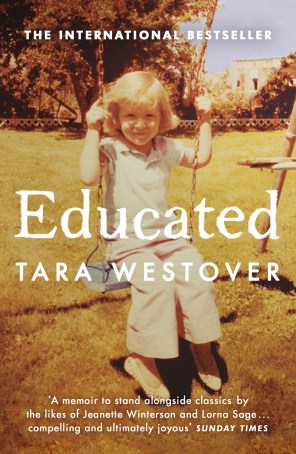 This book caused something of a sensation when it was published last year. It is the extraordinary memoir of a young woman who grew up in rural Idaho, as part of a large Mormon family. Nothing too outlandish there until the author begins telling you about the father’s survivalist beliefs (he hoards supplies of food and fuel in their bunker for when catastrophe strikes, as he believes it inevitably will), his Christian fundamentalism (quite extreme beliefs about, for example, what women should wear, that even their fellow Church members find uncomfortable) and the obsessive control he exerts over the rest of the family. The unconventional nature of the family would be enough to make this a fascinating read, but what makes it shocking is the level of violence, of almost sadistic cruelty. Some of is quite hard to read and at times I found myself gasping out loud.
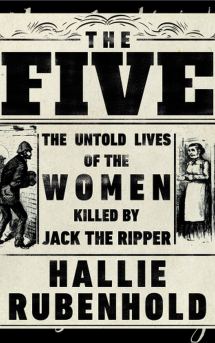 The Five by Hallie Rubenhold
 Bookworm: a memoir of childhood reading by Lucy Mangan
 Spring by Ali Smith
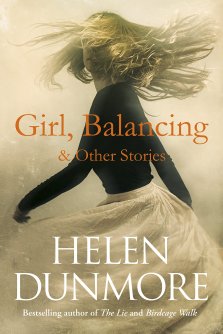 Girl, Balancing by Helen Dunmore
 Lanny by Max Porter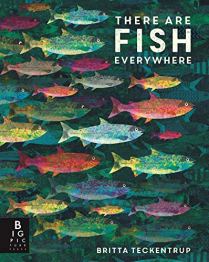
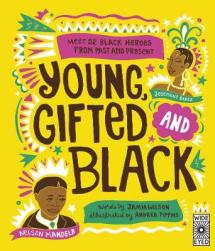


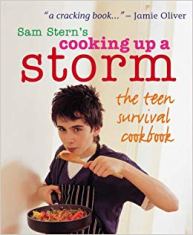 Cooking Up a Storm: The teen survival cookbook – Sam Stern & Susan Stern


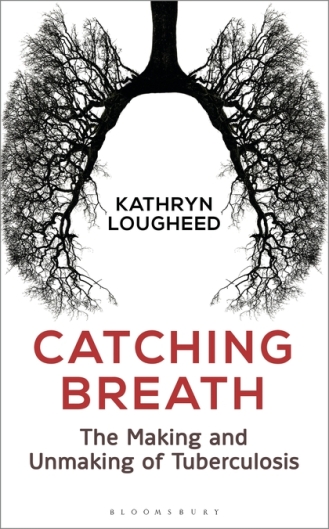 One of the books I consulted as part of my research into understanding more about the disease, its symptoms and its effects, was published very recently, in 2017. It’s called Catching Breath: the making and unmaking of tuberculosis by Kathryn Lougheed. The author is a former scientific researcher and is now a journalist and science writer. The book is excellent. It is fantastically well-written, even funny in parts (the author has an interesting sense of humour – her Twitter handle is @ilovebacteria!). She is out to make some serious points, however, about this, one of the oldest diseases known to humanity, which has so successfully mutated, crossed species and diversified and which just keeps on winning. Her main argument is that TB remains a disease of poverty and inequality. Globally, it affects the weakest – the young, the old, the poor or those who are already sick. She argues that, although it is a complex disease, if there was sufficient political will, many more lives could be saved. If there was as much resource and international effort put into tackling TB as there has been, say, to addressing AIDS, there would have been far greater success to date. In 2015 the World Health Organisation (WHO) announced its ‘


 Julia's books