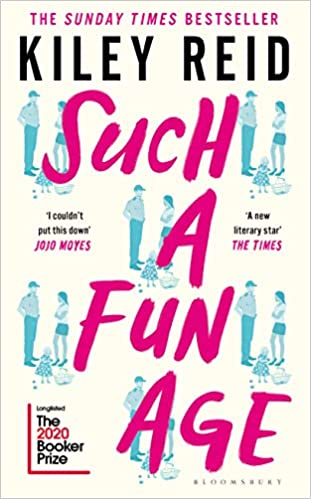
Luster has been causing a bit of a literary storm since it was published in the US late last year. It has won numerous prizes, was a bookshop favourite and was shortlisted for the Women’s Prize in the UK this year. It’s subject is similar to a couple of books I have already read this last year (Queenie and Such a Fun Age), but it does take a more unconventional journey through the experience of a woman of colour in a mainly white middle-class world. What lifts it above the other two books mentioned above, is the quality of the writing; this is most definitely in the ‘literary’ category and Leilani is a phenomenally talented writer.
Set in New York, twenty-something Edie is working as a publishing assistant, a job she finds boring. She has a very modest lifestyle, just about surviving on her salary, and her life seems without interest or stimulation. There are frequent references to her past, her family background, and, in particular, her mother who died relatively young in unhappy circumstances. Edie is still somewhat grief-stricken, something she expresses through her interest in art.

Edie meets Eric, a forty-something archivist from New Jersey, and they begin a relationship. Eric tells Edie he and his wife have an “open relationship”, but it is clearly not something he is used to. When we meet his wife later on, it becomes apparent that she has, at best, mixed feelings about the arrangement, and it appears more like a compromise to him than something she is wanting to engage in too. Much to Edie’s frustration it takes some weeks before the relationship with Eric becomes sexual, but when it does, the sex is fairly graphic. This is certainly one of the features of the book that critics have commented upon!
One of the boundaries that Eric’s wife Rebecca had set, was that he should not bring his lover to their home. Eric breaks this fairly quickly and this piques Edie’s interest. Eventually, and inevitably, Edie ends up meeting Rebecca, and finds that Eric has a thirteen year-old daughter, who is adopted and black. Rebecca is a pathologist whose job is to carry out autopsies. She too finds she has an interest in Edie, rather like a scab she cannot help but pick. The two women seem drawn together in a mutual kind of hostile fascination. When Edie loses her job (and therefore her income and her home), Rebecca tells Edie that she can move in with them temporarily (while Eric is away at a conference and therefore blissfully unaware!).
The novel changes tack at this point as it becomes about the emotional dance between the two women and the effect this has on Edie. Unemployed and unable to find sustainable employment, she takes up her art in earnest. Edie also latches onto Akila, the daughter, who is at first resentful of Edie, but then grows warmer towards her when she realises what they have in common. Eric is mortified when he returns home and finds Edie has moved in. His sexual interest in her declines rapidly and he nearly becomes irrelevant at this point.
This is not a ‘plot’ novel, though I won’t say any more about what happens. It is a novel about psychological tension and about the growth of a young woman into someone able to express herself through art and not just through her sexual relationship to a white male, and this says something significant about the black female experience.
Recommended.

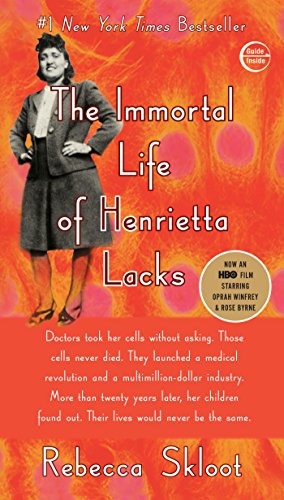 This may have been unremarkable and probably happened more than we care to imagine, but for what happened next: Henrietta’s surgeon had noticed how rapidly her cancer cells had grown, but when George Gey, the scientist to whom he had sent the cells, received them, he found that they divided and reproduced at a rapid rate, and, most remarkably, seemed extraordinarily robust outside their host, unlike all other cells he had dealt with. Gey soon forwarded cells to other colleagues working in the field and they too found the ability of these cells to thrive truly remarkable. HeLa (the name given to the cells) was born and they quickly became an essential part of research worldwide into therapies not just for cancer but for polio and HIV to name but a few. It is thought that around 50 million tonnes of HeLa cells have been cultivated since 1951.
 The other book I have been reading, The Water Dancer, concerns the story of Hiram, a black slave also in Virginia in the mid-1800s. His mother was also a slave, but his father was a slave-owner, who allowed his son some elementary education after his mother’s death and then, when he was in his teens, gave him the special status of being the personal servant to his white half-brother, Maynard, the heir to their father’s estate. Hiram is also the grandchild of legendary slave Santi-Bess, one of the original transported Africans who is said to have had magical powers (Conduction), although it does not become entirely clear what these are until towards the end of the book. The first significant glimpse of this is when, whilst chaperoning Maynard on a drunken night out, the two young men somehow end up in the river. Maynard drowns but Hiram somehow emerges alive. The events which follow Maynard’s death eventually afford Hiram the opportunity to escape slavery via the Underground and he soon becomes an agent of that cause. It is not a straightforward choice for him, though, as he is forced to confront traumatic memories of his mother, who died when he was very young, and to face the many complex facets of slavery, its consequences, its victims and what it means to be free.
 This book has been on my to-read list for some time now, ever since it caught my eye over a year ago when it was published. I recommended it as a
 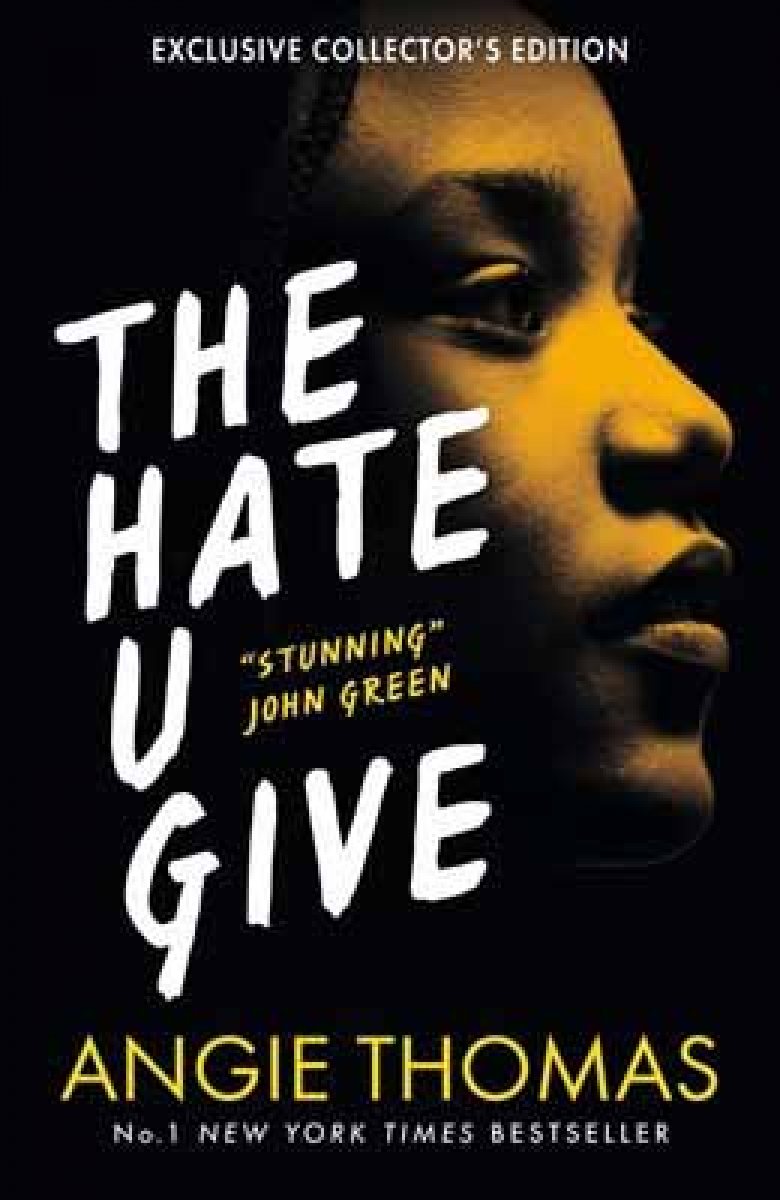 This book is Angie Thomas’s debut novel and it caused a sensation when it was first published in the United States in February 2017. It enjoyed both critical and popular acclaim, remaining at the top of the New York Times YA best seller list for almost a year. It was made into a film which was released last Autumn. The novel came out of a short story Thomas wrote in college following the police shooting of a young black man in 2009.
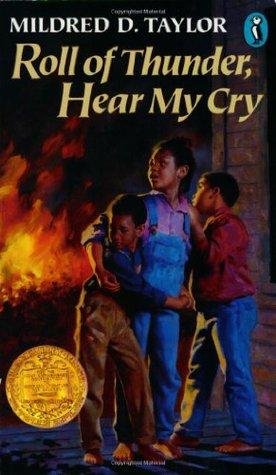 In January the theme was a humorous novel and we read Beryl Bainbridge’s
  I chose this book for my 2018 Facebook Reading Challenge. The June theme was an autobiography, a tricky category since enjoyment can often depend on your feelings about the author. I also wanted to avoid titles that would most likely have been ghost-written. After thinking about it for some time, I chose this, the first volume in Angelou’s memoir series, and the one which is often considered to be the best. It can be read as a stand-alone.
 Julia's books