A the beginning of lockdown it seemed there was no end to challenges published on social media as most of us stared into an abyss of being confined in our homes for an indeterminate period. Whether it was fitness, craft, cooking, or reading, there was a challenge for everyone. For others, just staying alive and/or sane was enough of a challenge, and for many, of course, endless unfilled days were a luxury they could only dream of; health and care workers, key workers in supermarkets and delivery drivers all found their work was busier than ever. I got sucked in too, thinking that I was suddenly going to have lots of time on my hands to do all sorts of jobs I had not got around to doing for months, as well as reading more (SO much more!), being really creative, sorting out my garden, etc, etc. The reality was somewhat different. I, and many others, had not factored in the emotional toll of this period we called lockdown; it was not like a staycation AT ALL, it was really stressful! I was relatively lucky: some people were worried about dying and others were painfully lonely, some were locked up with abusive partners, others confined in an apartment with young, bored children who needed home-schooling. I only had a working from home husband and three teenagers to contend with. But still, I found it difficult to settle to very much at all.


I have posted on here before about how valuable I found the streaming of National Theatre Live performances, the Hay Festival channel, and the BBC Glastonbury channel was great (if anyone has ever wondered whether the TV license fee is worth it I hope their question has been answered well and truly in the affirmative these last few months). I have also been watching a lot more television than ever before and it has been such a treat. I finally watched the amazingly incredible His Dark Materials in full – Dafne Keen as Lyra Belacqua was simply the stand-out performance and she’s only 15! Season two is coming soon – the trailer alone is thrilling. I also enjoyed Normal People, the much-acclaimed adaptation of Sally Rooney’s much-acclaimed novel. I loved the book and was so excited to watch the television series. I thought it was very faithful to the book, and the acting performances (again from two very young actors) were outstanding, but it did not move me as much as the book. Perhaps my expectations were too high, or the book was just too good? I have also watched a couple of the new versions of Alan Bennett’s Talking Heads. They are brilliant! There are twelve to watch altogether and every one of them will be fantastic I am sure as the casting is extremely high calibre.
Despite all this ‘extra time on my hands’ there are a few things I still have not got around to that are on my must-watch list: Noughts and Crosses, the series based on the Malorie Blackman novels, and My Brilliant Friend, the Italian adaptation of the first novel in Elena Ferrante’s Neapolitan series, which is now available on YouTube! I can’t wait to watch it, as it’s one of the best things I’ve read in the last few years. I also haven’t even started on the epic series The Luminaries yet, which has been screening on Sunday evenings on BBC1 for the last few weeks. It has finished now and its slot has been swiftly taken by A Suitable Boy, Vikram Seth’s epic novel from 1993, and still one of my all-time favourite books. Since I read Gone Girl in January I’ve also been wanting to watch the film – that’s another one on the list.
So, lockdown has not been the reading/film-watching/sewing/baking/decorating/ exercising bonanza that I thought it would be. Maybe in six months I’ll be asking myself what on earth I did with all that ‘spare’ time. Maybe I’ll just say to myself that I kept my family safe and well, I helped some people, I walked a lot, I kept my head together (ish) and I did enough.
NAMASTE

What are your reflections on your life in lockdown?
 In The ABC Murders Poirot is involved in a cat and mouse game with a serial killer, someone who warns in advance where and when he will strike, taunting our Belgian hero; the murderer begins with middle-aged shopkeeper Mrs Alice Ascher in Andover, then flirty young waitress Betty Barnard in Bexhill-on-sea, and so on. In this novel Poirot is past his career peak and his approach is challenged as somewhat old-fashioned in the form of Inspector Crome, an ambitious young detective who prefers more modern methods in his investigation. The murderer, however, pits himself squarely against our ageing Belgian hero; it is, unusually for the Poirot novels (it seems to me), a psychological game between perpetrator and hunter.
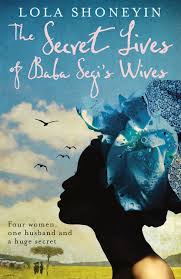 This book by Nigerian writer Lola Shoneyin, was published in 2010 and longlisted for the then Orange Prize for fiction the following year. Shoneyin writes beautifully. I have only just started it but I already love the characterisation and the humour, although a more melancholic note is now beginning to enter. It is described in the publisher’s blurb as at once funny and moving and I can definitely see that. Baba Segi is a traditional Nigerian male, still following the practice of polygamy in modern-day Nigeria. He has seven children by his first three wives, but desires more and when he meets Bolanle, a young graduate from a more enlightened family, who are against the marriage, he thinks his wish has been granted. Not all goes to plan, however.
 I really enjoyed Zennor in Darkness. It is a great story, two stories really, which become intertwined. Clare Coyne is the only daughter of widowed Francis Coyne, and the pair live together in the small town of Zennor in Cornwall. Clare’s mother was born there and the family moved from London when Clare was a baby in order to be near family. Clare’s father’s family had a higher social status, and Clare is clearly ‘different’ from her Cornish cousins, grandparents and aunts, with whom she has spent so much time, but Clare is largely disconnected from her paternal grandparents. Francis Coyne is an ineffectual character, a botanist who earns very little money from his publishing, who spends more time with his books than with his daughter, and who does not seem to understand her on any level. Clare has artistic ability and is a talented artist. She spends her time looking after her father, keeping house, and drawing plants for his latest book project.
 The premise of the story is very simple: So-nyo is a wife and mother to five children, all of whom are now grown-up and living their lives in different parts of the country (South Korea). So-nyo lives a very simple fairly rural life with her husband at the family home, where there are many privations. The place is almost a throwback to a bygone era. So-nyo’s eldest son, Hyong-chol, lives in Seoul with his wife and family and it is while his parents are on their way to visit him (to celebrate the father’s birthday) that his mother goes missing; she was holding her husband’s hand on the busy underground station platform one moment, then she seemed to slip from his grasp and just disappeared into the crowd.
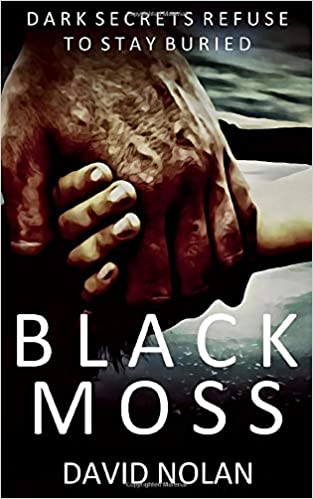 The book jumps back and forth in time between the present day and April 1990. In the present day we meet a middle-aged Danny Johnston, a long-in-the-tooth presenter of investigative television documentaries. He is past his peak professionally and clearly has some deep-rooted, well-suppressed emotional difficulties; the book opens with him crashing into a tree whilst drunk. He lives an empty life alone in London and is borderline alcoholic. His accident is well-publicised in the media and as a result he loses his television contract and is let go by his agent. With nothing to keep him in London he decides to return to the north, to Manchester where he grew up and where he began his career as a local radio reporter.
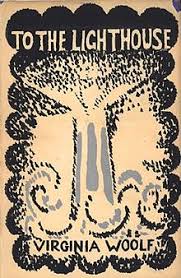 I had that very experience recently with my book club when we decided to read To The Lighthouse by Virginia Woolf. Some of us had read it before (though years earlier) others had not read it at all. But even those of us who had read it before could not remember very much about it! I read it when I was studying for my English degree 30 years ago; I would probably have got through most of Virginia Woolf’s books in a very short space of time, because that was what my degree entailed – reading lots and lots of books very quickly! I always remembered that To The Lighthouse was my favourite, but I could not honestly have told you what happens in it, except that the journey to the eponymous lighthouse was about something desired more than something fulfilled.
 Viktor E Frankl was a psychiatrist who is credited with developing one of the most important theories in the field human psychology (logotherapy) since Freud. He was developing his theory before he was captured by the Nazis but his time in the concentration camp enabled him to observe human beings in extreme conditions and further evolve his ideas.
 I was tempted to go for Haruki Murakami – after reading
  Julia's books