It always feels like the sure start of Autumn when the Booker Prize shortlist is announced – kids have gone back to school, college and university, the evenings are getting darker earlier and, certainly in my part of northern England as I look out on the pouring rain, all thoughts of yellow grass and hosepipe bans have vanished from our minds. And Marks and Spencer has shelves full of Christmas confectionery!
Each year, since I began writing this blog ten years ago, I have attempted to read the shortlist and predict the winner by the time of the final announcement, which will be on Monday the 9th of November this year. That’s just over six weeks, so a book a week. I think I have only managed this feat one year in the last ten – how the judges get through upwards of 150 in a few months is beyond me! I haven’t even completed the Women’s Prize shortlist yet, and the winner of that was announced in June! I was reading a piece by chair of judges this year, classicist Professor Mary Beard who said she found it required more energy than writing a book – isn’t reading supposed to be relaxing?!
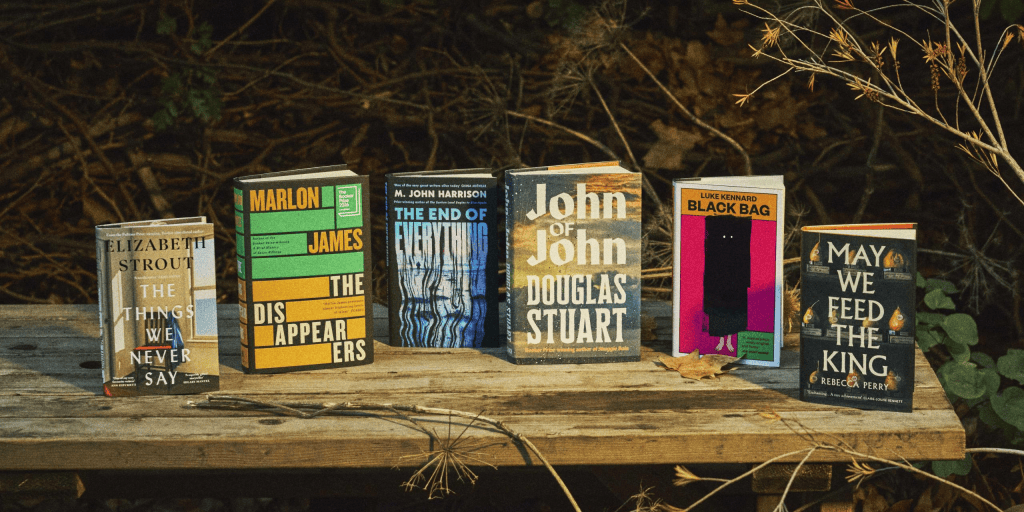
I am delighted to say I have a bit of a head start, having just completed one of the shortlisted books – I felt after reading it that if it wasn’t shortlisted, then something was seriously amiss – Douglas Stuart’s John of John. It is also one of the longest books on the shortlist, so that’s a double win! I read this book because I spent a couple of weeks in Scotland in August and visited the Isle of Harris and Lewis, where this book is set. Look out for my review of that soon, as well as some pictures of beautiful Scotland.
I will also look forward to reading Elizabeth Strout’s The Things We Never Say. I have grown to love her gentle and insightful writing the more that I have read it and thoroughly enjoyed her last novel before this one, Tell Me Everything. I wonder if the similarity in the titles is significant.
Marlon James makes an appearance on the shortlist once again with The Disappearers about the persecution of gay men in Jamaica in the 1980s. He is, of course, like Douglas Stuart, a previous winner with his 2014 novel A Brief History of Seven Killings. I’m ashamed to say that I have not read any of his work before, so I’m looking forward to rectifying that with this novel.
M. John Harrison is perhaps the most experienced author on the shortlist and I have heard that if he wins, he will be the oldest ever (he is in his 80s). Bravo! His novel The End of Everything is set in a post-apocalyptic coastal area in Kent (that seems significant) where Phillip survives by collecting artefacts from the sea. It feels like it might be a novel for our times.
Rebecca Perry is the only debut novelist on the shortlist with her first published work of fiction May We Feed the King. The novel is part modern commentary and part historical fiction as a museum curator encounters the story of a past monarch who was a reluctant ruler, thrust onto the throne after the deaths of his older brothers.
Finally, Luke Kennard’s novel Black Bag is described as the only comic novel on the shortlist (therefore unlikely to win?). An actor takes on a job where, as part of a psychological experiment he is required to wear nothing but a black leather bag. It sounds intriguing!
So, as usual, an interesting list. One down, five to go, about 1,700 pages in 6 weeks. Here we go!


