Aix-en Provence, France & a disappointing Simenon novel

My youngest is currently doing her university year abroad in the south of France so I have been lucky enough to have made two visits there in recent weeks. I have been to France many times and it is a country that is difficult not to love. Paris is probably my favourite city in the entire world, I love Brittany and Normandy, the distinctive scenery and coastal towns, and I love the south and south west too – Biarritz, the Pyrenees, Bordeaux, Langeudoc, it’s all wonderful. Provence is an area that I know less well, so it has been a joy to discover a bit more about it on my recent visits.

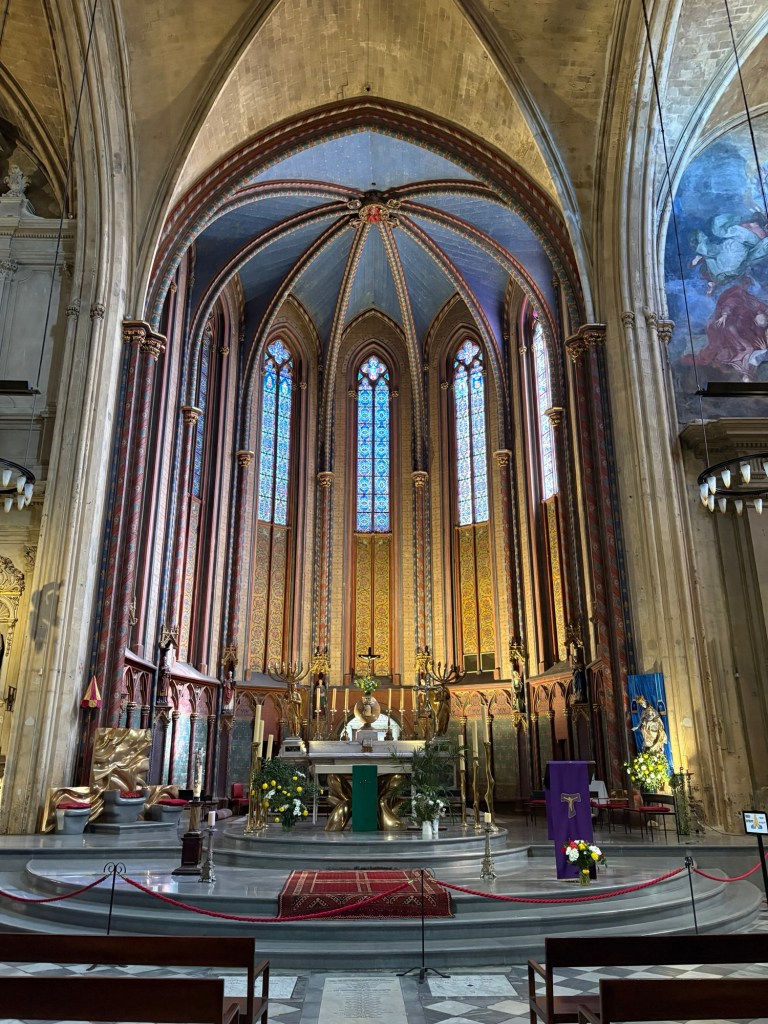
Aix-en-Provence dates back to Roman times, but had its heyday in the medieval era and much of the architecture of that period remains, including the magnificant Cathedral of Saint Saveur. It is a city of two halves with narrow, angular streets on one side of the Cours Mirabeau and a more orderly grid-like arrangement on the other.
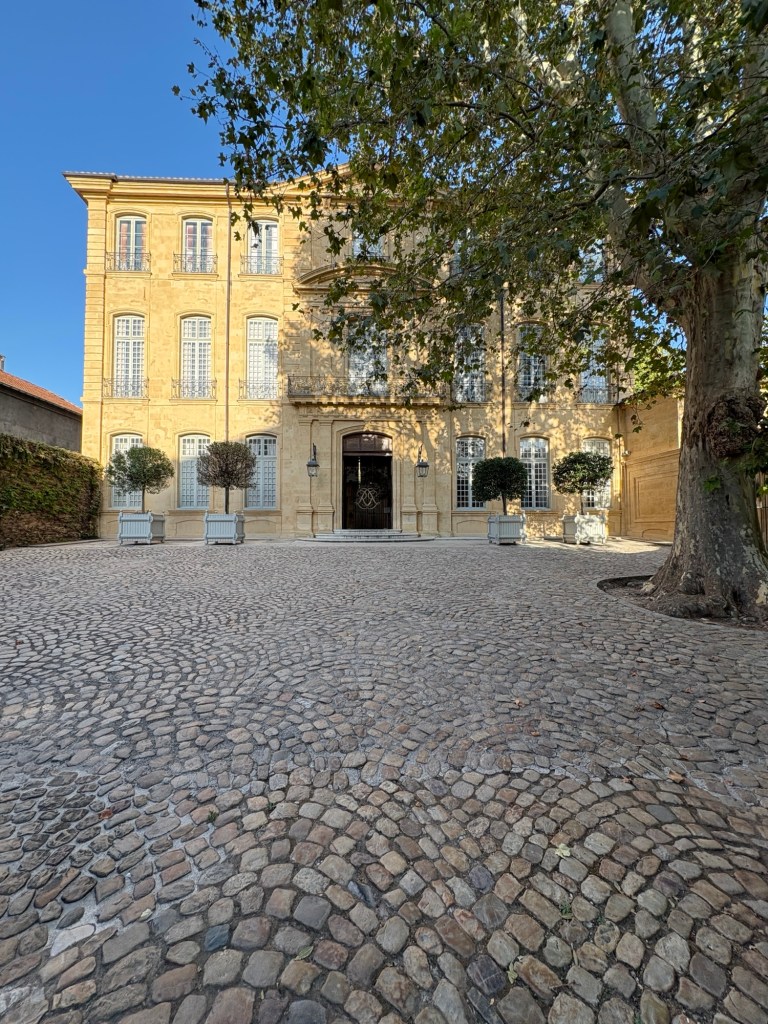
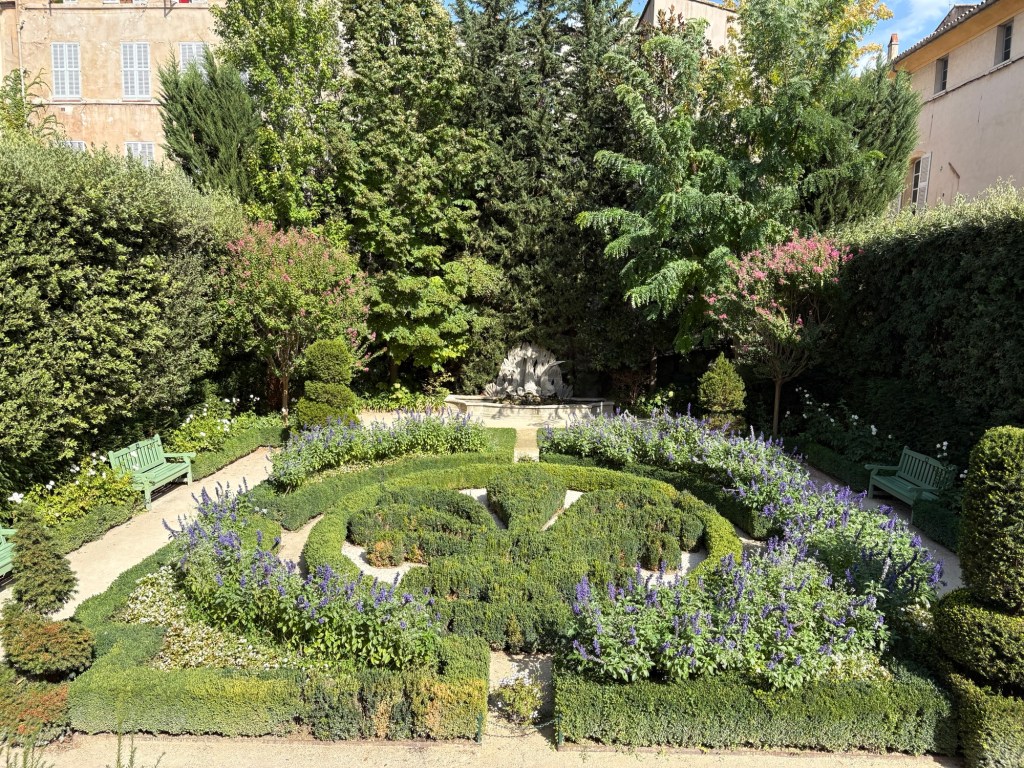
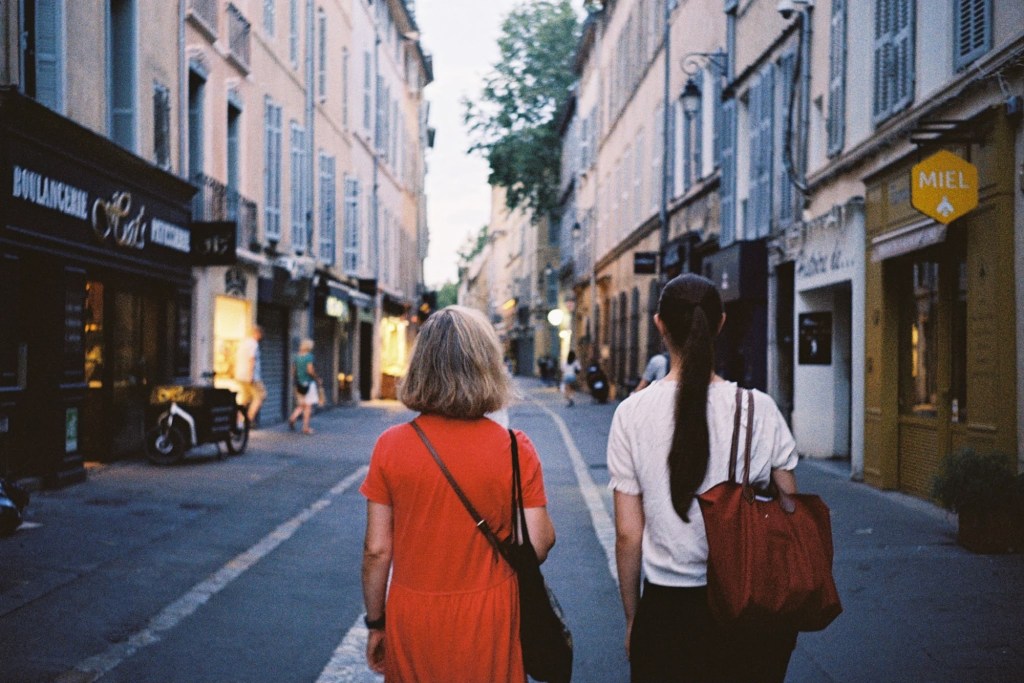
Much of the night-life, bars and restaurants, takes place in the medieval part of the town, while the other side feels more high-brow – here you will find the Centre Caumont, a beautiful art gallery, and the school where the town’s most famous son, Paul Cézanne, was educated.
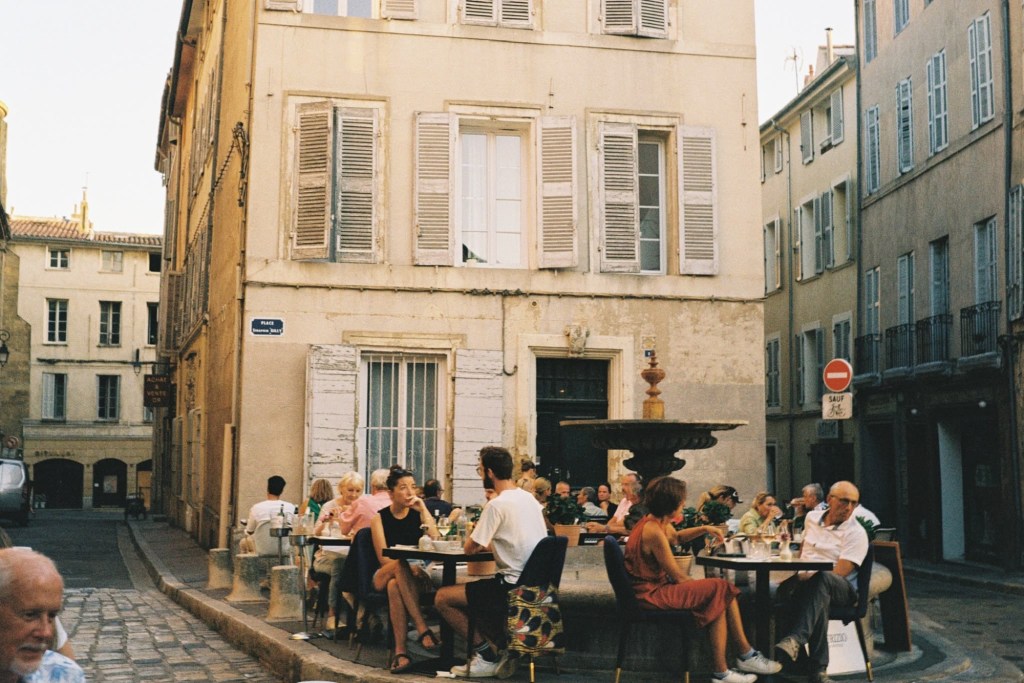
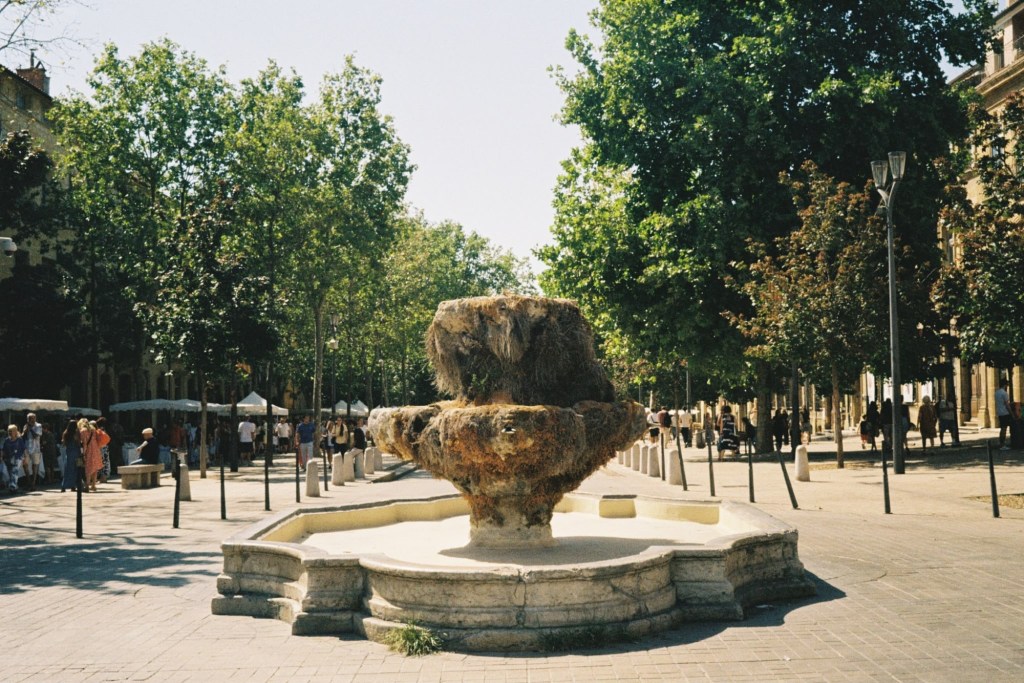
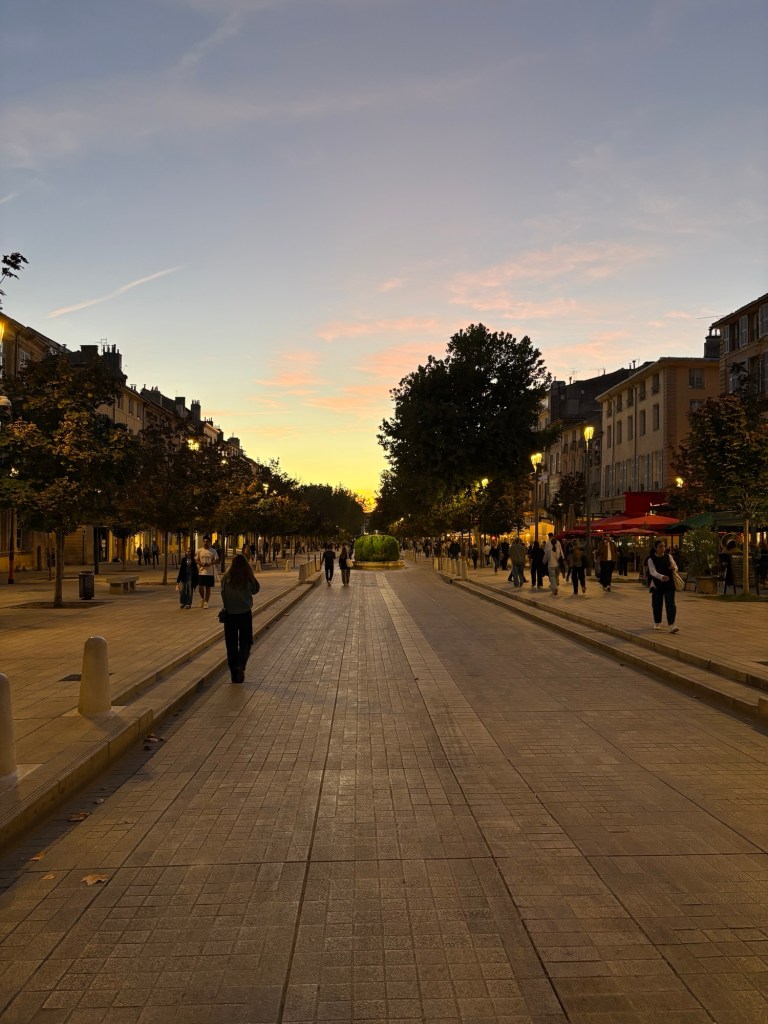
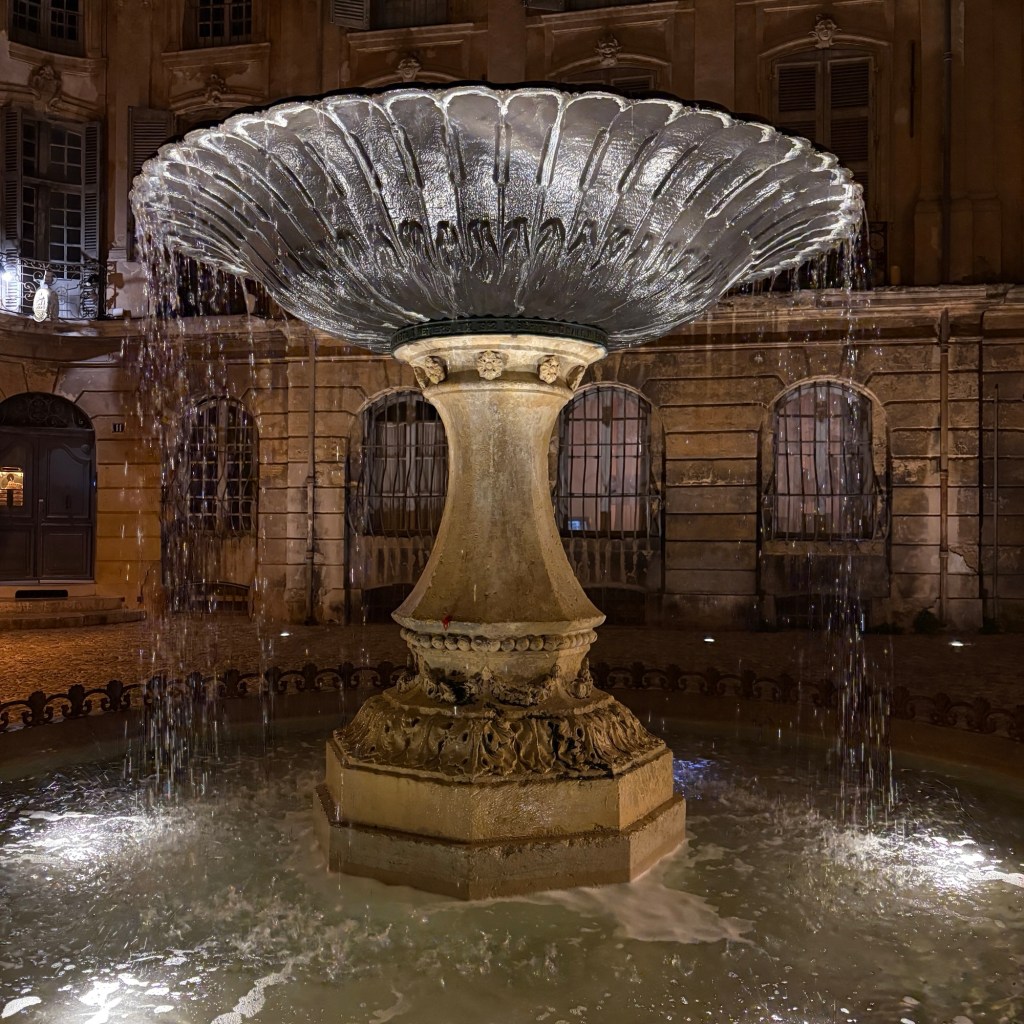
The Cours Mirabeau itself is a wide and impressive boulevard lined with magnificent plane trees that offer welcome shade from the Mediterranean sun. Aix is known as the city of fountains and there are certainly some beautiful ones and some interesting ones to see, not least the huge Fontaine de la Rotonde at the top of Cours Mirabeau and the 17th century Fontaine Mossue which was apparently once used by washerwomen . Not any more though.
My husband is a committed Francophile and lover of French literature, and recommended The Dancer at the Gai Moulin, a novel by Georges Simenon, one of his Maigret novels, as my reading accompaniment. I fear that the translation I read was not the best as I found it slow and unengaging. I’ve read other novels by Simenon, considered one of France’s best writers, which I enjoyed more, but this translation lacked subtlety and did not bring out the depth of the characters, particularly the famous Inspector Maigret himself, which was unfortunate. You can read my review on my Goodreads page. Émile Zola also spent part of his early life here and attended the same school as Cezanne, the Collège Mignet on Rue Cardinale.

We visited the city of Marseiile while I was there, on a day when there was a substantial protest by students, which has featured much in the international news lately. There was certainly an ‘edge’ to the city on that day and public transport was somewhat disrupted but the protest itself seemed fairly contained. There were a lot of police around. My daughter tells me there have been protests in Aix too, and though noisy and, again, a little disruptive to daily life, they have been peaceful. She has also heard that conditions in some schools are poor (though she felt comparable to her own secondary school in the UK) and young people have some legitimate claims.

Aix is a town with a rich history and a vibrant cultural life. I feel very fortunate that my daughter is spending time there as I will be very happy to be a frequent visitor in the coming months!
Book review – “Land” by Maggie O’Farrell

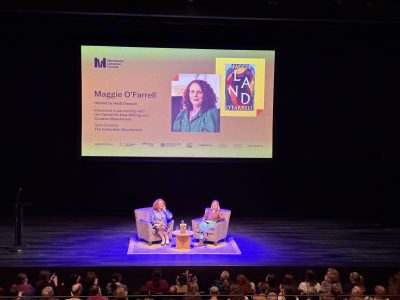
The Manchester Literature Festival kicked off this week and runs until 25th October. I usually like to attend a few events, but will be away for much of the period this year (more of that to follow!). I was fortunate, however, to be able to attend one of the opening events, a talk with Maggie O’Farrell; my book club recently completed her new novel Land, so it was fantastic to be able to go along and hear her speak about it. Maggie O’Farrell is surely one of the finest British authors of her generation and since she is only in her mid-fifties, hopefully has many more years of writing ahead of her. Her career reached a new zenith last year with the release of the film “Hamnet”, which was an adaptation of her 2020 Women’s Prize winning novel. O’Farrell co-wrote the screenplay of the film with Director Chloé Zhao, which itself won many awards, including a best actress BAFTA and Oscar for Jessie Buckley. 

With all that going on, one can only marvel at the work ethic of O’Farrell – how on earth did this mother of three squeeze in another 400+ page novel? Furthermore she has to be one of the humblest most relatable literary giants alive! 

Land might be O’Farrell’s most personal novel to date and at the MLF talk she described the novel as loosely based on one of her own ancestors who, according to family myth (which may also be truth), was the first cartographer to map the island of Ireland in the mid-nineteenth century, in the service of the British government, which Ireland was a part of at the time. She has not been able from her research to confirm all the details of this, as cartographers were not allowed to sign their own name on the maps they produced, but she has nonetheless let her imagination form a story out of a few bare facts. 

The main character, based on O’Farrell’s ancestor, is Tomás who, when we meet him at the start of the novel, is working with his young son Liam, carrying out survey work on behalf of the British army. Liam hates the work, which is very physical. Tomás is passionate about his work and intends that Liam will follow in his footsteps. He is a tough taskmaster and a strict father and it soon becomes clear that Liam has more scholarly ambitions. Tomás is married to Phina, a strong-willed woman whom he fell in love with at the workhouse where they were both resident as children, and they have three children: in addition to Liam there is Enda and Rose. A fourth child, Eugene, will follow. 

The family has its troubles, after he is severely injured in a work accident in which he loses an arm, Tomás goes into a deep depression, through which Phina nurses him. He vows never again to work for the British, and moves the family to a remote peninsula in the west of the country, where they rent a derelict cottage and small piece of land, from which Tomás hopes they can make enough to live on. 

The story is set in the shadow of the Irish famine of the 1840s, which caused the deaths of over a million people and the mass migration of a million more. This catastrophic event changed the social make-up of the country and the physical landscape. The family itself is also deeply impacted – through Tomás’s mapping, which exposes some of the death and destruction, and through the choices made by the individual children as they consider their destinies. 

O’Farrell also weaves in Irish pagan myth and legend – at the MLF talk she shared how she drew on the many stories her father would tell her and her siblings – giving a profound sense of the how the land of Ireland, the very shape and texture, which Tomás is so diligently attempting to record, bears witness to people and stories that go back beyond mappable time. 

This is a multi-layered, complex novel that draws on many ideas and is epic in its scale. But at the heart of it is love – that which exists within the family, that which the Irish hold for the hard-won land beneath their feet, and the deep love that the author has for her family history, which she honours so powerfully in this novel. 

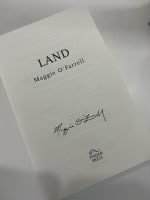
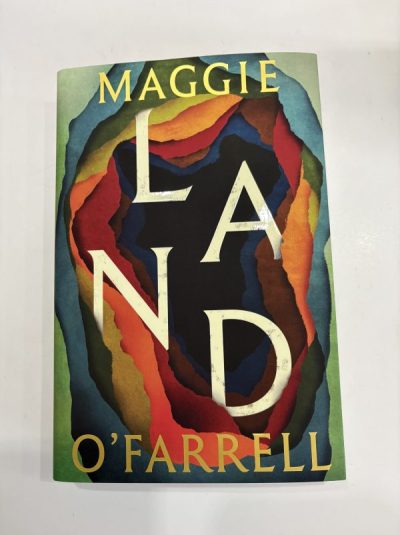
This is a brilliant piece of work that I recommend highly. I was also delighted to obtain a signed copy of the beautiful hardback edition which has the most beautiful cover artwork by Helen Cann. 

**I am baffled that this book did not make even the longlist for this year’s Booker Prize, for which it was eligible. Astonishing!**

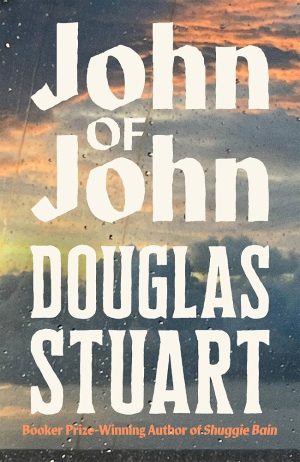
Booker shortlist review #1 – “John of John” by Douglas Stuart

Last week I shared some photos of my wonderful summer holiday in Scotland where I was fortunate enough to spend some time on the island of Harris and Lewis in the Outer Hebrides. I started reading this book while I was there and was then delighted to see that it has been shortlisted for this year’s Booker Prize. I am not surprised and would have been questioning the decisions of the judging panel if it had been omitted! 

The novel is set in the 1980s and the main character is Calum (Cal) Macleod, who is returning home from Edinburgh, where he has been a student studying textiles, at the behest of his father John (Cal is actually named after his father but prefers to use his middle name), who tells him that his grandmother’s health is failing. John lives with Cal’s grandmother Ella, even though she is actually his ex-mother-in-law, John having divorced Cal’s mother Grace some years earlier. Ella owns the croft on which the family depends for a living. Cal himself is deep in debt, from his studies, and unable to find a job, so although he is reluctant to return home, in reality he has few choices.

Also, Cal is gay, and has found his student life in Edinburgh very freeing in that respect (though, as we will learn, very isolating in others). He has not come out to anyone at home and is afraid that he will be cast out by his father and by the deeply religious community on the island if he does. (When we visited Harris and Lewis, we arrived on a Sunday and everything was closed, and that is 40 years further on from this book.) Cal has a poor relationship with his father and the novel opens with him taking the long journey home, by bus, ferry and another bus, both dreading and putting off his arrival, choosing to spend his first night back on the island drunk in Tarbert, the ferry port, rather than at the family home.  

As soon as he arrives at home, John berates his son – for not coming home earlier (word has got around that he arrived on the island the day before), for his haircut and his tardy ways. Ella does her best to calm troubled waters, but John is a stubborn man and he never misses an opportunity to criticise his son. Cal is put to work instantly, helping his father with the weaving (an activity that is meant to bring in extra money to the household, but barely pays for itself now) – it is the one area where Cal and John can begin to bond. Cal recognises his father’s ‘feel’ for the work and his eye for colour in the tweed fabrics he creates. We begin to see where Cal gets his talent for textiles and some areas of common ground slowly start to emerge between the two men. 

The novel recounts the long and tough road that their relationship will need to navigate and the compromises that Cal in particular will need to make. Douglas Stuart also begins to peel back the layers of the community, the undercurrents that are suppressed in service to the religious imperatives, how the dreams of the young people on the island are impoverished due to the lack of opportunity and how when there is no hope people turn to other ways to numb the pain of their existence. 

This novel is at times rather dark and hopeless, but there is something positive in Cal’s acceptance of his father, even if his father will struggle to accept him, and the small acts of resistance that some of the characters exercise just to be themselves. The novel answered many questions for me about the beautiful island I visited, so remote and disconnected from the pressures of urban life, but while I was there I found myself wondering about the young people brought up there, what they wanted, how they expressed themselves. I sincerely hope things have changed for them. 

This is a powerful and beautiful novel that must be a strong contender to win the Booker Prize for a second time for its author.

Book review – “Benbecula” by Graeme Macrae Burnet

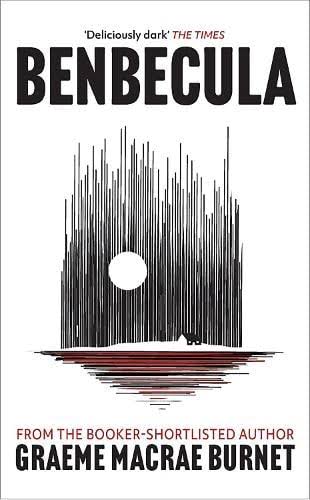
I bought this book from a gorgeous bookshop in Portree on the Isle of Skye. When I’m travelling I always like to pick up something “local” and although the author is actually from Kilmarnock, this novel is set in the Outer Hebrides where, as I wrote earlier in the week, I had the good fortune to spend part of my holiday this summer. There were, of course, far too many great Scottish books to choose from, but I was very impressed with Graeme Macrae Burnet’s 2016 Booker Prize shortlisted novel His Bloody Project so I was keen to try this one. As with the earlier book, and others he has written, I understand, his novels are often based on real life cases, murder mysteries. In the Afterword to Benbecula, the author writes extensively of his research and his own conclusions about the case. 

This story concerns a brutal triple murder that took place on the remote Scottish island of Benbecula in 1857. Angus McPhee, the second son of four siblings, killed, seemingly in cold blood, his mother, father and aunt. The story is narrated by the elder brother Malcolm, a man who now lives alone, his two other siblings having abandoned the island and the desolate life that apparently lay ahead of them, tended only by a local woman who cooks and cleans for him and takes some care over his personal hygiene. 

The author creates a powerful sense of remote island life in the middle of the nineteenth century, where it is hard for labouring families like the McPhees to make any sort of a living. They manage a small croft and collect seaweed from the shore for fertiliser, providing barely enough income to feed them all. In addition to Malcolm and his brother Angus, there is a sister Marion and a younger brother John, who appears to have learning difficulties. They are a family of loners; none of the siblings seems to get on well with any of the other islanders, or have any love interest. Malcolm describes his sister Marion as being plain at best and Angus’s lascivious behaviour towards other local young girls marks him out as a person to be avoided. Malcolm worries that there is something genetically faulty in the family.

Angus has unpredictable and sometimes violent outbursts which make it necessary to restrain him physically, sometimes for days at a time. Whilst he is clearly considered, by the local church elders and the governing authorities, a danger to the public, no-one predicts that he will murder members of his own family.

Malcolm narrates the story and his is a dark and troubled soul, bearing the scars of his family shame, but also the burden of loneliness that must inevitably attend someone in that position in a small community where everyone knows you, your family and the horror that your sibling has visited on his own flesh and blood. Malcolm reflects on his own life, both in the present and the past, and on the events he has borne witness to. We see the devastating impact that a brother’s crimes have had on the one left behind. The island itself is a key part of the novel – the loneliness and isolation reflect Malcolm’s own, the deeply religious nature of the community judges Angus directly, and Malcolm indirectly. 

This is a deeply researched and thoughtful novel where the author has attempted to get inside the head of his main protagonist, whilst also interrogating the facts of a deeply horrifying incident that must have shaken a small community to its core. 

A good read, recommended.

Summer travel in Scotland

I wrote last week that September always feels like the start of the year to me. This is the first year since 2005 when I am not bound by any academic term dates (my youngest is studying languages and is on a year abroad), but it will take me a while to adjust I think. So, as we find ourselves post-Autumn equinox I have been reflecting on the year so far. It has been a busy one, not least with lots of travelling, a privilege and a joy, but it has meant that my blog has taken the hit because my day job has been a lot more demanding this year too.

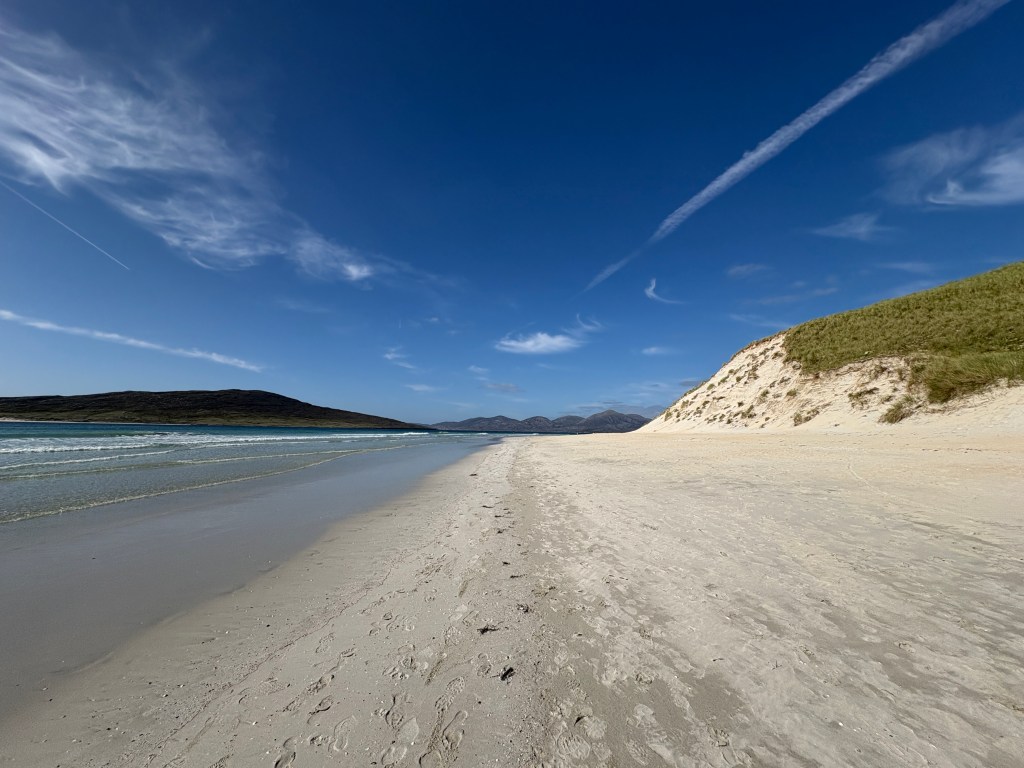
This summer I fulfilled a long-held ambition to do a road trip in Scotland. A work client mentioned to me a while ago that she and her husband had spent their honeymoon in the Outer Hebrides and when she showed me photos of Luskentyre beach I felt immediately drawn to it.

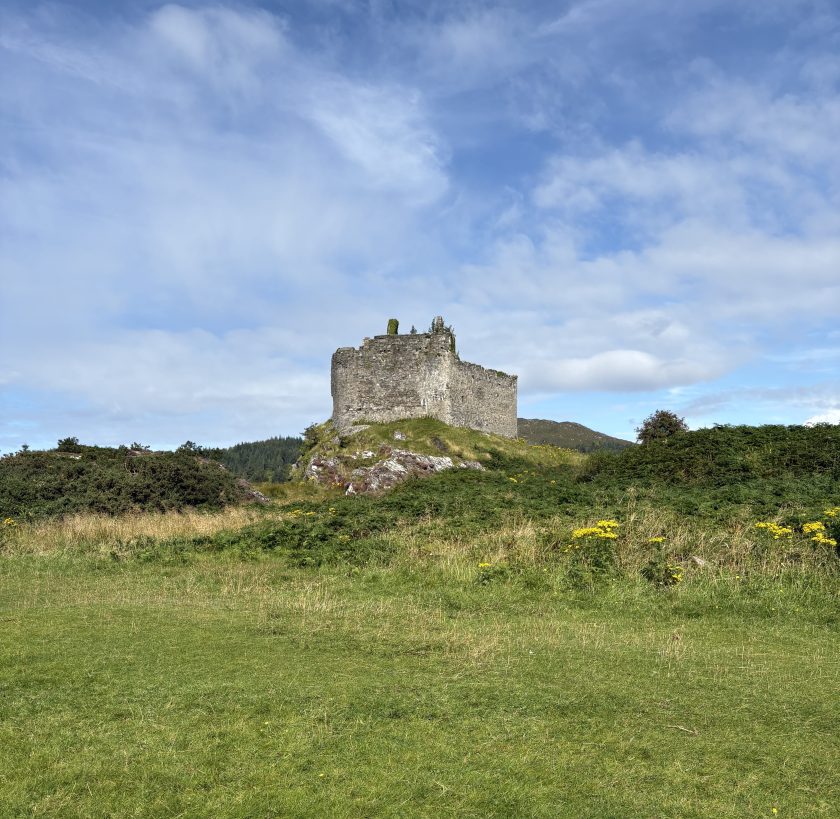
We had two weeks and Scotland is a big place so we necessarily limited our ambitions (otherwise we would have spent the whole time in the car!) and decided to focus on the west coast and a few of the islands. Even then, there were a number of places where we would have loved to stay longer, Fort William for example.

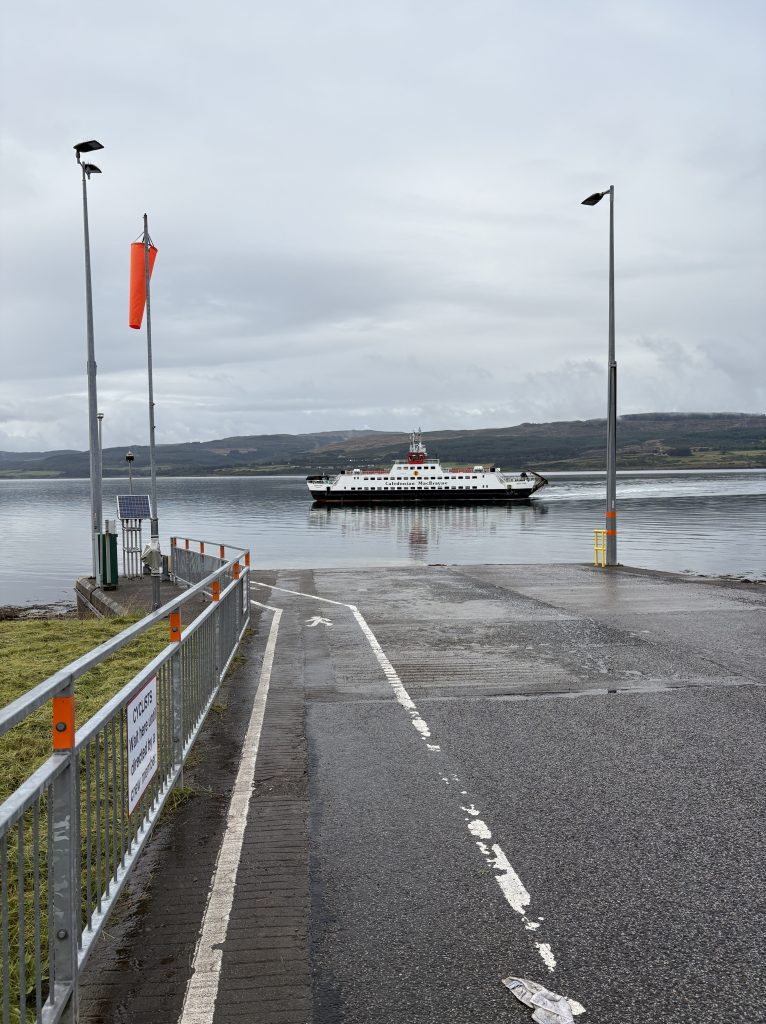
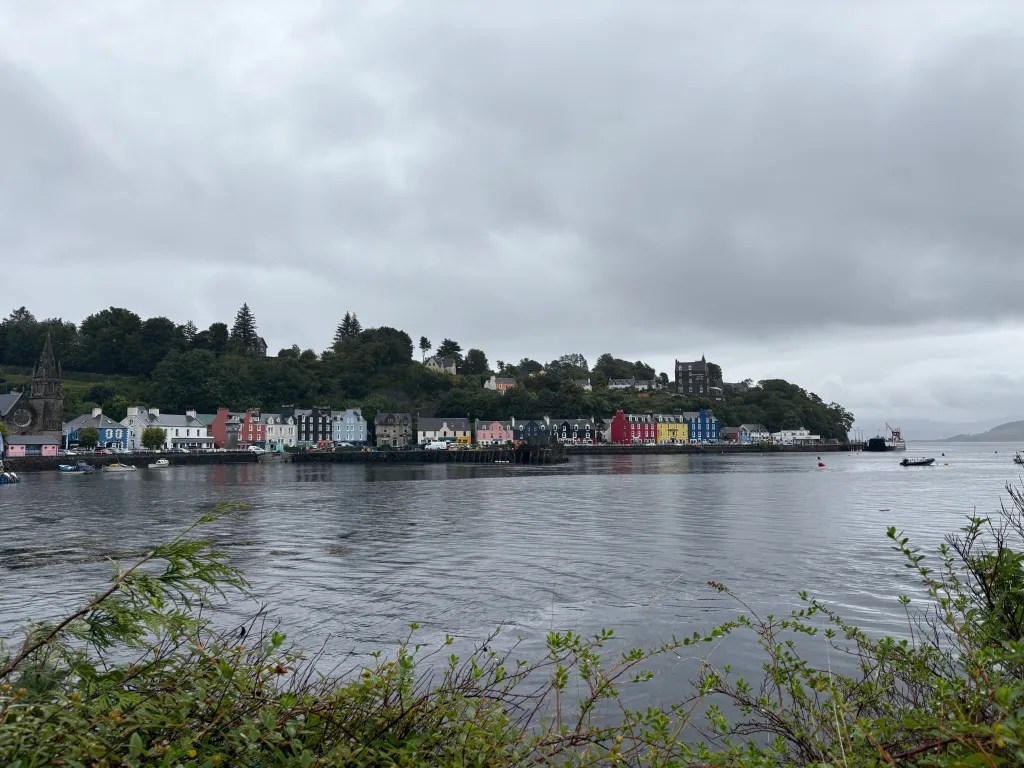
After spending a couple of days in the historic city of Glasgow, we drove to the Ardnamurchan peninsula, which, although part of the mainland, is separated from the rest of Argyll by the very long and wide Loch Linnhe. We crossed at the narrowest point, the Corran ferry, which entails quite a drive north via the stunning (and in August very busy) Glencoe mountain range. Ardnamurchan is completely different and we encountered few other tourists. We stayed in a small hotel overlooking the beautiful and peaceful Loch Shiel. From there we were also able to explore the beautiful Isle of Mull, via the ferries at Kilchoan (to Tobermory) and Lochaline (to Fishnish). Tobermory was a highlight for me as it was the setting for Balamory, a favourite TV show my kids used to watch when they were little.

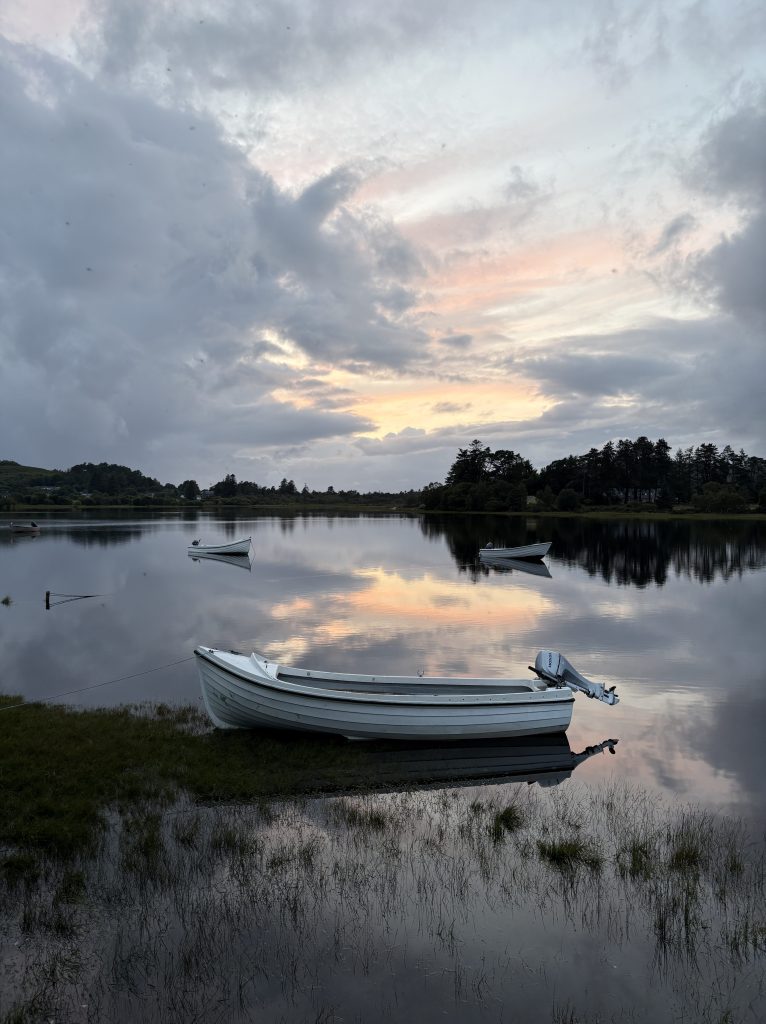
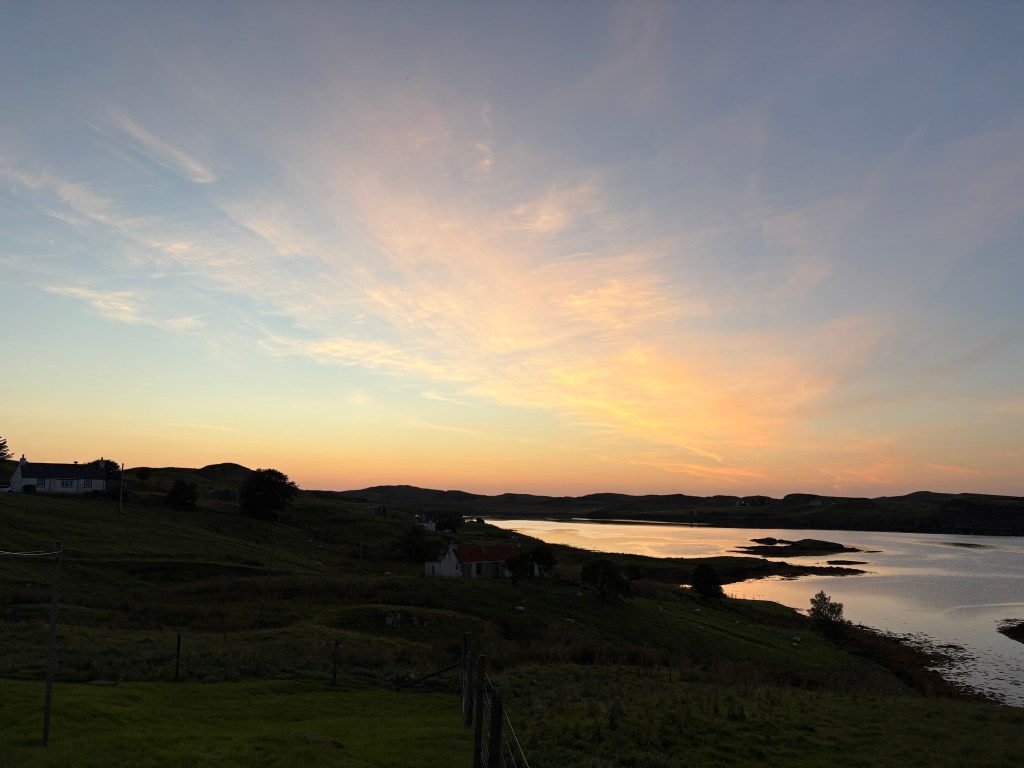
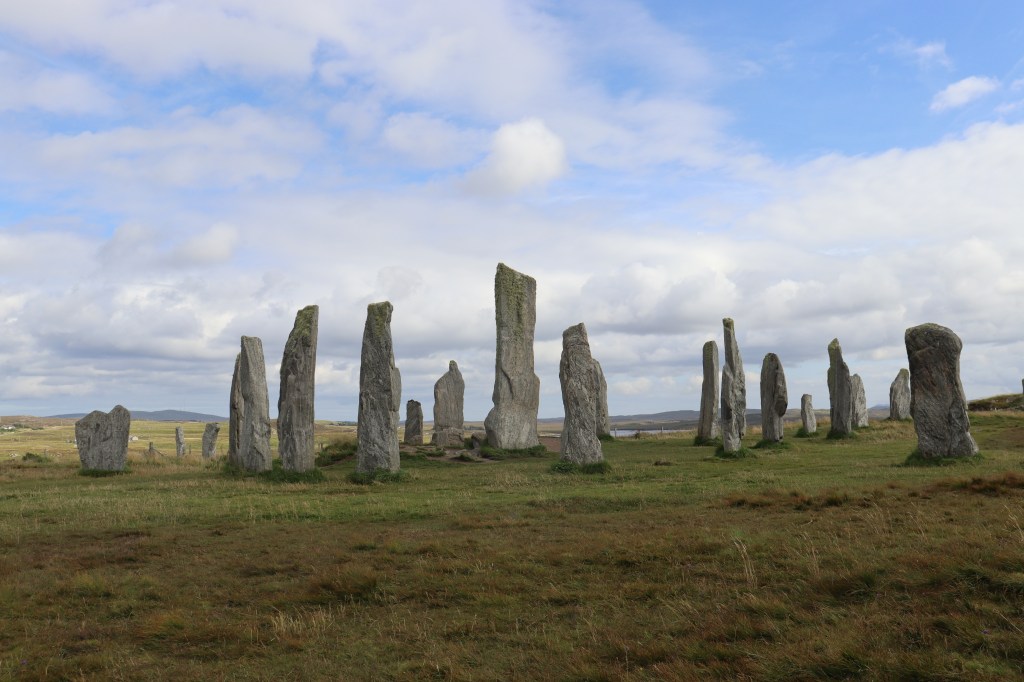
From Ardnamurchan we drove to the Isle of Skye, which was beautiful, but just felt so busy. It is close to the mainland and accessible by a half-kilometer road bridge. The bridge opened in 1995 and has clearly brought a great deal of tourism to the island. Our next stop was the Isle of Harris and Lewis (it’s one island but has two distinct parts), the Outer Hebrides, and the highlight of the whole trip for me. It is not easy to get to – you have to travel to Uig, at the northernmost part of Skye, and then take the 1 hour 40 minute ferry journey to Tarbert. From there it was another 40 minute drive to our cottage overlooking Loch Eireasort. Distant, but so worth it! We arrived on a Sunday, and everything was closed, apart from the llama sanctuary near the legendary Callanish Standing Stones – luckily we’d bought some groceries in Uig. We were able to visit the stones, but even the visitor centre was closed. This felt like a throwback to my 70s childhood!

Our days on Harris and Lewis were magical. And we got to see the stunning Luskentyre beach! The sun shined the whole time, though I think we were very lucky. While there I read Graeme McCrae Burnet’s 2025 novel Benbecula – this is another island in the Outer Hebrides, nestled between North and South Uist. I also began Douglas Stuart’s Booker-shortlisted John of John, set on Harris and Lewis. It was fascinating to read these two books in the remote and special part of the world they were set and it gave me a really interesting perspective on the novels. Look out for my reviews of these books in the next couple of weeks.

We ended our road trip in Edinburgh, to see our youngest performing at the Fringe, stopping in Fort William on the way. We are already planning to go back next year, to do more cycling and more walking and to see more the islands that we missed. I recommend this part of the world highly!