Book review: “Norwegian Wood” & “The Strange Library” by Haruki Murakami

2018-01-10 14.18.01-1
Gorgeous covers

Murakami is a giant of Japanese literature, and it was Norwegian Wood that sealed his international fame. Prior to its publication (in Japan in 1987) his reputation and readership were more modest, but when he became internationally famous with this book, he fled the country and eschewed all publicity (oh for that luxury!). I had read nothing by Murakami before this although a friend told me (when I’d only just started it) that Norwegian Wood was his favourite book of all time and after reading he went out and got hold of everything else Murakami had written.

It’s a book that really defies description. To say it’s a love story (which it is) does not do justice to the complex interweaving of themes, the darkness, the painterly portrayal of intimate relationships and the forensic examination of the dilemmas of youth and coming of age.

Toru Watanabe is on a plane at the age of 37, about to land at Hamburg airport, when the song Norwegian Wood by The Beatles is played on the aircraft’s PA system. It takes him immediately back to his youth, when he was at university in 1969. His girlfriend at that time was Naoko, a fragile young woman with whom he used to walk miles around Tokyo. Naoko was, previously, the girlfriend of his best friend Kizuki, who committed suicide. Thus the scene is set that this novel is going to explore some challenging themes.

Naoko and Toru become lovers, but their relationship stalls when Naoko is admitted to long-term psychiatric care for severe mental health issues. Toru remains loyal to Naoko, visits her occasionally at the special hospital where she lives, some distance from Tokyo, and also strikes up a friendship with Naoko’s roommate Reiko, who, because of the very close relationship she has with Naoko, appears to know everything about Toru. A further character then enters and places Toru in something of a love triangle; Midori is a feisty, passionate fellow student to whom Toru is immediately attracted. They become friends but nothing more, mainly because of Toru’s loyalty to Naoko. Midori also has a boyfriend, although she says is not in love with him.

It is a novel in which nothing very much happens, so I don’t want to say more about the ‘plot’, and I have had some difficulty explaining to myself what is so engaging about it; I had high expectations after my friend’s endorsement. When we discussed it in my book club, we all said we found it a slow read; it is not a book you can read quickly. In a weird sort of way it forces you to read at reading out loud pace. You have to take in and savour every word, and every word has been written to be savoured. The level of detail in the observations is extraordinary. The main characters, especially Toru and Naoko, are so gentle and sensitive, that it almost has the same effect as when you hold a newborn baby – they are so fragile that all your movements become softer, your heart and breathing seem to slow down. The purpose of this, I think, is to try to take the reader deeply into the private worlds of the characters, to feel what they feel, see what they see.

There are some brash peripheral characters in the novel, such as Toru’s dorm mates, and there is a strong sense of time and place – student revolts in Japan in the late ‘60s – which serve to highlight the quietness and sensitivity of the main characters, even Midori, who comes across initially as a strong personality, but who is masking deeper insecurities.

It is a novel about coming of age, about growing up, but also about the deep darkness of depression and suicide. Insofar as it is a love story, it asks the reader what the limits of human beings’ commitments to one another are, but it will not give you a straightforward answer.

After reading Norwegian Wood I was given a copy of another of Murakami’s works, published in the UK in 2014, The Strange Library. This is a work of short fiction, a very surreal and fascinating story about a young boy who is imprisoned in the bowels of his local library after being tricked into following a strange old man in search of a reference book about tax collection in the Ottoman Empire. Whilst trapped inside he meets a collection of other weird and wonderful characters also trapped in a kind of time and space limbo. Like much short fiction it concludes in a way that leaves more questions than answers. The edition I read is beautifully illustrated, which added to my appreciation of it immensely, and it has left me wanting to explore more of Murakami’s work.

Norwegian Wood is a strange and powerful novel that will certainly leave its mark. It stays with you long after you finish it. Highly recommended.

If you are familiar with Murakami, which of his books would you recommend?

If you have enjoyed this post, I would love for you to follow my blog. Please click the ‘Follow’ button, and let’s connect on social media too. 

Short story review: “Cat Person” by Kristen Roupenian

2018-01-10 10.43.49I concluded my 2017 Reading Challenge with something a little less challenging (in terms of length anyway), a short story. I knew it would be a busy month so I did not want to set myself up to fail by choosing some lengthy tome. (I’ve done the same for my 2018 Reading Challenge). December was so busy that it actually took me a couple of weeks to get around to choosing what to read, and then Cat Person fell in my lap, so to speak!

It’s hard to write a review a short story without spoilers so you can read it here, and then move on the reading the rest of this post, if you wish. It will take you no longer than 20-30 minutes, or you can actually listen to the author reading it herself via the same link.

Cat Person imgCat Person, by Kristen Roupenian has caused a social media storm. Set in America it is a story about Margot, a 20-year old college student, and a brief relationship she has with 34-year old Robert. Margot works at a small independent cinema and she meets Robert when he buys some confectionery from her stand before watching a movie. She feels mildly attracted to him:

“She did think that Robert was cute. Not so cute that she would have, say, gone up to him at a party, but cute enough that she could have drummed up an imaginary crush on him if he’d sat across from her during a dull class.”

Margot flirts lightly with Robert, to ease her boredom, but, initially, at least, he does not reciprocate. He returns to the cinema a week later and this time they exchange phone numbers. Over the next few weeks they develop a text relationship, then he meets her late one night at a convenience store. She expects that he will try to kiss her but he merely gives her a peck on the forehead. They eventually go on a date, to see a movie about the Holocaust that Margot finds slightly inappropriate for a first date. Afterward, when they have been for a drink at a bar, he kisses her, ineptly, and she finds she has mixed feelings about him. Despite this, Margot seems to feel she cannot back down from the inevitable, at this point, and they go back to his place to have sex. Margot finds the sex repellent and decides that she does not want to see him again, but she also feels that her flirtatious behaviour may have ‘led him on’.

This is a highly topical story about the complicated business of dating and sexual relations in the 21st century. The “cat person” of the title refers to Robert; when they go back to his place he announces that he “has cats”, although Margot never sees them. This is clearly meant to convey a slight ‘oddness’. In Margot’s eyes Robert falls well short of expectations (on all levels not just physically and sexually, she does not even feel completely safe with him) and she decides she wants nothing more to do with him, which he clearly finds confusing. When she finally rejects him by text (encouraged by her roommate who becomes impatient with Margot’s dithering and takes the matter into her own hands), Robert reacts in quite a needy way, before becoming angry (all by text). His final text “Whore” clearly echoes the aggressive and unsolicited sexual behaviour we are hearing too much about at the moment, but it could be argued that Margot’s behaviour, her flirtation, her initiation of the sex, means she created that situation for herself and it is no wonder that Robert, clearly no master at relationships, does not know how to react to her seemingly unpredictable behaviour.

It is a story that left me somewhat morally adrift.  There is no clear right and wrong party here. How you judge Margot, or Robert, will depend entirely on your perspective – your age, your gender, whether you have male or female children, etc. And it perhaps goes to show how the sexual politics that are currently being renegotiated make for a complex environment for both men and women.

A thought-provoking read, highly recommended.

If you have read this story, what did you think?

If you have enjoyed this post, do follow my blog and let’s connect on social media.

The 2018 Reading Challenge!

I read a great article yesterday about new year’s resolutions that struck a chord with me. It talked about the Christmas and New Year break can be a time for powerful reflection, on what has passed as well as what is to come, as you step away from the day-to-day routine. But it also said that 1st February is a much better time to start your resolutions if you really want to succeed at them. I was saying similar things when I posted the other day about New Year and how I prefer not to resolve to change things at the start of January – how can I possibly keep to a promise to, for example, eat a perfect diet when there is still Christmas chocolate lying around?

All of which is building up to giving myself an excuse for posting about my 2018 reading challenge when it’s already the second week of January. Ah, but my kids only went back to school on Monday. Anyway, who minds?

So, here it is, my 2018 reading challenge! Care to join me?

2018-01-10 10.53.02

Click The 2018 Reading Challenge to download and print your own copy.

At the beginning of each month I will post my choice of book for the month and then share my review at the end of the month. I’d love for you to join in the conversation, so do look out for my posts. I’ve also set up a Facebook page for the challenge, so do join that too.

35529075The first book in the challenge (the theme is a Young Adult novel) will I hope be a nice one to start with – The Disappearances by Emily Bain Murphy. It’s part science fiction/fantasy, part coming to terms with love and loss.
I have a particular passion for children’s literature, and we know that kids like reading about characters a little older than themselves. So, it shouldn’t surprise us that even younger teenagers are reading books that we might assume are more for 17-18 year olds. So, if you are a parent, knowing what is going on in these books can help you to engage with the culture your young people might be in (or encourage their reading if they have a preference for more digital distractions). And if you are not a parent, you might find this particular genre is not one that you usually pick, and, for me, that is what reading groups are all about.

I look forward to you joining in the conversation.


Happy New Year!

new-year-3039802_1920

After a two-week break from blogging, writing, and working generally, I’m returning to my desk today refreshed and with a renewed sense of vigour. I had a proper rest over Christmas, mostly spending time with friends and family. The build-up to Christmas is always a crazily busy time, I never seem to get to the end of the to-do list, and the things that normally sustain me – nutritious food, quality sleep, exercise, and reading, of course – are all compromised as there is always another event to attend, party to host, gift to purchase. Don’t get me wrong, I love all the excitement, the sparkle, the dressing-up and going out, the shopping, etc, but I can only keep it up for so long. For me, this Christmas, all of that stopped at the Winter Solstice on the 22nd, fittingly perhaps. At that point, school ended, and time spent with those closest to me began. It would also have been my late father’s 74th birthday so is always a time when I pause to reflect. Two weeks of rest ensued and I now feel ready to face all the challenges that 2018 will no doubt bring.

My biggest goal this year will be to complete the first full draft of my book. I’ve been working pretty hard on it over the last three or four months and I’m hoping to finish it by the Spring. I’ve also been giving a great deal of thought to this blog and have decided that my passion really lies with children’s literacy, so I will be doing a lot more this year focussing on books for kids. After the posts I put out before Christmas with literary gift ideas for children, I had so many conversations with other parents desperate to support their children’s literacy, and looking for ideas on how to motivate a good reading habit, that I feel there is a real hunger out there for more on this topic.

January is a tough month in my view, long, cold (in northern England), damp and dark, so I’m always wary of making too many ‘resolutions’ (I find Autumn a much more fruitful time for me). It is also the month of my birthday and this year I am having one with a zero so that will be challenge enough! At our family New Year’s Eve celebration we were each asked what we would be letting go of, what we would be bringing more of into our lives. I will be trying to let go of ‘busy-ness’ – it doesn’t suit me, I lose my sense of myself and I get irritated with those around me. Yes, we are all busy at least some of the time, but I will try instead to focus on priorities and to let go of what I don’t need to do. I will try to bring more music into my life, listening, playing, singing and dancing. It is a primal human expression of our self and our creativity and allows us to connect with others on a deeper level. I also have a very narrow range of music I listen to (mostly Radiohead!) so I’ll be attempting to broaden my scope.

I will also, of course, try hard to maintain my reading habit. I had a great year of reading in 2017, thanks to this blog, my book club and to the Reading Challenge I set myself at the start of the year. I’ll be posting later in the week with another Reading Challenge for 2018, so look out for that if you’d like to join me.

Whatever your goals and aspirations for 2018 I wish you well in them. The sun is shining as I write this and life feels good!

What are your reading goals for 2018?

If you have enjoyed this post, do click on the link to follow my blog and let’s hook up on social media.

Happy Christmas!

christmas-2986866_1280

Thank you to everyone who has followed, liked and commented on my blog this last year. It’s been a fantastic year of reading and I’ve loved posting every week about my literary adventures. I’m signing off for a week or so to spend time with the husband and children, and then off to Ireland to visit family for New Year.

2017-12-18 11.06.58I plan to spend the time eating, sleeping, walking, watching movies, playing games and, of course, reading. I’m planning to tackle the enormous 4321, the Man Booker nominated tome by Paul Auster, and the only one on the shortlist I have not yet managed to read.
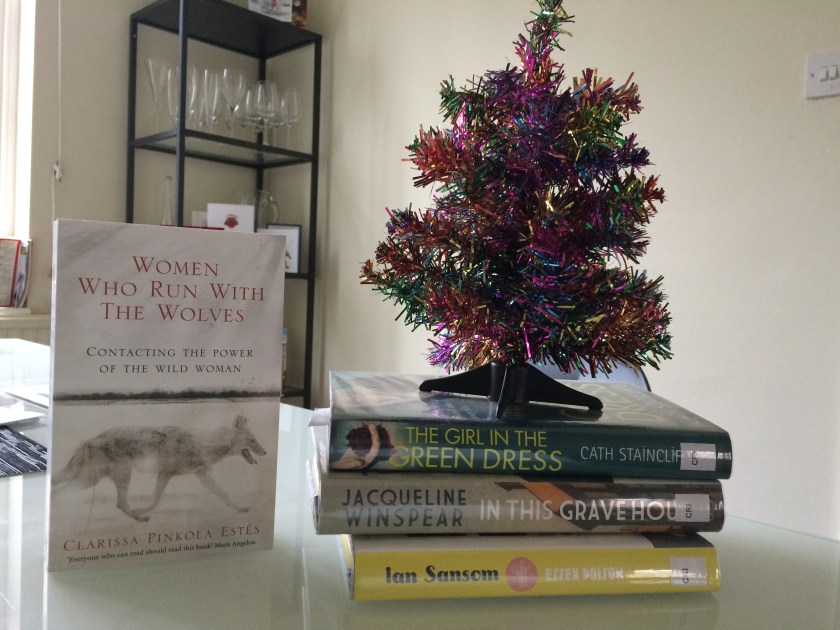
And if by some miracle I get through this, then there are a few other books I have on the TBR pile, three titles I picked up from the library (easier reads than 4321, I suspect!), plus a book I have been wanting to read for a while Women Who Run With the Wolves by Clarissa Pinkola Estes. I treated myself to it after I filled up my loyalty card from a well-known bookshop chain!


2017-12-18 11.08.53

So, I would like to wish everyone who is reading this, a very happy and restful Christmas. See you in the New Year!


December reading challenge: a short story

2017-12-18 10.46.14So, it’s my final reading challenge post of 2017, and this month it’s a short story. Just as well, because there isn’t very much month left! The reason I picked this genre for December is that I predicted, correctly, that it would be a busy month and my reading would slacken off. It is taking me ages to get through the book I am currently reading (the book club’s choice of Norwegian Wood by Haruki Murakami).
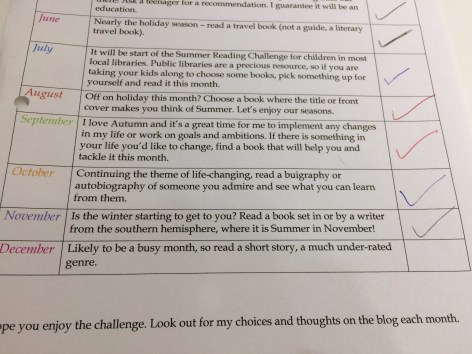
I’d been thinking for a while what I might read this month; there are some fantastic short story writers out there, and I have to confess to not having read many of them, so I wanted to make a real effort to delve in. Then last week I heard about a short story published in the New Yorker magazine recently that has caused a furore on social media, provoking praise and disdain in equal measure. I have also learned a new word as a result – ‘misandrist’ – a person who dislikes, despises, or is strongly prejudiced against men, the opposite of misogynist. You have to wonder why we don’t hear this word very much!

Anyway, Cat Person by Kristen Roupenian is about sex and relationships in the 21st century. What’s not to like?! If your appetite is whetted by this, you too can read along by clicking on the link below:

Cat Person by Kristen Roupenian

Let me know what you think!

Book Review: “Portrait in Sepia” by Isabel Allende


2017-12-13 13.57.52

My Reading Challenge for November, was to read a book by a writer from the southern hemisphere. The reason for this was to try to distract me from any midwinter misery! As I write this, the light dusting of snow which made everything look so pretty these last few days, has given way to a persistent rain and I feel plunged into dark greyness once again. I swear it stayed night until about 11am today! Less than two weeks to the Winter solstice and we can start to look forward to longer days again.

2017-11-14 16.26.50
Stunning front cover

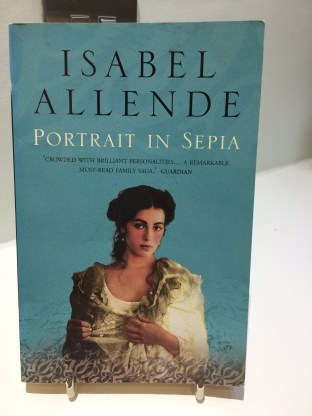
Chilean author Isabel Allende has to be one of the finest writers alive today. As in most of her books, the central characters are strong females. This novel tells the story of Aurora del Valle, who was born in Chinatown, San Francisco in 1880. Her mother was a spectacularly beautiful but fatally naïve young woman, Lynn Sommers, who was duped into sleeping with the wealthy and wayward Matias Rodriguez de Santa Cruz. Lynn is the daughter of Eliza Sommers, and Matias the son of Paulina del Valle. Both these women were central characters in the forerunner to this book, Daughter of Fortune. Severo del Valle, Matias’s cousin, marries Lynn to spare her honour (though the marriage is never consummated) and becomes Aurora’s legal guardian. Lynn dies from a haemorrhage just after her daughter is born so when Severo returns to Chile to fight in the war he leaves the child in the care of her maternal grandparents, Eliza and her husband Tao Chi’en. Aurora spends her first five years with them, happy and much-loved. When Tao Chi’en dies, Eliza fulfils a promise to return her husband’s body to his native China and leaves the child with her paternal grandmother, the indomitable Paulina del Valle. Paulina agrees to this on the basis that Eliza sever all ties with the child.

Thus, Aurora grows up with Paulina and the rest of the story follows her life, from her early years growing up amidst the pomp and wealth of her voracious grandmother’s vast household, such a contrast from the modest life she led in Chinatown, through to her early adulthood as the family moves to Chile. Allende gives a stunning account of the Chilean civil war, and the effect this had on the family, particularly Severo del Valle, who has now married his cousin Nivea, and with whom he goes on to have fifteen children. Nivea is another strong woman in the book, an idealist with fierce views on women’s rights, who does not let childbirth get in the way of her campaigning. She is devoted to Severo and their marriage provides a powerful model of spousal partnership for Aurora. Her grandmother Paulina is also a strong role model, teaching her about business and about feminine power.

In the latter part of the book, the adult Aurora becomes a photographer and enters into a disastrous marriage with Diego Dominguez. Lacking the wilfulness of Paulina and the inner confidence of Eliza, Aurora’s life is miserable, stuck on a farm in a rural part of Chile with a husband who does not love her. She feels as if her fate is not in her own hands.

The novel is classic Allende, an epic saga, covering the period 1862 (before Aurora’s birth) to 1910 with a beautifully drawn cast of characters. Yet despite its scale, the novel digs deep into the human condition – what it is to love and be loved, romantic love, marriage, the love between child, parent and grandparent, blood ties, and the pain and the pleasure that family can bring. The meaning of the title is cryptic, but it is revealed beautifully by the author at the end, in such a way that made me want to go straight back and read it all again! It’s a novel to get lost in, and Allende has this immense talent for drawing the reader in to the extraordinary world she creates.

A flawless book, highly recommended.

Have you read this book? How does it compare with Allende’s other works?

If you have enjoyed this post, please follow my blog by clicking the ‘Follow’ button, and connect with me on social media.

Books to give at Christmas

gifts-2998593_1920

A book is a great gift to give at Christmas – long-lasting, can be personalised, relatively inexpensive, easy to wrap, and wil always look as if you’ve thought hard about it, even when you haven’t! And if the worst comes to the worst it’s recyclable and re-giftable! I’ve posted recently about books for children, both fiction and non-fiction, but what about the grown-ups? Below, I’ve listed my stand-out reads of the year, any one of which would make a fantastic gift. Click on the title of each book to see my longer reviews.

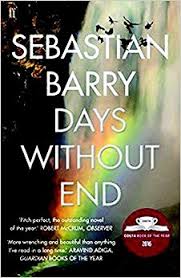
Days Without End img Days Without End by Sebastian Barry 

Would suit men or women of any age who just love a great story, brilliantly told. It’s about two young men, mercenaries in the American Civil War, one of whom is an Irish immigrant, who find love amidst the horror, carnage, poverty and degradation. It’s graphic and hard-hitting but also tender and moving. Shouldda won the Man Booker IMHO.


Photo 11-10-2017, 12 45 36Elmet by Fiona Mozley

For lovers of Yorkshire who like their fiction a bit dark. Shortlisted for the Man Booker but sadly did not win. Daniel lives with his father, a bare-knuckle fighter, and his sister Cathy in an isolated rural home they built themselves, life takes a very dramatic turn when they are threatened by the local landowner who bears a grudge against the family.


Eleanor Oliphant  Eleanor Oliphant is Completely Fine by Gail Honeyman

For anyone interested in mental health issues. A fine first novel, which has rightly won many plaudits. Eleanor is our narrator, an unusual and vulnerable young woman who struggles to find her place in the world and conform to social norms. At times funny, at others heart-breaking, it’s a cracking read.


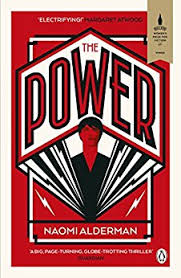
The Power img2The Power by Naomi Alderman

A great book for strong women who would like to turn the gender tables! Winner of this years Bailey’s Women’s Prize for Fiction, it’s a brilliant satire on what it might be like if women ran the world. In this powerful commentary on gender politics, the world’s women find they have a physical ability to injure, kill and therefore control men with an electrical charge. Imaginative and original.


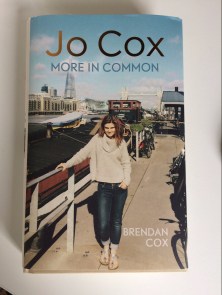
More in Common img Jo Cox: More in Common by Brendan Cox

For campaigners and humanitarians. Written by the widower of the late Jo Cox MP, brutally murdered in her Yorkshire constituency by a Far Right Extremist, this account of the woman and her values, not only gives an insight into the life of this extraordinary politician, but is also a reminder of what it is to be human.


Stay-with-Me img Stay With Me by Ayobami Adebayo

For anyone fascinated by the tussle between modernity and tradition or for lovers of Africa. Set in Nigeria in the 1980s, this novel is a story about Yejide and Akin, an infertile couple and the pressures that places on their relationship. Moving and brilliantly plotted.


The Essex Serpent img The Essex Serpent by Sarah Perry

For natives of Essex or London or those who like a grown-up mystery story. Newly-widowed Cora Seaborne moves to a small Essex village with her autistic son, and strikes up a deep friendship with the local vicar, Will Ransome, over a mutual fascination with archaeology and in particular a local legend about a serpent who blights the lives of the inhabitants. It explores the conflict between science and religion, reason and superstition at the end of the 19th century, and the nature of love in all its forms.


I’ve just realised that all of these books explore the many types of love. Perfect for this season!

If you have enjoyed this post, please subscribe to my blog by clicking on the ‘Follow’ button and follow me on social media.


Kids’s books for Christmas – fiction

I posted last week with some suggestions for non-fiction books for children for Christmas. Today, I’ve got some fiction ideas for you. Here is my round-up of some of the best books around at the moment, which I recommend for children. I’ve given you an idea of the age range too. As a rule of thumb, the central character in a book is generally a year or two older than the age of the children the book is aimed at. Kids like reading about people who are slightly older than them.

Pax img

Pax by Sara Pennypacker – suitable for 10-11 year olds

I reviewed this book here a few weeks ago. I loved it. Set in America, it concerns 12 year old Peter and a ‘pet’ fox he has raised from a cub. Peter is forced to release Pax into the wild when his father is called up to serve in the army. Peter’s mother is dead and he is sent to live with his grandfather. He runs away to search for Pax after realising what a terrible mistake he has made, and meets Vola, who lives on an isolated farm. Vola nurses Peter after he breaks his ankle and the two form an unlikely friendship which sets them both on a journey of self-discovery. Some challenging themes, but ultimately a heart-warming tale, with some lovely illustrations.

33126922

Memoirs of a Polar Bear by Yoko Tawada – suitable for 11-13 year olds

Perfect for pre-teens whose reading tastes and skills are maturing but who still love their animals. Narrated in three parts by three generations of a polar bear family who find themselves in different parts of the world: beginning with the matriarch in the Soviet Union, her daughter Tosca in East Germany, and her grandson, Knut, raised in Leipzig zoo. Very quirky and gently political. It is translated from the original Japanese so will also give children a taste of a quite different style of writing.


9781406371680

Lucky Button by Michael Morpurgo – suitable for 9-12 year olds

I love a book with illustrations and I love Michael Morpurgo. This entry-level Morpurgo is a perfect Christmas offering. It concerns Jonah Trelawney who is the victim of school bullies and a carer for his mother. an accidental encounter gives him a life-changing insight to life in a Foundling Hospital in the 18th century (the original Foundling Museum was the inspiration for the story). Lovers of Jacqueline Wilson’s Hetty Feather will enjoy this.


The Adventures of John Blake: Mystery of the Ghost Ship by Philip Pullman – suitable for 10-13 year olds

Pullman’s The Book of Dust, part of the Lyra trilogy, is possibly the biggest children’s literature event of the year. Fans will already have bought it, so I’m not going to mention it here. Instead, I draw your attention to this graphic novel by the same author, which may encourage more reluctant readers, particularly boys. Just because it has pictures, does not mean it is for younger ones, who may find the storyline complex and the themes quite dark. John Blake is a seafaring time traveller. He rescues a young girl from a shipwreck, but his efforts to return her to her own time place them both in grave danger.


35529075The Disappearances by Emily Bain Murphy – suitable for 12-14 year olds

This debut has been very well-reviewed. It concerns Aila and her younger brother Miles who are sent to live in the rural town of Sterling, after their enigmatic mother, Juliet dies. The town carries a mysterious affliction: every seven years certain memories, experiences that people share in common, vanish. The locals believe that Aila’s dead mother, is somehow responsible and Aila must bear the brunt of their prejudice and hostility. A long book with some challenging themes which will suit keen readers who like a bit of depth.


2017-12-11 12.05.07Do You Speak Chocolate? by Cas Lester – suitable for 10-12 year olds

Friendship between girls is explored in this novel, which has been compared to Jacqueline Wilson. It is also a story about how friendship can transcend the bounds of language. Nadima is a new girl at school, recently arrived from Syria, and speaks no English. Jaz is a strong personality, and becomes friends with Nadima after the two share some confectionery. Their relationship does not always go smoothly and this book explores the ups and downs via themes of integration, community, and the things that bring us together.


Do you have any recommendations for children’s fiction this Christmas? I’d love to hear your suggestions.

If you have enjoyed this post, I would love for you to follow my blog and for us to connect on social media. You can do this by clicking on the various buttons on this page.

Kids books for Christmas – non-fiction

I posted a blog last week encouraging you all to give a book a home this Christmas. A well-chosen book is NEVER a bad gift idea. Even if the gift receiver does not in the end like the book they will appreciate you buying it for them, especially if you write something inside about why you chose it. It will also give the two of you something to talk about. It’s the gift that keeps on giving!

Kids can be more tricky, as we know! Unless you know what authors they like, or what sort of reading material they are into, it can be a risk. And for a reluctant reader, receipt of a book may come as a disappointment. When it comes to encouraging children to read, my advice is always to let them choose, but that can be difficult at Christmas, if you are buying for nieces and nephews, for example. Non-fiction is always a good choice in this scenario as you will be able to find a book on almost any subject, targeted at the age range you are looking for. I’ve done a bit of research for you and here are some that have caught my eye.

For younger ones:

2017-12-01 12.49.11

Paper Monsters by Oscar Sabini (£14.95). This is a gorgeous gift book. The idea is the child makes a collage on a blank sheet and then uses the monster templates to cut round. There is a similar book Paper Zoo which is just animals.

71FNtt45dULBarefoot Books World Atlas by Nick Crane & David Dean (£9.99). I love the values and ethos behind Barefoot Books. Multi-cultural and humanitarian themes are present in everything they publish and their books can be valuable tools in combatting exclusion in our world and teaching children about kindness. This world atlas focuses on the interaction between environment and the communities and cultures of the world.

For 10-13 year olds:

2017-12-04 13.20.00Illumanatomy  by Kate Davies and Carnovsky (£15.00). A superb large format book about the human body that goes into real detail. The illustrations are outstanding; when viewed with the special lenses provided you can see different parts of the body (skeleton, muscles, organs) and how they interact. Perfect for budding biologists!

2017-12-01 12.59.15EtchArt: Hidden Forest by AJ Wood, Mike Jolley & Dinara Mirtalipova (£9.99). This is rather like those books in the colouring trend except the images you create are shiny and sparkly. The child uses the etching tool provided to produce glorious forest-themed pictures (there is also a sea-themed one available). Lovely, and nice and solid.

Older teens:

2017-12-04 13.13.52

Notes from the Upside Down: Inside the World of Stranger Things by Guy Adams (£12.99). My teenagers love this show and Season 2 has been hotly awaited in our household! Yes, I know it’s a companion to a TV series, but it’s potentially entry-level Stephen King, which is not necessarily a bad thing.

2017-12-04 13.17.39 Wreck this Journal by Keri Smith (£12.99). Yes, I know it’s not exactly a reading book (though there are plenty of words) there are writing and drawing opportunities. I actually love this series as I think they tap into teenagers’ anarchic tendencies, whilst also encouraging a degree of creativity. Here’s the 2017 offering and the cover is much nicer than previous editions. Good fun.

If you have any non-fiction suggestions I’d love to hear them.

If you have enjoyed this post , then do follow my blog for more bookish thoughts.