I posted last week about my ups and down dealing with life during Covid-19. It sparked a lot of comments from friends about others feeling similar emotional swings. It just goes to show that you can’t rely on social media to reflect life accurately; if I look at my Facebook or Instagram feeds it looks as if everyone is having an amazing time and achieving all sorts of interesting challenges! Perhaps everyone else is just ‘faking it till they make it’ as well, putting a brave face on, or, if their profile is also their livelihood, perhaps they are thinking about their business. I am not normally someone who suffers from anxiety or other mental health issues, at least not at the severe end of the spectrum, but it strikes me that more openness and honesty would help those who do.
I mentioned in my last post that one of the books that has really helped me this last few weeks is Grown Ups, the latest novel from Marian Keyes. I have long admired Marian; though I have not read any of her other books, I often hear her on the radio. She is also very active on Twitter and is hilarious. She is able to project her personality very strongly, she is forthcoming about her vulnerabilities and her frailties and she is an engaging and witty speaker. Grown Ups was suggested at my book club for April and I listened to it on audiobook. I absolutely loved it and especially Marian’s wonderfully authentic narration.
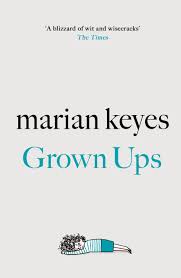
The novel is set over the course of six months in the life of one extended family – the Caseys – which comprises the three separate families of brothers Johnny, Ed and Liam and their various wives, girlfriends and children. The novel is set mostly in Ireland and mostly in Dublin, where the main characters all live. It opens on the occasion of Johnny’s 49th birthday, and the three brothers and their families have gathered together,, as they do frequently and regularly. These are usually organised (and paid for) by wealthy Type A personality Jessie, Johnny’s wife, successful business owner of a chain of stores selling high-end and exotic groceries. All of a sudden, Ed’s wife Cara begins to have what can only be described as a mental meltdown during dinner. Although I found this initial scene quite difficult to follow because I did not, of course, know any of the characters, it is quite clear that Cara’s outburst is entirely out of character, deeply embarrassing for many of the attendees, exposing behaviours they believed they had masked pretty successfully, and that it is going to cause deep fissures in what might otherwise appear to be a ‘happy’ family. It’s as if Cara has taken some sort truth drug.
All is in chaos and then Marian takes us back six months and we begin to explore the sequence of events that has led to this breakdown. These include an Easter break in a smart hotel in Killarney, a weekend away to celebrate the 50th wedding anniversary of the Casey brothers’ awful parents (which goes a long way to explaining the various ‘issues’ their sons have), a hilarious but disastrous murder mystery weekend for Jessie’s 50th birthday and a holiday in Tuscany. Most of these extravagant events are organised and paid for by Jessie, who, as an only child, longs for the happy extended family.
Although it’s the three men who are related, the story seems mainly to revolve around their partners – Johnny’s wife Jessie, who married him a few years after she had lost her beloved first husband Rory, Cara, Ed’s wife, a mild-mannered hotel receptionist, who has an eating disorder, and Nell, the young and lovely set designer, who marries feckless Liam after a whirlwind romance.
At first I found some of the scenes overly long, which made the pace quite laboured in the first quarter or so of the book, but on reflection I think this is necessary to building the personalities of the characters, understanding their motivations, and really getting inside their heads. By the time I got to the last quarter I could not put it down. I became totally lost in the world of the Caseys and found I cared very deeply about what happened to them all. Best of all Marian’s dialogue feels entirely authentic and made me feel nostalgic for get-togethers over the years I have had with my own extended family of Irish in-laws, though none quite so eventful as those depicted here!
This book was a real tonic and I recommend it highly. I will definitely explore more of Marian Keyes’s books.
What books have kept your spirits up during the pandemic lockdown?
 Marian Keyes – Grown Ups to be precise. It was my book club’s choice the last time we met in person and although it was probably not a book I would have picked up it was the most perfect tonic, especially as I listened to it on audio, with Marian’s wonderful narration.
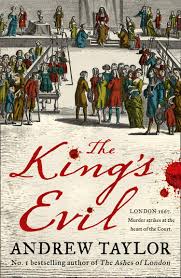 This is the third book in Andrew Taylor’s series of Marwood & Lovett novels. I have thoroughly enjoyed the first two books,
 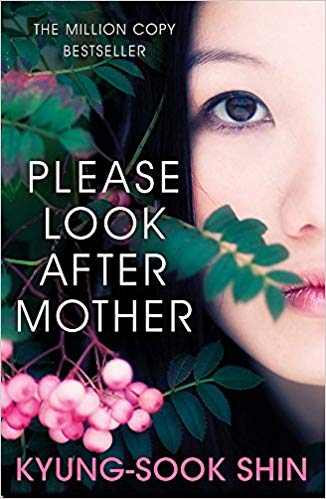 The premise of the story is very simple: So-nyo is a wife and mother to five children, all of whom are now grown-up and living their lives in different parts of the country (South Korea). So-nyo lives a very simple fairly rural life with her husband at the family home, where there are many privations. The place is almost a throwback to a bygone era. So-nyo’s eldest son, Hyong-chol, lives in Seoul with his wife and family and it is while his parents are on their way to visit him (to celebrate the father’s birthday) that his mother goes missing; she was holding her husband’s hand on the busy underground station platform one moment, then she seemed to slip from his grasp and just disappeared into the crowd.
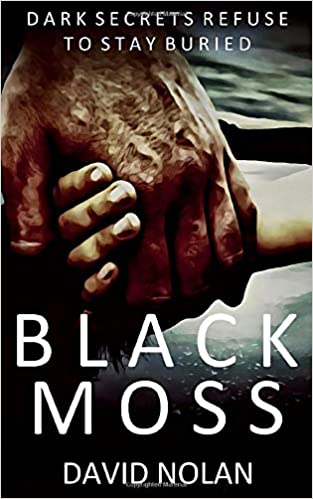 The book jumps back and forth in time between the present day and April 1990. In the present day we meet a middle-aged Danny Johnston, a long-in-the-tooth presenter of investigative television documentaries. He is past his peak professionally and clearly has some deep-rooted, well-suppressed emotional difficulties; the book opens with him crashing into a tree whilst drunk. He lives an empty life alone in London and is borderline alcoholic. His accident is well-publicised in the media and as a result he loses his television contract and is let go by his agent. With nothing to keep him in London he decides to return to the north, to Manchester where he grew up and where he began his career as a local radio reporter.
 I had that very experience recently with my book club when we decided to read To The Lighthouse by Virginia Woolf. Some of us had read it before (though years earlier) others had not read it at all. But even those of us who had read it before could not remember very much about it! I read it when I was studying for my English degree 30 years ago; I would probably have got through most of Virginia Woolf’s books in a very short space of time, because that was what my degree entailed – reading lots and lots of books very quickly! I always remembered that To The Lighthouse was my favourite, but I could not honestly have told you what happens in it, except that the journey to the eponymous lighthouse was about something desired more than something fulfilled.
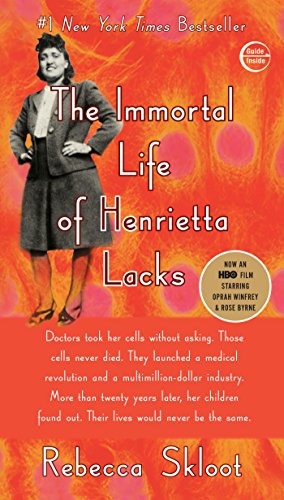 This may have been unremarkable and probably happened more than we care to imagine, but for what happened next: Henrietta’s surgeon had noticed how rapidly her cancer cells had grown, but when George Gey, the scientist to whom he had sent the cells, received them, he found that they divided and reproduced at a rapid rate, and, most remarkably, seemed extraordinarily robust outside their host, unlike all other cells he had dealt with. Gey soon forwarded cells to other colleagues working in the field and they too found the ability of these cells to thrive truly remarkable. HeLa (the name given to the cells) was born and they quickly became an essential part of research worldwide into therapies not just for cancer but for polio and HIV to name but a few. It is thought that around 50 million tonnes of HeLa cells have been cultivated since 1951.
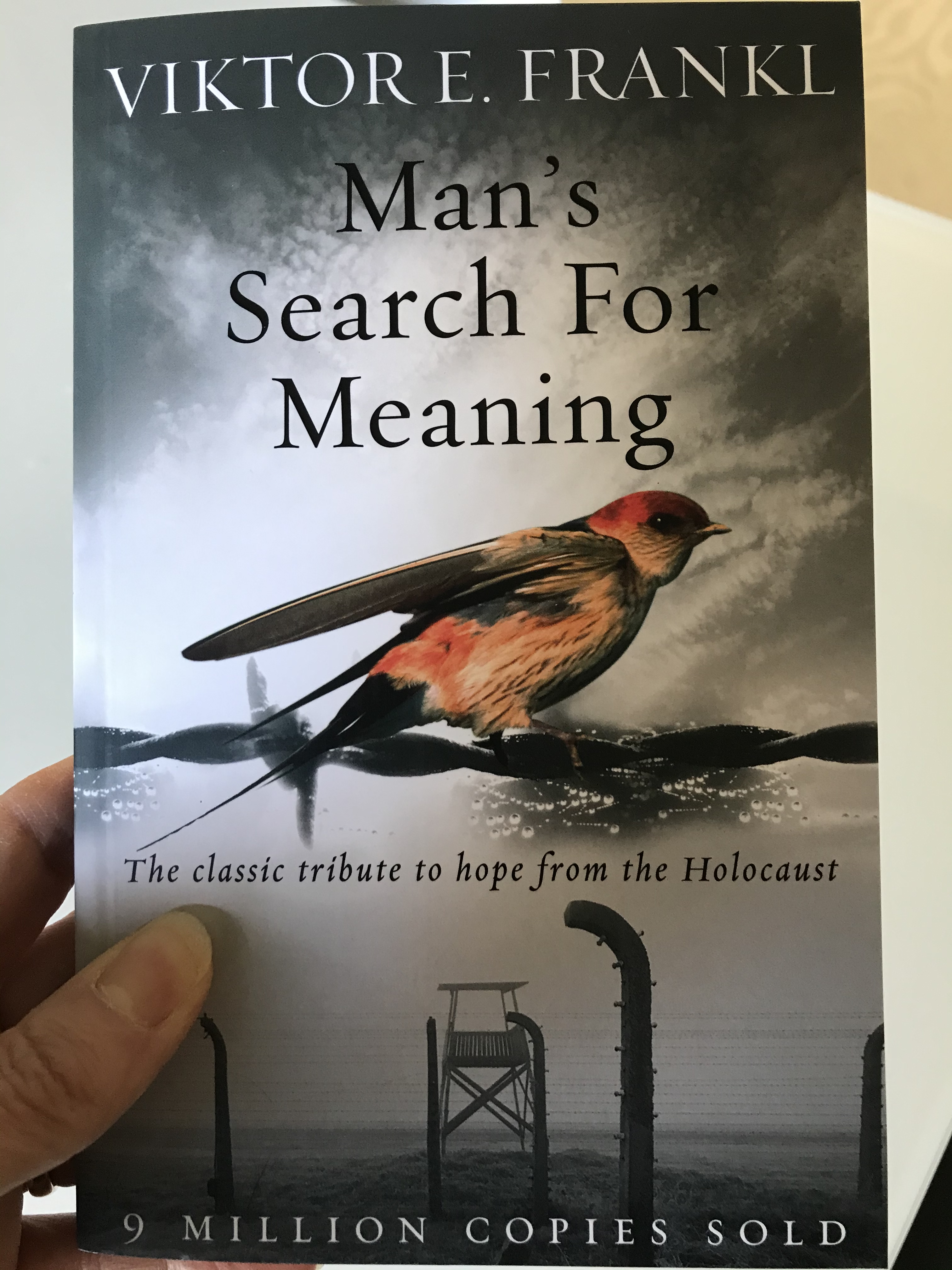 Viktor E Frankl was a psychiatrist who is credited with developing one of the most important theories in the field human psychology (logotherapy) since Freud. He was developing his theory before he was captured by the Nazis but his time in the concentration camp enabled him to observe human beings in extreme conditions and further evolve his ideas.
 I was tempted to go for Haruki Murakami – after reading
  Julia's books