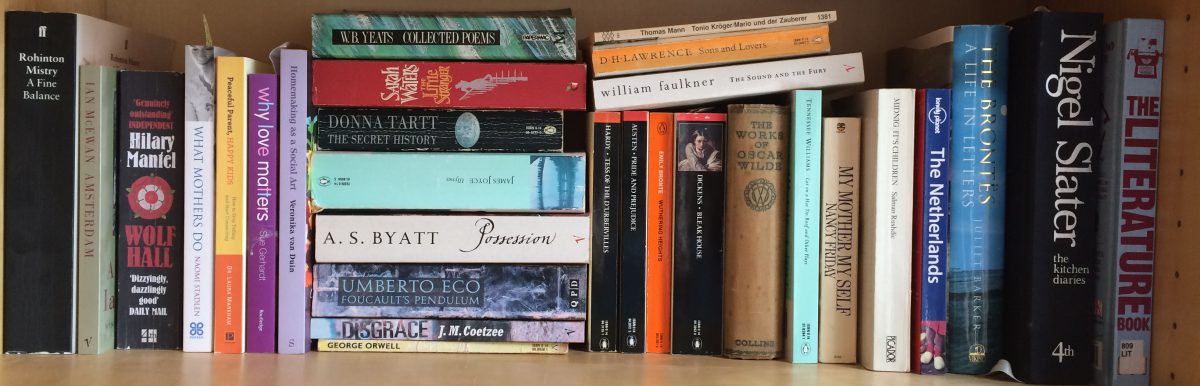
I haven’t read that many books by Ian McEwan – about four I think, not as many as I would like. Each time I read one, I am so overwhelmed by the quality of the work, the writing, the ideas behind each novel, that I wonder why on earth I haven’t read every single thing he’s written, especially as most of them aren’t terribly long. I’ve just finished The Children Act which was my book club’s choice for January. I read it in just a couple of days; the story was not only utterly compelling, but the prose was a joy. McEwan’s easy brilliance just draws you in and I found it hard to put down – one of those books you just have to pick up while you wait for the kettle to boil, just to enjoy the next couple of paragraphs. I felt similarly about On Chesil Beach which I read in 2017, but I’d go so far as to say this book is even better.
The central character is Fiona Maye, a High Court judge in the Family law division. She is considered brilliant at her job. She deals with both high-profile celebrity divorces, as well as complex and difficult cases. Not just difficult, but the kinds of cases that most of us would find virtually impossible to adjudicate, such as one particularly challenging case we are told about of two conjoined twin babies. Left together, both would eventually die, but separation would mean doctors could save the stronger of the two, but with the certain and immediate death of the weaker one. In essence, killing one baby to save the other. Fiona reaches conclusions on these kinds of impossible moral dilemmas.


Fiona is 60 and married to Jack, an academic. They have no children, but plenty of nieces, nephews and god-children. They seem settled in their comfortable, affluent, London life until, on the eve of a difficult case, Jack announces that he is finding their marriage sexually unsatisfying and would like to go and have a final fling while he still has it in him. Fiona is horrified and they argue bitterly. The evening ends with Jack leaving the flat, to go off to the young woman he plans to have an affair with, Fiona presumes.
The case over which Fiona is about to preside is an urgent one and she must immediately switch off from her marital crisis in order to focus on her work, where she feels in control.
“No denying the relief at being delivered onto the neutral ground, the treeless heath, of other people’s problems.”
The case on which she is being asked to rule concerns Adam Henry, a teenager, three months short of his 18th birthday, who has leukaemia. His proposed treatment involves a combination of drugs which will also require him to receive a blood transfusion, but, as a Jehovah’s Witness, his parents object to this course of action, and so, it is reported, does Adam. The hospital wants to proceed with the remaining treatment and the transfusion, and to do so immediately in order to save his life, and wishes the Court to rule that, as a child, he can be forced to have it (if he were an adult he would have the right to refuse treatment). Fiona hears the evidence from all sides and decides that before reaching her decision she will visit Adam. The visit affects Fiona deeply, more than she will realise.
It is tense reading as we wait to find out what Fiona will decide. No spoiler here, I won’t tell you her conclusion. Suffice to say that her decision has repercussions, which are primarily about her going through a kind of breakdown, of all that she has believed and taken for granted up to now, and this affects also how she responds then to Jack and the situation of their marriage.
This is both a touching and deeply affecting novel about one woman’s internal struggles and about human relationships in general and the nature of marital love in particular. And at the end we are invited, in a way, to judge Fiona, the Judge. McEwan has some brilliant turns of phrase which left me breathless with admiration and his economical style of writing makes him highly accessible and exciting to read.
I loved this book and recommend it highly.
Which McEwan shall I read next? What is your personal favourite?
If you have enjoyed this post, I would love for you to follow my blog. Let’s also connect on social media.
 My book club chose this for our pre-Christmas read (I’ve only just finished it!) and we all thoroughly enjoyed it. It’s long, and perhaps could have been edited somewhat, but I imagine the main buyers of this book will be Michelle-fans who want as much detail as possible. The first part of the book was, for me, the least engaging. My fellow readers and I were a little surprised to learn that Michelle Robinson did not in fact come from an affluent background. She was a ‘Southsider’ – from a part of Chicago that was fairly blue-collar and largely African-American, and became more so as she grew older and some of the white residents moved out. A picture is painted of a family with strong values around hard work, doing the right thing, caring for others and loyalty to family. Michelle excelled in school through hard work, determination and the support of her parents and attended both Princeton and Harvard Law School. She has never forgotten her humble beginnings, however, and this underpins her commitment to equality and social justice. However, I did feel this part of the book was most descriptive; in the context of the book as a whole I can see why it would have been important to her to put her politics in perspective, but it was a tiny bit…pedestrian?
 Despite being outside skiing all day I did get a fair bit of reading done and managed finally to break the back of a book I have been reading for some time now – The Overstory by Richard Powers, the final one of the
  Over the holiday I also completed Michelle Obama’s Becoming. This is a much faster read and very different, though also thoroughly enjoyable. Look out for my reviews of both books over the next couple of weeks.
 For little ones there’s We’re Going on a Bear Hunt on Christmas Eve on Channel 4 (might have to watch that even though mine are now teenagers!). Or the wonderful Paddington movie on 30th December on Channel 4.
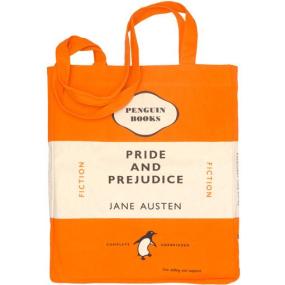
 Thomas Hardy’s Far From the Madding Crowd (one of my favourite Hardy novels) is on BBC2 on 23 December, Jane Austen’s Emma (with Gwyneth Paltrow) is on BBC2 on 28 December, Pride and Prejudice (starring Keira Knightley) is on More4 on Christmas Day, and the brilliant 2011 version of Charlotte Bronte’s Jane Eyre (the one with Michael Fassbender as Mr Rochester) is on BBC1 on 2 January.

 Finally, for something a little more up to date, you could try


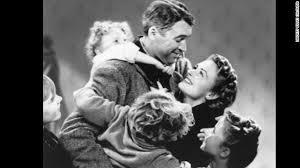 It’s a Wonderful Life

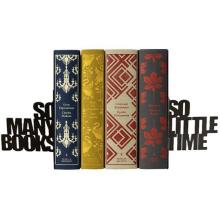
 It’s an expensive time of year and sometimes you just need a little token. Bookmarks are wonderful for popping into a card and can be as simple or as elaborate as you want, can convey a warm message, humour, be beautiful or functional (eg have a reading light on the end!). Go as cheap or as pricey as you want, maybe even make yourself, like these gorgeous watercolour ones from
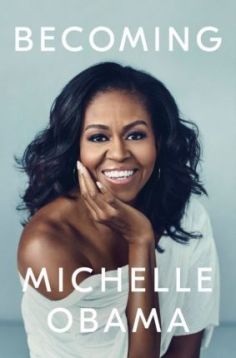 Becoming by Michelle Obama


 Ottolenghi Simple by Yotam Ottolenghi


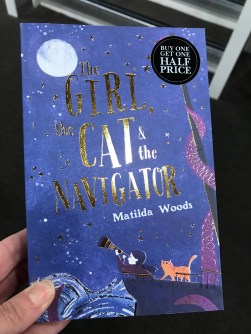 The Girl, the Cat and the Navigator – Matilda Woods
 Ladybird Tales of Adventurous Girls
  Dog Man Lord of the Fleas – Dav Pilkey
 Flamingo Boy – Michael Morpurgo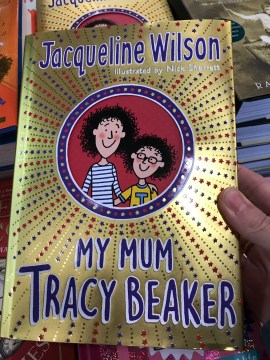


 Dumplin’ – Julie Murphy




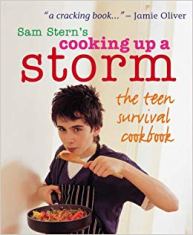 Cooking Up a Storm: The teen survival cookbook – Sam Stern & Susan Stern
 As I have been told many times by some of the people in my household, today is the official start of Christmas as it is the first Sunday of Advent (sounds like a bit of an excuse to me since we are not a religious family). Not quite feeling it myself yet, but then I tend to prefer to hold off for another week or two so as not to feel too exhausted by it all when the big day finally arrives. There is no doubt though, when you have children, or just a larger extended family with some children in it, you kind of have to get a little organised otherwise things can get a bit stressful.

