

The theme for July in my Facebook Reading Challenge was an American novel. It was a tough choice as I wanted to select something that captured the American ‘story’. I at first thought about The Color Purple, which had been on my shortlist for February (a work by a feminist writer) but I felt it was too similar to June’s choice of I Know Why The Caged Bird Sings, the first volume of Maya Angelou’s autobiography. I also thought about The Bonfire of the Vanities, but decided it was a bit long and my fellow readers on the Challenge would not thank me! So, I finally alighted on Philip Roth’s American Pastoral, which seemed appropriate in terms of both subject matter and timing, since Roth died just a couple of months ago. I’m not sure how other readers on the challenge got on, but I’m afraid I failed to complete it within the month – it’s not overly long at 423 pages, but the writing is so rich that it was almost impossible to read at any pace. I had to (and wanted to!) savour every word. That gives you an idea of my overall feeling about the book – it is tremendous, epic, glorious and tragic. If you want to understand anything about the American experience, especially the immigrant experience over the last hundred years or so and the effect that has had on the mindset of American-born second and third generation immigrants, it is essential reading.
 The plot is not complicated: ‘Swede’ Levov is a third generation Jewish immigrant whose grandfather came to America from Europe. He was a glovemaker and set up a business in Newark, New Jersey which became highly successful. Swede’s father continued the business, which peaked in the 1950s and 1960s when glove-wearing for respectable women was the norm and most would have several pairs. (There is more information on gloves in this book than you will ever need to know, but it’s fascinating!) Swede inherited the business from his father, while his more wayward brother became a cardiac surgeon.
Swede Levov pursued the quintessential ‘American dream’ – he excelled in sports at school, served in the military, followed his father into the business, and learned the glove trade, married an Irish-American Catholic former beauty queen, with whom he had a daughter, Merry. From the outside everything seems perfect except for one small flaw – Merry has a stammer, which no amount of expensive medical or therapeutic treatment seems to be able to fix. This is the first indication that Merry perhaps represents some flaw which will undermine the Levovs and all that they represent.
Slight spoiler alert (though not really because you learn of the event quite early in the book): as a teenager Merry becomes obsessed with opposition to the Vietnam war. She becomes increasingly frustrated and rebellious. Her parents lose control and it culminates in her planting a bomb in the general store of Old Rimrock, the solid New Jersey semi-rural idyll in which the family has settled. The bomb kills the local doctor.
Swede’s world begins to fall apart; he cannot accept that his daughter has committed this crime, believing that she must have been put up to it by others, or indeed that others did it and are allowing her to take the blame. For a number of years Swede lives in the hope that he will be able to find his daughter, that the truth will come out and that she will be exonerated, and that their life will return to ‘normal’. For a time, it appears that he might find be able to find Merry, when a woman known as Rita Cohen contacts him saying she knows Merry’s whereabouts. Swede becomes convinced that she is in fact the real bomber because she is cruel and threatening and extorts money from him.
The Rita Cohen thread is all part of Swede’s self-deception, however, and this is the central theme of the book – Swede, his wife and his family, represent the ‘American dream’, which is in fact, just that, a fantasy, a mirage. Merry’s actions put Swede on a path where everything he held dear, which he believed to be real, unravels and is exposed as a sham.
As I have already said, the plot is not complex because it is not a novel so much about events as it is a deep exploration of the American psyche. The structure of the book is quite complex, however, but so brilliantly done that it is not hard to follow. It flits effortlessly between different stages, between different characters and their individual stories and the handling can only be described as masterful. No wonder it won the Pulitzer Prize (1998)! It explores notions of religion in America, particularly the Jewish experience as told through the Levov family, and through the eyes of our first narrator, former schoolmate of Swede’s and now author Nathan ‘Skip’ Zuckerman, the Catholic experience (through Dawn Levov) and the American Protestant experience through the residents of Old Rimrock. The decline of the glove industry and its craft, and also the city of Newark where the Levov family business was based, is a metaphor for the gradual collapse of the concept of the American dream which now seems to lie degraded and in ruins. A further metaphor is the Garden of Eden story, itself Old Testament fiction. The book is written in three parts (Paradise Remembered, The Fall and Paradise Lost) echoing Milton’s epic poem Paradise Lost, because for Swede Levov the experience is truly a destruction of all that he once understood to be real and to be good.
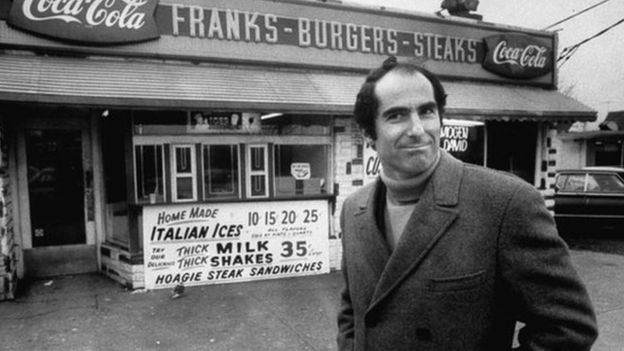
This is the longest review I’ve written in a while and yet I feel I have only scratched the surface in telling you about this book. I have only just completed it so I may write more in a few weeks once it has had a chance to sit with me! Truly, as I savoured the last few pages I was open-mouthed at the unravelling. It is truly an American tragedy (the title is a kind of oxymoron), and it reminded me of Long Day’s Journey Into Night, Who’s Afraid of Virgina Woolf similar examples of the collapse of an American dream happening in slow motion before our very eyes. The final dinner party scene is quite spectacular.
Needless to say I recommend this book highly. It’s not an easy read but it rewards in spades.
If you have read this book I would love to hear your thoughts.
 The novel begins with a dramatic event: four children are travelling in a light aircraft across the Amazon jungle, which then crashes. The pilot dies (this is quite gently done, it is not frightening), which means the four children, five year-old Max, his older sister Lila, both Brazilian, and Con and Fred, two Brits, aged about 11-12, find themselves alone. Each of the children has their own back-story and their characters are carefully-drawn: Fred is resourceful, a natural leader who the others look to, but he is also a troubled soul, his mother is dead and he longs for the approval of his remote and uptight father. I should add at this point that the story is set, I would guess, in the 1950s. Con is a feisty and assertive girl, who is also often angry and finding herself in conflict or impatient with the others. She comes across as something of a spoiled brat, but she too is hiding a deeper insecurity. Her secret will be revealed much later. Lila and Max are siblings. Max is very young, vulnerable and afraid. Lila is fiercely protective of him, acts as a mother-figure in the absence of their own family, and has the maturity to bring the group together at times of great stress.


 This book is magnificent and I urge you to read it. It was my book club read this month and we all loved it. It concerns a period in hsitory that is seldom openly discussed – the brutality of the Russian advance into Germany at the end of the WW2. One of the earliest books I reviewed on this blog was
 I chose this book for my 2018 Facebook Reading Challenge. The June theme was an autobiography, a tricky category since enjoyment can often depend on your feelings about the author. I also wanted to avoid titles that would most likely have been ghost-written. After thinking about it for some time, I chose this, the first volume in Angelou’s memoir series, and the one which is often considered to be the best. It can be read as a stand-alone.


 I have learnt my lesson and carve-out reading time for myself in the day. My bedtime reading is usually reserved for lighter books, entertainment. I have recently discovered the Maisie Dobbs series by British-American writer
  Browsing in the bookshop last year, I noticed that she had published her own autobiography, at the age of 83 – I note with some pleasure that her 84th birthday is in fact today! Many happy returns! Reading the blurb whetted my appetite – I was not aware of her life as a groundbreaking Literary Editor at the Sunday Times, or that she had five children, including one boy who died as a baby, and another son who was born with severe disabilities, nor that her first husband, fellow journalist Nicholas Tomalin, was killed in 1973, when her children were still very young. It sounded like a very interesting read.
 The novel is set in Renaissance Florence; the sense of time and place is profound. You can almost smell the streets wafting from the pages! Dunant is a meticulous researcher and the novel feels very authentic. The central character is Alessandra, the fifteen year-old daughter of a wealthy cloth merchant. Much to the frustration of her family Alessandra is a precociously intelligent young woman, a talented artist, a strong personality and has a deep desire to be out in the world. These are all traits which are highly inconvenient for the family and not compatible with the kind of life she will be expected to lead.
