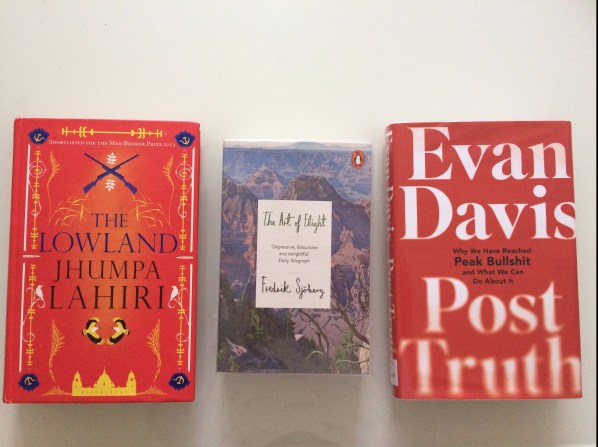
My ‘to read’ pile is shrinking!

Last week I posted a review on this blog of Patti Smith’s Just Kids, which I’d read as part of my 2017 reading challenge. The challenge for March was to select something from my ever-growing ‘to-read’ pile. I know you have one too! It felt very satisfying to finally get around to something that I’ve been wanting to read for some time but which never seemed to rise to the top of the pile. My ‘to read’ pile bothers me a lot, so much so that I have many “‘to read” piles’ around the house. I’m a compulsive book-buyer so I feel guilty about the money I spend (although it has to be said a great many of the books I buy on impulse are from charity shops or waiting rooms) and about the space taken up, especially since I read Marie Kondo’s The Life-Changing Magic of Tidying! Clutter, to me, feels like a powerful signal of under-achievement. I bet my tidy, high-achieving friends don’t have large ‘to read’ piles! The psychology of the ‘to read’ pile is clearly very deep.

2017-03-30-12-10-56.jpgSo, it gives me great pleasure to announce that I completed the March challenge and the pile is one volume smaller. I really enjoyed Just Kids and I’m pleased I finally got around to it. I’ve also given up book-buying for Lent so hopefully I will be better able to resist temptation in the future and tackle the unread books before buying new ones. Sometimes.
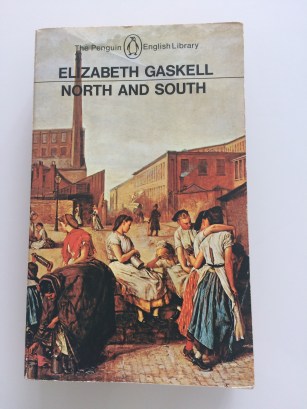
April’s challenge is to re-read a book I have enjoyed in the past. I’m not a big re-reader and yet I know this can be hugely rewarding, especially if you’re in a quiz or something and the name of the central character from that really famous book you read years ago is on the tip of your tongue! My husband is a good re-reader and he finds that he is able to get something new out of a book each time he goes back to it. I’ve decided to re-read Elizabeth Gaskell’s North and South. I read this many years ago, whilst studying English Literature at university and I’m afraid I remember very little about it, but I do know that I enjoyed it.

2017-03-30 11.25.47I am fortunate to live in Manchester, northern England, the setting of this book. It’s also where Gaskell spent much of her early life. You can visit Gaskell’s house in Plymouth Grove, Ardwick (and then stroll over to the Pankhurst Centre nestled in amongst the buildings of the Manchester Royal Infirmary) which I did last year. It’s still a work in progress, so well worth supporting, but has a fascinating collection of her possessions and is set out as it would have been when she and her family lived there. I moved to Manchester relatively recently and have become fascinated by the city’s history and culture. It will be interesting to read the book now, with that new knowledge and awareness.

My copy of North and South is a slim little thing, perfectly innocuous-looking, but the text is tiny and it has over 500 pages! I’m looking forward to immersing myself in 19th century northern industrial poverty. I also note that the Introduction to my edition is written by one of my former Professors, so it will be a trip down Memory Lane altogether.

Did you start a reading challenge this year? If so, how are you getting on?

If you have enjoyed this post, I would be delighted if you would follow my blog by clicking on the subscribe button, below or to the right, depending on your device.

A nice book for kids for the holidays

xmas-1-2Regular visitors to this blog will know that I am passionate about children’s literature. My children are part of the generation that grew up with Harry Potter. JK Rowling is one of my heroes, for a number of reasons, but primarily for all that she has done to get (and keep) children reading, particularly those who might otherwise not have done so. Harry Potter wasn’t the first literary character to bring wizarding and magic into children’s literary lives, however. The Snow Spider was first published 30 years ago and was a multiple award winner. It was originally published as a trilogy, but this anniversary volume has been issued as a stand-alone. I chose it for the book club I run at my daughter’s primary school.

It’s set in Gwynedd, rural Wales, where our central character, nine year-old Gwyn Davies, lives on a farm with his parents. It starts on the morning of Gwyn’s birthday with his grandmother, the eccentric Nain, giving him five gifts: a brooch, a broken wooden horse, a yellow scarf, a piece of seaweed and a tin whistle. It turns out that these rather unusual tokens are in fact a kind of test, designed to determine whether Gwyn has inherited the magical powers that run in the family line but which have now missed several generations.

We learn that Gwyn’s birthday is usually a quiet and fairly sombre affair because it is the anniversary of his elder sister’s disappearance, four years earlier. Bethan went out in search of a pet lamb belonging to her little brother, after he begged her to do so, and never returned. Gwyn’s father blames Gwyn for his beloved daughter’s disappearance and has since become a cold and distant figure in his son’s life.

Gwyn soon finds that he does indeed possess certain magical powers and each of the gifts given to him by Nain has an individual significance, a power he must explore and learn about. The first sign he receives is when the brooch becomes a delicate and beautiful silver spider, Arianwen. The spider becomes his guide and companion throughout the rest of the book and on his journey of self-discovery. The broken horse unleashes some malevolent forces that Gwyn must learn to control – this is a very high-action chapter! The yellow scarf, which had belonged to his sister and was the only sign of her left on the hills after she vanished, attracts Bethan back into the family’s life, but in an abstract way; Eirlys is introduced about halfway through the book when she arrives at Gwyn’s school, apparently an orphan. She lives with a family in the village, but after becoming trapped in a storm finds herself spending some days with Gwyn and his family. Eirlys clearly reminds Gwyn’s father of his missing daughter and her presence brings about a softening in his relationship with his son.

The children in the book club had mixed feelings about The Snow Spider. Some did not like it at all – one even abandoned it! For others I think it was perhaps rather gentler than their usual reading, with not quite enough “action”. Compared to many of the books published today it has a certain innocence that I confess made me rather nostalgic! I loved the sense of place; rural Wales, with all its traditions of myth and magic is beautifully evoked, and the characters are well-drawn and familiar.

The recommended age group for this book is 8-12 years, but I feel it would probably work best for children at the younger end of that spectrum, and it’s a lovely one to read aloud together; some of the keener children in the book club raced through it (it’s quite short) and I think this may have compromised their enjoyment. I think it also helps to have an adult to discuss the book with as it deals with some challenging themes, not least the disappearance of a child. Gwyn’s relationship with his parents, particularly his father, is quite a tricky issue, as is the question of acceptance by peers (once Gwyn’s ‘visions’ become playground gossip, he is teased by some of the other children). Also, Gwyn’s discovery of his magic after his 9th birthday is, I think a metaphor for puberty and adolescence, which may resonate with children approaching double figures.

It is a lovely book that I think quieter, perhaps more thoughtful children will enjoy, or children who like to read with an adult. But it isn’t Harry Potter!

Books for Spring

What do you think of when you think of Spring? I think of birth, renewal, reinvigoration, green shoots, hope, beginnings, fresh air, clean, the colour yellow, eggs, baby animals and life. There is a little more light each day, and it’s getting ever so slightly warmer. I want to be outdoors and I want to let the outside in by throwing open the windows. It’s also a time when people start to think about putting into effect changes they’d like in their lives, whether that be losing weight, decluttering or pursuing a new venture, because it’s easier to motivate yourself when the sun is shining and you have more energy.

With all those things in mind, I have come up with a list of books for Spring, a mix of fiction and non-fiction, hopefully covering a broad range of topics and interests.+

This slideshow requires JavaScript.

  1. The Life Changing Magic of Tidying by Marie Kondo – for those of you determined to do some spring decluttering. I read it last year and you can read my review here. It is a great talking point even if you don’t follow the Kon-Mari method for clearing your home and unblocking your life to the letter.
  2. My Mother My Self by Nancy Friday – 26th March is Mothering Sunday in the UK and I think this book is essential reading for all women. I learned so much about myself when I first read this some years ago, reflected a great deal on my mother and my relationship with her, and thought about the kind of mother I wish to be to my daughters.It covers all sorts of issues from how we talk about our bodies, sex,
  3. We: A Manifesto for Women Everywhere by Gillian Anderson and Jennifer Nadel – I am a huge fan of Gillian Anderson and I am dying to read this book. She is a very interesting and uncompromising woman who is open about her lifelong struggles with mental health. Jennifer Nadel is apparently a writer friend of hers.
  4. Gut: the inside story of our body’s most under-rated organ by Giulia Enders – the microbiome is getting a lot of publicity at the moment as we realise how little we have still to learn about the body and the influences on our health prognosis. This is a fascinating book, not just a handbook on how you can improve your overall health through what you eat, but, for those of us who like our advice to come backed up by a little more evidence, has plenty of science in it too.
  5. Exit West by Mohsin Hamid – published just last week, I’m very keen to read this. Globalisation and migration will be the defining issues of our time, I suspect, and this book is a novel about two young lovers who leave their home in the ‘east’, as civil war is about to break out, and plan their escape to an idealised ‘west’. The seemingly impossible clash between the desire of those who want a better life and those who are anxious about the pace of change is explored.
  6. Stay With Me by Ayobami Adebayo – Chimamanda Nogozi Adiche, possibly one of Nigeria’s finest literary figures, has been in the news a lot recently, as her views and publications on feminism have been getting some profile. Her work has certainly roused my interest in African women writers (I’ll be writing more about this in a future blog) and this novel by Adebayo stood out for me when the longlist for the Baileys Women’s Prize for Fiction was announced last week. It is the story of a young woman whose husband and family are desperate for her to have a child, yet she seems unable to conceive. It is set in 1980s Nigeria and explores the social and cultural pressures faced by Yejide, the main character.
  7. Tweet of the Day: a year of Britain’s birds by Brett Westwood and Stephen Moss – I have a bit of a phobia about birds, but I love them and am fascinated by them at the same time. This is a really gorgeous book that I want to look at when I see all the young birds landing on my neighbour’s bird feeder (we have a cat, so a bird feeder is not an option for us!)
  8. A Year in the Life of the Yorkshire Shepherdess by Amanda Owen – the story of a farmer in a remote Yorkshire location. She has eight children, so plenty of birth and renewal here. Also, the very outdoor nature of her and her family’s life may inspire you if you want to get your family off the sofa.
  9. The Detox Kitchen Bible by Lily Simpson and Rob Hobson – Spring is a good time for a health detox, I find. I have my own little detox method, which I’ve used for years, but if you’re looking for one for yourself this book, published at the end of 2016, has had some excellent reviews.
  10. Jane Eyre by Charlotte Bronte – you don’t need an excuse to revisit this classic, but if you want one, Charlotte was born in the Spring (21st April 1816) and she died in the Spring (31st March 1855).


What are your recommendations for Spring reading?

If you have enjoyed reading this post, please take a moment to follow my blog by clicking on the subscribe button below or to the right (depending on your device). Thank you!

Finished at last!


Do Not Say We Have Nothing img

I cannot remember when it last took me so long to read a book. I started reading Do Not Say We Have Nothing in early January and finished it at the end of February. I toyed with giving up on it (as I blogged about here), but instead I took a couple of ‘breaks’ to read other books, which interrupted the flow for me a little, but also helped me to persevere. At over 460 pages it’s of a considerable length, but I’ve taken less time to read longer books. It’s a tremendous achievement, a work of scholarship, but I found it really hard-going. It was shortlisted for the Man Booker prize last year; I’ve read the other five and I have to say that although in some ways this is the ‘finest’ book, it was not, for me at least, the best read. It has also been longlisted for the Baileys Women’s Prize for Fiction, announced today.

I’m also finding it fiendishly difficult to review! It’s a book about China. It covers a period from the mid-1960s, when Mao’s Cultural Revolution was instigated, to the student protests in Tiananmen Square in 1989, the government’s military reaction to which resulted in several hundred deaths. These deaths, however, pale into insignificance when compared to the thousands, possibly millions who were tortured, killed and persecuted in the previous forty years under Communist rule. The great horror the author explores more closely in this book, however, is the obsessive annihilation of all ‘unauthorised’ culture.

The novel begins in Canada where 10-year old Marie lives with her mother. Marie’s father, we learn, committed suicide, leaving many papers and a mystery. Then Ai-Ming comes into their lives, a refugee from China whose links to Marie’s father are not clear initially. She is a troubled young woman, though at this stage we do not know why. Marie becomes close to Ai-Ming and with her she begins to uncover some of the mysteries lying within her father’s remaining effects, but Ai-Ming eventually disappears, leaving many unanswered questions. Marie sets out to uncover the full story of the connections between Ai-Ming’s family and her father and most of the book is a detailed first hand account of these events.

Ai-Ming’s father, Sparrow, was a gifted composer at the prestigious musical academy in Shanghai. Marie’s father, Jiang Kai, a little younger and a gifted pianist. The third key individual is Zhuli, Sparrow’s young cousin who lives with him and his parents because her own parents have been imprisoned in remote labour camps for crimes against the state. Zhuli is a prodigious violinist. For each of our three main protagonists, music not only dominates their life, but their whole being. The homogenisation of culture under Mao, the proscribing of musical performance and the condemnation of musicians as ‘bourgeois rightists’ has profound effects on their lives. The book is primarily about how each is affected, both the shared horror they feel, and the different paths they must each follow for self-preservation.

It is a profoundly moving book: the horrors of the time are recounted in breathtaking detail and the aims of the book are noble. The author paints a picture of how the Cultural Revolution, by denying the expression of a shared history through art, literature and music, and by prohibiting so much that was beautiful and valuable, was a programme of dehumanisation that exercised control by turning a mass of people into savages. There is no doubt that Madeline Thien is an extremely talented writer. However, I was only able to become really engaged with the book partway through; the first hundred pages or so just failed to move me at all. I found the transitions from 1990 Canada to 1960s China rather clunky; each time we were with Ai-Ming and Marie and just beginning to get to know them, we were suddenly drawn back to China and a set of random characters in whom I struggled to get interested. It was when Sparrow, Zhuli and Kai’s story came to the fore that I began to become more invested. Even then though there would be extremely long sections of the book telling us their story, without even a mention of Ai-Ming and Marie. Yes, the author ties everything up very cleverly at the end, but it rather rendered the Ai-Ming/Marie reflective device a bit redundant. I think it would have been just as good a story without involving these two at all.

So, a powerful and moving book, a necessary one perhaps, demonstrating the dangers of oppression, control and the regulation of art and culture, but a book that is hard-going at times.

Have you read this book? I’d be interested in your views

If you’ve enjoyed reading this post, please follow my blog by clicking on the ‘Subscribe’ button below or to the right, depending on your device, and if you do, thank you!

The Oscars – literary references

You will no doubt have picked up that it’s the Oscars this weekend; they start somewhere in the middle of the night (UK time) on Sunday 26th. I’m not a huge film buff so I’ve never stayed up for them, but I’ve become interested in recent years as an increasing number of the top movies, it seems to me, have been based on works of literature. The ones that spring to mind are Life of Pi (2013), 12 Years A Slave (2014), No Country for Old Men (2007) and Slumdog Millionaire (2008). Last year was particularly rich in literary reference with The Danish Girl, Carol, The Revenant and Room all big winners based on books. (I was so struck by this that I read three of the books and posted about it not long after I started this blog. You can read my post here)

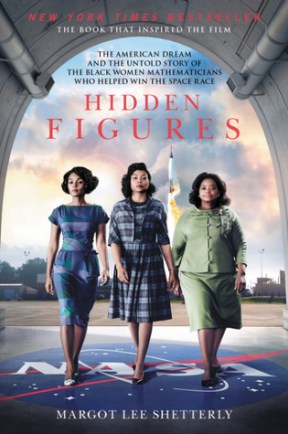
hidden-figures-imgThis year, literary references are a little thinner on the ground, but I want to tell you about a couple that have caught my eye. My children were on their half term holiday last week and I took my youngest daughter (aged 10) to see Hidden Figures. It is based on a true story, but the film was inspired by a book of the same name by Margot Lee Shetterly. You will  no doubt have seen the trailers, but, to summarise, it tells the story of three exceptionally talented mathematical minds whose contribution to the US space programme in the 1960s went largely unacknowledged…because they were African-American women working at a time when racial segregation was still in place. It is a remarkable story, very moving and very well told.

I am proud to say that my young daughter was incredulous at the level of discrimination that prevailed – why didn’t these very clever women get the credit for the work they did? Without them, John Glenn may not have made it into space, let alone come back in one piece! I’d be interested to read the book, if only because the film is at times a little sentimental (though this takes nothing away from the achievement of the central characters) and I’d like to  understand which facts have been sugar-coated for pictorial effect and which are true. And which bits they left out! I would highly recommend the film though, so take your daughters. And your sons!

lion-img

The other film I’m desperate to see this year is Lion, which has been nominated for six Oscars, and is based on the book A Long Way Home by Saroo Brierley. This book is also a true story and is a personal account by the author of how he became separated from his dirt-poor family in India at the age of five. He found himself on the streets in Calcutta and then ended up in Tasmania. At the age of 30 he set out to try and find his family and the book (and the film) is the story of that journey.


I’m starting to build-up a long ‘to watch’ list, alongside my ‘to read’ list, but at least the ‘to watch’ list is merely a page of notes at the back of my diary and doesn’t haunt me every time I walk into a room in my house and am confronted by a very real large pile of books! (Yes, there is one in every room!) Roll on the March reading challenge, which is to tackle a book from the ‘to read’ pile.

Have you seen any films recently that you would recommend?

If you have enjoyed reading this blog post and would like to receive notification of future posts direct to your email inbox, please subscribe by clicking on the link below or to the right, depending on your device.


What to do when a book feels like a hard slog?

Last Autumn I set myself a challenge to read the full Man Booker Shortlist 2016 (six books). I didn’t manage all of them before the winner, Paul Beatty’s The Sellout, was announced. I planned to complete and review the final one on my list (Do Not Say We Have Nothing by Madeleine Thien) this week, but I’m afraid I haven’t finished it; it is taking me an inordinate amount of time to get through!

swan-319379_640Now, dear reader, this blog is rather like the proverbial swan – whilst it may look smooth and effortless to you on the surface, the planning (reading, idea generation, social media, writing, etc) that goes on behind the scenes is like a military operation! Well, not exactly, but, you know, I do plan my reading, aim to bring you a book a week and try to blog twice a week. And this book has totally blown my schedule! You know what it’s like when you’ve got a busy day planned either at home or at work…and you hear the words “Mum, I’ve just been sick!” and you know your day is irretrievably banjaxed. Well, that’s how I feel.

2017-02-08-11-48-44Do Not Say We Have Nothing, broadly speaking, is about China after the revolution, what it was like living under the dictatorship of Mao Tse Tung and about the hardships endured by the population, particularly by artists and intellectuals, in an era when culture was heavily proscribed. I have had a lifelong fascination with China, have read very widely about this enormously diverse and culturally rich nation, so I should be loving it. But I’m not! And I’m barely halfway through! I took a break from it this week and read Love, Nina by Nina Stibbe (which I’ll be reviewing soon), and that book is at the very opposite end of the literary spectrum – light, fun, quick to read. Many people probably would have given up by now. After all, a book, particularly a long one, is a huge investment is it not? I rarely give up on a book – I gave up on White Teeth by Zadie Smith a few years ago after a couple of false starts, but I have always planned to go back to it. My rationale for continuing with Do Not Say We Have Nothing is as follows:

  1. I’ve already sunk several hours into it
  2. I keep thinking that it’ll get more enjoyable
  3. It seems a worthy book, so I feel I ought to finish it
  4. I set myself the challenge to complete the shortlist and I can’t let one book make me fail.

Reasons 2 and 4 are the most compelling. So, I will carry on to the bitter end and hope that a turn of the plot will make it all worthwhile. I’ll keep you posted!

Do you give up on a book if you’re not enjoying it?

If you’ve already read this book, I’d love to hear your thoughts on whether you think it’ll be worth it in the end. Is it just me?

February’s reading challenge – four poems

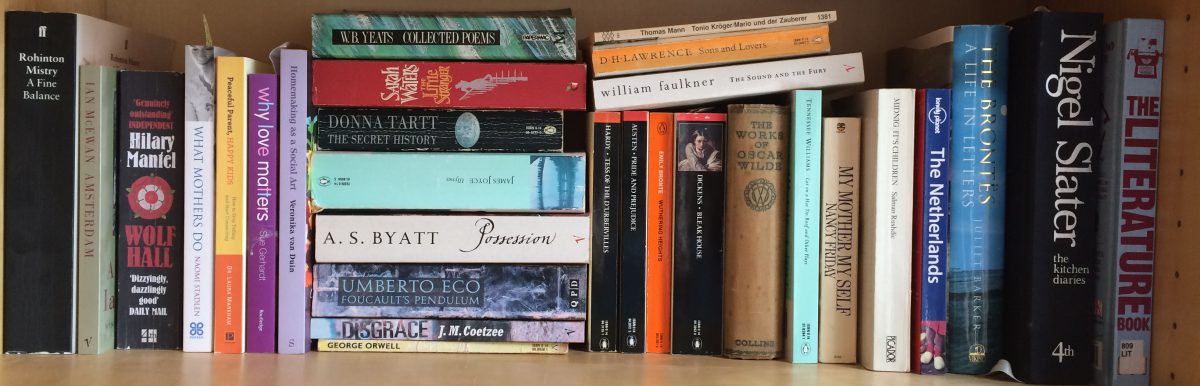
The aim of my 2017 reading challenge was not to binge on books or to find quirky ways of seeking out different kinds of books, it was very much about challenging reading habits and embracing reading for the sake of it. Finding more joy in reading, not just lengthening the list of books read. Naturally, I had myself in mind! Books have been at the centre of my life for as long as I can remember, but I am not a big poetry reader. So, February’s challenge (to select four poems and read each one every day for a week) has required a good deal of thought for me. I did a degree in English Literature and so, book hoarder that I am, I have a few poetry anthologies lying around. WB Yeats is my favourite poet, but I am ashamed to say that my poetry knowledge is not that wide.

It requires a different set of reading skills for sure! Firstly, I’m quite a quick reader, and evidence shows that most of us can quite easily comprehend a piece of text without reading every word or even every letter of the words we do read (it’s how proofreaders make a living!). I’m sure you’ve seen or done one of those Facebook tests which tells you you’re super-intelligent if you can understand a quoted piece of jumbled and misspelled text? Secondly, like mindfulness colouring, or yoga, it forces you to slow right down. Poems have special unique rhythms and they can’t be speed read. Well, they can, but it misses the point.

If you know your Beowulf or your Chaucer, even your Shakespeare, you’ll know that prose fiction is a fairly recent phenomenon; poetry was by far the more popular form until around the late 18th/early 19th century. Furthermore, when ‘story-telling’ was a verbal or performance art form, and passed on by the telling, not by print, it was much more poetic in terms of the language used and the sound and rhythm of the sentences. And aren’t many of the first books we read our children, rhyming ones? Poetry undoubtedly taps into something very human and very instinctual. When you think about all of that, it’s extraordinary that most adults rarely indulge in poetry (perhaps pop music has replaced it?) So, for February, poetry it is!

For this first week, I’ve selected a Yeats poem to ease myself back into a poetry reading habit. Something familiar, which will also transport me back to my youth and dusty lecture halls! I’ve chosen a short poem, ‘The Wild Swans at Coole’ I’m reading this every day for the next week, so I’ll let you know how I get on. Perhaps you’d like to join me?

I’m off to the library tomorrow to do a bit more research and decide on poem number two!

Do you have any poetry recommendations? I’m particularly interested in something contemporary.

If you have enjoyed this blog, then I’d be delighted if you could follow me on social media or, better still, subscribe to the blog and get email notifications each time I publish a new post. You can do so by clicking on the link below or to the right, depending on your device.


Reading Heaven for kids

I’ve recently started running an after-school book club at my youngest daughter’s primary school; I am a passionate advocate of enhancing children’s access to and enjoyment of books, perhaps because reading gave me so much as a child and in a sense has shaped everything I have done in my life. It can bring particular benefits to less well-off, less confident and less academic kids, and children’s authors in recent years have embraced this wholeheartedly. There are some truly fantastic titles out there for children at the moment – I wrote about some of them in a couple of blogs I published before Christmas.

time-travelling-with-a-hamster-imgTime Travelling with a Hamster was the first choice of the book club, and what a joy it is. At the heart of the plot is a tragic event – a boy who loses his father at the age of eight – but the author handles this so deftly, acknowledging the huge emotional impact it will no doubt have had on such a young child, but also deploying humour and intelligence to help child readers deal with such a challenging topic. I think it shows a great respect on the part of the author for the maturity and strength of his young readership.

When we meet him, Al is 12. His mother has remarried and the family now lives with Steve, with whom Al has almost nothing in common, and his teenage daughter Carly, who is openly hostile. The other main character is Grandpa Byron, Al’s grandfather on his father’s side, with whom he has a warm and loving relationship. Grandpa Byron is a wonderful, larger-than-life, eccentric character, a perfect foil to his rather serious and conservative grandson.

For his 12th birthday Al is given a hamster (whom he calls Alan Shearer, to please Steve, who is a football fan and always trying to involve Al in his hobby). He is also given a letter from his father, written before he died. In the letter, Al’s father makes a huge request: he wants him to travel back in time, using a time machine he had invented before he died, to when Al’s father was a boy. Pye (Al’s father) had a go-kart accident, also when he was 12, which left a fragment of metal lodged in his brain. It is this fragment of metal that will later cause a brain haemorrhage that will kill Pye at the age of 40. Therefore, if Al can just prevent the go-kart accident happening, he will effectively be saving his own father’s life. Naturally, it doesn’t quite go to plan, and this is why the hamster is important. I don’t want to tell you anymore because it’s a cracking story that had me on the edge of my seat (and staying up far too late with the light on!).

There are some big themes in here: loss of a parent, step-families, mixed-race families, bullying, social awkwardness, as well as time-travel, of course, and some of the science around it! But the author handles these so skilfully that I don’t think it is too much for slightly older primary school-age children. The kids in my book club are 10 and 11 and are loving it. Although it’s quite a long book, it’s a fairly quick read because the pace is pretty fast. Events spiral very quickly. There are one or two chapters dealing with ‘the sad stuff’, but these are short and well-contained, and the pace of the action means the reader won’t dwell on them too long. Rest assured, the ending is a satisfying one for readers of all ages!

I heartily recommend this book for children 10-13. It’s also a good one for adults if you’re following my 2017 reading challenge! (January’s challenge is to read a book with a child)

Go back

Your message has been sent

Warning
Warning
Warning
Warning

Warning.

Reading challenges

2017-01-11-12-09-17

Reading challenges have become popular in recent years: you know, where someone gives you a guide or a format for reading a number of different types of books with a view to expanding your reading horizons. They can be useful for people who feel they are stuck in a bit of a literary rut or good for those who are motivated by a deadline. Those sorts of things usually work for me – I am usually the one in my book club who is up late the night before we meet, racing through the final chapters of that month’s book! I think it’s a personality thing.

What I hear from from people more often though is that they would just like to read more. That they are haunted by their ‘to read’ pile (but, book fiends that we are, we still can’t resist acquiring more). And they would just love to carve out a bit of time in their week to read. When I started this blog, I knew that I would have to make time to read if I was serious about it. And I have. I read for about an hour a day – an hour a day I didn’t have before I started blogging! Which just goes to show that if you want something enough you’ll find a way of doing it. And I believe I am a happier calmer person as a result.

So, if that’s you, and if you don’t necessarily need to widen your reading, but would rather just deepen your reading habit, I would like to share my personal reading challenge with you. I think of it as a yogic or mindful rather than a HIT reading challenge!  Join me if you like, it’s about quality rather than quantity.

You can download the challenge here.

Are you doing a reading challenge of your own that you can recommend?

If you enjoy reading my blog you can subscribe by clicking on the button to the right or below (depending on your device), and receive email notifications each time I post.

Happy reading!


A book for reading in Winter

2017-01-06-13-49-46Parts of the country have been struck by a severe cold snap this last couple of days; on my walk yesterday I certainly felt the scenery was quite bleak. Yesterday was the end of Advent, twelfth night, and a natural end, for me, of a period of reflection: about the year that has gone and the one that is to come. In June last year I started this blog and I have loved posting every week about my reading and hearing from readers what you have enjoyed. In the past 12 months I have read over 30 books, the bulk of those since starting this blog, and that feels like quite an achievement. I hope to improve on that this year.

My top five favourite reads last year were:

  1. A Little Life, by Hanya Yanagihara (shortlisted for the Man Booker and many other prizes in 2015)
  2. Hot Milk, by Deborah Levy (shortlisted for the Man Booker last year)
  3. All the Light We Cannot See, by Anthony Doerr (published 2014)
  4. The Green Road, by Anne Enright (shortlisted for the Man Booker in 2015)
  5. H is for Hawk, by Helen Macdonald (published in 2015)

My fifth choice was the book I was reading this time last year, when 2015 became 2016. I wrote a review of it ages ago, but haven’t posted it here yet, mainly, I think, because it just hasn’t felt right. It is a book for midwinter. And that is why I am choosing to tell you about it now.

h-is-for-hawk-imgThis book was a long slow read for me, but in a way that suits the type of book that it is. It is an account of bereavement. In that sense it bears reading over a long period because it covers a period of more than a year following the death of the author’s father.

It’s fascinating because it’s not a traditional account of loss; it’s about how a grieving daughter finds a coping strategy in the acquisition and training of a goshawk. Goshawks are hunting birds, rare in the wild in the UK. They have a long history in the tradition of falconry but, according to the author, are notoriously difficult to train. Helen Macdonald took up falconry in her childhood and this was a hobby she shared with her photographer father, who was, by her account, something of an introvert, a man who enjoyed his own company and loved the outdoors.

The book begins with an account of her father’s passing and its initial impact on the family. The rest of the book is about her journey in coming to terms with her grief. She acquires the goshawk and sets about training it, using as her guide a book published in the 1950s by an underachieving schoolmaster (T H White) who wrote of his own frustrations at trying to tame and train a goshawk; ultimately he failed and his goshawk escaped. Helen Macdonald encounters her own fair share of ups and downs (excuse the pun!) in her attempts to train her goshawk and this is an apt metaphor for her grieving process.

This book is not an easy read, but it’s ultimately a rewarding one. It won the Samuel Johnson Prize for non-fiction in 2014 and the Costa Book Award in the same year and has been highly acclaimed. It is an impressive achievement. Birds are not really my thing but I found it fascinating to learn about this creature. The accounts of the natural environment are stark – mostly nature is conveyed as hostile and barren, rather like the world of grief the author finds herself immersed in, and very like the goshawk, who is not at all a friendly or sympathetic character in this tale.

The emotions in this book are quite raw, so any reader who has experienced a recent loss themselves could either find it very cathartic or very painful. Grief is not objectified, we are there living it with the author.

I’d recommend this book. It’s a good one for long winter nights, but not for the beach.

If you have read H is for Hawk did you find it bleak or uplifting?

What were your top reads of 2016?