Booker shortlist review #4 – “Creation Lake” by Rachel Kushner

I was on quite a roll with the Booker shortlist and beginning to think this was perhaps the strongest field for years. This is Rachel Kushner’s second time of being shortlisted, her 2018 novel The Mars Room also having enjoyed that distinction. I wasn’t mad about that novel and I’m afraid I’m not mad about this one either. I found I just kept waiting for something to happen and then there was a sort of denouement that was sketched out rather quickly and then it ended and I found myself asking what it was all about. 

The narrator and central character is a self-styled “Jane Doe” whom we know in this story as Sadie. She is a shape-shifter, trained in taking on alternative identities for her line of work. She learned her craft as an undercover agent working for the FBI in the United States, but seems to have found the rules of working in an organisation too stifling and now works freelance, often for people whom she also does not know. This is a book about people who can change who they appear to be. In the particular operation covered in this novel, Sadie is required to infiltrate a commune in southern France, influenced by the ideas of a reclusive intellectual (Bruno). The members of the commune are activists against capitalism and the modern world, living in an agricultural region, tending the land using traditional methods and attempting to live sustainably. Sadie’s mission is to cause havoc in the group and to urge them towards a big action that will ultimately undermine their cause. 

In order to complete her task, Sadie must develop a network of complex relationships, including a sham marriage, in order to gain the trust of the group members, to avert suspicion, and to cultivate an authentic identity. For me, Sadie comes across quite simply as a sociopath. She has no feelings for any of those she exploits in order to complete her mission, seems even to enjoy their vulnerability, and there is a kind of arrogance in her non-selfhood. I wondered whether this might be the point of the novel, that she might come unstuck as a result of excessive self-confidence.  

There is some clever prose in this book and some thorough research – Bruno the intellectual writes extensively about Neanderthals, about Home sapiens, our ancestors, which I assume is accurate? There is also some interesting exposure of some of the contradictions in the philosophy of those living in the commune – they really do not get along, and demonstrate that humans could never live in this kind of mutual arrangement. (I had many “we’re all doomed” moments listening to this book!) Like some of the others novels on the shortlist this is also a deeply political book, which I appreciated.

I’m afraid to say though that for me the narrative just wasn’t strong enough to hold it all together. There were parts I found, frankly, a bit boring and the plot just petered out, there did not seem to be any consequence and the sense of suspense just did not go anywhere for me. Kushner has cited John le Carre as one of her influences for the book and I can sort of see that, but le Carre’s novels deliver comprehensively on both plot and character and I felt this book was not really strong enough on either. 

I would struggle to recommend this book and will be surprised if it wins, but I have been very wrong before so let’s see!

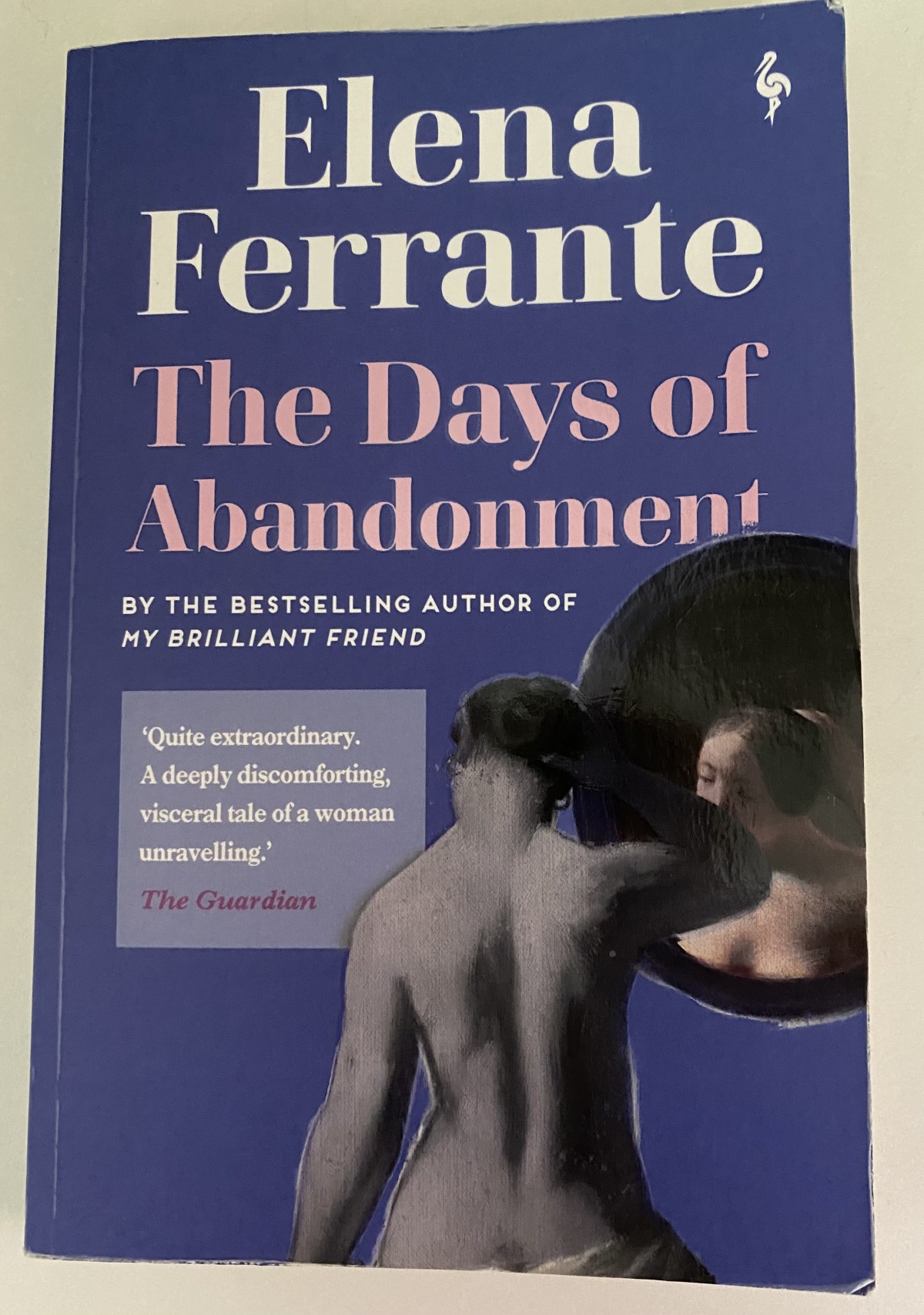
Book review – “The Days of Abandonment” by Elena Ferrante (And my 500th post!)

Last week I posted a blog reviewing two powerful books about new motherhood that I had read over the summer. During the holidays I also read The Days of Abandonment which I picked up at the Oxfam secondhand bookstall at the Hay Festival earlier this year. Ferrante’s Neapolitan novels (My Brilliant Friend, The Story of a New Name, Those Who Leave and Those Who Stay, and The Story of the Lost Child) are world-renowned, deservedly so, and I have reviewed most of them on this blog. They were published between 2011-15 so this novel, published in 2002 (first English translation by Europa Editions in 2005) is a good decade earlier in her writing career, and was only her second novel, her first having been published much earlier in 1992 (though the English translation actually came later, in 2006).

The Days of Abandonment covers another life-changing event in the life of a woman, a mother of young children – in the very first sentence of the book, the narrator announces “One April afternoon, right after lunch, my husband announced that he wanted to leave me.” The line is devastating in its simplicity and the juxtaposition of the routine domestic scene (“we were clearing the table; the children were quarreling as usual in the next room, the dog was dreaming, growling beside the radiator.”) with a piece of news so catastrophic and yet delivered so casually, sets the scene brilliantly and foretells the rest of the novel. One must not forget of course, that this is a translation from the original Italian and it is clear here that Ferrante had not only found her powerful authorial voice, but also a brilliant translator who would go on to translate her other works, Ann Goldstein.

Olga, the narrator, is a woman in her mid to late thirties and she has been married to Mario for 15 years. When he first gives her the news, she has difficulty taking it seriously and thinks he just needs reminders of how good their home life is, but then he admits that there is another woman and Olga is horrified to learn that she is the daughter of a friend and is very young, barely an adult. As realisation of the ending comes to her, the downward spiral begins. 

When Mario leaves, Olga’s mental state becomes increasingly precarious and her behaviour erratic. She is barely able to care for her young family, her two children and the family dog, and not at all able to support the children emotionally through this dramatic change in their circumstances. Olga must seek work to support them, she must attend to matters that were previously Mario’s responsibility, basic domestic tasks like walking the dog, paying utility bills and arranging household repairs. She is a capable and intelligent woman and yet she seems incompetent at basic tasks in her state of mental and emotional breakdown.

Olga’s interior world is fertile ground for Ferrante who explores themes of women’s place in marriage and their vulnerability, male fecklessness, and social expectations of the sexes even in modern society. At times the novel is a very hard read, inexorably bleak, and I felt intensely the injustice of Olga’s situation, her helplessness and her trauma. I found I needed to read it in small episodes. Like Soldier Sailor and Matrescence, which I reviewed last week, it is visceral and it is deeply feminine. 

This book might need a trigger warning – it took me right back to break ups I’d had in my twenties (pre-children and before I’d met my husband!), a long time ago, and I recognised Olga’s pain – this is not a book for the broken-hearted! For Ferrante admirers, however, it is a must-read. 

My 500th post!

I discovered last week by chance that this is my 500th blog post! I have been blogging since June 2016 – goodness hasn’t the world changed a lot in the that time? In my eight years of blogging I have read and reviewed over 300 books – not bad I think. This blog has probably made me read more than I ever have since university and that is reason enough to do it. It’s fitting that this milestone should be represented by Elena Ferrante, one of my favourite authors of the last few years, whose work really speaks to me. I only wish I could read it in the original Italian.

I am not the most prolific blogger and I have learned that it is much harder to cultivate a following than you would think, but I also feel the bookblogging world is a generous space and I get to have some bookish conversations with like-minded folk about books I have loved. So thank you to anyone who reads this or has read and commented on any previous post of mine.

So, forgive me for allowing myself a little bit of self-pride at this point and thanks to all of the other book lovers out there for helping to create this lovely corner of the blogosphere!

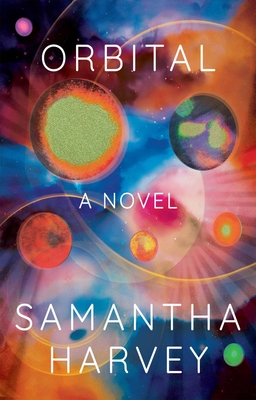
Booker shortlist book review #3 – “Orbital” by Samantha Harvey

I have to confess that I wasn’t looking forward to reading this book. I find I have zero interest in space. Super-telescopes, yes okay, but rockets and astronauts? No. I feel it’s all a colossal waste of money, pure hubris. Sometimes, blurbs don’t give much away in terms of what a book is about and I tend to avoid reading reviews of books I plan to review myself, lest I be influenced, so coming to this book has been a very pleasant surprise.

The book is set in an international space station, with six astronauts of varying nationalities, on a single day where their craft makes sixteen circumnavigations of the earth. The group is there primarily for research purposes but their days are curiously languid; they have mice and plants in laboratories, but they too are lab animals, their body’s responses to the conditions of space being monitored. To what end? The novel explores the minute details of their everyday life: eating, hygiene, games they play to pass the time, their waking thoughts and their dreams whilst asleep, and the routine is made poetic. The prosaic details give us an insight into what aspects of life make our existence special and meaningful. What is the point of food if it is only nutrition? What about taste and texture? I think this gets to the heart of my problem with the ambition of some of those currently engaged in space exploration – who wants to live on a spaceship or another planet if it means we lose the pleasures of a beautiful meal, or fresh fruit, breaking bread with loved ones, a hot bath?

And I think that is where this novel is coming from; setting it in space means the author can take a step back and provide a panoramic view of the earth and our lives on this fragile and beautiful planet. The astronauts admire the earth from a distance and express a child-like wonder at the oceans, mountain ranges, weather systems and natural phenomena, echoing their own childhood ambitions about going into space.

This novel is also about what it means to be human and in that sense is deeply political and speaks to our time. Borders are not visible from space. The authorities attempt to create borders in space – the Russians have their own toilet – but away from earthly politics, none of the astronauts take this too seriously. They share stories and find they have much in common. One of the astronauts, a Japanese woman, loses her mother while she is on her tour of duty on the space station. There is no question of her returning for the funeral or other rituals that follow death. And it is the absence of that connection to what makes us human that is the most painful.

I loved this book. It is very short, less than 150 pages, but every word seems deliberately and carefully chosen. The prose is beautiful and spare and in its conciseness packs an incredible punch.

Highly recommended and must be a contender for the winner.

Booker shortlist book review #1 – “James” by Percival Everett

This is my first read from the Booker shortlist. I chose it for two reasons: firstly, I thoroughly enjoyed Everett’s previous novel The Trees, which was shortlisted for the Booker in 2022 (it did not win; Shehan Karunitilaka’s The Seven Moons of Maali Almeida took the honours that year); secondly, I was invited to ask the author a question on the BBC’s World Book Club radio show a few months ago. I entered into a (very small, but huge to me!) dialogue with the author and came away a bit starstruck! I suspect our brief little conversation was edited out of the final show, I haven’t listened back to it. I also read quite a few pieces about the book and the author since and he is without doubt an impressive and accomplished man. 

James has caught a lot of attention because it tampers with an American icon, Huckleberry Finn. I recall reading the Adventures of Huckleberry Finn, first published in 1884, on a road trip around the United States when I was 21. I spent a summer working in New Hampshire and then spent my earnings travelling round for a few weeks. I spent quite a bit of time in the south and the racial divides were still very clear to see in the late 1980s. To my shame, however, I cannot say that I was particularly aware of the racism implicit in the novel (or in its companion volume, which I also read, The Adventures of Tom Sawyer, Huck’s friend) apart from the widespread use of the n-word, which I think I probably saw simply as the vernacular of the era in which the book was written and therefore somehow being less offensive?

In Twain’s novel, Huck is an innocent, a child who runs away from home and his abusive father, and who meets the runaway slave Jim en route. The two work together, but it is clear that Jim is merely secondary, meant to highlight Huck’s naivety and essential goodness. Twain was a staunch supporter of the movement to abolish slavery but he fails to challenge racial stereotypes and Jim is merely a bit-player with neither agency or intellect. Everett turns that Great American novel on its head (which will no doubt have infuriated some), makes Jim the eponymous central character and rather than call him by the three-word handle bestowed on him by his “owner” gives him back his full and rightful title, James. 

Jim/James, it matters here. The novel begins, somewhat comically, with the children in the community being taught “slave talk”; how to speak in a way that will not threaten their white masters and will therefore help to keep them safe. There is a quiet resistance here. Whilst the slaves are, yes, forced to dumb-down, privately they exercise their right to use the English language to its full extent, and to use their minds. It is almost as if they are in waiting. The theme of words, their power, and the power of speech, prevails throughout the novel.

In the first half of the novel, James spends a lot of time with Huckleberry and the author reprises many of the same scenes as characters as Twain, follows the same picaresque journey, but giving the reader, as it were, the inside track on what is really going on with ‘Jim’ and between him and Huck. Huck remains the innocent, as in Twain’s original, but we also see his internalised racism, his own victimhood, but, ultimately, his confidence in the security bestowed upon him by being white. There are no major consequences for Huck in being a runaway or getting into scrapes. Here though, it is Huck who is the secondary character, the foil to illustrate James’s character. The second half of the novel takes some darker turns and Huck is less prominent. The events in James’s life take on a certain inevitability and whereas white skinned Huck can have adventures largely without consequence, for James there will always be consequences. The author puts very much in James’s shoes and invites us to consider whether any of us would have done anything differently. 

This novel is brilliantly conceived and executed with aplomb. It is better than The Trees, more sophisticated and subtle, and so must be a strong contender for the prize. If it wins it will be richly deserved. 

A must-read. 

Book review – “Old God’s Time” by Sebastian Barry

I have been an enthusiastic follower of Sebastian Barry for a few years now. I love his work and I have heard and watched a number of interviews with him and he comes across as a wonderful man too – humble, compassionate, witty and someone who even despite his immense and widely acknowledged literary prowess does not take himself too seriously. There are a couple of his novels that I have still to read, but I was very excited when Old God’s Time was published earlier this year and received strong reviews.

It is not like any of Barry’s other novels that I have read. It bears his trademark command of prose, his profound empathy, particularly for those in their dying years, and his extraordinary ability to capture the unique spirit of Ireland – the light, the landscape (even this relatively urban one) and a particular perspective on the human condition. This novel is set mostly in the present day in Dalkey, a small coastal town not far from Dublin. Tom Kettle is our main protagonist, an ageing retired detective, living alone in an apartment in a converted mansion, who is contacted by his former boss for assistance in the unsolved suspicious death of a priest. Another priest has made some allegations about the incident, which occurred many years earlier, that the force now needs to follow up. Tom was involved with the earlier investigation when he was still working. 

Tom is treated respectfully by the two young officers who come to interview him and by the former boss himself when Tom is invited to the station to provide a DNA sample, just to ensure they are following all the correct procedures. The contact throws up a lot of painful history for Tom. We learn that he adored his late wife June, herself a deeply troubled woman, and that they had two children Winnie and Joseph, also troubled, but for different reasons. Tom reflects on how June came into his life, the things they had in common and the experiences she had as a child in the care of the Catholic church that he would never be able to relate to. Suffice it to say that the church does not come out well in this novel.

As Tom’s introspection goes to deeper and ever darker places, elements of the family life he shared with June and the children are gradually revealed, both the good and the bad. He reflects candidly on his police career and concludes that perhaps it took him away from his family in ways that caused later troubles. But he was simply a man trying to do his best. 

This is in many ways a simple book, lacking the complex timelines and plotting of some of his other works. But in other ways it is a very profound novel about an ordinary man looking back on the events of his life, the joys and the heartbreak, as the past comes crashing in on him with a dramatic denouement. 

This book was longlisted for this year’s Booker Prize, but, sadly, did not make it to the shortlist. It is, however, a ‘Highly recommended’ from me. If you are familiar with Barry’s work, you might find this one surprising. 

Goodbye summer, hello autumn

Conkers might just be one of my favourite things – I cannot walk past one on the ground without picking it up! Image by Alex Pearson from Pixabay

I’ve had a very long summer blogging break – the longest, I think, since I started blogging about a million years ago! It’s been another intense year in my household, not least because all three of my children were at fairly crucial points in their academic lives, and I felt that a complete break from the demands of my usual routine was in order. Like the school summer break of childhood, a chance to recharge the work and blogging batteries.

My break was extended by the unexpected and very welcome arrival of something resembling ‘summer’ last week, so I spent it prioritising getting outside, gardening and laundry – practically everything textile in my house has been through the washing machine!

The break was worth it. I went to Ireland to visit family as usual, but also managed to fulfil a long-held ambition of visiting the north west of the country. Despite having been to Ireland several times a year for more than two decades (with the exception of the Covid hiatus), I have never managed to venture as far as that. When I was at university studying for my Bachelor’s degree in English literature, I fell in love with the poetry of WB Yeats and always wanted to go to Sligo, the place where he spent much of his youth and which inspired so much of his work. His grave is also there, lying in the shadow of Ben Bulben, the distinctive mountain he revered and which was the subject of one of his final poems. Back then, Sligo seemed so far away.

My fascination with the county has been reawakened in recent years as I have grown to love the work of Sebastian Barry; Sligo is one of the settings he evokes so brilliantly in his novels. It was therefore a complete joy for me to go there this August. See some of my holiday snaps below. I also went to County Fermanagh in Northern Ireland ( a very much under-visited and very beautiful part of the world, which I encourage you to visit), and County Donegal, which I found even more beautiful than Sligo, if I’m honest.

Views across Lough Erne, Co. Fermanagh, from Cuilcagh mountain
Castle Coole, Enniskillen
Sliabh Liag mountains, Co. Donegal

Busy days on the beaches and highways of Donegal!

The colours of Donegal – they don’t call it the Emerald Isle for nothing!

Stunning Co. Sligo – Castle Classiebawn (former home of the the Earl of Mountbatten) on the Mullaghmore peninsula, with Ben Bulben just visible in the background

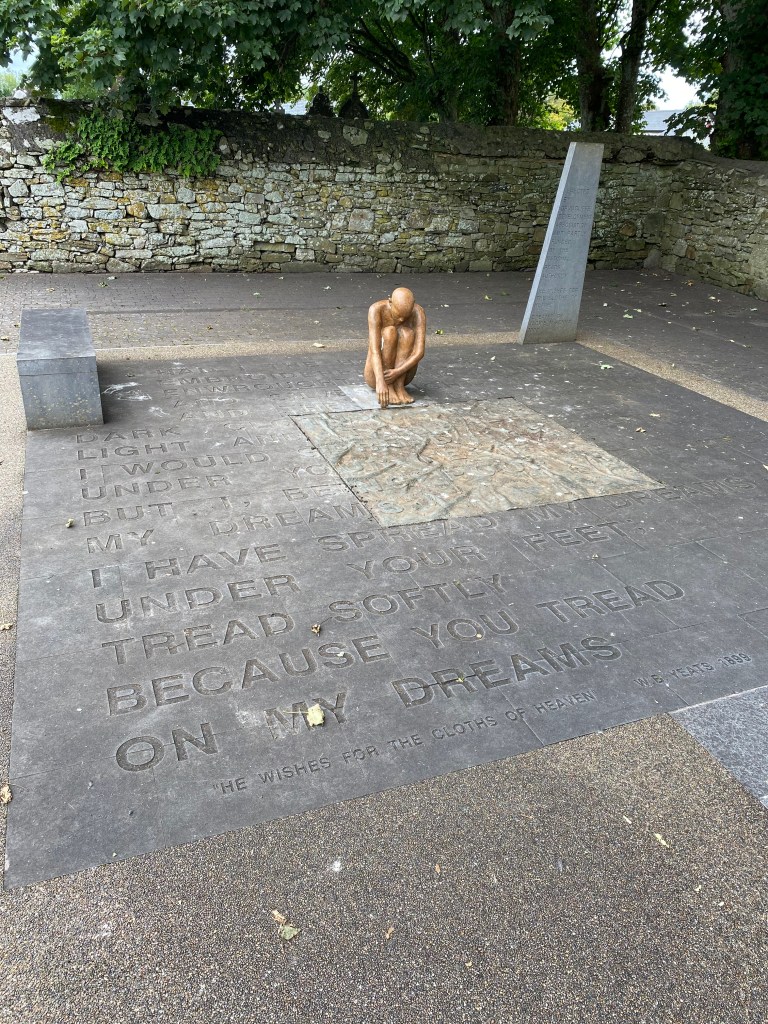
The grave of WB Yeats in Drumcliffe churchyard and a memorial which stands outside bearing the text of his poem ‘He Wishes for the Cloths of Heaven’

The subjects of two of Yeats’s most famous poems, Ben Bulben…
…and the Lake Isle of Innisfree.

So, that was my slightly literary-themed sojourn in the north west of Ireland. I would encourage anyone to add this stunning part of the world to their travel bucket list.

And now thoughts turn to autumn, to new ventures and the year ahead (as I have written on here many times before I love the ‘back to school’ feeling and the sense of new beginnings it gives me). I am taking on a some major new training for my day job (so it really is back to school for me, as a mature student at university!) I have almost completed my second novel and will be submitting it to competitions, agents and publishers. And of course, I will keep reading as much as I can and blogging about my thoughts.

Enjoy the fruits of this very special time of the year!

Booker book review #2 – “Glory” by NoViolet Bulawayo

This is my second Booker Prize shortlist review and I hardly know where to begin in writing about this novel. I don’t think anything I write could truly do it justice. It should be sufficient for me to just say “please read” and leave it at that. This book is a remarkable piece of work and I honestly felt in the presence of something great throughout. I listened to it on audio and the reading by Zimbabwean actress Chipo Chung was pure perfection – the range of voices and narrative tones she was able to deploy was outstanding. And you know when you listen to an audiobook and you feel like the narrator is reading it for the first time? Well, that is definitely not the case here; the narrator feels every word.

NoViolet Bulawayo is a new author to me but she is undoubtedly a literary heavyweight, being the first black African woman to have been shortlisted twice (her debut novel, We Need New Names, was shortlisted for the Man Booker in 2013). She was born in Zimbabwe, but completed her higher education in the United States. 

Glory is political satire at its acerbic best. The novel is set in the fictional African country of Jidada (“with a da and another da”) and all the characters are animals. It opens at a rally where The Old Horse, the country’s elderly ruler who has been in place for decades since the War of Liberation from the colonisers, supported by his wife, Dr Sweet Mother, and other denizens, are celebrating their great achievements before the ‘people’. This is a lengthy section that exposes the ego, hypocrisy, untramelled power, and unlimited (and stolen) wealth that characterises the leadership.  Jidada got rid of its colonial ruler, but got a tyrannical and autocratic leader in its place. The regime is cruel, murderous and corrupt. It is a thinly-disguised critique of Robert Mugabe and his followers in Zimbabwe. It is more than that, however, for it does not let so-called advanced nations off the hook. With its linguistic echoes of Trump and its suggestion that other governments are happy to turn a blind eye to what is happening in Jidada where it suits them, it implicates leaders well beyond the borders of Jidada for the cruel oppression of the population. It also takes to task the “clicktivists” who criticise from afar, largely to satisfy their own needs, but to very little tangible effect.

The nation eventually tires of The Old Horse and particularly his wife, and there is a military coup, led by Tuvius Shasha, the former Vice President. The Old Horse goes into exile. The situation for the country does not improve, however. The economy in fact worsens still further and discontent abounds. Enter Destiny Lozikeyi, a gentle female goat who fled her village many years earlier but who has now returned to search for her family and her history. She shows her fellow citizens how desperate their situation is and, slowly, a citizen-led uprising begins.

It would be easy to describe this novel as an African Animal Farm, as many indeed have already done. True, it does many of the same things, but it is borne of an entirely different tradition, I think, and to draw parallels between the two is to over-simplify. The writing in Glory is breathtaking – it is a linguistic tour de force. The precision of its attack is awesome as it deftly dismantles every pretence of democracy, fairness and good governance that the leaders of Jidada claim. Africa is not the only focus of the author’s laser-like gaze, however; in her observation of referenda that return 90% plus votes in favour of the leaders she wags a finger at every dictator currently on the planet and the hypocritical international order that often enables them.  

I was blown away by this book. It is long, but worth every second. Highly recommended.

Literary Edinburgh

The Edinburgh Festival is currently underway. This almost month-long “event” is one of the highlights of the Scottish cultural calendar and world-renowned for its high quality, its breadth and its edginess. Between the main festival, the Fringe and not forgetting of course the book festival, there are literally hundreds of events to attend. So many events in fact that I don’t know how you would choose which ones to go to! I went once, many years ago, pre-children, and I remember seeing a comedian, a couple of plays, one of which was Shopping and F***ing by Mark Ravenhill (I can’t remember the other one) and going to the book festival. I went with a friend and we stayed with their grandmother. Accommodation in the city is at a premium during the festival, one of the main reasons I have not been since.

I have been to Edinburgh many times over the years and like the city very much. I’ve been for conferences, training events for my day job, to the Christmas markets, but I went recently with my son to a gig. We saw The Smile at the Usher Hall. It was a brief visit, but we did a self-guided walking tour which took me to parts of the city I had not previously seen. I thoroughly enjoyed it and vowed to return as soon as I could – perhaps when it’s less busy, although as it is the UK’s second most visited city, it is probably never not-busy!

To celebrate the festival, I thought I’d share some photos of my trip, particularly the literary aspects of the city.

Edinburgh Castle dominates the city from every point!
One of the many highlights on the stunning Royal Mile, the John Knox House, parts of which date from the 15th century, is one of the oldest buildings in the city. It is now a museum telling the story of the Reformation. John Knox himself, the firebrand preacher, is not thought to have actually lived here!
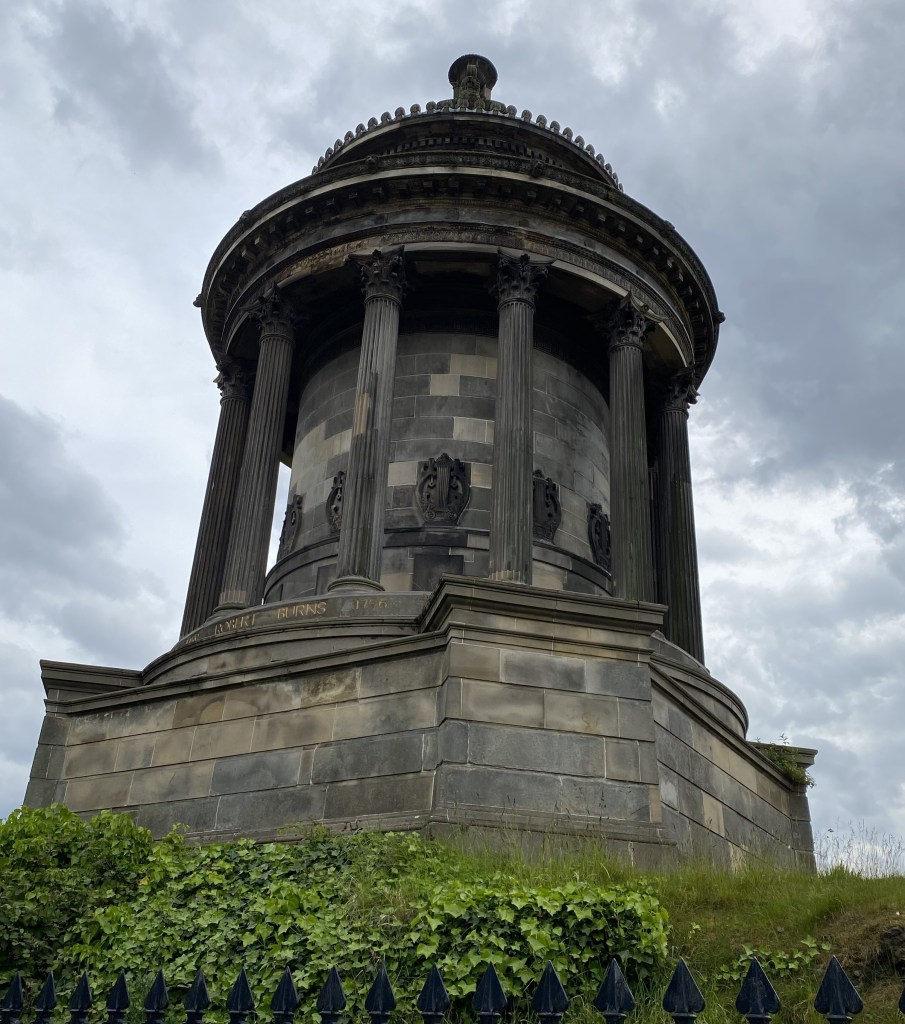
The Burns Monument, commemorating Robert ‘Rabbie’ Burns (1759-1796), unofficial national poet of Scotland

Sir Henry Raeburn’s famous Reverend Robert Walker skating on Duddingston Loch. One of the many treasures to be found in the outstanding Scottish National Gallery, overlooking Princes Street Gardens

There are other literary highlights that I did not get to see (and some I saw but did not photograph!), such as the Conan Doyle pub, named in memory of the author of the Sherlock Holmes stories and an Edinburgh physician. There is also the Elephant House cafe, said to have been patronised by the likes of Ian Rankin, Alexander McCall Smith and JK Rowling. There is even a ‘Harry Potter trail’ which takes in locations that JK Rowling is said to have incorporated into the novels.

Edinburgh has so much to offer bookworms and literature buffs as well as just being a beautiful and interesting place to visit. If you go on a walking tour, however, wear your most comfortable shoes and be prepared to climb lots of stairs!

[Note to self: must improve photography to ensure I capture fewer random strangers in future!]

Women’s Prize shortlist announced today

Each year the Women’s Prize seems to get bigger and better! The idea for this wonderful initiative was first conceived in the early 1990s when it became apparent that despite women authoring the majority of books published, they rarely achieved more than one or two places on the shortlist for the prestigious Booker Prize; in 1992, there was not even one woman writer on the shortlist. Author Kate Mosse was the driving force behind the prize and remains its Director. She is a formidable character and I am not surprised she was the one to get this going! The first winner was the late Helen Dunmore for her novel A Spell of Winter. Other winners have included Carol Shields, the late Andrea Levy, Chimamanda Ngozi Adichie, Eimear MacBride, Ali Smith and Maggie O’Farrell.

Over the years the Prize has had a number of sponsors and has previously been named after them (the Orange Prize and the Bailey’s Prize), but since 2018 it has been known simply as the Women’s Prize and enjoys a range of joint sponsors. Its remit is not simply to award prizes for literary achievement, but also to support reading and creativity in the community more generally and to make a space in the literary world for women’s voices.

In many ways, the Prize feels more relevant than the Booker even, and I have particularly valued how, during the pandemic, the talks with authors, which often only took place in-person in London, came to Zoom, making the work and the writers more accessible.

The shortlist for the 2022 Women’s Prize was announced today and is as follows:

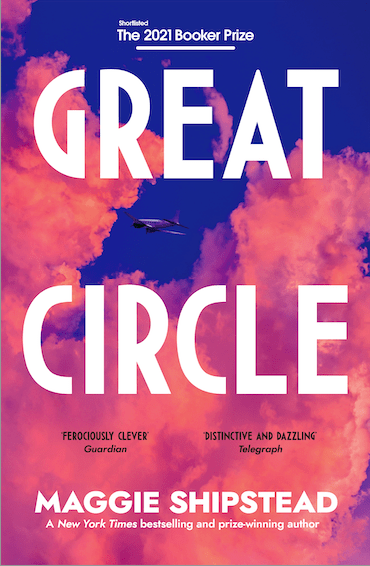
Great Circle by Maggie Shipstead – I’ve already read and reviewed this one as it was shortlisted for last year’s Booker, and it is AMAZING!


The Island of Missing Trees by Elif Shafak – set in Cyrpus in 1974 at the time of the island’s division.


Sorrow and Bliss by Meg Mason – 40 year old Martha seems to have it all until her marriage breaks down and she has to move back to her dysfunctional family home. Can her life ever be ‘fixed’?


The Bread the Devil Knead by Lisa Allen-Agostini – Alethea is in an abusive marriage. She witnesses a woman murdered by her jealous lover and seems to see what her own future might be. Can she change her life’s trajectory?


The Sentence by Louise Erdrich – set in a Minneapolis bookshop during the tumultuous period November 2019 to November 2020 which is haunted by one of its now deceased customers. New employee Tookie must solve the mystery and make sense of events.


The Book of Form and Emptiness by Ruth Ozeki – teenager Benny starts hearing voices after his father dies and his mother develops her own mental problems. He finds solace in the public library where he meets the characters who will help him through his grief.

This is a fascinating list of books and I would happily curl up on the sofa with any of them! I have long wanted to read Louise Erdrich’s work, so I think that may be the one I go to first.

Which do you fancy?

The winner is announced on 25 May and you can enter a competition to win copies of the shortlisted books by signing up to the the newsletter here.


Book review – “Where the Crawdads Sing” by Delia Owens

This book has been a phenomenal success since its publication in 2018 and has spent most of that time on various best-seller lists. A film is now in production starring Daisy Edgar-Jones (who played Marianne, to great acclaim, in the television adaptation of Sally Rooney’s Normal People) and I am reliably informed by a young person that Taylor Swift has written a song for it! I approached it with some trepidation – I don’t normally go for best-sellers and I feared this might be over-hyped and overly sentimental. I could not have been more wrong and my book club decided this might be one of the best books we had ever read.

Delia Owens
Delia Owens is better known as a conservationist than an author. Crawdads was her debut novel, published when she was 69.

The novel covers events in the period 1952 to 1970 and the central character is Kya (short for Catherine) Clark, known to the local rural community of Barkley Cove as “the swamp girl”. The North Carolina setting of the novel is crucial because Kya becomes an integral part of it. And the setting is brilliantly and powerfully evoked by the author.

The novel is told on two timelines. It opens in 1969 with the discovery of a body in an old tower beside the swamp. The victim is Chase Andrews, a local man, the sporting pride of Barkley Cove, suave, confident and outgoing, he is married but has a reputation as something of a playboy. The local police begin their investigation. The novel then reverts to 1952 where six year-old Kya, the fifth and youngest child of a ‘swamp’ family (one which lives in a rundown house beside the swamp, where their income is precarious and their reputation as outsiders separates them from the mainstream Barkley Cove community) watches her fragile mother walking down the dirt track away from their home, leaving the family for good. Kya’s father is a feckless, violent drunk and Kya’s older siblings gradually leave the home too, unable to bear his aggressive dominance. This leaves Kya on her own with her father. At times they are able to live relatively agreeably together – he sometimes gives her money from his war pension (the family’s only income) and she is able to purchase supplies from the town – but mostly, he disappears, sometimes for days at a time, and Kya is forced to learn to fend for herself. Eventually he disappears altogether. Kya manages to evade the local authorities who try and get her to attend school; they give up eventually too. Kya grows up alone developing an intimate knowledge of the natural world of the swamp, living in harmony with it.

Kya avoids everyone in the town, she has learned to stay under the radar of both the authorities and the two gossips, to whom she is a mystery, to be treated with suspicion and disdain, but she makes three friends: Jumpin’, and his wife Mabel, the proprietor of the swamp-side general store where she must go to replenish her basic supplies, and childhood playmate Tate Walker. When the young child Kya starts to visit his store alone, Jumpin’ quickly realises that she is living alone and he and his wife support and protect her discreetly as best they can; as “coloreds” they are themselves marginalised. Tate Walker was friends with Kya from a very young age when they played together, and is well aware of her father’s violent tendencies. His mother died, a loss which binds them, and he lives alone with his father. When Kya’s father vanishes they renew their acquaintance and their relationship deepens. They eventually become “lovers” of a kind, though avoid intercourse. Tate receives the education Kya is denied and is ambitious to go to college and study natural science. He promises that he will visit Kya during the vacations, but on his first visit home he spots Kya from a distance on the beach near her hut and realises that she is almost a wild creature (that is indeed part of what he loves about her) and that she will never be able to fit into the new academic world he now inhabits. Tate leaves Kya without saying goodbye or explaining.

In her deep grief at being abandoned once again Kya falls into a relationship with Chase Andrews. He seduces her and the two begin a secret affair. Chase tells Kya that he will marry her, though he never introduces her to his family. On a visit to Barkley Cove Kya sees an announcement in the local newspaper that Chase is engaged to be married.

Kya’s progress, from small child learning to live by her wits to beautiful young woman living alone on the swamp, fending for herself, is told alongside the story of the police investigation into Chase Andrews’s murder. Inevitably, the twin stories collide when Kya is accused by Chase’s mother and charged with the murder. The account of the trial is told in gripping detail in a way that is reminiscent of To Kill a Mockingbird. No spoilers here, however, as it will have you on the edge of your seat!

I listened to this on audio and it was read brilliantly by Cassandra Campbell, the same actress who read Maggie Shipstead’s Great Circle so powerfully. If you’ve read the hype about this book then believe it! I cried several times throughout – there are so many big moments in it. The plotting is extremely clever. The characters are all strong, fully thought through and well-rounded. But what makes this book so brilliant, and what for me makes it great, is that it is just a cracking good story!

Highly recommended.