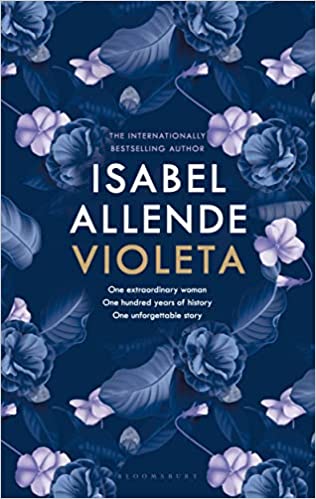
Book review – “Violeta” by Isabel Allende

I have a particular fondness for Isabel Allende. She is an icon of world literature, of global feminism, of how to embrace ageing and of the joy, beauty and depth of south American culture. In a week when the world said its goodbyes to one female icon (Queen Elizabeth II, regardless of what you think about monarchy, it was quite a moment) and were shocked to learn of the sudden death of another, this time from the world of literature (the terribly sad news of Hilary Mantel’s untimely passing), it seems appropriate to praise Allende and value her for all that she has given us. 

The last arts event I attended before most of the world went into lockdown on the brink of the Coronavirus pandemic, was a talk in Manchester between Allende and Jeanette Winterson on the publication of her last but one novel The Long Petal of the Sea. I enjoyed that book though I felt it was not among her best. Allende’s latest novel, Violeta, published earlier this year and written, one assumes, during the pandemic feels like that to me too. 

The central character, Violeta, is an elderly woman (almost 100 years old we will learn) writing a letter, memoir, for another character Camilo. We don’t know the connection between Violeta and Camilo until about halfway through the book and I’m not going to give any spoilers here, though we do know that she loves him “more than anyone else in this world”. The story begins with Violeta’s birth in 1920 at the time of the Spanish ‘flu outbreak in Chile. Her father committed suicide, after a series of failed business ventures brought him and his family to a situation of near penury, and it was Violeta who found his body.

Her childhood was spent mostly in a rural setting on a smallholding where she was educated in the school of life. The family was forced to flee there after they lost everything in the Depression. She grew up with her brother in the care of a poor family who showered her with love and protection. She married a man who was the son of affluent European hoteliers, but the marriage was largely sexless and doomed. When Violeta met the dashing Julian Bravo, a pilot, and a passionate lothario, she was immediately swept off her feet and left her husband. This brought disgrace upon her head, particularly as Julian refused to marry her, even when she bore him a son and a daughter. 

Julian lived life on the edge, having lots of money one minute and none the next, so although their relationship was initially a fulfilling one, it lacked stability. As a young woman it was clear that Violeta had business acumen so she set up a company with her brother in the construction industry and was very successful, able to support herself and her family without being dependent on her wayward lover. 

That is as much as I will say about the plot. The book is basically the story of a life so to tell you any more would be to give you a full synopsis! The life story it tells is an interesting one and Violeta certainly has an interesting life. She is also telling the story from the perspective of a person of a great age, so she is able to reflect on her mistakes as well as celebrate her life’s achievements. It is a pretty linear first-person narrative and that, for me, is where it disappoints. I have come to expect more of such a great writer and the book for me never really delivers. Throughout I was just wanting more. There is no doubt that Allende is a great storyteller and the interweaving of history into the narrative, the politics of south America in the twentieth century, the dictatorships, the terrors, the corruption and the sheltering of Nazis fleeing Europe, is fascinating and deftly done, but I just felt she was capable of more. Some parts of it are clumsy (for example the love scenes which made me squirm a little!) and some parts of it feel autobiographical (for example, Violeta’s views on feminism), almost as if Allende herself is writing a letter to her readers.  

I hope there is more to come from this wonderful author, and fans of Allende (and I count myself as one) will of course treasure every word she writes, but I do rather feel this book lacks some of her usual creative energy.  Perhaps that is a result of its having been written during a lockdown. My fellow book club members enjoyed it, and found its uncomplicated approach quite refreshing, especially as we read it over the summer. It also does have a rather neat symmetry, which you will see if you read it. 

Recommended if you like a good story that does not ask too much of a reader. 

Literary sightseeing: James Joyce’s Dublin

I have been visiting Dublin for many years now as my husband is Irish and most of his family is still there. I have always wanted to visit on ‘Bloom’s Day’ (June 16th) – the date on which the whole of the events in Joyce’s seminal work Ulysses is set. However, since this falls in the middle of school term time, this has not so far been possible for me. Maybe next year! On this particular day (in fact, the whole of the week from what I gather), Joyce enthusiasts dress up in the fashions of the time and replicate Harold Bloom’s odyssey through his home town on that day.

I have visited a few of the many sites that occur in the book, however, and on our visit this summer I added a couple more to the list. Perhaps if I don’t get to ‘Bloom’s Day’ soon I’ll do my own little one day tour! Here is a broad itinerary if you happen to be in Dublin’s fair city not on 16th June.

Stop 1 – Sandycove and the Martello Tower

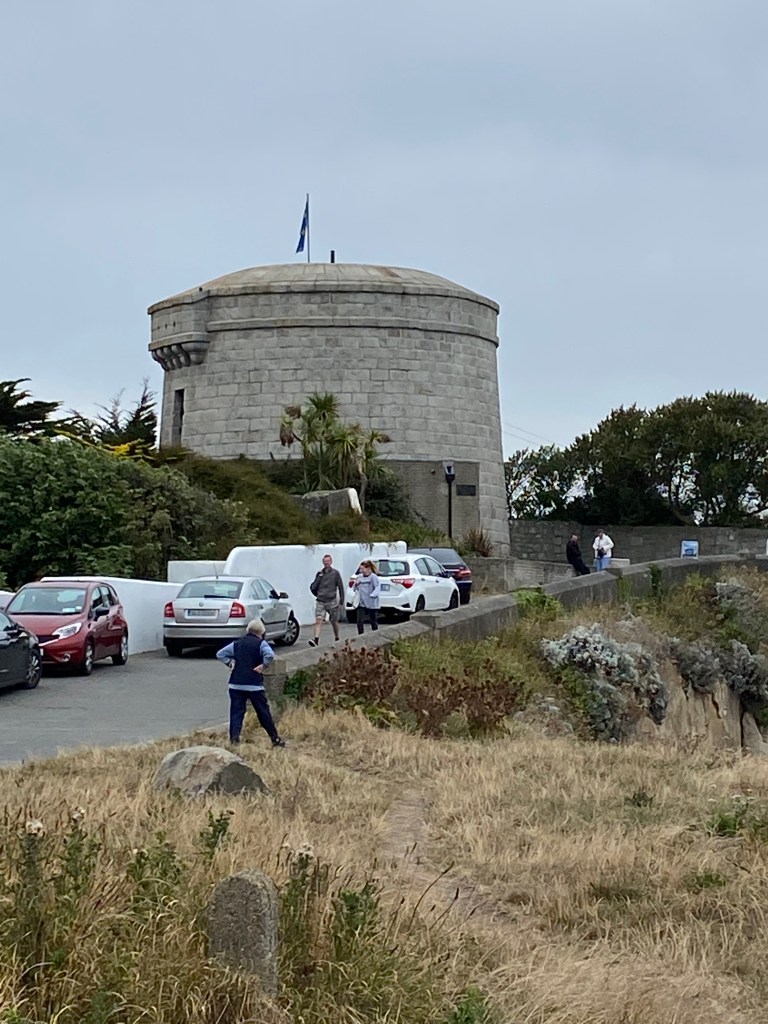
The opening scenes of Ulysses (Telemachus episode) take place in the Martello Tower (built by the British as a defence against Napoleon, who never invaded) at Sandycove. Joyce stayed here briefly when it belonged to his friend Oliver St John Gogarty. In the book, Buck Mulligan lives here and he and his two companions take breakfast following a swim in the ‘Forty Foot’, a bathing pool in the sea below the tower, which is still there.

Today, the tower houses the James Joyce museum, which has been run almost entirely by volunteers for many years, with only very limited funding. Entry is free and you can see a number of artefacts inside, as well as get a good sense of Joyce’s life and career.

Sandycove can be reached on the DART train from Dublin city centre.

Stop 2 – Sandymount Strand

Leopold Bloom takes walk here at sunset. It is a beautiful spot with fantastic views across Dublin Bay, with the iconic chimneys at Ringsend, the mouth of the Liffey. At low tide, you can walk the vast sands where work is being done here to preserve rare grasses. When the tide is in, you can walk along the promenade, along with many other Dubliners.

Sandymound Strand is a few stops north of Sandycove on the DART train.

Stop 3 – Dublin City Centre

Within the city you can walk along many of the same streets that Leopold Bloom (or Stephen Dedalus) took. I would begin at O’Connell Street (and perhaps drop in at the General Post Office while you’re there. Although not directly Joyce related, there is a fantastic museum that tells the story of the independence movement and in particular the 1916 Easter Rising, which centred on the GPO.)

From O’Connell Street you can walk south, cross the Liffey, to Trinity College (you can book tours of the famous library and view the Book of Kells), and then on to Grafton Street, Kildare Street and Merrion Square. All these locations appear in the Wandering Rocks episode.

From Merrion Square it’s a short walk then to Sweny’s Pharmacy, which I mentioned when I wrote a blog post about my visit to Dublin a few weeks ago. The shop remained a pharmacy until 2008, and the owners had changed very little of the interior from how it would have been in Joyce’s time, recognising its future tourism potential. Bloom called into Sweny’s to pick up a tonic for his wife and bought some lemon soap, a bar of which you can still purchase there today. It is run by volunteer Joyce enthusiasts, where they will chat happily to you about the author, the shop’s history, and hold weekly meetings where they read from his work.

You can get the DART from Sandymount to Connolly station, from which it is a short walk to O’Connell street. The above walking route is about 3km.

Stop 4 – Glasnevin cemetery

Glasnevin Cemetery appears in the Hades episode of Ulysses when Bloom travels there with his friends for the funeral of Paddy Dignam. It is a fascinating place with many famous Irish figures buried here including Michael Collins, Eamon De Valera, Maud Gonne, Brendan Behan and Christy Brown. Pre-booked tours are available.

The cemetery is a few kilometres out of the city centre, but there are several bus routes that pass it. Dublin buses have an excellent app where you can work out which service to get from wherever you are.

On your way there you will likely pass O’Connell Street again and can call in at the small but very interesting James Joyce cultural centre on North Great George’s Street. It is housed in one of the typical Georgian townhouses that Dublin is famous for. Another interesting stopover is the Hugh Lane Gallery. Hugh Lane was a contemporary of Joyce who established a superb art collection. He was killed in the RMS Lusitania which sank off Cork in 1915.

It is possible to visit many more Ulysses ‘sites’ than I have listed here. I can recommend the book The Ulysses Guide: Tours through Joyce’s Dublin by Robert Nicholson, which provides several detailed itineraries complete with the relevant extracts from the book.

Dublin is a fantastic city to visit with so much to see in a relatively compact area. Though Joyce spent much of his adult life outside Ireland, Dublin is at the heart of so much of his work.

Bye bye summer, hello Booker shortlist!

It has been a long, hot and eventful summer, but the year has ticked round, as it inevitably does, and we find ourselves once again at the start of meteorological autumn – my favourite time of the year.

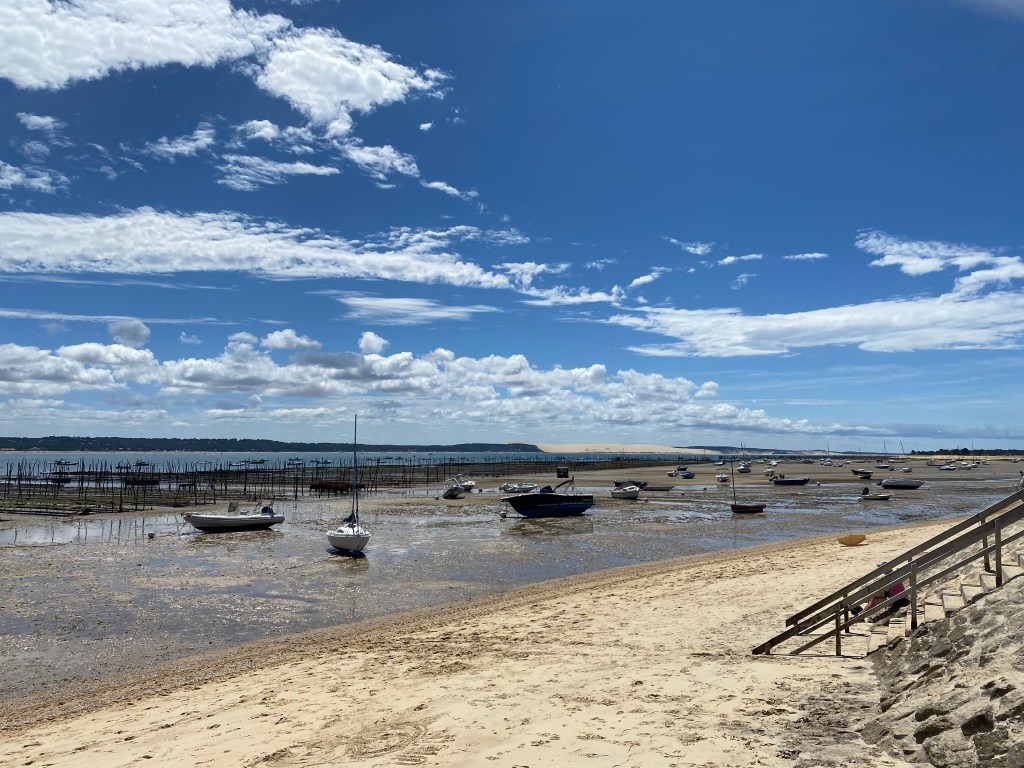
Like many people, we found ourselves travelling more this year than we have done for what has felt like a long time, primarily because we COULD. Two, summers of severe restrictions curtailed lots of people’s plans and it has certainly felt to me as if there was a high degree of pent-up wanderlust. We had a family holiday in France this year, a few days in sweltering Paris, followed by a longer spell in the south-western Gironde area, not far from the location of some of the terrible forest fires to hit parts of continental Europe, although we were lucky not to have been directly affected. It was heaven and I ate far too much patisserie, partly thanks to our holiday home being located next door to what we were told was the best boulangerie in town – it would have been rude not to partake!

We also spent time with family in Ireland, as well as a couple of shorter trips in the UK. Interspersed with that was the stress/excitement of not one but TWO results days. It has been the most difficult year for 16-18 year olds in this country, with the damage done to so many by Covid and online learning, all the talk of bringing down the perceived grade inflation of the last couple of years, fewer university places on offer, not to mention the uncertain economic environment. I am relieved to say that both my daughters did fantastically well, getting results they thoroughly deserved, and I will be despatching my middle child off to university in a few short weeks.

With only my youngest child left at school (and with her going into sixth form that’s only two years left!), September for me now is less about ‘back to school’ – that is a hard habit to break after 16 years! – and more about renewal and re-focus. I have had my break (three weeks without posting a single blog!) and now I am ready to start again.

What does September mean for you?

One event that has been on my radar for some time, but which was somewhat overshadowed this year by the appointment of yet another new Prime Minister in the UK (our fourth in six years!), was the announcement of the Booker Prize shortlist last night. It went largely unnoticed here because the mainstream media was completely absorbed by the shenanigans in Downing Street. As ever it is an interesting list, and I am familiar with only two of the authors.

As usual, I will be attempting to read my way through the shortlist before the winner is announced on 17th October, a little under six weeks’ time. Last year was the first time I actually managed to get through all six, and I am fairly optimistic of being able to do so again this year as quite a few of them are pretty short! That does not necessarily mean one can speed-read of course as short books are often more intense, I think. A couple of them are very long!

I aim to publish reviews regularly in the coming weeks and to make my prediction on the day itself. I’m very excited! Having only just returned from Dublin I think I will be starting with Claire Keegan’s Small Things Like These, a novel set in a small Irish town in the 1980s, a period when society there was dominated by the Church.

I would love to hear what you’ve been up to over the summer and what your plans are for the autumn.

Happy reading!

#KeepKidsReading Book Review #2 – “Into the Sideways World” by Ross Welford

Going on holiday can play havoc with your writing goals so my July #KeepKidsReading week has turned into a #KeepKidsReading fortnight, my second book review being a full ten days after the first! So I am writing this from a very sunny south-west France where I am holidaying with my family. We escaped the heatwave in the UK last weekend, but exchanged it for very high temperatures in Paris, where nobody seemed particularly bothered. We spent a lot of time doing indoor things like enjoying the shops and visiting museums. It is very hot here in the Gironde today so I have chosen to stay inside for a couple of hours, fair-skinned English woman that I am. Thankfully the terrible fires that afflicted this part of France (and indeed Spain and Portugal) seem to be largely under control, or extinguished, and although it is hot here today, the termperature is set to drop to the (still very hot in my opinion) mid-twenties from tomorrow.

Preparations for my trip meant that I did not manage to write my review of Ross Welford’s latest book for children. Published earlier this year, it is his seventh and he has quickly become one of the leading authors for children in the 8-12 age group. I read his his first novel, Time Travelling with a Hamster (published in 2016), with a primary school book club I was running at the time and all the kids loved it. It was the first book we read in the club and I’m afraid they found every subsequent book a disappointment! I read Welford’s next two books, What Not To Do If You Turn Invisible and The 1,000 Year Old Boy, and loved those too, but he has written a further three books in the meantime that I have not yet caught up on. So, his latest novel felt like a good opportunity to dive back into Welford’s world.

Welford’s world is one that is familiar to me, the north east of England, the coastal area to the east of Newcastle upon Tyne, Whitley Bay, to be precise. Welford sets his books in the fictional area of Culvercot, equivalent to Cullercoats. I lived some happy years in Tynemouth, the next town along, and so I know the area well. I also love the fact that Welford’s character are really ordinary kids – they are not super clever with perfect lives. In Into the Sideways World, the narrator and main character Willa, who is twelve, has wonky teeth, is teased at school, her parents are stressed by their business problems and bicker constantly, and she is generally unexceptional. Wonderful! Kids can see themselves in this character without feeling they are somehow wanting.

Willa’s parents run a holiday camp in Whitley Bay that was set up by Willa’s grandfather, but which is now in decline. One of Willa’s closest confidantes is Maudie, on-site general handywoman and ageing hippy with a passion for learning and for chocolate. Maudie has worked on the site since it was opened and her main claim to fame is that she met briefly President John F Kennedy before he was assassinated and told him about her vision of a World Without War. The novel is set some time in the 2030s. Maudie’s vision seems even more poignant given that there is the threat of a third world war looming. References are made to “the great pandemic” that killed thousands, including Willa’s grandfather, and climate change is wreaking ever greater havoc.

Willa’s life seems mostly pretty dull and occasionally difficult, with more than a little sadness, until she meets Manny Weaver, a new boy at school who has spent his short life to date moving from one foster home to another. Manny is bolder and more confident than Willa and while he is not exactly delinquent he is more willing to push boundaries. When he learns about the Whitley Bay cog, a mysterious and shy sea creature, having been spotted in a cave on the beach at Culvercot, he encourages Willa to go searching for it with him.

Once inside the cave, Manny and Willa, experience a violent meteorological event and when they emerge, they do so into a very different world. The date is the same (this is not quite time travel), but it is most definitely a parallel universe where everything is different, where President Kennedy survived the assassination attempt and, influenced by the great and distinguished Lady Maud Fry, led the world to make different choices. In this new “sideways world” the worst effects of climate change have been averted, science has devoted itself to finding alternatives to fossil fuels and meat consumption, world leaders choose dialogue over conflict, and everyone is happy.

Once they have arrived in the sideways world, Willa goes “home” and finds the environment very different: firstly, she is now Mina, not Willa, she no longer has an older sister, rather her older brother Alex, who in her own world died as a baby from cardiac abnormality, has survived. Her parents are (embarrassingly!) still very much in love, their business is successful, and there was no pandemic so her grandfather is still alive. Cars as we know them have gone, rather there are strange floating scooters that run on some advanced hydrogen/solar technology. It is a utopian vision. Crucially, Manny’s longed-for mother, who in their own world disappeared for many years and has been tracked down to a psychiatric facility in Scotland, is getting well and they are about to be reunited.

Manny and Willa do not know what to make of the new world. It turns out that Manny is one of a very small number of people with a hypersensitivity to the moon and tides and who can switch between these different worlds at certain times. At the time of the novel, the moon, a Supermoon, is closer to the earth than it has been for decades or will be again for many years, which enables Manny to take advantage of the conditions to transport himself, and Willa, to an alternative reality.

The rest of the novel follows the two children as they try to make sense of what has happened to them. They make a couple of journeys back and forth and it becomes clear that, although the sideways world is, in countless ways, better and happier than her own world, Willa comes to the conclusion that the world she knows is where she belongs. She also realises that she has switched places with her doppelganger, Mina, who will be finding the old world extremely challenging compared to what she has been used to. For Manny, the decision is less clearcut – the old world has nothing to offer him, but he has a life with his mother to gain in the sideways world.

Thematically, the book is similar to the other Welford novels I have read, although I love the way he has incorporated climate change and the pandemic into this one. At this difficult stage in history, I also love the way he is showing children that things can be better, change is possible, they can be hopeful of a better world in the future, and the power will soon be in their hands to make it so. Welford achieves this without being preachy though, because he wraps it in yet another brilliant story with great characters, adventure, action, a chase (of course!) and all the little references that will draw children in, the social media and technology references, sibling rivalries and relationships with parents.

Highly recommended, brilliant summer reading for kids, and for me too!

Non-fiction book review: “The Hare with Amber Eyes: A Hidden Inheritance” by Edmund De Waal

This was my my fourth non-fiction book of the year and, very helpfully, also my book club read for June (now only two behind!). I have to admit I was a little sceptical at first. It was suggested by one of my fellow book club members and I had not heard about it before. I thought it would be just another rich family  memoir, but it seemed to have a bit of history about it, so I was game.

The author is a British ceramicist whose grandmother was part of one of the richest Jewish families in Europe, the Ephrussi banking dynasty, before the Nazis confiscated their property and they were forced to flee their native Vienna in the late 1930s. At the start of his journey the author apparently knew very little of his family history and it is only through the discovery of a collection of ‘netsuke’ tiny Japanese carved figures of people and animals in ivory or wood, that he decides to explore further. The author was on an academic sabbatical in Japan, where his great uncle Iggy (Ignatius) lived when he sees the collection for the first time. He is fascinated by the netsuke and this prompts him to dig deeper into their history and how they came to be in his family.

The book does begin as something of a rich family memoir. Originally from Odessa, the accumulation of wealth through banking enables them to live variously in Paris and Vienna, mixing with the highest-calibre thinkers and artists of the day. It is Charles Ephrussi, an enthusiast for ‘japonisme’, which was popular at the time, who put together the collection of netsuke. Later, they would be considered more like minor trinkets (compared to other parts of the collection), played with by the children of the family, as taste for japonisme waned and the market became saturated with lower quality objects. Because of the family’s wealth and importance, the author has been able to compile a detailed history of the family and imagines the scenes and events at their various homes, the salons they held with the famous people of the day present. It is fascinating but a touch sterile for me.

As the narrative moves into the twentieth century, and the inevitable decline of the dynasty, I felt it became more interesting. The first world war changes everything, of course, for that stratum of society, but the author writes most movingly when describing the decade or so before the outbreak of the second world war, with the gradual demonising of Jews, particularly the wealthy ones. As various members of the family see the writing on the wall and flee the continent, the dynasty begins to break down. The final humiliation comes when the Nazis confiscate their mansion in Vienna and all its contents. The netsuke only survived this process because the family’s long-serving maid, Anna, who was kept on at the house, gradually spirited them away and hid them in her mattress. Later they were smuggled out of the country.

This part of the book is also most moving because it is within the author’s living memory almost, his grandmother having been one of those to flee Vienna, arriving in Kent with next to nothing and having to start her life again. De Waal also becomes increasingly reflective as the history gets closer to the time of the war and to his living family members. It is as if he becomes able to feel their pain. He is also philosophical about how relatively lucky his family were – yes, they lost everything (and they had a lot to lose), but they survived and prospered, unlike many other European Jews. Their wealth meant they were able to leave more easily than most. He is also deeply moved by the loyalty of Anna, the family maid, who risked her own life by trying to save something of the family’s collection, the netsuke.

I listened to this on audio and it was beautifully read by Michael Maloney, but it would have been useful to have the family tree that is in the print edition to refer back to as I did lose track of the members of each generation. The book won the Costa Book Award in the Biography category in 2010. Since its publication, some historians have challenged some of the facts in the book, I gather, for example suggesting the standing of the Ephrussi family has been overstated. I suspect some misrepresentation is inevitable in this kind of book, where the author has fleshed out bare facts with imaginings about day to day life, and this does not detract too much.

It is a fascinating account – recommended.

My next non-fiction read is a book I have had for a while now, Margaret Atwood’s Burning Questions – a collection of essays and comment pieces. It is another big book, so I suspect I am not going to be catching up too easily on my non-fiction challenge for the year, but I plan to take it on my summer holidays so we’ll see!

Summer reading book review – “The Break” by Marian Keyes

The second holiday reading recommendation I’d like to share with you is The Break by Marian Keyes. For years I eschewed Marian Keyes (though I always enjoyed hearing her whenever she popped up on the radio) in the mistaken belief that her books were a bit too ‘chick-lit’ for me – I say this completely ironically, since I loathe that term – it’s so pejorative and patronising! I would argue all night that no genre is better or worse than any other, it’s all just about what you enjoy reading. I might just draw the line at ghost-written autobiographies by very young minor celebrities, but that would be a personal line, and I would be happy to be proven wrong. Back to Marian; my book club read Grown Ups a couple of years ago, after which I was completely hooked and vowed that I would work my way through all of her eighteen novels and five non-fiction books – I’ll write that again…EIGHTEEN novels! She has apparently sold more than 35 million books worldwide. She is one popular writer, and deservedly so.

As with Grown Ups I listened to The Break on audio, and I absolutely loved it. It wasn’t Marian herself narrating this time, but Aoife McMahon does an excellent job. The plot is simple but effective. Amy and Hugh are seemingly happily married with three daughters – Niamh is from Amy’s first marriage, Keira is their own and Sophie is her niece, who came to live with them after her own two parents (Amy’s feckless brother and his equally feckless Latvian girlfriend) separated and showed no ability to care for their daughter. Hugh hits a difficult patch after the death of his father and best friend, and announces to Amy that he wants to take a complete six month break. He doesn’t just want a holiday on his own, he wants to spend six months in Asia with a backpack living as if he was single, with all that this entails.

Naturally, this comes as a tremendous shock to Amy. By the time he tells her, Hugh has already made most of his plans and so there is little time for her to influence his decision. He insists that he loves her completely and fully intends to come back and resume their life as it was before, he just needs this ‘time out’. After he leaves, Amy goes through something like a bereavement, trying to come to terms with the practical and emotional implications of his actions. Amy’s family (sprawling, loving and a bit chaotic, typically Irish, you might say, and a common characteristic in Keyes’s work) has challenges of its own – her father has dementia, which puts a strain on the offspring, there are sibling rivalries and each of Amy’s daughters is going through their own turmoil, partly connected and partly unconnected to Hugh’s departure.

Amy has a job as a PR executive, working two days a week in London with her two partners in their small company. Life as a single parent therefore presents her with many practical challenges; even though the girls are old enough to look after themselves on one level, it is clear that they still need a lot of support. Amy’s life is busy and Hugh has left her in the lurch.

Amy’s friends encourage her to embrace her own bit of single life while Hugh is on the other side of the world having his fun. (Amy cannot help stalking his Facebook account and when she sees him with another woman, it is a devastating blow.) Amy’s relationship adventures turn out not to be as easy or exciting as might be expected, and neither do Hugh’s.

I don’t want to give away any spoilers, but needless to say, the book is not just about what each of them does while they are apart, but also what happens when Hugh returns, how they are changed and what the implications are for the relationship. Keyes keeps you guessing and it does not pan out quite how you expect. Part of this author’s skill, I think, is in taking the everyday mundane aspects of life and making out of them something special. It is so engaging because the characters, and therefore the events that befall them, could easily be us. There is an impressive cast of characters in this novel and yet they are all distinctive, well-drawn and multi-faceted. The narrator of the audiobook does very well also to give a slightly different voice twist to each one.

So, another ‘highly recommended’ for your summer reading!

The Women’s Prize – winner announced tonight

The Women’s Prize has really gained in profile in the last few years. I think it’s actually been better since it stopped being sponsored by, first, Orange and then Bailey’s. By calling itself simply ‘The Women’s Prize’ it seems to have been able to be truer to its purpose. It also seems not to have suffered from some of the criticisms that other literary prizes have attracted around diversity. I make it my intention to read the Booker Prize shortlist each autumn; perhaps I should do the same for the The Women’s Prize.

This year, I have read three of the six titles on the shortlist, although one of these, Maggie Shipstead’s Great Circle, was shortlisted for the Booker last year too, so I was one step ahead for a change! I have already written about how much I loved that particular book.

When the shortlist was announced, my book club decided we’d read The Sentence Louise Erdrich. Erdrich is an American author. She won the Pulitzer Prize in 2021 for her novel The Night Watchman. I know very little about her, except that she has Native American heritage on her mother’s side, and that this cultural inheritance influences her writing.

The Sentence is a complex book. The main character is Tookie, an Ojibwe woman who is convicted of drug smuggling and given a prison sentence. She has had a difficult upbringing (in common with a disproportionate number of Native American and African American young people, an issue which underpins many of the novel’s themes), but during her incarceration she discovers literature. When she is released she marries Pollux, the man who arrested her, a kind of tribal law enforcement officer, and gets a steady job in a bookstore. Her life is good, on track, and she and Pollux live very happily.

All that changes on All Soul’s Eve in 2019 when a former customer of the bookshop, a cantankerous elderly woman called Flora, dies. Tookie is convinced that Flora is haunting the bookstore, more as a poltergeist than a friendly ghost, and the impact this has on Tookie’s mental state is mirrored by wider social events which seem to signify a kind of societal breakdown. The novel is set in Minneapolis (where Erdrich herself lives so she will have been close to events) and the murder of George Floyd in 2020 is a totemic moment that causes grief and chaos. Then there is the Covid pandemic, the lockdowns, the visceral fear of disease and the social isolation that it leads to. Tookie and Pollux at least have each other (plus Pollux’s daughter Hetta and her baby son, who come to live with them), but it is clear that this is a period during which the things they have thus far taken for granted are being swept away.

The Sentence is a powerful novel which explores many important issues, but I cannot say that I really ‘enjoyed’ it. It is one of the first ‘pandemic novels’ I have read and it will have been written when the world was still in the grip of Covid, not really knowing how or if we would get out of it. That comes through strongly in the novel, the sense of entering an unknown state, whilst also observing things falling apart. The aftermath of George Floyd’s murder will also have been quite raw and the sense of history repeating itself, of lack of justice for minorities and fear of the police, a sense of social structures collapsing, is expressed in Tookie’s despair. For me, though, the novel feels a little under-cooked. I’m not sure many of us have fully processed the events of 2019-21 and the novel seems to flounder a bit on not really having a clear direction.

My feelings about another of the shortlisted books, Meg Mason’s Sorrow and Bliss could not be more different. It too deals with a pressing social issue, mental illness, but it deals with it through, for me, a much stronger narrative. Martha is unwell. She has her first bout of depression, or ‘episode’ we might call it, when she is seventeen. Her family might be described by some as bohemian, dysfuctional by others. Her parents are artists, her father a poet and her mother a sculptor, and neither is especially successful. Her mother, Celia, was brought up largely by her older sister Winsome, after their mother died. Winsome married a rich man, lives in Belgravia, and largely supports Celia and her family. Martha has one sister, Ingrid, to whom she is very close.

Every year, the whole family gathers for Christmas in Belgravia, and included in their number is Patrick, a boarding school friend of one of Martha’s cousins. Patrick’s mother is dead and his father lives abroad and appears not to care very much about his son. Patrick is one of the few people able to empathise and show genuine care when Martha is first unwell, that Christmas in Belgravia, and we later learn that he has been in love with her ever since. Martha makes a very brief and disastrous marriage to wealthy and obnoxious financier Jonathan, who bolts at the very first sign of her illness. Later she will marry Patrick (not a spoiler since the book begins with what is described as the end of her marriage to him after Martha’s fortieth birthday). Their life together is entirely dominated by her illness, which is misdiagnosed, misunderstood, mismanaged, and incorrectly medicated. Eventually, Martha receives a new diagnosis from a new psychiatrist – significantly, the name of her condition is left blank. This is not a book about a condition, it is a book about how mental illness tears lives apart, and not just the lives of those who have the condition. Martha is prescribed medication which finally seems to work, but when Martha seems to be getting ‘fixed’, her life actually begins to fall apart.

This book is an astonishing account of a severe mental illness from the point of view of the person experiencing it. We see the world entirely through Martha’s eyes for most of the book, until the final, correct, diagnosis is made. As the fog clears for Martha, the experience of being a loved one of someone with a mental illness, partner, sibling, parent, is given air time. It is astonishing and I have not read anything quite like it before. Meg Mason writes concisely and brilliantly, with a style that is both spare and completely exposing. She also has the most extraordinary dark humour – the trauma is so deep that you do actually need the laugh out loud moments. It reminded me a bit of Phoebe Waller-Bridge’s Fleabag in that respect. The characters are powerfully drawn and I loved the exploration of the relationship between Martha and her sister Ingrid – brilliant, comic, intensely loving and brutally honest.

I don’t know much about the remaining books on the shortlist, but I would be delighted to see Meg Mason or Maggie Shipstead win – both their books rank in the top five titles I have read in the last twelve months.

So, Sorrow and Bliss highly recommended, The Sentence, I am more lukewarm about. You can watch a live stream of the prize-giving event and the announcement by following the link here.

The Platinum Jubilee #7 2010s to present

And so we find ourselves at the end of this Platinum Jubilee weekend, four days of events and celebrations that have been quite enjoyable, actually. I’ve been to two parties and for a change the British weather did not let us down! It does not seem so very long ago that we were celebrating the Diamond Jubilee (2012) in which the Queen and the Duke of Edinburgh, being sprightly 80-somethings, played a much more active role. It had not been too bad a decade for Her Majesty – we had two major royal weddings, William and Kate in 2011, then Harry and Meghan in 2018, plus a host of minor royal weddings. And all those newlyweds have produced the next generation of royals. Sadly, the last couple of years have been very difficult; the Queen lost her husband in 2021, a few weeks short of his 100th birthday, her son Andrew brought disgrace to the family when he was forced into an out of settlement in a sexual assault case, and rifts between Prince Harry, his brother, his father and ‘the Palace’ have seen him and his wife give up their royal duties and move to California. Their public pronouncements have been uncomfortable to say the least.

But all that has been set to one side for the moment. We were even able to forget the mess that passes for British government at the moment to enjoy a truly once-in-a-lifetime moment in history. Whatever you may think of Queen Elizabeth, monarchies more generally or the British Royal Family, the world will not see her like again.

I started this blog in 2016 and have probably read more in the last ten years than in any previous decade. A few of my favourite books since 2010 have been by American authors. Donna Tartt’s The Secret History was one of my favourite books from the 1990s. Her third novel The Goldfinch, published in 2013 certainly ranks in my top ten for the last decade. It follows the story of Theo Dekker, who loses his mother in an explosion at an art gallery. He manages to escape and takes with him a small but extremely valuable Dutch Renaissance painting. He spends the subsequent years concealing his crime and the book follows his story and the events that arise out of his concealment. It’s an extraordinary book.

Hanya Yanagihara’s 2015 novel A Little Life was another highlight, a novel of epic proportions following the lives of four college friends, all of them drawn together by their quirkiness, but also their relationship with Jude, the most vulnerable in the group. Set in New York city it is a novel of our times, dealing with sexuality, depression, self-harm, isolation and being on the outside. It is heartbreaking and completely compelling.

One of my other most enjoyable reads of the decade was Anthony Doerr’s All The Light We Cannot See, published in 2014. Set in St Malo, Brittany, it tells the story of Marie-Laure, a blind girl in second world war France and Werner, an orphan and member of the Hitler Youth and invading German forces, and how their worlds collide.

Sally Rooney took the literary world by storm in the last few years with her books Conversations with Friends (2017), Normal People (2018) and Beautiful World Where Are You (2021). Normal People was made into one of the televison events of the decade and I loved both the book and the series. Exceptional writing from a very talented young woman, who is still only thirty.

Elena Ferrante’s Neapolitan novels were another highlight of the decade. Published 2011-2014, I devoured them all and cannot choose between them for brilliance. I have yet to see the television series as it is currently only available on a channel I do not subscribe to. The two central characters Lila and Elena have stayed with me and the relationship between them has shed a whole new light on the nature of female relationships. Outstanding.

In the UK, Dame Hilary Mantel completed her Wolf Hall trilogy with Bring Up the Bodies in 2012 and The Mirror and the Light in 2020. It is a truly outstanding literary achievement. Having won her second Booker with Bring Up the Bodies, she did not quite get the hat trick with the final instalment. That honour went to Bernardine Evaristo for Girl, Woman, Other, although she shared that honour with Margaret Atwood for The Testaments.

Two other award winning novels by slightly lower profile authors I thoroughly enjoyed were Milkman by Anna Burns, which won the Booker Prize in 2018, and Birdcage Walk by the late Helen Dunmore, which was published posthumously in 2017. Milkman tells the story of a young woman growing up in Belfast during the time of the Troubles and struggling just to be herself and live the life she wants to without the threat of violence. Dunmore’s novel confirmed her as foremost among authors of historical fiction telling the story of a young woman in Bristol at the time of the French Revolution.

If I had not confined myself to British authors, my book of the decade would have been Richard Powers’s The Overstory, a book about trees and people trying to destroy them, versus people trying to protect them. But my parameters were set and Powers is American, so my book of the last decade, for sheer enjoyment, writing brilliance, masterful storytelling is Maggie O’Farrell’s Hamnet. It tells the story of a young William Shakespeare and his wife, and the 11 year-old son they lose to illness. Powerful, poignant, and a creative imagining of an event that actually happened but which we know so little about.

I have thoroughly enjoyed this exercise, looking back over books from a big chunk of the last century that I have enjoyed. Every day I have thought of more that I should have added to a previous decade and I am sure you can think of many others I have forgotten. I would love to hear your thoughts on any of my choices.

The Platinum Jubilee #6 2000s

After the turbulence of the 1990s, the noughties were a quieter decade for the Queen. She was getting older of course, in her mid-seventies by the turn of the century. In 2002 she celebrated her Golden Jubilee, marking an incredible half century on the British throne. It was an altogether more sedate affair than the Silver Jubilee in 1977, I seem to remember. Perhaps we were all becoming more grown up about the monarchy. The Queen also celebrated her 80th birthday in 2006 (my youngest was born on that day). She was officially an elderly lady and from that moment on she was pretty untouchable.

I think one of the reasons we took our eyes off the monarchy was that there was so much bigger stuff going on elsewhere in the world. There was the attack on the World Trade Center in New York in September 2001, of course, an event which led to prolonged and devastating war in the Middle East, the effects of which are still being felt today. The financial crash in 2008 would lead to a decade of austerity in the UK and the end of the Labour government.

For me, the decade was dominated by small children. My three children were born between 2001 and 2006. These were my reading wilderness years. Most of my reading was of children’s books, which, to be fair, is no bad thing. We worked through the Harry Potter books, of course. A favourite of mine was also Philip Pulman’s Northern Lights (though this was in fact published in 1995), though my kids were less keen on this one. My son adored the Diary of a Wimpy Kid series by Jeff Kinney (2007 onwards) while my daughters adored the Rainbow Magic books (2003 onwards). We had a huge collection of them which they have never forgiven me for throwing out. To be fair, their opprobrium is deserved and I have no defence.

The wars in Iraq and Afghanistan stimulated my interest in literature from that part of the world. I read two books published in this decade by Afghan-American novelist Khaled Hosseini which are extraordinary – The Kite Runner (2003) and A Thousand Splendid Suns (2007). Both novels evoke the culture and atmosphere of Afghanistan and its turbulent recent history.

I had a long drive to work in the first couple of years of the decade. I used to buy audiobooks (on cassettes!) and one that I loved, and which I listened to several times, was Margaret Atwood’s The Blind Assassin, published in 2000. Complex and innovative in structure, it explores the relationship between two sisters in the 1930s and 1940s, as recalled by Iris, her sister Laura having died in 1945.

In the UK, Zadie Smith shot to literary fame with her first novel White Teeth (2000) about two men, a Bangladeshi and an Englishman, who became friends during the war, and how their relationship evolves later on amid racial tension in London. I am ashamed to say that this is a book I have tried and failed to read more than once. I have no idea why. It took me a long time to read books in those days so perhaps it required more mental energy than I had available at the time.

A book I did love was Mark Haddon’s The Curious Incident of the Dog in the Night-time, published in 2003. It is an innovative novel about a teenager with autism spectrum disorder who takes it upon himself to investigate the death of his neighbour’s dog. It is about how the central character Christopher navigates a world that has been set up for the convenience of the majority that does not experience disability or neurodiversity, and what this means for people who are on the outside of this group.

The book of the decade, for me, however, was Wolf Hall by Dame Hilary Mantel, published in 2009. I adored her earlier novel about the aftermath of the French Revolution A Place of Greater Safety (1992), but it was Wolf Hall that really cemented her reputation as one of the finest living British writers. And rightly so. As a piece of historical fiction it is truly extraordinary. The depth of her research and the profound degree to which she has understood both her subject (Thomas Cromwell, minister at the court of King Henry VIII) and the period, drips off the page. The plotting, the story-telling, the characterisation, the immersion, it is all breathtaking.

I can’t say with absolute certainty that I read Wolf Hall in the decade in which it was published (which was the rule I set myself), but on this occasion I am giving myself the benefit of the doubt for this is a truly outstanding book that might even be book of the century.

The Platinum Jubilee #5 1990s

The 1990s proved to be a torrid decade for the Royal Family; the Queen’s children were getting divorced left, right and centre. Charles and Diana separated in 1992 and divorced in 1996, Princess Anne divorced in 1992, and Prince Andrew in 1996. In 1992, a massive fire at Windsor Castle caused extensive damage – the Queen would go on to describe that year as her annus horribilis. But it would get much worse. In 1997 her beloved Royal Yacht Britannia was decommissioned, deemed no longer worth refitting, one of the few occasions on which the Queen has been seen to cry in public. Then, the big one, the death of Diana, Princess of Wales, in a car crash in Paris in September 1997, drew great criticism. The Royal Family failed to grieve alongside a nation that seemed to have had its heart ripped out and sharp contrasts were drawn between the warm and outgoing character of Diana, and the seemingly hard-hearted Royals. Diana had become a thorn in the side of the British monarchy and conspiracy theories abounded about the cause of her death.

I was in my twenties in the 1990s and therefore at my peak. I had my own fair share of ups and downs, romances and heartbreaks, successes and disappointments. I joined the Civil Service in 1991 after graduating in 1990 and had an exciting few years in Whitehall before moving to Newcastle in north east England. Eighteen years of Conservative government came to an end in 1997 when Tony Blair and his New Labour government were elected in 1997, and there was so much HOPE! The music of this era remains the soundtrack of my life. My favourite band Radiohead became one of the biggest bands in the world, releasing their seminal work OK Computer in 1997, which probably remains my most listened to album ever. I was also listening to REM, U2, Blur and Oasis of course, Morrissey, PJ Harvey going to lots of gigs, working in the capital so at the theatre all the time. I was living my best life! Or so it seemed at the time. I met my husband in 1999, so the decade ended on a high too.

I re-discovered contemporary fiction in the 1990s and some of my favourite all-time books came out in this decade. One of the best was Donna Tartt’s The Secret History, published in 1992, a debut novel about a group of Classics students at a New England college and the events leading up to the death of one of their number. In 1991, Nigerian poet and author Ben Okri won the Booker Prize for his extraordinary novel The Famished Road, a strange and dreamlike book about a spirit boy who finds himself torn between the spirit and the material worlds. I remember finding it both strange and fascinating, but hugely powerful.

Two extraordinary Indian novels were published in this decade, both of which had a profound effect on me. Vikram Seth’s 1993 novel A Suitable Boy is one of the finest books I have ever read, and, at more than 1,300 pages long, it is also one of the longest ever published. I read it one Christmas when I was particularly miserable and it saved me. In 1995, Rohinton Mistry published A Fine Balance, another very powerful novel about life in the caste system in India.

In the UK, there were a couple of literary landmarks. Helen Fielding’s Bridget Jones’s Diary came out in 1996 – it WAS my life! It spoke for women of my generation, who were told we could have it all and then found we couldn’t really. Then in 1997 came JK Rowling’s Harry Potter and the Philosopher’s Stone and children’s literature would neve be quite the same again.

British-American novelist Tracy Chevalier took the literary world by storm in 1999 with her debut novel Girl with a Pearl Earring, a unique and innovative piece of historical fiction about the story behind Vermeer’s world famous painting. For me, it started a love affair with the Netherlands and with historical fiction for which I am very grateful.

Ian McEwan’s 1997 novel Enduring Love was another favourite. The scene with the hot air balloon remains one of the most arresting in the English language, in my opinion, and I am in awe of McEwan’s ability to create incredible stories out of the day to day.

But for me the book of the decade is AS Byatt’s Possession. Published in 1990, it also won the Booker Prize that year. The novel follows two present-day academics who are researching a possible romance between two previously unconnected Victorian poets. It is a book about academic rivalry and hubris, about lies and deception and is both a detective story and a romance. It is extremely literary whilst also being very accessible. It is a masterwork.

There are so many books I could have chosen from this decade. Reflecting on those years I see that they were turbulent for Her Majesty, and eventful and rich for me too, though rather more mirabilis than horribilis in my case, I am happy to say. At least none of my yachts were decommissioned.