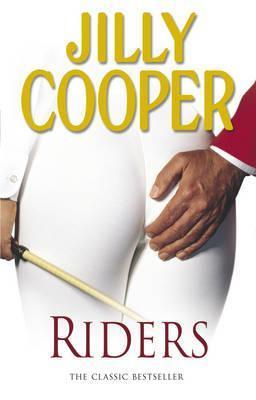
In between all my high-brow Booker shortlist reading, my book club selected something at the complete opposite end of the literary spectrum for our October read, which I saved for my trip to India, since I knew I’d have a lot of down-time, travelling on planes and trains – Riders by Jilly Cooper. I will confess straight away that I have never read a Jilly Cooper book in my life, nor seen any television adaptations, but I have always had a sort of admiration for her prolific output as a writer and her success as a woman in a male-dominated field, and the innovation she brought about in the genre of “romance”. My fellow book club members had read novels by Cooper before; as women of a certain age and growing up in the 1980s, when Cooper was first publishing her outrageous so-called “bonkbusters”, they were part of our cultural backdrop. I was never that kind of teenager, I’m afraid, already 17 when Riders first came out, I knew I was headed for an English Literature degree at that point so I really had no interest in reading Jilly Cooper or any other authors like her. In fact, I was probably quite disparaging and likely considered it beneath me!
It was interesting then to come to this novel much older, wiser, more open-minded and more than forty years after it was first published, in what was a very different age. I can honestly say that I think it might be one of the worst books I have ever read. I am sorry to say that (rest in peace Dame Jilly), given that the author died only a year ago and was widely lauded as a literary icon. I must also bear in mind that Riders was her first major breakthrough novel in the genre she came to dominate, so I applaud her. She has an adoring and enduring fan base (former UK Prime Minister Rishi Sunak is said to have described Riders as his favourite novel, which seems a bit weird to me) and has sold many millions of books worldwide, but I’m afraid I think Riders is terrible. It looks even worse in the light of the present-day news cycle in the UK (and elsewhere) with huge celebrities (whose names I do not wish to type) being investigated and convicted of sexual offences and twisted attitudes to power in relationships. But even if you take all that into consideration, and the fact that the 1980s were pretty terrible when it came to misogyny, equality, where feminism was disparaged, I still found it a very difficult read.
Riders was the first in Cooper’s Rutshire Chronicles series and the plot is very simple. Set mainly in the Cotswolds amongst the horsey set, specifically the show-jumping fraternity (a sport which had a moment of high popularity in the 1980s), the main narrative tension comes from the rivalry between upper-class Rupert Campbell-Black, a truly ghastly unreconstructed womaniser and, let’s be clear, sexual predator, and Jake Lovell, his main rival in the show-jumping arena. Jake has reason to bear personal grudges against Rupert; although he spent many years living with the “gypsies” he was related to on his father’s side, his single parent mother worked in a private preparatory school, and Jake was able to receive tuition there. Rupert and his lacklustre sidekick (both then and now), Billie, bullied Jake, and he has never forgotten it. The men become rivals professionally and personally, but they leave many broken hearts and abused and traumatised women in their wake. Even Jake, who at first seems much more benign. Few of the men in the book have any redeeming features, even the head of the British show-jumping team, Malaise Gordon, should not be forgiven for his light-touch supervision of rampant Rupert. As for the women, well, let’s just say I would not want to be friends with any of them. Only Fen, teenage sister-in-law to Jake and precocious show-jumping star, has any merit, but she is also flawed as a character.
There are three other reasons I disliked the book. First, the serious point – class. The British class system in all its dysfunctional unfairness, its cruelty and its reward for birth rather than talent, is laid bare without much critical reflection. There is no denying that it stinks, always has and sadly still does. Second, the sex scenes. One or two are actually horrific, but they are mostly just very very cringey, and considering this is a so-called “bonk-buster”, not that frequent. Thirdly, and with the deepest respect Dame Jilly, I just think it’s badly written and edited. Maybe I have to just avert my high-brow eyes there (said with very self-aware irony) and acknowledge this is written for a different audience – it is not high art, it’s entertainment, literary soap opera, not meant to be taken seriously. It must of course be read this way, but I’m afraid it was not for me. Millions of Goodreads readers give it an average of 3.97 (compared to my measly 2), so I am clearly in a minority.
I have not watched the recent television adaptation of Jilly Cooper’s follow-up novel Rivals. My friend and fellow book club member has and thinks it is great, easy viewing fun, and I have read reviews which concur. It also has some big-name actors such as David Tennent, Danny Dyer and Claire Rushbrook. I would hope that some of the more odious aspects of 1980s culture have been tempered, although, looking at the news from recent weeks and months, some of those odious aspects of the 1980s seem still to be with us, sadly.


