We learned last week of the death of Christopher Tolkien at the age of 95. Although he was a renowned Oxford scholar of Old and Middle English, the obituaries that I read, and the tributes I heard on the radio, tended to focus on his rather more famous father, JRR Tolkien. Not unreasonable; he was, after all, chief custodian, curator and champion of his father’s literary archive after his death in 1973 and from all accounts he was pretty well-adjusted, not seeming to have suffered any lack of self-confidence or self-esteem as a result of his eminent parent.

The same cannot be said of other children of famous or high-achieving parents: the two children of Sylvia Plath and Ted Hughes seem to have experienced great unhappiness – Nicholas hanged himself in 2009 and their daughter, Frieda, a poet and painter, moved far from her UK birthplace to become an Australian citizen and is three times divorced. I reviewed The Prime of Miss Jean Brodie a couple of weeks ago and learned that Muriel and her only son became estranged, her having left her husband and child not long after she married in 1937, and Doris Lessing also left her husband and two young children to pursue her literary career. In Lessing’s case, I am not aware of what impact the separation had on the children longer term, and, I hasten to add, I make no judgement. It cannot be easy, though, growing up in the shadow of a famous, high-achieving literary parent.
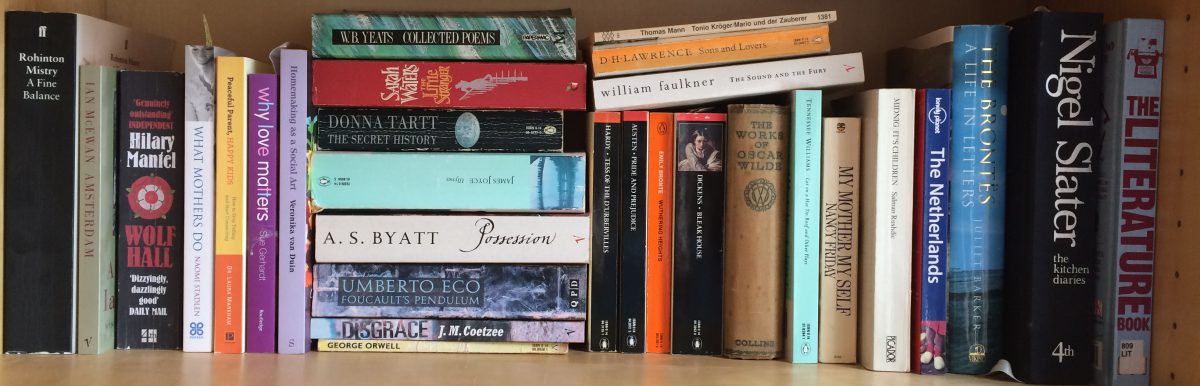
It got me thinking about parent-child relationships explored in literature and I decided to write a list! Here are my top picks (in no particular order):
- Oranges Are Not The Only Fruit by Jeanette Winterson – based on the author’s own difficult northern childhood
- Educated by Tara Westover – a memoir from the child of religious zealots
- A Little Life by Hanya Yanagihara – harrowing novel shows us how a lack of nurturing in childhood leaves its main protagonist deeply damaged
- Pride and Prejudice by Jane Austen – an awful meddling mother and impotent father cause chaos in their daughters’ lives
- Dombey and Son by Charles Dickens – most of Dickens’ novels focus on family relationships but this for me is one of the darkest
- Sons and Lovers by DH Lawrence – an unhealthy relationship between mother and son blights a young man’s future
- Eleanor Oliphant is Completely Fine by Gail Honeyman – a woman suffering in the shadow of a toxic parent
- Hot Milk by Deborah Levy – a brilliant study of a young woman trying to escape the straitjacket of life with a domineering and emotionally manipulative parent
- Wuthering Heights by Emily Bronte – among his many other misdemeanours, Heathcliff would surely be found guilty of child cruelty today!
I’ll no doubt think of a few more in the coming days!
What are your favourites?
If you have enjoyed this post, I would love for you to follow my blog. Let’s also connect on social media.
 Last week I launched my

 The Boy, the Mole, the Fox and the Horse by Charlie Mackesy £16.99
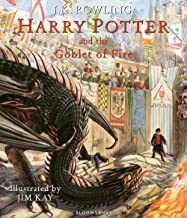 Harry Potter and the Goblet of Fire (Illustrated edition) by JK Rowling and Jim Kay £32.00

 Diary of a Dyslexic School Kid by Alais Winton and Zac Millard £9.99


 The Book of Dust Volume Two: The Secret Commonwealth by Philip Pulman £20.00
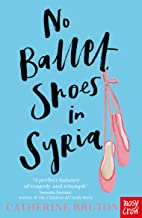 No Ballet Shoes in Syria by Catherine Bruton £6.99
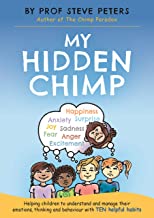 My Hidden Chimp by Steve Peters £12.99
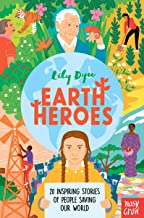 Earth Heroes: Twenty Inspiring Stories of People Saving Our World by Lily Dyu £9.99
 I remember when this book was published in 2006. It was widely acclaimed, but also controversial; there were some questions marks over its historical accuracy (one senior rabbi argued that nine year-old boys were not kept in concentration camps, all were gassed because they could not work and were therefore of no use, though this argument also been disputed) and others have questioned whether such a relationship, between a young inmate and the son of the camp commandant, could have gone on for so long undetected, particularly when Bruno slips under the fence. Whatever its problems, the book has sold millions of copies worldwide and was made into a successful film within two years of publication.
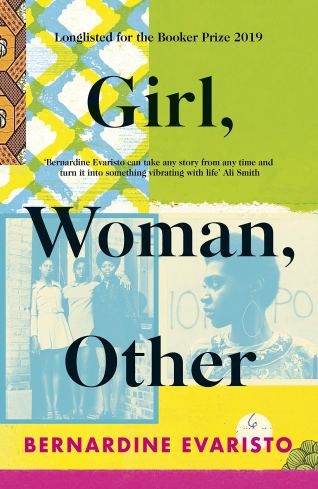 What I liked about it, however, was less this grander aspect, but rather the quality of its story-telling. I must admit that 50 or so pages in, I was not overwhelmed! There are twelve characters in the book, all women bar one (who is trans), all black or mixed race. They are broken down into four groups of three, and each threesome is strongly connected in some way (eg mother/daughter). Each group is also connected with the others, even if only in a tenuous way (eg teacher and former pupil) and almost all are in some way connected to Amma, the first character we meet. Amma has written a play which is having its debut performance at the National and this provides the framework of the novel. Many of the characters are present at the penultimate chapter of the book, the after-party, where the differences between them and their lives are laid bare. This is interesting because the author is not only trying to draw out the similarities between the characters and their life experiences, suggested by their common characteristic of being mixed race and female, but she is also, I think, railing against the notion of such women/people being homogeneous; they are all far more than just their race or gender.
 I’ve just finished a lovely little book The Umbrella Mouse by Anna Fargher. When I was browsing in my local bookshop a few months ago, one of the assistants recommended it to me and said it had had her in tears. I knew then it was a ‘must-read’! I got my copy secondhand online and it’s signed!
 The Lathe of Heaven was written in 1971, but was set in ‘the future’ – Portland Oregon in 2002. This future world is one in which the global population is out of control, climate change has wrought irreparable damage and war in the Middle East threatens geopolitical stability. The most alarming (and engaging) thing about the book, for me, was how prophetic it was; in 1971 did readers think this was some dystopian world? Worryingly, many of the problems envisaged by Le Guin are recognisable features of our environment in 2019.
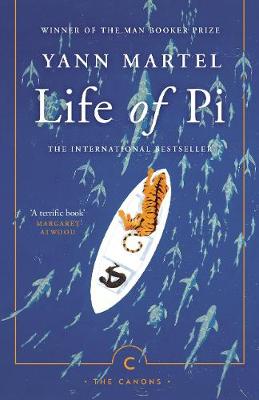 The story is well-known: a young Indian boy, Piscine “Pi” Patel (a name he adopts to get back at the school bullies who taunt him with the nickname ‘Pissing’) grows up in the territory of Pondicherry where his parents own a zoo. The first part of the story gives us a detailed account of the family’s life there, including enormous detail about life for the animals in a zoo setting (I was fascinated by this and it changed my perspective on zoos). We learn in particular about the fierce Bengal tiger, Richard Parker, who is the zoo’s prized possession. I love the use of ‘naming’ in this book – the story of how Richard Parker came to be given this name is brilliant and a sign of the author’s ingenuity and creativity. The other important feature of this part of the novel is that we learn of Pi’s deeply philosophical nature, his decision to adopt three religions (Hinduism, in which he has been brought up, Islam and Christianity), much to his family’s dismay, because he can see benefits in all of them.

 So now it is time top get back on track and announce the book for November. Our theme is a children’s book; we are winding down towards the end of the year, but I am not going to make it too easy, because this book is a challenging one – John Boyne’s The Boy in the Striped Pyjamas. I have been meaning to read this ever since it was published to great acclaim in 2006. My elder daughter read it recently and has been nagging me to follow suit. She found it very moving so I am looking forward to it.

