Booker shortlist book review – “10 Minutes 38 Seconds in This Strange World” by Elif Shafak

I posted last week about the events of my life over the last couple of months, the dominant event being the death of my mother in mid- September. So much has happened in that time and yet I have felt rather out of the loop, my attention having been on other things. It feels strange to be posting here again, to be writing my first book review in what feels like months – can you believe I have a few butterflies?!
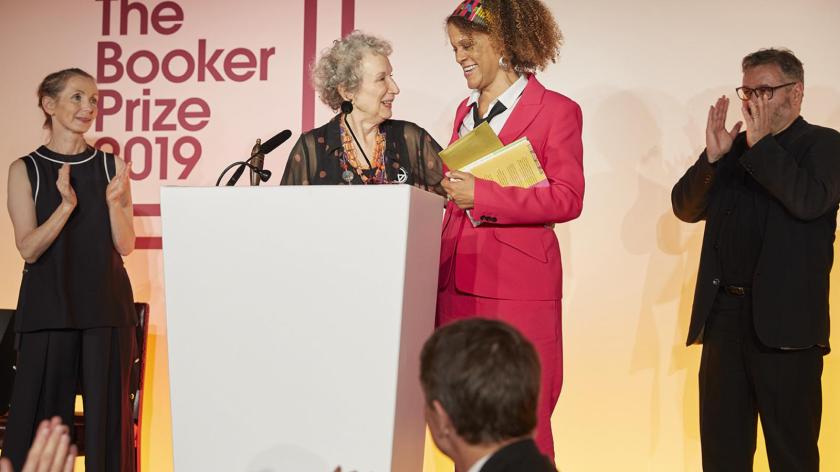
Booker Prize 2019The Booker prize winner(s) were announced last week and for the first time in years, and against the explicit rules of the contest, the judges awarded the prize jointly to Margaret Atwood and Bernardine Evaristo. I have not read either book yet, though I am currently listening to The Testaments on the excellent BBC Sounds and enjoying it enormously, though it is extremely dark. There has been so much publicity around Atwood and The Testaments that I was wondering how on earth the Booker prize judges were going to be able to not award it to her! So, I think the judges probably made the right decision. By now, I would probably have worked my way through at least two thirds of the shortlist (I’ve never managed all six in the period between shortlist and winner), but, for obvious reasons, I have not read that much so far this year.

10 minutes, 38 seconds imgIt is somewhat and sadly ironic that I was reading Elif Shafak’s 10 Minutes 38 Seconds in This Strange World at the time of my mother’s death, a novel about a woman, Leila, an Istanbul prostitute known as Tequila Leila, who is brutally murdered in a back alley by street thugs. Rather than death being an instant occurrence, however, the author explores the idea of it as a transition from the world of the living to the ‘other’ (with a duration, for Leila, of ten minutes and thirty-eight seconds) during which time her whole life flashes before her. Leila’s life story is told through a series of recollections about her five closest friends, how and when she met them and what impact they have had on her life. We learn that Leila came from a relatively affluent family. Her father was anxious for heirs, but when his wife proved incapable of having any he took a second wife, Binnaz, a much younger woman from a lowly family, who gave birth to Leila. Binnaz was forced to give up the child to the first wife to bring up as if she were her own, whilst Binnaz, who never recovered mentally from the trauma of that event, was thereafter known to Leila as ‘Auntie’.

Leila was sexually abused by her uncle as a child, ran away to Istanbul at the age of sixteen and, somewhat inevitably, was lured into a world of prostitution where she suffered many abuses, including being disfigured by a lunatic client who threw acid at her. She eventually found love in her life, with D’Ali, but he was killed soon after they were married and she found herself back on the streets again, just to survive.

We learn about the five friends in her life, people who crossed her path and whom she helped in different ways, and who became her family after her parents disowned her. Through these stories we learn about Leila’s humanity and warmth, her openness and kindness. After Leila’s death, with no living relatives willing to claim her body, the city consigns her to the ‘Cemetery of the Companionless’. Her friends have no rights to bury her so they set about stealing her body from the graveyard. The second half of the book is an account of how and why they do this and how eventually they give Leila the resting place they feel she deserves.

Elif Shafak is a Turkish national presently exiled from her country where she feels that with her liberal politics and as a free speech and human rights activist she would be in danger from the ultra-conservative government. It is clear, however, that she feels the present ruling party does not reflect the true culture of Turks, and in particular the ancient and multi-cultural city of Istanbul. The book is peppered with political messages and layered with historical references, particularly the Armenian genocide of 1915, a passion of Shafak’s, and the main topic of her novel The Bastard of Istanbul.

I have been an admirer of Elif Shafak since I saw her speak at the Hay Festival last year; she is a woman of huge intellect and achievement, a true polymath. However, I struggled with The Bastard of Istanbul as I have also with this book – I just did not like either of them as much as I wanted to. 10 Minutes 38 Seconds… is a really novel and interesting concept but I just felt like it did not deliver on its promise.

When my mother was admitted to hospital and was clearly close to death, I wondered whether to abandon this book; I thought I might find it too upsetting a read in the circumstances. But I’m afraid the book just did not move me. The second half even felt slightly slapstick.

I will keep admiring Shafak and keep trying with her books. Maybe I’ll find something I love!

What has been your favourite read from this year’s Booker shortlist?

If you have enjoyed this post, I would love for you to follow my blog. Let’s also connect on social media.

Book review: “Normal People” by Sally Rooney

I’m travelling to Dublin on the ferry from Holyhead, north Wales as I write this, making our annual summer visit to see family and friends. I love Dublin and think of it as a second home, having visited the place several times a year for about two decades now. I haven’t seen all the ‘sights’, although Dublin Zoo, the art gallery, Powerscourt, and the Natural History Museum have all been well and truly ‘done’! When we visit we seem to spend much of our time just hanging out, visiting people, sharing meals, etc. For me, it’s only when you do that, after visiting a place so many times that you really get to the heart of it.

Normal People imgIt seems appropriate that I should be posting a review of Normal People this week, a book so very much about Ireland, the challenges and contradictions at the heart of a nation that has transformed itself in recent years. It is not just about Ireland, but about what it means to be young in Ireland and about class. It is also about identity and, in common with some of the issues faced in the UK and many other societies I am sure, the draw away from regional towns and cities, towards a centre, a capital, where there is perceived to be more opportunity, and what that means both for the individual and for society in the wider sense.

 Connell and Marianne are two teenagers attending the same high school in Carricklea in the west of Ireland. Both are very bright and hopes about their future prospects are high, but that is where the similarities end; their lives couldn’t be more different. Connell is the much-loved only child of a young single Mum. The live together in a small house and Connell’s mother cleans for Marianne’s family. Although academically a high achiever, Connell still manages to be popular and admired. Marianne is much more of a loner and lives with her working Mum and brother (a threatening figure who becomes increasingly violent towards her). She is remote from her family, not well-liked at school, and has a spiky personality.

Despite their differences, Connell and Marianne develop a closeness which soon blossoms into an intense and sexual relationship. The author portrays skilfully the subtle differences in their perspectives, which will at times lead to difficulties of communication and understanding throughout their young lives and the ebb and flow of their relationship.

The pair both end up with outstanding exam results which means that both secure a place at the prestigious Trinity College, Dublin. We follow them to college and here their positions are reversed – it is Marianne now who finds her ‘tribe’ amongst the affluent, the elite, the middle classes, and Connell who struggles to feel at home, whose financial and social background contrasts so markedly with that of his peers.

Despite this, Connell and Marianne continue to have an on-off relationship for the duration of their university careers and beyond. At times their relationship is passionate and sexual, at others it is more platonic, mutually protective. But always it is intense, even where there is little contact between them, such as the period Marianne spends on a Scandinavian scholarship with the abusive artist she has for a boyfriend at the time.

It is a fascinating and compelling book, part elegiac romance, part social commentary, where there is very little in the way of plot, but an abundance of humanity that is acutely observed and intimately drawn. The book has rightly earned its young author widespread plaudits and praise and was shortlisted for this year’s Women’s Prize for Fiction. (The winner, An American Marriage by Tayari Jones, which I reviewed on here recently, was a worthy victor but I don’t envy the judges having to choose between these two outstanding novels.)

Normal People is a beautiful, clever book that will at times break your heart and at other times lift it, and I heartily recommend it. The only pity is that it’s relatively short!

Normal People has been widely read and reviewed – what did you think of it?

If you have enjoyed this post I would love for you to follow my blog. Let’s also connect on social media.

Care to join us for the Facebook Reading Challenge this month?

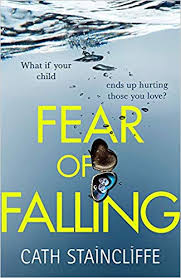
A few days ago I published a review of Fear of Falling by Cath Staincliffe, which was the July choice for my Facebook Reading Challenge. The book seemed to go down quite well and I enjoyed it too. The theme for August is ‘a beach read’, reflecting the fact that many people will be going on holiday this month (if, like me, you are confined to school holidays). But even if you are a holiday free agent and choose June or September to go away (I know I would!), August is often languid month when the pace of things tends to slow and you can take the opportunity to rest mind and body. The ‘beach read’ theme reflects this too as I wanted something that will be pure pleasure and not too demanding of our normally over-taxed brains.

The Lido imgI have chosen a book which caught my eye a couple of months ago – The Lido by Libby Page. It concerns a friendship between two women, 86 year-old widow Rosemary and 26 year-old Kate, who strike up a bond when their local outdoor swimming pool in Brixton, south London, is threatened with closure. The two women have different reasons for wanting to campaign to keep the lido open, but they are brought together in a common cause.
The book has received pretty universal praise, so far as I can tell, is a Sunday Times bestseller and looks like being one of the hits of the summer. I’m looking forward to this one as I’ll be doing some family visiting and some holidaying myself over the next few weeks, and after some books which have been either quite tough reads on the reading challenge this one feels like a reward for hard work!

I hope you will join us on the challenge this month. Hop over to the Facebook page if you’d like to join the group.

Enjoy the rest of the summer!

Does your reading taste change in the summer or at holiday time?

If you have enjoyed this post I would love for you to follow my blog. Let’s also connect on social media. 

Book review – “Fear of Falling” by Cath Staincliffe

This book was July’s choice for my Facebook Reading Challenge 2019, the theme of which last month was contemporary crime fiction. I picked Cath Staincliffe because I have met her and she’s very nice (and very successful!) and I have read a couple of her other books which I have thoroughly enjoyed, even though crime fiction is not usually my thing. Unlike much of her other work (and the last book of hers that I read – The Girl in the Green Dress), this is not strictly crime fiction, although a crime is committed. To that extent it is something of a departure for this author, I think, although the dedication at the front of the book to “my mothers”, Evelyn Cullen and Margaret Staincliffe, both of whom died in 2017, gives a clue as to what might have motivated this book, which was published in 2018.

Fear of Falling imgThe centre of the story is the relationship between two women, Bel and Lydia, who meet at a New Year’s party in 1985, when they are both sixth-formers although at different schools in Yorkshire. They are very different people – Lydia is reserved, generally quite sensible, and from a secure and ordinary family. Bel is wilder, her family rather more bohemian and she has a difficult relationship with her parents. Bel grew up in France and then London and it is her father’s job that has brought them to northern England, where she is something of an outsider. Bel and Lydia are drawn to one another, despite their very different personalities; for Lydia, Bel represents spontenaiety, excitement, danger even. For Bel, Lydia represents security, a steady point in a turning world.
Their lives begin to diverge after university: Lydia works in the scientific field, in a hospital laboratory, enjoys a successful career in which she is respected, and eventually meets the love of her life, Mac, an Irishman who runs a tattoo parlour. Lydia flits from one job to the next, travels the world, and never holds down either a long-term job or a long-term relationship. She seems to flee from commitment. Although she is never as diligent, thoughtful or kind a friend to Bel as Bel is to her, she somehow always seems to return to her.

Some years into their relationship Lydia and Mac decide the time is right to have children, but they find they cannot conceive. After three failed IVF attempts they decide to apply for adoption. In the meantime, Bel, in her usual fashion, finds herself unexpectedly pregnant by a man who wants nothing to do with the baby. Bel gives birth to Freya and the contrast between her indifference to the child, her inability to cope and her post-natal depression, and Lydia’s anguish at her and Mac’s  infertility is starkly portrayed. Lydia and Mac’s journey through the adoption process is equally traumatic, but eventually they are given a little girl to adopt, Chloe. She is about the same age as Freya.

This is where the story really begins: Chloe, it turns out, has had a very difficult start, with parents who neglected her. This absence of attachment in her first two years of life has caused damage which Lydia and Mac, despite their very best efforts, will never be able to repair. Chloe’s life becomes a series of dramas, problems, misdemeanours and eventually crimes. In contrast, Freya, who has a stormy relationship with Bel, becomes a bright, high achieving, outgoing teenager. Like the differences between Bel and Lydia, the contrast between their two daughters is stark.

I don’t want to give away the plot, although it is arguably not difficult to work out what is going to happen, but, as readers, we watch with horror as events unfold. Chloe gets increasingly out of control and Lydia and Mac become ever more desperate as they try and fail to bring their vulnerable daughter back from the precipice, time after time.

I enjoyed the book, I found it very compelling. Staincliffe has a writing style that is deceptively simple, but actually draws you effortlessly into the world of the characters. A lot of the novel is spent on building up the history of the friendship between the two central women, which I must admit, at first made me feel slightly frustrated as I just wanted to get to the main plot. By the end, however, it was clear that this was part of the author’s building of the narrative. The relationship IS the story; the two girls, the adoption story, yes these are also key plot lines, but it is as much about the vulnerability of mothers, about single mothers left alone and especially about couples who adopt (usually post-IVF disappointment) and are unprepared for the challenges, as it is about the plight of ‘looked after’ children.

The author’s afterword, where she writes about her own experience of being adopted as a baby after her young Irish mother became pregnant outside marriage, makes clear what has driven her desire to write this book. Her story had a happy ending, but for too many adopted children today, that is not the case.

It is a heartbreaking novel that will give you an insight into world about which most of us know very little. A difficult read but one that is definitely worth it.

How do you cope when a difficult story doesn’t have the ‘happy ending’?

If you have enjoyed this post, I would love for you to follow my blog. Let’s also connect on social media.


#KeepKidsReading week – book recommendations for summer

As is my seasonal habit, I’ve been scouring publishers’ lists, bookshelves and indeed my local library to come up with a few recommendations that your kids might be interested in. Yesterday, I posted about the Summer Reading Challenge launched this week which is an encouragement to mainly primary school age children to read six books over the summer. Much is made of so-called ‘summer learning loss’, when children get so out of the habit of schoolwork that teachers notice a decline in their performance when they return in September. I don’t hold much truck with this myself; true, anything you don’t do for six weeks is going to become rusty, but the benefits of down-time, family time, play and outdoor time outweigh keeping the times tables tip top! If you are worried about it, however, keeping your kids reading (for pure pleasure!) over the long summer holiday can help maintain their literacy standards as well as help them wind down after day-long playing, and help them relax and sleep when it’s light until late and routines go to the wall.

So, here are some great titles I have spotted that I think your kids might like. I’ve broken down into age groups, but these are broad and can be a bit arbitrary, as you know. Much will depend on not just reading aptitude, but also maturity.

7-10 year olds

summer 19 recs 1


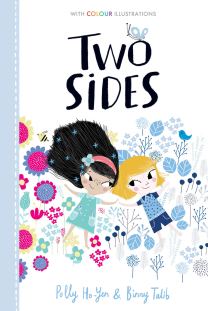
Two Sides by Polly Ho-Yen and Binny Talib

A beautifully illustrated book about Lula and Lenka, who are best friends and complete opposites. One day they have a falling out and they seem irreconcilable. The story is about how they come together again through patience, listening and empathy. Perfect!


Summer 19 recs 2Milton the Mighty by Emma Read

A great story for our time. Milton is a spider who discovers that he has been branded as deadly on social media and is being hunted by pest killers. He and his two best friends, fellow spiders Ralph and Audrey, must fight to restore Milton’s true reputation, but they will need the help of Zoe and her arachnophobic Dad, the humans in whose home they reside.


Summer 19 recs 3


Mr Penguin and the Fortress of Secrets by Alex T Smith

Really fun illustrations in this book. A nice easy adventure, the second in Alex T Smith’s series about Mr Penguin (a third is due in the autumn). Action and adventure with slapstick humour. Shades of Tin Tin, Captain Underpants and Hercules Poirot! A great introduction to mystery series.


10-13 year olds

summer 19 recs 4The Dog Who Saved the World by Ross Welford

I have frequently declared my admiration for Ross Welford and this is another cracking title! Welford has an uncanny ability to blend adventure and peril, with wonderful sensitive and empathic characters who defy stereotypes. In this his 2019 novel, eleven year-old Georgie and her dog, Mr Mash, must save all the dogs on earth when they are threatened by a deadly virus.


summer 19 recs 5


Pog by Padraig Kenny

I loved Padraig Kenny’s first novel Tin and his second looks great too. Brother and sister David and Penny move to their mother’s childhood home after she dies. It is situated in the middle of a forest and they soon discover that they are not alone – Pog is a tiny magical creature who protects the boundary between the human and his own world. Tempted by the prospect of seeing his mother on ‘the other side’ David is drawn to a dark place and Pog has to help save him.

summer 19 recs 6


The Umbrella Mouse by Anna Fargher

The lady in the bookshop told me this had her in tears! It has been very highly praised since its publication in May. Set in London during World War Two, Pip, a young mouse, finds herself homeless and an orphan when the shop in which she lives is bombed. She must find safety and a new home if she is to survive. Pass the hankies!


Older teens and young adults

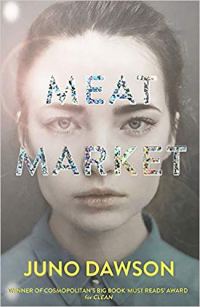
summer 19 recs 7Meat Market by Juno Dawson

A must-read author for this age group, Juno Dawson’s topics are hard-hitting but reflective of the world our young people inhabit today. This book is about the fashion industry and one young woman’s experience of it. Perfect for the #MeToo era.


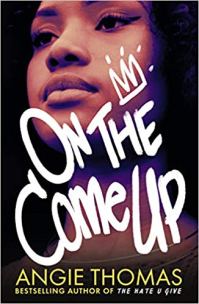
summer 19 recs 8On The Come Up  by Angie Thomas

I have recently read The Hate U Give, Angie Thomas’s first novel. If this one is half as good it will be well worth a read. The author returns to the neighbourhood of Garden Heights, the volatile setting of her first novel, but her central character this time is a teenage rapper who finds viral success online. It is a story about how getting what you wish for might not necessarily be what you need.


summer 19 recs 9

Killer T by Robert Muchamore

This looks like a highly ambitious novel, imagining a disturbing future where science has run amok and is being misused. The Killer T of the title is in fact a deadly virus which terrorists are threatening to release onto the world unless they are paid a huge ransom. Harry and Charlie are two teenagers attending a Las Vegas high school who become caught up in the effects of the impending catastrophe. Against a background of potential disaster, supposed technological advance and rapid social change, friendship and love are the forces that truly underpin the human condition.

Now that must have whetted your appetite – I want to go and read all of these right now! I hope you will find something for your kids here. As always, the golden rule with kids reading is support whatever it is they want to read (parental guidance notwithstanding), show an interest and discuss it with them.

Happy summer reading, kids!

Are there any titles for kids that have caught your eye this summer?

If you have enjoyed this post, I would love for you to follow my blog. Let’s also connect on social media. 

#KeepKidsReading week – the Summer Reading Challenge

I’m bursting with excitement this week – I seem to have got back into a good reading groove at last, and I’ve started another book by children’s author Ross Welford. I try to read at least one YA or children’s book a month and they are always such a treat. Ross Welford is one of my favourite authors; I loved both Time Travelling with a Hamster and The 1,000 Year Old Boy and I’ve now started on on What Not To Do If You Turn Invisible. I’ll be posting my review of it later in the week.

2019-07-17-09.50.20.jpg

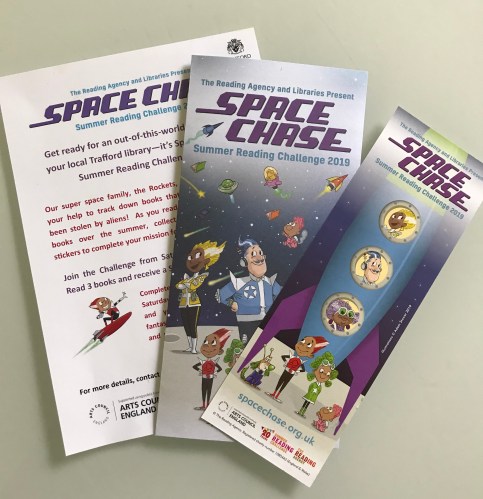
This week also sees the launch of the kids Summer Reading Challenge 2019 by The Reading Agency in association with libraries up and down the country. The theme this year is Space Chase, coinciding with the 50th anniversary of the moon landing. Children joining the reading challenge are encouraged to read up to six books. When they join they get a ‘mission folder’ so they can keep a record of their achievements, they get stickers and rewards for each book read, and, on completing the challenge, will receive a certificate. It’s aimed at primary school children and there is also a fantastic website with games, book recommendations, competitions and the chance to write reviews. I got my kids into this every year when they were younger and it also gave me something to do with them – a weekly trip to library certainly helped to fill the long summer holidays. It’s a win-win!

“It’s on in almost every locality, it’s a delight for the children to take part in and…it’s one of the few things where you’re delighted and it does you good! What could be better?”

Michael Rosen, Author and former Children’s Laureate on the Summer Reading Challenge

I’ll be posting tomorrow with some book recommendations for your kids for this summer, so look out for that if you’d like some ideas to get started.

If you have enjoyed this post, I would love for you to follow my blog. Let’s also connect on social media.

Book review – “An American Marriage” by Tayari Jones

2019-06-14 10.49.53This book has been on my to-read list for some time now, ever since it caught my eye over a year ago when it was published. I recommended it as a hot new read for Spring last year, in fact! Following in my footsteps (he must have read my blog post!) Barack Obama recommended it as one of his Summer reads last year and he is quoted on the cover as saying this is “A moving portrayal of the effects of a wrongful conviction on a young African-American couple.” Notably, it also won the Women’s Prize for Fiction in June.

Let me get my cards on the table straight away – I loved this book, and it completely lived up to the hype it has had. It is such an interesting topic for a novel and yet one in which very little actually ‘happens’. It is a tender account of a relationship and the effect that one single event has upon them. It does not once get sentimental, does not set out actively to campaign about the injustice of the one event, and does not take sides. It just lays everything bare for the reader to draw their own conclusions. It will break your heart and fill you with hope at the same time.

Roy and Celestial are a young African-American couple, living in Atlanta, Georgia and their lives are on the up. They come from rather different backgrounds: Celestial is the daughter of a teacher and an academic, and is hoping to forge a career as an artist. Roy is the only son of Olive and Big Roy (who is not his biological father), decidedly more blue-collar but with strong values, pride, and deep Christian faith. They met through a mutual friend, Andre, who has lived next door to Celestial’s parents since they were children. Roy and Celestial are very much in love, but it is still early days in their marriage and they have their ups and downs.

They visit Roy’s parents in Louisiana one weekend and decide to stay in a motel; Olive has a slight suspicion about her daughter-in-law’s commitment to her son and it is more comfortable for both women if the couple do not stay in the family home. Roy and Celestial have an argument and Roy storms out of their motel room. He meets with a white woman whilst fetching ice and the two get talking. He tells her about the argument with his wife. Later that night, the police storm Roy and Celestial’s room whilst they are sleeping and arrest Roy on suspicion of rape of the woman he had chatted with earlier in the evening. At the trial, the woman testifies with certainty against Roy and it is quite apparent that Roy has little chance of escaping a guilty verdict, even though his innocence is clear to all who know him. Roy is sentenced to twelve years in prison.

The early chapters set the scene, switching between first person accounts by Roy and Celestial of their backgrounds, how they met and their recollections of the fateful night. The following chapters are an exchange of letters between the couple whilst Roy is in jail. Although Celestial visits him every month from Atlanta, the letters are an important way for them to keep their love alive. Just a couple of years into Roy’s sentence, however (and only 80 pages into the book), Celestial tells Roy that she can no longer go on being his wife, that they have spent longer apart than they were together, and that the situation is intolerable for her. We learn that Celestial was pregnant at the time of Roy’s trial but that they decided she should have an abortion as neither wanted their child to grow up with its father in prison. It is a metaphor for the doomed future of their marriage. Their correspondence ceases, and the remaining letters in this section are between Roy and his lawyer, Robert Banks, a family friend of Celestial’s parents, both about Roy’s appeal, which seems futile at this stage, and the status of his marriage.

This might seem the like the end of the thing. What we know about the couple at this stage is that Celestial is a strong-willed, independent woman who knows her own mind, and that Roy is proud, stubborn and conservative. The situation seems hopeless.

Roy spends five years in jail altogether, during which time he learns things about the status of African-Americans in the penal system he had no concept of before. He also, by chance, meets and shares a cell with his biological father, Walter. Also, Roy’s mother, Olive dies of lung cancer, never to see her son walk free. Eventually, Roy’s appeal succeeds and he is released, but he is by now broken, alone, his career in ruins. The remainder of the book is about Roy’s reunion with his old life, his hometown, Big Roy, and most importantly, with Celestial. Can their relationship be salvaged?

I don’t want to give any spoilers here, but I would just suggest that if you are looking for a romantic ending this book, thankfully, chooses not go (entirely!) down that route. It is a fine and up-close examination of the real human impact of judicial complacency, institutional racism, social prejudice and how some sectors of American society just get fewer life chances. It is also about a clash of values, between the more conservative older generation and the younger, educated, more metropolitan groups who assume there is equality.

This book is fascinating, beautiful, gripping and challenging and I recommend it highly.

If you have already read this book I would love to know your thoughts.

Follow my blog if you have enjoyed this review, and get regular updates on my posts. 

Book review – “The Reader” by Bernhard Schlink

This was a recent choice for my book club. It was not a title I was familiar with although I had a vague recollection about a film adaptation coming out a few years ago. It was adapted for the screen in 2008, starring Kate Winslet and Ralph Fiennes. I had high hopes for the book and was excited at the prospect of reading it, especially since the comments on the cover of my edition were extremely enthusiastic. I’m afraid we were all slightly disappointed. The following review contains some spoilers.

2019-06-26 20.31.04The story begins when 15 year-old Michael, off school for many months after contracting hepatitis, seeks out Hanna Schmitz, a woman who had been passing when he found himself being sick in the street and who had helped him. Once he is well again, Michael’s mother sends him off to find the mystery good Samaritan in order that he can thank her. Hanna is twenty years Michael’s senior and employed as a bus conductor, but despite the social and age gap between them, they begin a passionate affair, both parties equally consenting. One of the more intimate aspects of their relationship is that Michael reads aloud to Hanna, after sex and in the bath mainly, although never the other way around. Michael never questions Hanna’s desire to have him read to her, he just accepts it. This makes up the first part of the book and perhaps it is a testament to events that have occurred since the time of its writing that all of us (mothers of teenagers!) found the prose rather discomfiting, and not a little implausible. Hanna disappears mysteriously out of Michael’s life, leaving him heartbroken and perhaps also rather damaged.

In part two, Michael is older, now at law school, when, as part of his studies, he is sent off to observe the trials of a number of former female guards of a concentration camp who are being charged with allowing the deaths of dozens of Jews, locked in a church when it was hit by a bomb and destroyed by fire. Michael is horrified to discover that Hanna is one of those on trial. There is a detailed report of the events that Hanna is accused of writing, thereby implicating her as the main guard responsible for the atrocity, a charge she does not deny. Michael observes the trial in horror unable to come to terms with the back-story of the woman he once loved. Only at the end of the trial, does he realise Hanna’s secret, that she is illiterate (and therefore could not have written the report), and he finds himself with the dilemma of whether to intervene and tell the judge, with all the implications that would have. He elects not to, realising that Hanna confessed in order to conceal her illiteracy and for him to expose her would breach her autonomy, even if it means there has been a miscarriage of justice.

The final part of the book is about Michael’s life after the trial, his failed marriage, and his eventual decision to make contact with Hanna in prison. He sends her cassette tapes of himself reading aloud although he never includes any personal messages or letters. Eventually, he sees Hanna again, as she is about to be released at the end of her sentence, and helps to set her up with work and accommodation for when she is released. Hanna never gets out though as she hangs herself in her cell on the night before her release.

Set in the late 1950s and 1960s, the novel is said to be about Germany coming to terms with its wartime past; there is Hanna’s trial, the account of the events in which she was involved, the opportunity for the survivors of the camps to give an account of their experiences, and for the German judiciary to rightfully punish those responsible and be seen to dispense justice. On the cover of the book, the late Sir Peter Hall is quoted as saying “[This] is the German novel I have been waiting for: it objectifies the Holocaust and legitimately makes all mankind responsible.” I’m afraid, I just don’t think it reaches these heights. Yes, it is quite well-written and is arguably an interesting story, though one which my fellow book club members and I found deeply uncomfortable since we saw the relationship between Michael and Hanna as borderline child sexual abuse. The fact that this is in no way acknowledged is a problem. The story for me, though, just didn’t go anywhere; I reached the end and had nothing to say, no great realisation or revelation, or even closure. I just don’t think the book really knew what it was about.

So, a disappointing read, I’m afraid and not one I can recommend. I’d quite like to see the film, to see what Director Stephen Daldry (of Billy Elliot fame) made of it.

I’d love to know what you thought, if you have read it – did something different come out for you? And how are we to view works of literature written at times when societal norms, or our understanding of them, are different?

If you have enjoyed this post, I would love for you to follow my blog. Let’s also connect on social media.

Building your children’s library #1 – books for pre-schoolers


I have a deep love of children’s books and am passionate about keeping kids reading, as regular readers of this blog will know. I am frequently asked for recommendations for books for children and young people. In truth, there are so many great books for kids out there and I can only read a fraction of what I’d like to, so it’s difficult. Wander into any bookshop or library, however, and you will see before you dozens of wonderful titles. I am a firm believer in allowing kids to choose their own books; that way you build their love of reading from the inside out rather than it being an interest that the parent tries to impose from the outside in. This is particularly important for teenagers who a) are likely to resist all things their parents like and embrace the opposite, and b) are particularly sensitive to being told what’s ‘good’ and ‘not good’. My advice would be, don’t worry too much about the ‘quality’ of their reading and take pleasure in the fact that they are reading. Once you engage with them on their terms, they may be more open to suggestions further down the line.


for-reading-813666_1920
Image by Aline Dassel from Pixabay

I have a deep love of children’s books and am passionate about keeping kids reading, as regular readers of this blog will know. I am frequently asked for recommendations for books for children and young people. In truth, there are so many great books for kids out there and I can only read a fraction of what I’d like to, so it’s difficult. Wander into any bookshop or library, however, and you will see before you dozens of wonderful titles. I am a firm believer in allowing kids to choose their own books; that way you build their love of reading from the inside out rather than it being an interest that the parent tries to impose from the outside in. This is particularly important for teenagers who a) are likely to resist all things their parents like and embrace the opposite, and b) are particularly sensitive to being told what’s ‘good’ and ‘not good’. My advice would be, don’t worry too much about the ‘quality’ of their reading and take pleasure in the fact that they are reading. Once you engage with them on their terms, they may be more open to suggestions further down the line.

I know, however, that many parents want to build a decent library of choices for their children, and also, grandparents, aunts and uncles, and godparents also want to know what they should give as gifts. So, I am starting a series of posts on building your children’s library. I will focus mainly on classics as these are books that have stood the test of time. As ever, age boundaries are flexible – a mature 10 year old might enjoy something in 11 -13 range and vice versa. Again, don’t worry; this is not a reflection of their ability, only of their interests. It is counter-productive to push them to read topics they are not ready for.

That probably won’t be a concern for today’s list however, as I’m picking books for pre-schoolers! Having said that, my teens still get great pleasure from having many of these books around (many of our books have gone to charity shops over the years, but some will be treasured forever).

This slideshow requires JavaScript.

So, if you have or know young children in 2-5 age group, here are ten of the very best books ever:

  1. The Very Hungry Caterpillar by Eric Carle
  2. Each Peach Pear Plum by Janet and Allan Ahlberg
  3. We’re Going on a Bear Hunt by Michael Rosen & Helen Oxenbury
  4. Guess How Much I Love You by Sam McBratney and Anita Jeram
  5. Miffy by Dick Bruna
  6. Goodnight Moon by Margaret Wise Brown and Clement Hurd
  7. The Tiger Who Came to Tea by Judith Kerr
  8. Where the Wild Things Are by Maurice Sendak
  9. The Gruffalo by Julia Donaldson and Axel Scheffler
  10. Elmer by David McKee

There are probably at least a hundred other books I could have included here, so my next post on this topic might just be an extension list to this one! I’d love to hear your recommendations too. I should add that these are books not only that my children loved but that I also loved reading aloud to them. And THAT has truly been one of the joys of my life.

What are your favourite books for pre-schoolers?

If you have enjoyed this post I would love for you to follow my blog. Let’s also connect on social media. 


YA book review – “The Hate U Give” by Angie Thomas

Regular readers of this blog will know that I am passionate about children’s literature and regularly review both kids and YA books. I haven’t done a kids book review post for a while, for reasons that have been rehearsed in recent blogs, so it was a joy to pick up a YA book again and to be able to start another ‘Kids Books Week’.

The Hate U Give imgThis book is Angie Thomas’s debut novel and it caused a sensation when it was first published in the United States in February 2017. It enjoyed both critical and popular acclaim, remaining at the top of the New York Times YA best seller list for almost a year. It was made into a film which was released last Autumn. The novel came out of a short story Thomas wrote in college following the police shooting of a young black man in 2009.

The narrator is Starr Carter, a 16 year-old who lives in a poor neighbourhood of an unnamed American city, but who attends an elite private school. Her parents are not wealthy (her mother works in the health sector, her father owns a shop and has spent time in jail) but they are ambitious for their three children and determined that they should have a good education and defy the expectations of their birth. Throughout the novel Starr tells us how this presents her with some complex challenges and how she effectively has to be two different people – school Starr and ‘Garden Starr’ (the family’s neighbourhood is called Garden Heights). She is constantly torn between these two identities at an age when she is still trying to work out who she really is, and doesn’t feel she truly belongs in either place. This puts her in conflict at times with her wealthy, white boyfriend, who cannot fully empathise with her and from whom Starr keeps many of her true feelings, and indeed her father, who is angered when he discovers Starr is going out with a white boy.

Starr’s life is turned upside down when one of her friends, Kahlil, a boy she has known since kindergarten, is shot and killed by a police officer while he is giving her a lift home in his car after a party. Starr and her older brother have been drilled by their father about how to behave with the police, but non-threatening, compliant behaviour does not save Kahlil when confronted by the police officer who carries assumptions about young black males. This is the second time in her short life that Starr has seen a friend killed. As the only witness to the killing, Starr is in an impossible situation – it is her word against that of the police officer. The police officer is also a colleague of her uncle’s, so the whole family is affected and divided by the events that follow the shooting. Furthermore, the shooting raises tensions in the neighbourhood between the police and the residents, in particular the two main gangs that effectively control the area, and whose actions are presented very much as part of the problem.

The reader is carried along with Starr’s pain at the loss of the her friend, fear for the position in which she has been placed as the only witness and what this means for her family, especially in the context of the gang elements in Garden Heights, and ongoing confusion at her place in the two worlds in which she moves.

This is a profoundly moving and fascinating novel; as a reader I really felt drawn into Starr’s dilemmas – she is such a powerful narrator. On one level, the novel left me feeling despair at how easy it clearly is for young black people to become the victims of violence for which they are not responsible and how, for young black men in particular, this presents a constant threat. The author’s note at the end of the book expands on this. On another level it is a novel full of hope as the strength of the community, family bonds and Starr’s maturity and dignity shine brighter than the injustices.

The novel pulls no punches and parts of it are a tough read, but the themes are important ones for all of us to be aware of, and it is an important contribution to the Black Lives Matter  movement. Young people will I think empathise with Starr’s agonies; even though most will never have to face the terrible ordeal that she has, they will understand her teenage outlook, her anxieties and her emotions, because these are universal.

There are drug and sexual references as well as some strong language, so I would recommend this for mature 14 year olds and over. I also recommend to all adults  – it’s a cracking read.

Have you seen the film of this novel? I’m keen to know if it does justice to the book.

If you have enjoyed this post, I would love for you to follow my blog. Let’s also connect on social media.