I’d been reading some books about writing non-fiction (to try and improve my own writing) and I came across this book, extensively cited as a fine example of the genre. It’s a chunky book that I intended to skim read, with a view to getting an idea about structure and the concept of writing about a personal journey, but I quickly became engrossed in the incredible story of Henrietta Lacks, a black woman, mother of five from Virginia, who died in 1951 at the age of thirty-one from an aggressive form of cervical cancer. Without either her consent or knowledge, the surgeon treating Henrietta took some of her cancer cells and passed them on to a colleague who was trying to find cells which would survive long enough outside the human body to be useful for research. The idea of doing this without the patient’s consent seems shocking to a 21st century reader, but remember this occurred at a time of segregation and ethical concerns and patient rights were concepts not widely considered to be essential elements of medical practice.
 This may have been unremarkable and probably happened more than we care to imagine, but for what happened next: Henrietta’s surgeon had noticed how rapidly her cancer cells had grown, but when George Gey, the scientist to whom he had sent the cells, received them, he found that they divided and reproduced at a rapid rate, and, most remarkably, seemed extraordinarily robust outside their host, unlike all other cells he had dealt with. Gey soon forwarded cells to other colleagues working in the field and they too found the ability of these cells to thrive truly remarkable. HeLa (the name given to the cells) was born and they quickly became an essential part of research worldwide into therapies not just for cancer but for polio and HIV to name but a few. It is thought that around 50 million tonnes of HeLa cells have been cultivated since 1951.
Meanwhile, Henrietta, died and left behind a widowed husband and five young children, two still in nappies, who would never have any memory of their late mother, and one with severe disabilities who would later be committed to an institution. They were poor; Day, Henrietta’s husband, tried to scrape together a living for the family as best he could while Henrietta’s sisters helped with the children. The family would know nothing of what had happened to Henrietta’s cells.
Rebecca Skloot, the author of this book first learned about the HeLa cells in a science class, but it was not until several years later, reading a research paper that her interest was truly piqued and she decided to do a little more digging. She tried to get in touch with the family and was at first rebuffed, but she became increasingly fascinated, obsessed even about HeLa, and the woman behind the headlines, and what had happened to her family. Eventually, she built a relationship with Deborah, Henrietta’s daughter, who had been an infant when her mother died, and a woman who had never come to terms with her loss.
This book is not just the story of Henrietta and her family, and her cells, it is the author’s journey of discovery of the truth about medicine and science in the second half of the twentieth century. It is also a story about racism and health inequality, about exploitation and greed. The author put years of her life into this book and a glance at the references pages will show you the huge amount of research that went into producing it. It also raises some interesting questions about ethics and consent which may surprise you – you might think the answer to the question “who owns discarded parts of our bodies?” is obvious, but when the complexities of the proposition are explored we see that it is not quite so straightforward.
I expected to skim through this book in a few hours, but I found myself captivated by the story and by the issues it raised. Perhaps there are some bits the author could have left out, but I think it is also pretty clear why she couldn’t!
Recommended, especially if you have any interest in the world of medicine.
Have you ever found yourself becoming engrossed in a book that you didn’t expect?
If you have enjoyed this post, I would love for you to follow my blog. Let’s also connect on social media.

 Viktor E Frankl was a psychiatrist who is credited with developing one of the most important theories in the field human psychology (logotherapy) since Freud. He was developing his theory before he was captured by the Nazis but his time in the concentration camp enabled him to observe human beings in extreme conditions and further evolve his ideas.
 I was tempted to go for Haruki Murakami – after reading
 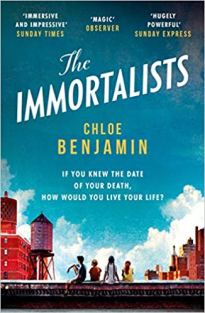 The novel begins in 1969 with the four children of the Gold family – Varya, Daniel, Klara and Simon – visiting a fortune-teller in her grimy downtown New York apartment, who is said to be able to predict the date of a person’s death. The mystic consults each child privately about their fate. Their reactions vary; Daniel, the second oldest, for example, says he thinks it is all rubbish. The younger children seem more vulnerable and more preoccupied, particularly Simon, who at this point is only seven years old, and who is told that he will die young.
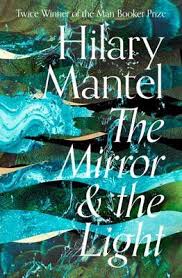 I think we can believe the hype – this is surely a writer at the top of her game! A few lucky critics who have had a preview have already tipped it for this year’s Booker Prize (parts one and two both won in 2009 and 2012). I am a huge fan of Mantel, ever since I read “A Place of Greater Safety”, a novel about the aftermath of the French Revolution. It was the book that really got me back into reading after I’d finished my English degree – I was all ‘read-out’ by the time I graduated, so this book saved me!
 There are many other books to get excited about this year. Isabel Allende’s latest book A Long Petal of the Sea was published in English last month. It is a story about escapees from the Spanish Civil War arriving in Chile in 1939, their evacuation having been organised by the great national poet Pablo Neruda. I was lucky enough to attend a talk Isabel Allende gave in Manchester (with Jeanette Winterson!) a couple of weeks ago and she was every bit as impressive and inspiring as I expected her to be. AND I got a signed copy of the book!
 By the strangest of coincidences, I have also just read two books which also explore issues of race and class. Rebecca Skloot’s non-fiction work The Immortal Life of Henrietta Lacks, and The Water Dancer by Ta-Nehisi Coates. Skloot’s book is a detailed and complex account of one woman, Henrietta Lacks, an African-American woman from Virginia who died in 1951 from aggressive cervical cancer. The cancer cells from her body were special and unique because they were the first ever cells that were able to not only survive outside their host, but were able to continue to thrive and reproduce, at a rapid rate. This perhaps accounts for the very aggressive nature of Henrietta’s disease. Scientists used these cells, known universally as HeLa cells, to create trillions and trillions more of them, which have been used ever since, worldwide and have been directly responsible for the development of life-saving drugs and treatments, for example for polio. The key to the story, however, is that Henrietta died without ever having been advised about or consenting to the use of her cells in this way, neither did her family, and none of her surviving relatives have been given any financial compensation. What makes the story all the more shocking, however, is that Henrietta died at a time of segregation, and almost certainly did not receive the same level of care and respect as a white woman would have done. I will write more about this book in a future post because it is a fascinating story.
 The other book I have been reading, The Water Dancer, concerns the story of Hiram, a black slave also in Virginia in the mid-1800s. His mother was also a slave, but his father was a slave-owner, who allowed his son some elementary education after his mother’s death and then, when he was in his teens, gave him the special status of being the personal servant to his white half-brother, Maynard, the heir to their father’s estate. Hiram is also the grandchild of legendary slave Santi-Bess, one of the original transported Africans who is said to have had magical powers (Conduction), although it does not become entirely clear what these are until towards the end of the book. The first significant glimpse of this is when, whilst chaperoning Maynard on a drunken night out, the two young men somehow end up in the river. Maynard drowns but Hiram somehow emerges alive. The events which follow Maynard’s death eventually afford Hiram the opportunity to escape slavery via the Underground and he soon becomes an agent of that cause. It is not a straightforward choice for him, though, as he is forced to confront traumatic memories of his mother, who died when he was very young, and to face the many complex facets of slavery, its consequences, its victims and what it means to be free.
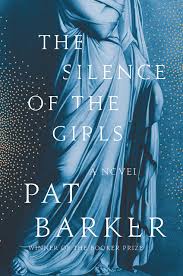 The Silence of the Girls has been critically-acclaimed and was shortlisted for last year’s Women’s Prize for Fiction. I really, really wanted to love this book, but I’m afraid I didn’t. It could be that the timing was wrong – December for me was mad busy so I read the book in short bursts over a longish period when I was quite stressed. I don’t think I gave it the time and attention it deserved. But then, neither did it really grab me when perhaps it ought to have done.
 In Winter, Ali Smith examines the ideas through the dynamics of a family thrown unwillingly together at Christmas. Sophia lives alone in a large house in Cornwall. She was a successful businesswoman but, now late in life, finds herself alone, estranged from her sister, not knowing what is going on in the life of her only son in London, and navigating with despair some of the dehumanising aspects of modern life. When we meet her at the start of the book, she is communicating with what I can only describe as a hallucination of a child’s head, which floats about with her. To the reader, this seems surreal at first, but it gradually becomes merely a manifestation of Sophia’s mental state – her deep loneliness and her disconnection from normal life and society. Arthur, Sophia’s son will have similar hallucinations later in the book. Sophia goes about her Christmas Eve business in the town with sadness, recalling the once vibrant high street that is now a series of boarded-up shops, frustrated at being unable to withdraw money from her own bank account and the inability of the young man in the bank to appreciate or meet her needs as a customer – she has nostalgia for the days of the friendly bank manager.
