Book Review: “Harvesting” by Lisa Harding

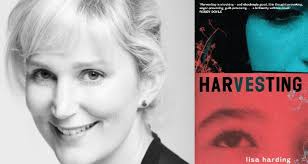
This book was given to me by a family member as a Secret Santa gift last year. I have been dying to read it for ages but it seemed to keeping slipping down the TBR list (does that happen to you too?) I determined to read it on my summer holiday, although in many ways it was rather a strange choice; not your traditional beach read! The subject matter is child sex trafficking and the author, a well-known actor in Ireland, came up with the idea after she became involved with a campaign to raise awareness of the issue in 2012.

Harvesting img

The book tells the parallel stories of two young girls, Nico and Sammy. Nico is from Moldova. She lives in a deprived rural setting, her family is poor and her father and two of her brothers are cruel and misogynistic. They have become brutalised by their poverty and by the systemic corruption and organised crime in their society. Nico’s mother is oppressed and powerless to stop the terrible fate that awaits her daughter. Nico has another brother, Luca, who disagrees with the family’s plans for her and wants to protect her, but he also cannot stand in their way. Lacking money for even a basic standard of living, Nico’s father sells his daughter for marriage to an older man, as soon as she starts her periods (so she is around 13). As far as the prevailing culture is concerned, she is a woman now and the family see no reason why they should continue to support her, so they seek to profit from her. Nico’s father believes that Petre, Nico’s future ‘husband’, will give Nico a good life in London and buy her all the things her family have been unable to give her. The two men are colluding in a mutual self-deception, one assumes because this is the only way that Nico’s father can justify selling his child in this way.

Nico is effectively kidnapped and it becomes very quickly apparent that she along with a number of other girls, is to be prepared for life as a prostitute. Nico is particularly valuable because she is so young and a virgin. The girls are drugged, abused, beaten and then trafficked across European borders until eventually they reach Ireland. Petre’s girlfriend Magda is the only person able to protect Nico even a little from the worst excesses of the gangsters and she is only able to do so on the basis that Nico is worth more if they treat her less cruelly than if she becomes ill through mistreatment. It is the only fragment of protection that Nico has.

The other main protagonist in the book is Sammy, a young Irish girl, of around 16, who represents a different side of sex slavery. She falls into a life of prostitution almost by accident. Problems at home (her mother is an alcoholic and her father can only cope by separating himself) and at school lead to her leaving home and falling into the hands of adults who exploit and abuse her. Sammy presents a more challenging character, firstly because, at a superficial level, her problems seem to be of her own making; she is rebellious, uncooperative and undisciplined. She puts herself in dangerous situations which have been interpreted as attention-seeking acts. She is a child out of control and has sacrificed the sympathy of those who might (should!) help her, such as the school authorities. What Harding does skilfully, though, is show us that, despite the fact that she is sassy and street-wise, Sammy is a child and no less deserving of protection than the more ‘innocent’ Nico.

What is also particularly chilling about Sammy’s story is that in a modern democratic western society, with liberal traditions, social services and proper policies and procedures in place to protect young people, even a young girl from a middle-class background can fall through the cracks and, worse, some of those who should be protecting her, are part of the problem.

The two girls eventually meet when they find themselves in the same suburban brothel and their fates become intertwined. This is not a book for the faint-hearted and some readers may find they are unable to bear the sex scenes. It is hard-hitting. Some aspects of it are almost unbelievable; as a frequent visitor to Ireland for many years now I find it difficult to accept that there is a huge underground network providing children for an illicit sex trade in a city I know and love. But the author has clearly researched the story extensively, and fact-checked with people who work and campaign in this field. This lends the book a shocking credibility. And we know from child sexual abuse cases of recent years that the worst perpetrators are often hiding in plain sight, and that the collective disbelief that people could act in such ways can blind us to the realities. This book will definitely shake you out of any complacency.

I recommend this book – it is hard to say it’s enjoyable, more that it is an important book, that is compelling, thought-provoking and necessarily shocking. It is well-written with strong characters.

Can you recommend any similarly hard-hitting but important books?

If you have enjoyed this post, do follow my blog and I owuld love for us to connect on social media. 

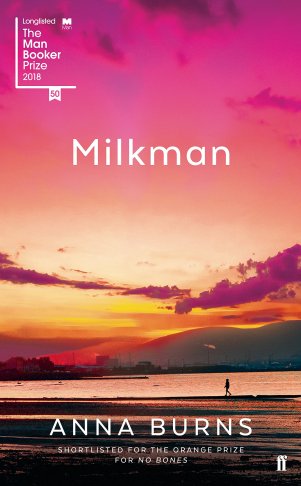
Man Booker Prize 2018 – shortlist announced next week

Next Thursday (20 September) sees the announcement of the shortlist for the 2018 Man Booker Prize, the foremost literary prize in the UK and one of the most important on the international calendar too. The longlist was announced back in July and I have to confess that I was not familiar with any of the novels listed. The shortlist comprises the six best novels, as agreed by the judging panel from their longlist of thirteen books.

MB judges 2018
The Man Booker 2018 judging panel (L-R) – Val McDermid, Leanne Shapton, Kwame Anthony Appiah (Chair), Leo Robson, Jacqueline Rose

This is an important year for the Booker as it celebrates its 50th anniversary. There was a special award made earlier this year for the Golden Man Booker, the best work of fiction from all the winners. The judging panel was a stellar cast and each chose their favourite work, as follows:

Robert McCrum – In a Free State (1971) by VS Naipaul

Lemn Sissay – Moon Tiger (1987) by Penelope Lively

Kamila Shamsie – The English Patient (1992) by Michael Ondaatje

Simon Mayo – Wolf Hall (2009) by Hilary Mantel

Holly McNish – Lincoln in the Bardo (2017) by George Saunders

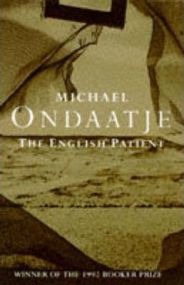
The English patientThis shortlist was announced in May and the list was then put up for a public vote. My personal favourite of these was Wolf Hall. In 1983, the celebrate the 25th anniversary of the prize a “Booker of Bookers” contest was set up and three judges chose Salman Rushdie’s Midnight’s Children, which I probably agree with. It was good to see the vote open to the public this time rather than a small group of the literati, and the winner was The English Patient. I still remember reading that book for the first time the year it came out and then the wonderful movie with Ralph Fiennes and Juliette Binoche, which itself went on to win several Oscars including Best Picture.

The panel of judges this year includes Val McDermid, so you can be sure that one of their criteria will be whether or not it’s a great story, something, I think it’s fair to say, literary fiction does not always consider of the highest importance. That was my feeling about last year’s winner, sadly.

For the last couple of years I have set myself the task of reading the shortlist before the winner is announced in October. Last year I managed five out of the six, and I STILL have not completed Paul Auster’s 4321 – I want to, honestly, but it’s SO LONG! I will do the same again this year, although I note that we seem to have one less week than usual between the shortlist and the announcement of the winner on 16 October – yikes, less than four weeks! Let’s hope there are no more monster tomes!

So look out for the shortlist announcement this Thursday; it will probably make many of the news bulletins.

Do you plan to read the Man Booker shortlist?

If you have enjoyed this post, do follow my blog and connect with me on social media.

Book review: “Death on the Nile” by Agatha Christie

This is my second Agatha Christie this year. Having never in the past felt a particular desire to read her work, I have to say that I am completely won over! I chose this book for August in my Facebook reading challenge, which happened also to coincide with my summer holiday. When I stop and think, there is something a little odd about choosing books about death and misery for the kind of escapist material I usually seek for holiday reading, but there is a kind of unreality about the two books I have read, a kind of nostalgia for a bygone era. I do also love the sense of place that Christie evokes; I found this to be true also of Murder on the Orient Express, which I read in January, although in this novel, there are some anachronistic references to the Egyptians which make a modern reader wince slightly.

Death on the Nile imgIn some ways, there is not a great deal to say about Death on the Nile that you couldn’t say about any other Christie novel, I suspect: there is a situation, in this case, a Nile cruise, being undertaken by 10-15 characters, all for different reasons. Conflicts and tensions are set up amongst the different characters, mysterious aspects of their personality or behaviour are noted, one of their number dies and then there is a process of detection to work out whodunnit. I did largely guess the correct outcome in the case of this novel, although I didn’t with Orient Express.

Both the Christie novels I have read are Poirot novels (these make up a third of Christie’s impressive oeuvre) and he is, of course, a marvellous central character – quirky, consistent, charming, and with a brilliant mind. David Suchet played Poirot to great acclaim in the wonderful UK television series, and although I am familiar with them I have to confess I never actually watched them! Suchet was in my mind, however, as I was reading the book.

I found the book unputdownable. I was eager for each new chapter, each new revelation; you can argue until the cows come home about whether this is “great literature” or something more “popular” but you can’t ask for much more than that, in my view. Wonderful characterisation, brilliant plotting, vivid imagination and storytelling that keeps you gripped to the end.

2018-09-10 10.16.18
Quite a back catalogue!

Reading these two books this year has definitely made me want to read more Christie. I find the novels quite quick reads, just as well since there are nearly 70 of them! I feel the need now to start with the first Poirot novels, to see how his character begins and how the author develops it over time. I also fancy like to binge-watching all those Poirot television dramas – there must be a channel somewhere showing them! A project for when the nights start drawing in, perhaps.


Christie is such a clever writer and one who clearly understood her readership and gave them what they wanted. Yes, I suppose they are rather formulaic, but when the world feels rather unpredictable there is no harm in getting what you expect from a book!

Recommended.

What appeals to you about Agatha Christie?

If you have enjoyed this post, I would love for you to follow my blog and to connect with me on social media.

Summer holidays

We arrived in France yesterday for our family summer holiday. We had a week in Ireland last week visiting family, travelling between Dublin and West Cork. It was wonderfully full-on so there was precious little reading time. However, now that it’s just the five of us I’m looking forward to a slower pace. My children are all well into the teen zone now so my husband and I find ourselves twiddling our thumbs in the mornings, waiting for them to get up. Perfect reading time!

We are staying in Cancale, a smallish coastal town in Northern Brittany, arriving here on the overnight ferry from Cork to Roscoff, which was very pleasant indeed – good, reasonably-priced food, decent cabins and plenty to do.

I’ve been unusually restrained with my holiday library this year, just the three books: Harvesting by Lisa Harding, a harrowing account of child prostitution, child trafficking, abuse and neglect, Death on the Nile, by Agatha Christie, the August choice for my Facebook Reading Challenge, and The Last Runaway by Tracy Chevalier, one of my book club’s summer reading titles.

I’ve almost finished Harvesting in the first couple of days! It’s not for the faint-hearted, but is gripping. I’m told it has been thoroughly researched and is not an outlandish account. If this is the case, I have truly led a sheltered life. It’s tough stuff.

If I manage all three books there is always the Kindle back-up! I’ll keep you posted on my progress.

What are your holiday reading choices?

Book review: “American Pastoral” by Philip Roth

2018-08-08-16-30-02.jpg

The theme for July in my Facebook Reading Challenge was an American novel. It was a tough choice as I wanted to select something that captured the American ‘story’. I at first thought about The Color Purple, which had been on my shortlist for February (a work by a feminist writer) but I felt it was too similar to June’s choice of I Know Why The Caged Bird Sings, the first volume of Maya Angelou’s autobiography. I also thought about The Bonfire of the Vanities, but decided it was a bit long and my fellow readers on the Challenge would not thank me! So, I finally alighted on Philip Roth’s American Pastoral, which seemed appropriate in terms of both subject matter and timing, since Roth died just a couple of months ago. I’m not sure how other readers on the challenge got on, but I’m afraid I failed to complete it within the month – it’s not overly long at 423 pages, but the writing is so rich that it was almost impossible to read at any pace. I had to (and wanted to!) savour every word. That gives you an idea of my overall feeling about the book – it is tremendous, epic, glorious and tragic. If you want to understand anything about the American experience, especially the immigrant experience over the last hundred years or so and the effect that has had on the mindset of American-born second and third generation immigrants, it is essential reading.

2018-07-23 16.19.23The plot is not complicated: ‘Swede’ Levov is a third generation Jewish immigrant whose grandfather came to America from Europe. He was a glovemaker and set up a business in Newark, New Jersey which became highly successful. Swede’s father continued the business, which peaked in the 1950s and 1960s when glove-wearing for respectable women was the norm and most would have several pairs. (There is more information on gloves in this book than you will ever need to know, but it’s fascinating!) Swede inherited the business from his father, while his more wayward brother became a cardiac surgeon.
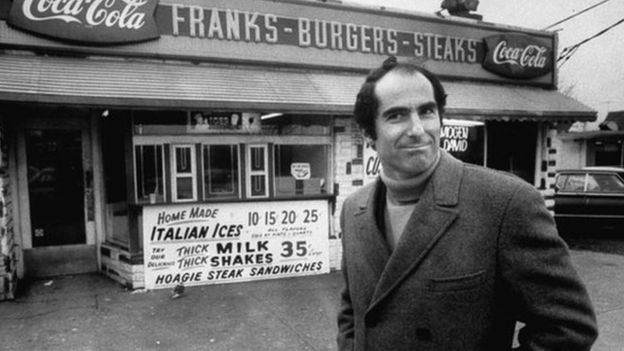
Swede Levov pursued the quintessential ‘American dream’ – he excelled in sports at school, served in the military, followed his father into the business, and learned the glove trade, married an Irish-American Catholic former beauty queen, with whom he had a daughter, Merry. From the outside everything seems perfect except for one small flaw – Merry has a stammer, which no amount of expensive medical or therapeutic treatment seems to be able to fix. This is the first indication that Merry perhaps represents some flaw which will undermine the Levovs and all that they represent.

Slight spoiler alert (though not really because you learn of the event quite early in the book): as a teenager Merry becomes obsessed with opposition to the Vietnam war. She becomes increasingly frustrated and rebellious. Her parents lose control and it culminates in her planting a bomb in the general store of Old Rimrock, the solid New Jersey semi-rural idyll in which the family has settled. The bomb kills the local doctor.

Swede’s world begins to fall apart; he cannot accept that his daughter has committed this crime, believing that she must have been put up to it by others, or indeed that others did it and are allowing her to take the blame. For a number of years Swede lives in the hope that he will be able to find his daughter, that the truth will come out and that she will be exonerated, and that their life will return to ‘normal’. For a time, it appears that he might find be able to find Merry, when a woman known as Rita Cohen contacts him saying she knows Merry’s whereabouts. Swede becomes convinced that she is in fact the real bomber because she is cruel and threatening and extorts money from him.

The Rita Cohen thread is all part of Swede’s self-deception, however, and this is the central theme of the book – Swede, his wife and his family, represent the ‘American dream’, which is in fact, just that, a fantasy, a mirage. Merry’s actions put Swede on a path where everything he held dear, which he believed to be real, unravels and is exposed as a sham.

As I have already said, the plot is not complex because it is not a novel so much about events as it is a deep exploration of the American psyche. The structure of the book is quite complex, however, but so brilliantly done that it is not hard to follow. It flits effortlessly between different stages, between different characters and their individual stories and the handling can only be described as masterful. No wonder it won the Pulitzer Prize (1998)! It explores notions of religion in America, particularly the Jewish experience as told through the Levov family, and through the eyes of our first narrator, former schoolmate of Swede’s and now author Nathan ‘Skip’ Zuckerman, the Catholic experience (through Dawn Levov) and the American Protestant experience through the residents of Old Rimrock. The decline of the glove industry and its craft, and also the city of Newark where the Levov family business was based, is a metaphor for the gradual collapse of the concept of the American dream which now seems to lie degraded and in ruins. A further metaphor is the Garden of Eden story, itself Old Testament fiction. The book is written in three parts (Paradise Remembered, The Fall and Paradise Lost) echoing Milton’s epic poem Paradise Lost, because for Swede Levov the experience is truly a destruction of all that he once understood to be real and to be good.

Philip roth
In American Pastoral Roth explodes the idea of the ‘American dream’.

This is the longest review I’ve written in a while and yet I feel I have only scratched the surface in telling you about this book. I have only just completed it so I may write more in a few weeks once it has had a chance to sit with me! Truly, as I savoured the last few pages I was open-mouthed at the unravelling. It is truly an American tragedy (the title is a kind of oxymoron), and it reminded me of Long Day’s Journey Into Night, Who’s Afraid of Virgina Woolf similar examples of the collapse of an American dream happening in slow motion before our very eyes. The final dinner party scene is quite spectacular.

Needless to say I recommend this book highly. It’s not an easy read but it rewards in spades.

If you have read this book I would love to hear your thoughts.

Hot new reads for the Summer

As Britain swelters under a seemingly relentless heatwave, thoughts are turning to holidays, even though perhaps that fortnight in the sun could just as easily be had at home at the moment! So, if you are looking for ideas for your holiday reading list here are some new titles that you might look out for. It’s quite an international list so if you are outside the UK you should be able to find most of these too.

The Burning Chambers by Kate Mosse – I haven’t read any Kate Mosse but having just finished The Birth of Venus I am in the mood for historical fiction! Set in 16th century Carcassonne, France, it concerns an elderly bookseller and his family and the impact of the religious wars on their lives.

The Baghdad Clock by Shahad Al Rawi – already a best-seller in Dubai and the UAE, this novel, set in the time of the first Gulf war in 1991, looks at how the conflict affected the ordinary people of the city of Baghdad. When our television screens are full of images of refugees caught up in war, of bodies and of bombed-out buildings, I hope this novel will give us an insight into the reality of the lives of people just like us.

Lala  by Jacek Dehnel – an elderly woman recounts her extraordinary life to her grandson. Born in Poland in 1875 she lived through two world wars, life under communism and then liberation. This book has already won prizes in the author’s native Poland.

Social Creature by Tara Isabella Burton – set in New York city this novel concerns the increasingly oppressive friendship between two young women, aspiring writer Louise and wealthy social butterfly Lavinia. The two women meet when Louise goes to tutor Lavinia’s younger sister. Their friendship becomes necessary to both of them, but for different reasons, and is characterised by deceit, jealousy and an unhealthy dependency.

The Hour of Separation by Katharine McMahon – McMahon’s The Rose of Sebastapol is one of my all-time favourite books. I haven’t read anything she has written since, but I really like the sound of this novel. Another novel about friendship between two women, Christa and Estelle, this time set in 1939, who have in common Fleur – Fleur was the Belgian Resistance fighter who saved Christa’s father in the Great War. She was also Estelle’s mother. The two women meet just before the outbreak of World War Two.

My Year of Rest and Relaxation by Ottessa Moshfegh – I loved Moshfegh’s thriller Eileen, which was shortlisted for the Man Booker Prize in 2016. Her new novel, published in the UK this week, promises to be equally dark and thrilling. Set in 2000, around the corner in time from 9/11, our narrator is a wealthy young New Yorker. The deaths of her parents while she was studying at Columbia university, a sense of the pointlessness of her own life, and dysfunctional relationships with her so-called best friend and her Wall Street boyfriend, lead her to take a ‘narcotic hibernation’. It is not without consequence.

The Temptation of Gracie by Santa Montefiore – the cover tells you this is going to be perfect for poolside! Gracie Burton blows all her savings on a week-long cookery course in Tuscany, much to the consternation of her daughter Carina and granddaughter Anastasia. The trip turns out to be about more than just mid-life crisis, however, and aspects of Gracie’s past that her family were not aware of, are revealed. Tantalising!

Some of these books are only just out and so may only be available in Hardback, or e-reader – perfect for holiday packing!

What are your recommendations for the summer?

If you have enjoyed this post, do subscribe to my blog to get notifications of future posts. Let’s also connect on social media.


Book review ‘Salt to the Sea’ by Ruta Sepetys

I saw Ruta Sepetys speak at the Hay Festival in May and I’m so glad I did, because otherwise this book may not have crossed my radar. It’s being marketed as a Young Adult novel (though DO NOT let that put you off) and there were many young people in the audience with whom Ruta was gracious, charming and generally lovely.

RutaThis book is magnificent and I urge you to read it. It was my book club read this month and we all loved it. It concerns a period in hsitory that is seldom openly discussed – the brutality of the Russian advance into Germany at the end of the WW2. One of the earliest books I reviewed on this blog was A Woman in Berlin (Anonymous author) which was an account, reputedly a true story, of the siege of that city and its final capture by Russian troops who, half-starved and brutalised themselves, set about rape and pillage of the native population (which by that stage was mostly women, children, older men and the infirm) on an industrial scale. It is tough reading. My WW2 history is not great so correct me if I’m wrong, but these events are not widely recognised and discussed because of course Stalin was part of the Allied group which defeated Hitler. There was, and, arguably, continues to be, a reluctance to openly acknowledge anything which might tarnish the glory of that victory. We all know that the Allies committed many atrocities in the name of war, but somehow these have been brushed over.

Enough of the political history because Salt to the Sea is so much more than that; it concerns an event that almost no-one knows about, the sinking of the civilian ship Wilhelm Gustloff in 1945 by a Russian submarine, resulting in the largest loss of life at sea in maritime history, My children at school know all about the Titanic, thanks to the movie and the 100th anniversary of its sinking in 2012. A little over 1,500 people died in that disaster. Nine thousand died on the Wilhelm Gustloff, over half of them children and almost all of them desperate refugees.

It is a story beautifully and skilfully told through the eyes of four characters – Joana, a young Lithuanian nurse, Florian, A Prussian who worked for but then subsequently fled from the Nazi art theft effort, Emilia, a Polish girl from Lwow, whose parents sent her away from home to live with a German family with whom they thought she would be safe, and Alfred, a young German soldier, conceited, inept and deluded. Joana, Florian and Emilia are part of a small group, which includes an elderly shoemaker nicknamed ‘Poet’, a young boy, Klaus, a young blind girl, Ingrid, and Eva, a bold and forthright German woman. The raggle-taggle group has come together on the road, along with thousands of others, and is making its way to Gotenhafen, fleeing the brutal Russian advance, in the hope of boarding a ship which will take them further west and to what they hope will be relative safety.

It is the end of the war and they all know the Nazi Reich is close to collapsing, but the military remains in charge and committed to the Fuhrer’s cause. The group is also well aware of the fates of others who have fallen into the hands of Russian soldiers, some of them having direct experience of Russian violence. The group is facing multiple threats, not just from the Nazis and the Russians, but also from starvation and sickness. We follow the group as they trek across Prussia, learning about their back-stories, and the relationships between the group’s members evolve.

2018-07-11 15.29.05
“Freedom” – my copy, signed by the author!

Once they reach Gotenhafen, they feel relief and begin to feel safe. Although the town has become a ghetto, with thousands of desperate people trying to escape on a handful of ships, they are hopeful and begin to imagine a future once again. Alfred is one of the sailors on the ship and by the time the group meets him we have learned much about his earlier life. He will become an important character in the events our group is about to face, and his back-story is important to understanding the motivation behind his actions.

For the reader, the tension here is excruciating because although the characters are hopeful and relieved, we know that tragedy will strike the ship. It is just a question of who, if any of them, will survive.

Sometimes, knowledge of the general outcome of a story can have a profound effect on your reading experience. This was very much the case for me here. The tentative joy, so long held-back and so fragile, that the characters experience, contrasted so deeply with the doom and dread that I felt for them.

This is a Young Adult novel and I would suggest that it is appropriate for 14 years and upwards. Even then, some younger teens might find it quite challenging. I would liken it to The Book Thief. The characters are fictional, but the events portrayed in this book are real and we have a duty to acknowledge what happened in the past rather than to airbrush it.

I cannot recommend this book highly enough.

The NHS at 70: 9 books with medical themes

There is a great deal of debate and attention on the UK National Health Service at the moment as it celebrates its 70th anniversary this year. If you live in Britain, you can’t move for television, radio and newspaper commentaries at the moment. But the talk is not just about celebration, but about what we want and expect public services to provide in the way of healthcare, and, just as important, how the immense costs of it all should be met. The challenges are mind-boggling: we have an ageing population, advanced medicines come at a high price, the long-term nature of public health investment, not to mention dealing with developed world problems such as obesity, addiction and mental illness. The issues are massive.

The NHS was described by politician Nigel Lawson as “the closest thing the English people have to a religion” and it is indeed dear to the hearts of many. Observe the profile it enjoyed at the opening ceremony to the London 2012 Olympics and the influence the promise of extra cash for the NHS most likely had on the Brexit debate.

I have no intention of starting a political debate here, but if health is on your mind, you might want to dip into some books with a medical theme. Here are some of my suggestions (not all of which I have read, I should add):

  1. Still Alice by Lisa Genova – a moving account of a 50 year-old woman’s development of early onset Alzheimers. Made into a film starring Julianne Moore.
  2. Everything Everything by Nicola Yoon – a YA book about a young woman suffering from a rare condition which means her immune system is dangerously impaired.
  3. The Diving Bell and the Butterfly by Jean-Dominique Bauby – a harrowing true story where the author developed locked-in syndrome after a car accident. He was initially thought to be in a coma, but was in fact fully conscious. He was eventually able to communicate through blinking, and wrote this book using only this tool. Incredible and reminds you of the fragility of life.
  4. The Fault in Our Stars by John Green – another YA novel, both my daughters love this book, about teenage terminal illness. Also made into a tear-jerker of a film.
  5. This Is Going to Hurt by Adam Kay – award-winning non-fiction writing from a junior doctor telling it like it is on the NHS front-line.
  6. Call the Midwife by Jennifer Worth – love the TV show, currently reading the follow-up Farewell to the East End, Worth was a young midwife in East London in the 1950s so for a taste of the early days of the NHS look no further.
  7. Eleanor Oliphant is Completely Fine by Gail Honeyman – a young Scottish woman’s mental illness, compounded by loneliness, detachment and the harshness of modern life.
  8. The Curious Incident of the Dog in the Night-time by Mark Haddon – challenging life events, seen through the eyes of a young man with Asperger’s Syndrome. A must-read.
  9. Two Girls, Fat and Thin by Mary Gaitskill – I have recommended this book so many times. It’s an intense novel about eating disorders, mental health and sexuality.


If you have suggestions for any other books with a medical theme that you have enjoyed, I would love to hear them.

If you have enjoyed this post, do follow my blog or connect with me on social media.


A little light reading

I usually have two or three books on the go at any one time – at the moment it’s my book club book and a children’s book, and then I usually have one other. Sometimes this ‘other’ is necessary as a bit of light relief! Many people tell me that they love to read, but can’t find the time, so they read in bed…and fall asleep after a few pages. I know that feeling! It makes reading anything at the more challenging end of the spectrum very frustrating because you can easily lose the flow.

In this grave hour imgI have learnt my lesson and carve-out reading time for myself in the day. My bedtime reading is usually reserved for lighter books, entertainment. I have recently discovered the Maisie Dobbs series by British-American writer Jacqueline Winspear. I picked up In This Grave Hour whilst browsing at the local library. Set in London in 1939, at the time of the outbreak of World War Two, my principal interest in it was as background for a book I am currently working on. I ended up enjoying the book far more than I expected.

Maisie Dobbs is a private detective, working in London. She is titled, due to marriage, but hails from a humble background herself, though she clearly has many high level Establishment connections. Maisie is a widow, her husband having been killed in the First World War. There is clearly a sadness to her life, as there seems always to be with great literary detectives.

The mystery Maisie solves in this book concerns the violent murders of three Belgians, all of whom escaped Europe and the Nazis as they began to make their way across the continent. Maisie uncovers links between the incidents that the police have been unable to find. At the same time, war preparations are being made in London and children are beginning to be evacuated from the city, including to her own father and stepmother in Kent. Maisie finds herself particularly drawn to a young girl who goes to live with them, whose identity is unknown and who refuses to speak. Another, parallel, mystery that Maisie has to get to the bottom of.

Once I had got past my snobbery about the “this kind of book”, I must say I thoroughly enjoyed it. It was easy to read, a good story, competently written and with easy likeable characters. In This Grave Hour is the thirteenth book in the series, (the fourteenth was published earlier this year), and the author seems to have produced one a year pretty consistently. The first book is set, I believe, at the end of the First World War. It reminded me of a couple of books I have read in the past, the Kate Shackleton Mysteries by Frances Brody. Set in the 1920s, the heroine is a widowed private detective, based in Yorkshire. I read Murder in the Afternoon and Murder on a Summer’s Day, which I have reviewed on here, and enjoyed them both. There are nine Kate Shackleton books altogether.

So, if you’re looking for some light reading, for bedtime, or perhaps for a forthcoming holiday, I would recommend either Maisie Dobbs or Kate Shackleton. You could do a lot worse and you may actually find they keep you awake!

What is your recommended ‘light reading’?

If you have enjoyed this post, please follow my blog and connect with me on social media.

Easter Greetings

easter-3248883_1280

Easter is falling rather early this year, and with the weather not looking great for the UK this weekend, it could be a rather chilly Spring break. Perfect for spending time with a book! My kids will be getting the usual smallish chocolate egg from the Easter mummy bunny, plus a book token, a tradition I started a couple of years ago.

I’ll be away for a few days and have been giving some thought to what reading material I will take with me. I will, as always, take far more than I will actually get through, but I do that because I get a bit nervous when I have only one book available to read! I like to have a choice and nearly always have a couple of books on the go, in any case.

I’ll be taking Paul Auster’s 4321, about which I posted here a couple of weeks ago. I started it last Autumn and have found it really hard-going. I have been pondering whether to give up on it, but I think I’m going to give it one last focussed go, to see how I get on.

I’ll also be taking Frankenstein, the 1818 classic by Mary Shelley, which celebrates its bicentenary this year. I’m reading that with my girlfriends from my book club and we have booked to see the new production that is currently running at the Royal Exchange Theatre in Manchester in a couple of weeks. Really excited about that.

That’s it. Just the two books! That demonstrates an unusual realism about my reading and my commitment to doing justice to 4321, I think. (Although I do have a couple of back up books on my e-reader. Just in case.)

I bought a couple of magazines for the journey (I can’t read a book in a car) and nearly choked when I discovered they were £4.30. Each! Is it really that long since I bought a magazine? You can buy half a book for that!

Have a wonderful Easter, with plenty of reading and chocolate!

What will you be up to this Easter? What are you reading?

If you have enjoyed this post, do follow my blog, I’d love to hear from you.