This was one of my holidays reads and one of two books my book club chose for our summer break. It’s only my third Tracy Chevalier novel, but each time I read her I just want more! I read Girl with a Pearl Earring years ago when it was first published and then The Lady and the Unicorn a year or so ago, which I thought was wonderful. I have since picked up Virgin Blue from my local secondhand bookshop so that will be next on my list.
 One thing that is so impressive about Chevalier is how beautifully she creates the historical setting: the two novels I have read so far have been set in 17th century Holland and 15th century Paris and Brussels and I can only begin to imagine the amount of research she has to undertake. The Last Runaway is set in the United States in the mid-nineteenth century when parts of the country were only just being settled. Honor Bright, our main character is a young Quaker woman from Dorset in England. She has led a modest and sheltered life, but her world was turned upside down when her fiancé left her and their close-knit Quaker community for another woman. This was not only a scandal but it left Honor distraught and in a very difficult position. When her sister, Grace, is persuaded by her fiancé that they should move to America, Honor decides she must go with her, not only to support her sister, but to escape the oppression of her situation and have some chance of making a life for herself.
Their journey from Bristol to New York is arduous and Honor suffers with debilitating seasickness. As they travel the long distance from New York to Ohio, Grace contracts Yellow Fever and dies. This places Honor in a further difficult position: not only must she tell Adam Cox, Grace’s fiancé, that she is dead, but she is also in fear about where that leaves her as he, of course, has no obligation to support her. Honor, however, cannot face going back to England either because of the journey or the shame.
On the final leg of her journey, Honor has a frightening encounter with a local slave-hunter, Donovan. Honor is appalled both by his profession and his dangerous air, and yet also finds herself strangely drawn to him when he seems to flirt with her. This also sends her into a tailspin as it conflicts with her Quaker outlook and moral code.
Honor arrives in the small town of Wellington, close to Faithwell, her intended destination. There, she finds quarters with Belle Mills, the local milliner, who, it transpires, is also the half-sister of the mysterious Donovan. Belle warns Honor about him and it is clear there is a tension between these siblings. During her stay with Belle, Honor adapts her talent for quilting (quilting, its traditions, the patterns and its place in Quaker culture, are a strong and fascinating motif running through the novel) and shows promise as a hat-maker, endearing her to Belle and her many customers. Belle’s designs are often flamboyant, which is an anathema to Honor, who, as a Quaker, must observe plainness and modesty in all forms of dress. The two women develop a firm friendship, however, and Honor begins to feel more confident.
Honor first realises there is something strange going on when she finds a black man under a woodpile in the yard of Belle’s home. Honor is aware of the existence of the slave trade, indeed, the Quakers were an important part of the movement calling for its abolition, but this is the first time she has come so close to an escapee. She is terrified, particularly when Donovan comes searching at his sister’s property, sensing the presence of the runaway. Honor later learns that Belle is part of a network of citizens who provided the means of escape, food and shelter for runaway slaves fleeing the South to states which had already outlawed slavery – the ‘underground railroad’. Belle was what was known as a ‘station-master’.
Honor is collected from Belle’s by Adam Cox, Grace’s fiancé, and taken back to Faithwell, to live with him and his sister-in-law (also widowed) and to work in their shop. The domestic situation is uncomfortable for Honor, however, and her prospects only brighten when she is wooed and then married to fellow Quaker Jack Haymaker. At first it seems like a good marriage that will improve Honor’s situation, but her mother-in-law proves to be a formidable presence, who does not conceal her contempt for her daughter-in-law and how little she has to offer when Honor goes to live with them on their isolated farm. At first, Jack is attentive and loving, but quickly becomes complacent and Honor grows increasingly miserable, despite her efforts to feel and appropriate degree of godly gratitude. Tensions deepen when Honor decides she will provide support for runaway slaves passing through their property. This is against the expressed wishes of the Haymakers. A law has been passed which makes it illegal for anyone to help a runaway, and the penalties are severe. Whilst the Quakers are against slavery, they are also against law-breaking and Honor’s actions are seen as a threat to their livelihood. Honor finds herself increasingly in conflict with the family until the point where her position becomes untenable. All the while, Donovan hovers in the background, stalking Honor and sniffing out runaways.
I will say no more as the events of the story then take quite dramatic turns. I loved the unexpected twists of the plot. I also love the way the author wove in details about the slave trade and the underground railroad (which I confess I knew very little about). Colson Whitehead’s 2016 novel The Underground Railroad brought the existence of this movement to the attention of many readers for the first time, I think. I was not aware that Tracy Chevalier had also written this novel about it. I also loved the domesticity of this novel, its femaleness and the feminine craft of homemaking, particularly in relation to the skills required for good quilting. This seems to be a common theme in Chevalier’s work. I loved how strong the women were in this novel; the men do not come out looking so good!
I recommend this book highly. It’s a great story, a fascinating read and will give you an insight into worlds you may not know much about.
If you have read this book, I would love to hear your views.
If you have enjoyed this post, do follow my blog and let’s connect on social media.

 The plot is not complicated: ‘Swede’ Levov is a third generation Jewish immigrant whose grandfather came to America from Europe. He was a glovemaker and set up a business in Newark, New Jersey which became highly successful. Swede’s father continued the business, which peaked in the 1950s and 1960s when glove-wearing for respectable women was the norm and most would have several pairs. (There is more information on gloves in this book than you will ever need to know, but it’s fascinating!) Swede inherited the business from his father, while his more wayward brother became a cardiac surgeon.
 I chose this book for my 2018 Facebook Reading Challenge. The June theme was an autobiography, a tricky category since enjoyment can often depend on your feelings about the author. I also wanted to avoid titles that would most likely have been ghost-written. After thinking about it for some time, I chose this, the first volume in Angelou’s memoir series, and the one which is often considered to be the best. It can be read as a stand-alone.
 This is a very hard-hitting YA novel for older teens. It is an important book, dealing with a very current issue, misogyny, sexual violence and rape, but as a parent I found it extremely challenging to read. The story is set in Prescott, Oregon, a medium sized-town in the northwest United States. It centres on a group of three girls in high school (so about 17 or 18 years old) Grace, Erin and Rosina. Grace has moved to Prescott after her mother (an evangelical preacher) was forced out of her position in their previous home in the southern US because of hostility from the congregation towards her views. Grace finds, in her bedroom in their new home, some cryptic words scratched into the woodwork. She discovers that the previous occupant of the room was a girl called Lucy who alleged that she was raped by fellow students. No charges were brought and Lucy and her family left the town.
 I concluded my 2017 Reading Challenge with something a little less challenging (in terms of length anyway), a short story. I knew it would be a busy month so I did not want to set myself up to fail by choosing some lengthy tome. (I’ve done the same for my 2018 Reading Challenge). December was so busy that it actually took me a couple of weeks to get around to choosing what to read, and then Cat Person fell in my lap, so to speak!
 Cat Person, by Kristen Roupenian has caused a social media storm. Set in America it is a story about Margot, a 20-year old college student, and a brief relationship she has with 34-year old Robert. Margot works at a small independent cinema and she meets Robert when he buys some confectionery from her stand before watching a movie. She feels mildly attracted to him:
 It’s a tough one to review without giving too much away, and the comments on the jacket don’t say very much about the story either, only that it is “exquisite”, “compelling” and “forcefully moving”. The central character is Linda (also Madeline or Mattie to her parents), who is an only child living with her parents in small town Minnesota. To say they live in a rural environment is an under-statement; they live in a cabin in the woods, which they seem to have built themselves, with their dogs. It seems they were formerly part of a small commune, but the other residents have gradually moved away as the cooperative spirit broke down. Linda’s parents are rather remote and she is allowed to roam the area freely, to canoe on the lake as and when she pleases, and to walk many miles in all weathers.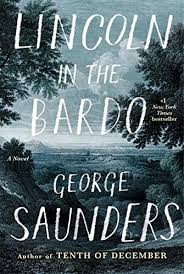
 The novel opens with our central character Maddy’s eighteenth birthday. She celebrates this with her mother and her nurse, Carla; Maddy suffers from severe allergies and lives an isolated existence in her hermetically sealed home, which she has not left for many years, so these two women provide the only relationships she really has. Maddy is home schooled, receiving almost all her tuition over Skype from various tutors. Occasionally, they are allowed to tutor her in person, but only after they spend a period of time in a decontamination unit in the house, to ensure Maddy does not come into contact with any pathogens or foreign particles which might harm her. Maddy’s father and older brother were killed in an accident when Maddy was a baby and she and her mother are therefore incredibly close.
 Julia's books