
And finally, that’s the children sorted out with fiction and non-fiction recommendations. How about some ideas for the grown-ups? Walk into any bookshop at this time of year and you will be spoilt for choice; there are lots of celebrity biographies, cookbooks, beautifully illustrated books featuring plants and animals, compilations, self-help books and gorgeous coffee table books. Many of these can be quite expensive.
If you feel a bit overwhelmed, here are a few ideas.
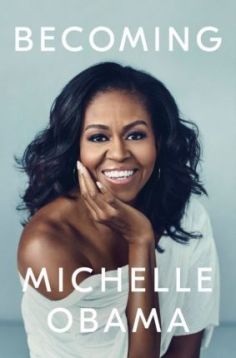 Becoming by Michelle Obama
You would have to have been living under a rock these last few weeks to have missed the publication of this! I wouldn’t normally recommend a celeb biography, but I can’t not. If it’s a bit big or a bit pricey, you could instead try the Pocket Michelle Wisdom which I spotted in Foyle’s in Birmingham last week.

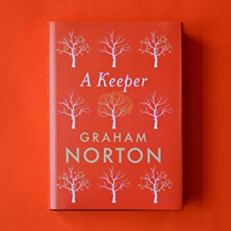
A Keeper by Graham Norton
I loved Graham’s first novel Holding and I’ve read some good reviews of this one too. I hope Santa brings it for me!

Normal People by Sally Rooney
Recently announced as the Waterstones book of the year. The story centres on the intense relationship between Marianne, who is young, clever and affluent but shy, and Connell, a likeable boy, but living in the shadows of his family’s poverty and reputation. An unlikely pairing that will have consequences for them both.

21 Lessons for the 21st Century by Yuval Noah Harari
More accessible philosophy from the bestselling author of Sapiens and Homo Deus. In this book Harari focuses on the present and invites us to consider issues such as nuclear weapons, fake news and parenting. With so much debate about the future of our species, this is a must for high-brow dinner party goers.

Notes on a Nervous Planet by Matt Haig
Listened to it, read it, loved it, reviewed it and will be giving it. Fab book about how to survive the challenges of modern life.

Codename Villanelle by Luke Jennings
For fans of the wonderful BBC series Killing Eve which was screened in the early autumn, here is the book on which the series is based.
 Ottolenghi Simple by Yotam Ottolenghi
I have followed Yotam Ottolenghi’s recipes in The Guardian for years but have rarely cooked them because they are usually far too complex or involve way too many ingredients. In this, his latest publication, Ottolenghi takes on that criticism and all the recipes in this book are said to be quick to make and contain fewer than ten ingredients, without sacrificing flavour. What’s not to love!

Vladimir Putin: Life Coach by Rob Sears
Browsed through this in the bookshop and thought it was hilarious. Great little stocking filler.

Educated: A Memoir by Tara Westover
This book has been a sensation this year and is a must-read. The author grew up in rural Idaho as part of a survivalist family and was not allowed to go to school until at the age of 17 she took matters into her own hands. She went on to study at Harvard and Cambridge Universities, but at what cost to her relationship with her family? Has won oodles of prizes.
So, I hope all that gives you food for thought. Would love to hear any recommendations you might have.
If you have enjoyed this post, I would love for you to follow my blog. Let’s also connect on social media.


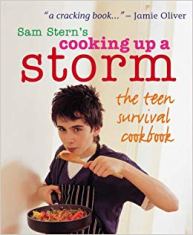 Cooking Up a Storm: The teen survival cookbook – Sam Stern & Susan Stern
 As I have been told many times by some of the people in my household, today is the official start of Christmas as it is the first Sunday of Advent (sounds like a bit of an excuse to me since we are not a religious family). Not quite feeling it myself yet, but then I tend to prefer to hold off for another week or two so as not to feel too exhausted by it all when the big day finally arrives. There is no doubt though, when you have children, or just a larger extended family with some children in it, you kind of have to get a little organised otherwise things can get a bit stressful.
 Nell is in her late teens and lives with her father, a very religious alcoholic, and her sister, Harper, who has cancer. They are from Manchester but moved to Norway, ostensibly for Harper’s medical treatment. The girls’ mother, we learn, left when they were young and they have had no contact since. Nell is a confused young woman; she is the primary carer for her sister, their father either working or incapable most of the time, and she wants to be a singer-songwriter back in Britain, but finds herself cut off from any possibility of making a career in that field. She attends a local school where she experiences bullying and isolation. She decides to go back to the UK, without her family’s knowledge, for an audition, but gets into a spot of bother en route and meets Lukas, a handsome but mysterious boy. At first it appears he rescues her but we learn later that he in fact engineered the whole episode in order to entrap her.
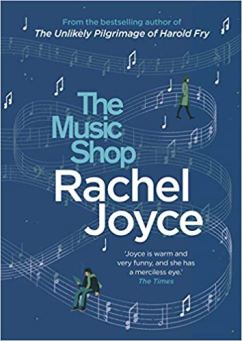 The books open in 1988 when the central character Frank opens a music shop in a rundown area (Unity Street) of an unnamed city. Frank is passionate about music, something that was instilled in him by his late mother, the eccentric Peg. It is probably the only the good thing that Frank got from her, and as the book goes on, we learn much about the lack of love and security in his childhood. This is important as it helps us to understand Frank’s actions later on. The other thing that Frank is passionate about is vinyl; he refuses to sell either cassette tapes or the new-fangled CDs in his shop, much to the chagrin of the salesmen who tell him he is a dinosaur and will have to change with the times. They gradually abandon him.
 My youngest daughter, a keen singer, started getting into the show a year or so ago. She has been listening to and singing along to the soundtrack almost continuously ever since. When it was her birthday earlier this year I decided to get her tickets. I was astonished to discover how difficult these were to obtain (and how expensive!), so she has been waiting patiently for almost six months to enjoy her birthday gift. Last week, during half term, we travelled to London to see the show. It was worth the wait and she promptly declared that it was the best experience of her life. For me, seeing her enjoying something so much and how she has engaged so wholeheartedly with the story, the music and the ethos of the production, has the been the greatest pleasure.
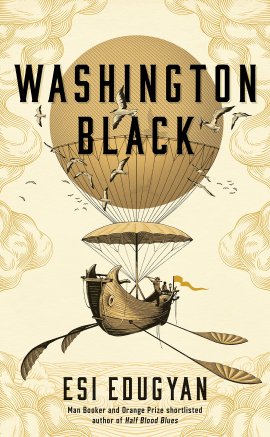 Washington Black’s life is turned around, however, when Erasmus’s younger brother, Christopher, or ‘Titch’, arrives at the plantation. He is an inventor, a man of science like his father, who does not share his brother’s views on slavery. Titch has come to Barbados in order to work on a flying machine he has designed and asks his brother for a helper. Erasmus loans him Washington Black and the boy goes to live in Titch’s quarters, helping him with drawings and experiments as well as practical household tasks. Titch discovers that Washington has considerable artistic talent as well as abilities which will be useful in his science projects and he teaches him to read. This change in Wash’s circumstances means he can probably never go back to being with the other slaves and the question is posed whether Titch has served his protégé well.
 The central character is Walker, a man from rural Nova Scotia, who fought with the Allied forces in the D-Day landings. He has seen and experienced terrible events, death and injury that most of us can barely even imagine, and he survived. After the end of the war, he goes back to the United States and finds himself living among the homeless in New York City. The book is divided into four sections: 1946, 1948, 1951 and 1953 each set in a different US city (though Los Angeles is the setting for both 1948 and 1953). As he reflects on his experiences, it becomes clear that it was impossible for him to return home to Canada. He reminisces about the quiet, gentle life he led there, where the rhythms of the seasons, the dependence on the harvests of the seas, and community events (such as village hall dances) dominate everyone’s existence. It’s as if the contrast between that life and the brutality he witnessed in the war means he fears contaminating the innocence of those he has left behind. He can never go back, never unsee what he has seen, and those he once loved will never be able to understand how he has been changed.
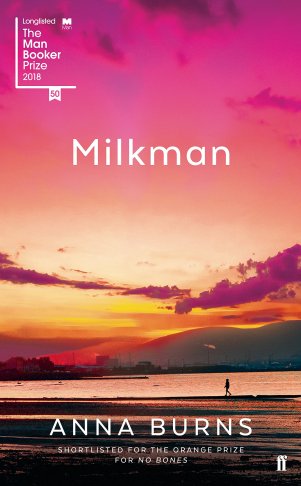 Milkman is set in Belfast during the Troubles in Northern Ireland and the central character and narrator is a young Catholic woman who finds herself drawn unwillingly into a relationship with a local paramilitary leader. It is not clear when the book is set, but I am guessing around the late 1970s, early ‘80s. Northern Ireland is known to be socially conservative, but the general sense of the place of women in society suggests to me that it dates back quite some time. Our central character (not named, I’ll come onto this) is from a large family. Her father is dead and she has several siblings, both older and younger. She is in a “maybe-relationship” with a local young man, who she has been seeing for about a year, though they have not made a commitment to one another. She is keen on running as a hobby and shares this with “third brother-in-law”. Whilst out running one day in a local park she finds that she is observed by a man in a white van. Over subsequent weeks he infiltrates her life by stealth, indicating that he expects her to have a relationship with him. He is known only as “Milkman”. It becomes clear to her that he is quite a powerful local figure in the paramilitary world, so not only does she have little choice about whether to become involved with him or not, it is made quite clear to her that as long as she goes along with him no harm will come to her “Maybe-boyfriend”.
 Julia's books