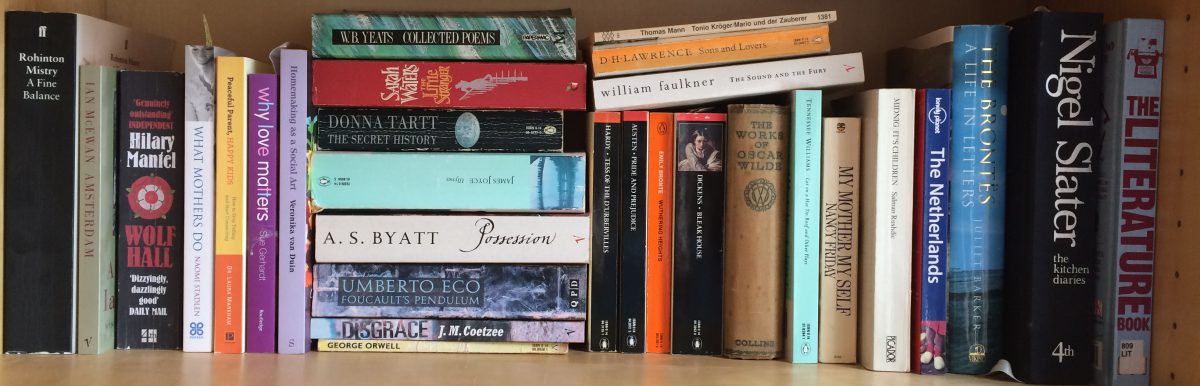
This book has certainly captured headlines since it was published in November. It was abridged and serialised on Radio 4 the week it came out. I caught a couple of the episodes, but this was merely a taster since, having now finished reading it, at over 400 pages, they gave only the very edited highlights. I do not normally go in for celebrity memoirs, and one could be quite cynical about the enormous deal that has been struck by the Obamas and their publishers (though I gather they are donating royalties to charity). However, very early on in the book any cynicism I might have had melted away. I have no idea what help Michelle had in writing this book, but it does not ‘feel’ ghost-written. Her narrative voice is very authentic – warm and compassionate, the same way that she comes across when she speaks.
 My book club chose this for our pre-Christmas read (I’ve only just finished it!) and we all thoroughly enjoyed it. It’s long, and perhaps could have been edited somewhat, but I imagine the main buyers of this book will be Michelle-fans who want as much detail as possible. The first part of the book was, for me, the least engaging. My fellow readers and I were a little surprised to learn that Michelle Robinson did not in fact come from an affluent background. She was a ‘Southsider’ – from a part of Chicago that was fairly blue-collar and largely African-American, and became more so as she grew older and some of the white residents moved out. A picture is painted of a family with strong values around hard work, doing the right thing, caring for others and loyalty to family. Michelle excelled in school through hard work, determination and the support of her parents and attended both Princeton and Harvard Law School. She has never forgotten her humble beginnings, however, and this underpins her commitment to equality and social justice. However, I did feel this part of the book was most descriptive; in the context of the book as a whole I can see why it would have been important to her to put her politics in perspective, but it was a tiny bit…pedestrian?
Michelle met her husband, Barack Obama, while she was working at a law firm in Chicago, and the development of their relationship forms the basis of the second part of the book. It’s a lovely romantic story, and they are clearly deeply committed to one another. However, it did not come without some pain. Much has been made of their difficulties conceiving a child (both daughters were born after IVF treatment) and of their seeking relationship counselling. What I found most interesting, however, was how Michelle has wrestled with and had to reconcile herself to, the role that being the spouse of a high-profile politician, then a Senator, then a President, has meant for her own career ambitions and her life as a parent.
The challenges of this dilemma are thrown into sharpest relief in the later chapters of Part Two where Barack Obama makes his bid for the US Presidency in 2007/8. The way that Michelle was treated is both fascinating and appalling. How she coped is beyond me, and it is to her enormous credit that she was able to rise above the racist and misogynist vitriol that came her way. I suspect those things ultimately made her stronger. Since Barack Obama left office in 2016, there have been calls from many quarters for Michelle to consider running at some point in the future, to which she has repeatedly said she never would (she states this explicitly in the final pages of the book). When you read her personal reflections in the 2008 campaign you can see fully why she is not made for that particular political bear-pit. She is a much better person than that and working towards a bigger picture than the short-termism associated with political elections.
As my visibility as Barack Obama’s wife rose, the other parts of me were dissolving from view. When I spoke to reporters, they rarely asked about my work. They inserted “Harvard-educated” in their description of me, but generally left it at that. A couple of news outlets had published stories speculating that I’d been promoted at the hospital not due to my own hard work and merit but because of my husband’s growing political stature, which was painful to read.
The final part of the book looks at her life in the White House. As she writes in the opening lines:
There is no handbook for incoming First Ladies of the United States.
As with most things in her life, Michelle Obama had to find her own way. In some ways that must be a liberating position to be in – having the freedom to write your own job description (the present First Lady has taken a somewhat different approach) – but for Michelle Obama there was the deep hostility she had to contend with, not just the political opposition, but the more personal, racist, misogynist and body-shaming tone she also endured.
I understood…that I’d be measured by a different yardstick. As the only African American First Lady to set foot in the White House, I was “other” almost by default. If there was a presumed grace assigned to my white predecessors, I knew it wasn’t likely to be the same for me.
When the book was published, commentators pounced upon her comments about the present incumbent of the White House, looking for something juicy. Yes, there are some criticisms, as you might expect, and sadly the echo chamber rather defines the politics of the age – most of us prefer to read or listen to people who reflect the views we already hold. But what struck me in fact was the restraint, and the most chilling comment was that Michelle Obama will never forgive Trump and his team for placing the life of her husband and her daughters in danger. This sums up the book, and the woman, for me; it’s family, loved ones, values first, politics second.
If you’re a Michelle fan you’ll love this and have probably read it already anyway! If you’re objective there is still much to enjoy here and there’s no doubting the courage, integrity and sheer grit of the woman. She is undoubtedly a role model to us all.
What did you think of Michelle Obama’s memoir?
If you have enjoyed this post, I would love for you to follow my blog. Let’s also connect on social media.

 Despite being outside skiing all day I did get a fair bit of reading done and managed finally to break the back of a book I have been reading for some time now – The Overstory by Richard Powers, the final one of the
  Over the holiday I also completed Michelle Obama’s Becoming. This is a much faster read and very different, though also thoroughly enjoyable. Look out for my reviews of both books over the next couple of weeks.
 For little ones there’s We’re Going on a Bear Hunt on Christmas Eve on Channel 4 (might have to watch that even though mine are now teenagers!). Or the wonderful Paddington movie on 30th December on Channel 4.
 Thomas Hardy’s Far From the Madding Crowd (one of my favourite Hardy novels) is on BBC2 on 23 December, Jane Austen’s Emma (with Gwyneth Paltrow) is on BBC2 on 28 December, Pride and Prejudice (starring Keira Knightley) is on More4 on Christmas Day, and the brilliant 2011 version of Charlotte Bronte’s Jane Eyre (the one with Michael Fassbender as Mr Rochester) is on BBC1 on 2 January.

 Finally, for something a little more up to date, you could try
 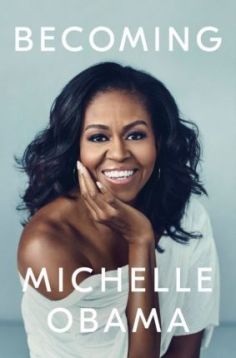 Becoming by Michelle Obama


 Ottolenghi Simple by Yotam Ottolenghi



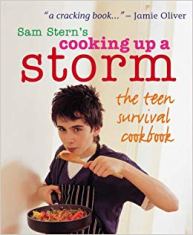 Cooking Up a Storm: The teen survival cookbook – Sam Stern & Susan Stern
 As I have been told many times by some of the people in my household, today is the official start of Christmas as it is the first Sunday of Advent (sounds like a bit of an excuse to me since we are not a religious family). Not quite feeling it myself yet, but then I tend to prefer to hold off for another week or two so as not to feel too exhausted by it all when the big day finally arrives. There is no doubt though, when you have children, or just a larger extended family with some children in it, you kind of have to get a little organised otherwise things can get a bit stressful.
 Nell is in her late teens and lives with her father, a very religious alcoholic, and her sister, Harper, who has cancer. They are from Manchester but moved to Norway, ostensibly for Harper’s medical treatment. The girls’ mother, we learn, left when they were young and they have had no contact since. Nell is a confused young woman; she is the primary carer for her sister, their father either working or incapable most of the time, and she wants to be a singer-songwriter back in Britain, but finds herself cut off from any possibility of making a career in that field. She attends a local school where she experiences bullying and isolation. She decides to go back to the UK, without her family’s knowledge, for an audition, but gets into a spot of bother en route and meets Lukas, a handsome but mysterious boy. At first it appears he rescues her but we learn later that he in fact engineered the whole episode in order to entrap her.
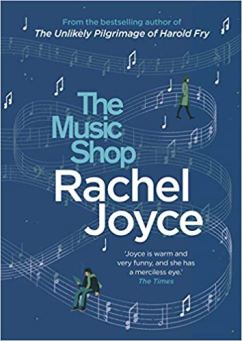 The books open in 1988 when the central character Frank opens a music shop in a rundown area (Unity Street) of an unnamed city. Frank is passionate about music, something that was instilled in him by his late mother, the eccentric Peg. It is probably the only the good thing that Frank got from her, and as the book goes on, we learn much about the lack of love and security in his childhood. This is important as it helps us to understand Frank’s actions later on. The other thing that Frank is passionate about is vinyl; he refuses to sell either cassette tapes or the new-fangled CDs in his shop, much to the chagrin of the salesmen who tell him he is a dinosaur and will have to change with the times. They gradually abandon him.
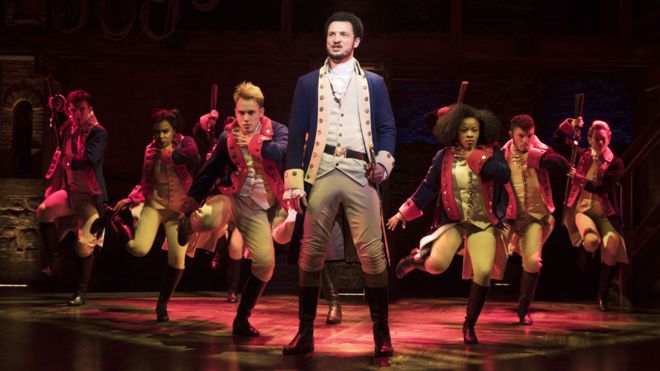 My youngest daughter, a keen singer, started getting into the show a year or so ago. She has been listening to and singing along to the soundtrack almost continuously ever since. When it was her birthday earlier this year I decided to get her tickets. I was astonished to discover how difficult these were to obtain (and how expensive!), so she has been waiting patiently for almost six months to enjoy her birthday gift. Last week, during half term, we travelled to London to see the show. It was worth the wait and she promptly declared that it was the best experience of her life. For me, seeing her enjoying something so much and how she has engaged so wholeheartedly with the story, the music and the ethos of the production, has the been the greatest pleasure.
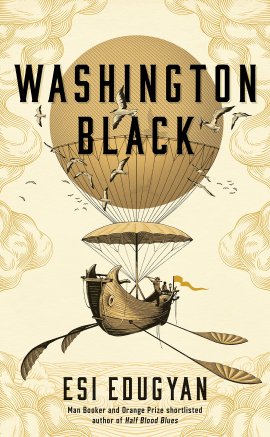 Washington Black’s life is turned around, however, when Erasmus’s younger brother, Christopher, or ‘Titch’, arrives at the plantation. He is an inventor, a man of science like his father, who does not share his brother’s views on slavery. Titch has come to Barbados in order to work on a flying machine he has designed and asks his brother for a helper. Erasmus loans him Washington Black and the boy goes to live in Titch’s quarters, helping him with drawings and experiments as well as practical household tasks. Titch discovers that Washington has considerable artistic talent as well as abilities which will be useful in his science projects and he teaches him to read. This change in Wash’s circumstances means he can probably never go back to being with the other slaves and the question is posed whether Titch has served his protégé well.
