No-one could forget the terrible events of June 16th 2016, the week before the UK referendum on exiting the EU, when Jo Cox, the British MP for Batley and Spen in West Yorkshire, was brutally murdered whilst in her constituency. It was shocking on so many levels. Firstly, that, in the midst of a profound expression of our democracy (which I believe we should never take for granted), campaigning during a referendum, one of our most conscientious and hard-working elected members should be killed for doing her job and what she believed in. Secondly, and most upsetting to me and, I’m sure, to many others, that a mother of two young children, a wife, a sister, a daughter, should lose her life and all those close to her should lose the most important person in theirs. It was truly awful.

In the days that followed, campaigning in the referendum was suspended as the news reverberated around the world. Support was shown and condolences sent by dozens of world leaders, not least President Obama. Jo’s death had a huge impact. So many had felt the insult to our democracy. In those subsequent days and weeks, we also learned much about this young woman and her life, and the loss felt even greater.
Jo’s husband, Brendan, became famous overnight, a role he would never have wanted. The grieving widower, the father of two shocked and grieving young children (then aged just five and three), the spokesperson for his late wife and all the good and powerful things she stood for. He was frequently on our television screens, looking dazed and gaunt, in Parliament, just days after Jo’s death, hearing MPs’ tributes, at a memorial event in Trafalgar, attended by thousands. It is a wonder how he got through those days.
It is thirteen months since Jo’s death and Brendan has been busy. He has set up the Jo Cox Foundation which seeks to promote fairness and tolerance in the world through practical actions. He has also published this book, which is part biography of Jo, partly an account of loss and, I suspect, part catharsis. It is rare that I have sat down and read a book in a couple of sittings over a weekend, but this book lends itself to that kind of immersion.
First and foremost the book, for me, provides an intimate glimpse into the architecture of grief. We will all experience grief in our lives, but most of us will never have to lose someone in the circumstances that Brendan lost Jo, that their children lost their mother. The pain is profound. We see Brendan go through all the stages we are familiar with – shock, denial, etc, though he clearly fights very hard against anger, and seems to have won. He describes in detail the unique way that nature enables children to process it. In the midst of his own grief Brendan’s primary concern was to support his children through their even greater loss to ensure that it was handled in the best possible way. Brendan talks about taking advice from experts in child psychology on how he should talk to them about their mother. The overwhelming consensus is that children should be allowed the space to grieve as they need, in their own unique way, and that it is important that we do not impose adult preconceptions and expectations about their level of sadness. For a young child, losing a mother is a profound and life-changing event that will affect the rest of their lives and it is so important to handle it right.
The sadness in this book is at times unbearable, but Brendan also writes with joy too. He provides an account of Jo’s life, her humble family background and childhood, her life as a student at Cambridge and her early achievements in a career that was destined to be stellar. Brendan, in providing this account, is honouring his late wife and the enormous achievements she made in her short life. There is a definite sense that the best was yet to come.
“We are far more united and have far more in common with each other than things that divide us.” Jo Cox, maiden speech to Parliament, 2015
Finally, the book is a love letter, a tribute from a bereaved husband to the woman he clearly loved so deeply. His love drips from every page. Some of the detail he gives is surprisingly intimate almost too much for me as a reader. The kind of small details of a relationship that couples normally only share with one another. But then you remember that Brendan no longer can, and his sharing with us feels all the more poignant.
The book is structured so that parallels are drawn between events in the months following Jo’s death and important stages in Jo’s life. For example, the account of Jo and Brendan’s time working in America and joining the Obama presidential campaign is given alongside an account of Brendan’s visit to the White House with his children, at the invitation of President Obama.
It is an incredible book and all proceeds from sales will go to the Jo Cox Foundation. It is hard to say I ‘enjoyed’ it but it felt like a very important read. It has certainly caused me to reflect, and the lesson that comes from it, for me, is along the lines of that old truism (with apologies for misquoting) that it’s not the years in your life that really count, but the life in your years. And Jo certainly packed a lifetime’s worth in her 42 years.
An emotional read, but highly recommended.
If you have read this book, I’d love to know how it affected you.
If you have enjoyed reading this post, I would love for you to subscribe to the blog and for us to connect n social media.


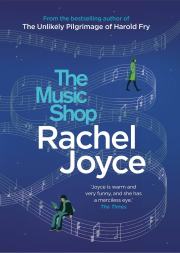 There are of course, a lot of titles published in the Spring and early Summer, marketed specifically for the holiday reading market. I’ve been perusing the titles and these are the ones that have stuck out for me. The Music Shop by Rachel Joyce, is a love story set in the 1980s about Frank, a record store owner, and Ilse, a German woman whom Frank meets when she happens to faint outside his shop. It’s had good reviews and Rachel Joyce’s earlier novel, The Unlikely Pilgrimage of Harold Fry, did very well.
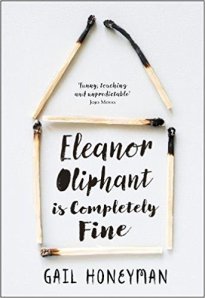 Eleanor Oliphant is Completely Fine by Gail Honeyman is on my summer reading list. Set in Glasgow, it’s about the emotional and psychological journey of a young woman from shy introvert with a dark past to living a more fulfilling and complete life through friendship and love. I’m looking forward to it.
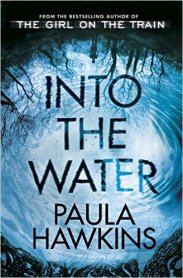 Paula Hawkins’s new novel Into the Water is everywhere, following the phenomenal success of The Girl on the Train which I’ve just finished listening to on audiobook. I had to find out what all the fuss was about! I enjoyed it, but I found most of the characters a bit irritating (that could be the influence of the actors reading, however) and, as I said, thrillers are not my favourite genre. Into the Water is another psychological thriller about a series of mysterious drownings. Like The Girl on the Train, I think, it’s as much about the internal dramas experienced by the characters as it is about ‘events’ so I’m sure it’s gripping.
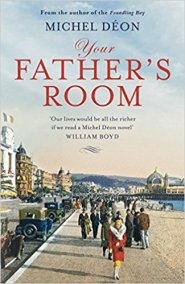 Finally, a little-known book that has caught my eye is Your Father’s Room by Michel Deon. Set in 1920s Paris and Monte Carlo (perfect if you’re off to France for your hols!) it is a fictionalised memoir based on the author’s own life. Looking back on his childhood in an unconventional bohemian family during the interwar period, the elderly narrator recounts how the events of his early life, including family tragedy, affected him growing up. I really need to read this; I’m writing a book myself partly based on my grandmother’s life in East London in the same period so I think I could learn a lot from how the author approaches this genre.
 I am an admirer of Gillian Anderson, not since her X-Files days, but since watching The Fall, the hugely popular television drama about a misogynistic and brutal serial killer in Northern Ireland, in which Anderson played the beautiful, enigmatic, but also rather damaged DSI Stella Gibson. The drama ran for three series between 2013-2016 and I was hooked. (It also starred Jamie Dornan, which helped). Jennifer Nadel, Anderson’s co-author, is a former journalist, writer and activist. Both women are open about their experiences of depression and poor self-esteem, despite their hugely successful careers and enviable lifestyles, and this book is their account of recovery and a ‘guidebook’ for other women who may be suffering from mental health issues.
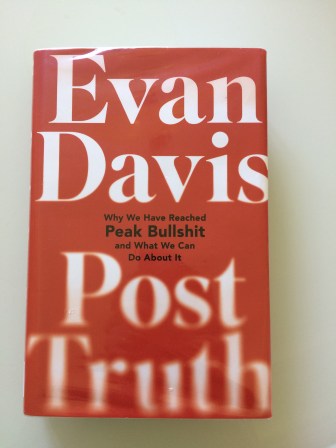 This is actually my July reading challenge book, which was to borrow something from the library. I read it in virtually one sitting on a train journey to London. For a weighty non-fiction book it’s very readable and the writing is resonant of Evan’s relaxed and articulate presenting style. There were parts where I could almost hear him reading it out. There are many references to the help and support he has had in the acknowledgements, so I’m sure he had plenty of research assistance (how could he not – with Newsnight, The Bottom Line and Dragon’s Den he is a very busy fellow!), but the authorial voice is definitely authentic, and I would bet it isn’t ghost-written, which just makes me love him all the more!
 I fell in love with Jane Austen in my teens, and I have never fallen out of love with her. The first book I read was Pride and Prejudice, and I remember I much preferred this colourful collection of sisters to Louisa May Alcott’s in Little Women! But it wasn’t until I read Emma for my English Literature A level that I really ‘got’ Jane Austen and I was blown away. Even now when I read Austen I still see her writing as impossibly brilliant. And then when you think about the life she led, her modest rural upbringing, her insight into human character is barely plausible. After Emma I quickly gobbled up all of Austen’s work (sadly, there is too little of it) and my favourite is probably Mansfield Park.
 Children these days have so many distractions which can take them away from reading; they seem to be so busy with out of school activities, have more homework than ever before and, of course, there are the digital distractions…don’t even get me started. But reading is such an important activity for them:
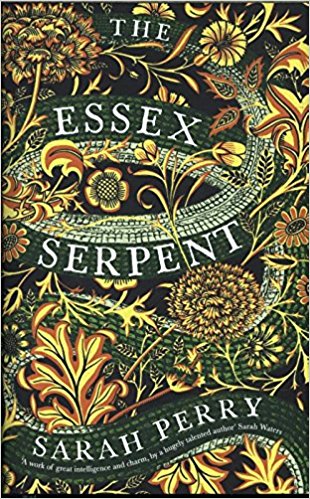 The book is set mostly in the fictional Essex village of Aldwinter in the 1890s and the action takes place over the course of a year. The central dynamic of the plot is the relationship between Cora Seaborne, a woman approximately in her late 30s, who at the start of the novel is newly widowed, and William (Will) Ransome, the local minister. Will is happily married to Stella and they have three children, while Cora is happily widowed! It seems hers was a fairly loveless marriage in which she felt constrained and imprisoned and her husband appears to have been somewhat older than her. The lack of intimacy in the marriage is indicated by the fact they had only one child, Francis, and that he is an unusual boy (for Cora “nothing shamed her as much as her son”), who is almost certainly autistic.
 If, like me, you find yourself a little nostalgic for an era when travel meant slowing down, getting to know a place and its people (rather than just taking a selfie with a local and posting to Instagram), and immersing yourself in the new environment, then Dervla Murphy could be the travel writer for you. In On a Shoestring to Coorg, Murphy travels for the first time with her five-year old daughter, Rachel. They travel scarily light (I would take more stuff on a day out when my kids were younger!) with very little money and are dependent on the kindness and hospitality of people they meet, including a number of British ex-pats, who have made India their home in the post-colonial era.