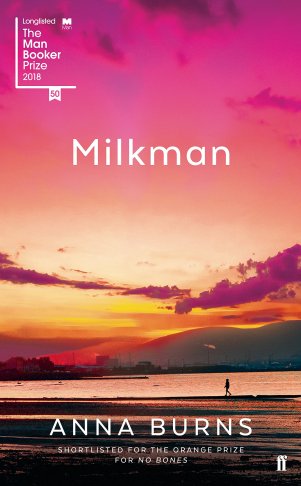
Man Booker Review #1 – “Milkman” by Anna Burns

With just a few days to go now until the announcement of this year’s Man Booker Prize winner, my goal to read all six titles by the 16th is not going well! In fact, it’s my worst performance in several years; I have only just started on my third title. Milkman took me some time to read. It is quite long, but it is also written in a way that I found it nearly impossible to read at my usual pace. The lyrical prose style that means you have to read nearly every word in order to feel the full impact. The same is true of the second book I read, The Long Take by Robin Robertson, which is in fact an extended poem, although it is somewhat shorter. I’m now on Everything Under, also quite short, but I’m not really enjoying it so finding it quite hard going.

Milkman imgMilkman is set in Belfast during the Troubles in Northern Ireland and the central character and narrator is a young Catholic woman who finds herself drawn unwillingly into a relationship with a local paramilitary leader. It is not clear when the book is set, but I am guessing around the late 1970s, early ‘80s. Northern Ireland is known to be socially conservative, but the general sense of the place of women in society suggests to me that it dates back quite some time. Our central character (not named, I’ll come onto this) is from a large family. Her father is dead and she has several siblings, both older and younger. She is in a “maybe-relationship” with a local young man, who she has been seeing for about a year, though they have not made a commitment to one another. She is keen on running as a hobby and shares this with “third brother-in-law”. Whilst out running one day in a local park she finds that she is observed by a man in a white van. Over subsequent weeks he infiltrates her life by stealth, indicating that he expects her to have a relationship with him. He is known only as “Milkman”. It becomes clear to her that he is quite a powerful local figure in the paramilitary world, so not only does she have little choice about whether to become involved with him or not, it is made quite clear to her that as long as she goes along with him no harm will come to her “Maybe-boyfriend”.

The pace of the novel is slow as we follow her complex internal dialogue about what she should do, her fears, her accounts of how the community reacts to her activities and descriptions of what life is like in this environment of threat, surveillance, oppression and violence. At first I found this slow pace frustrating, especially as there were parts early on that I felt could have been edited down. However, by the end of the book I could see that the author was building her character’s world quite carefully. Some readers will no doubt be only too aware of what life was like at this time in Belfast, the segregation, the violence, the suspicion, but most of us will not, and the slow pace ultimately helped to draw me in and help me appreciate the character’s dilemma. The sense of how she had no choice, the sense of how any behaviour outside the accepted norms is considered beyond the pale. For example, our character has a habit of “Walking while reading”, which almost everyone around her considers unacceptable behaviour and comments upon and encourages her to stop doing. It is ironic that such innocuous behaviour is thought to be dangerous and provocative in a context where shooting, killing and blackmail are not.

None of the characters in the book are named, all are referred to by their relationship to the central character (eg Ma, wee sisters, first sister), or some other title. This is not as complicated as it sounds and I think the author is trying to make her characters representative of the lived experiences of so many ordinary people in Northern Ireland at that time. It is also indicative of the dehumanising effect of the Troubles, and in particular what our young woman went through. By removing any autonomy or choice from her (and it was not just Milkman doing this, it was the strictures of the community) there is a gradual destruction of her selfhood.

So, a long and complex read, but a brilliant novel from a very talented writer. The prose is sublime, the language is like nothing I’ve read before, except perhaps Lisa McInerney. It won’t appeal to those who like action and plot, but for an examination of the day to day life of a young person in Northern Ireland during that terrible period it is something quite special, and very enlightening. Recommended.

Have you managed to read any of the Man Booker shortlisted titles yet?

If you have enjoyed this post, I would love for you to follow my blog. Let’s also connect on social media.

New rules for life?

I dip into self-help books from time to time and have a reviewed a few on here, from Marie Kondo’s The Life Changing Magic of Tidying, which aims to improve our relationship with the things in our home, to Big Magic: Creative Living beyond Fear by Elizabeth Gilbert, which helped me to change my mindset about my right to be creative and to think of myself in that way. Both very powerful. Over the last few weeks I have been listening to Matt Haig’s Notes on a Nervous Planet (audiobooks seems to take me much longer to get through), which I have found immensely enjoyable. I’d even go so far as to say it was inspirational. I also picked up Jordan Peterson’s much-hyped 12 Rules for Life: An antidote to chaos although I’m afraid I found it quite turgid and didn’t get very far before I had to take it back to the library for the next person on the reserve list.

So, I originally planned for this post to be a compare and contrast between the two, but it’s going to focus more on the Haig, which, from what I read, was better anyway. Matt Haig has suffered with depression and anxiety for much of his life and it sounds as if this has at times been debilitating. Mental illness is a huge topic of conversation at the moment, rightly so, and it is very much a spectrum from occasionally feeling down or going through periods of stress and anxiety, to full-blown depression that afflicts people for years, to suicide. Matt Haig does not use this book directly to examine or discuss his own battles with depression, it’s not a memoir, but he does refer to it throughout as a way of illustrating his points.

Matt Haig’s book is more about how modern life is placing almost unbearable pressures on human beings today. He is particularly concerned about young people, and the impact of social media on their mental health. Social media forces us all into unrealistic comparisons where we will inevitably fall short. And the fact that we are constantly connected, constantly reachable and how it is so difficult to ‘switch off’ (both literally and figuratively) makes so many of us vulnerable. It is ironic that at a time when we have more ‘friends’ and followers than ever before, we seem to be more lonely than ever. This topic has been in the news again this week as new research undertaken by the BBC is revealing the extent of loneliness felt amongst young people in particular.

Notes On A Nervous Planet is, in my view, required reading, especially for young people. There are lots of people on my Christmas list who will be getting copies. I listened to it on audiobook and found Matt’s lovely, warm voice, made it particularly compelling. I will  now buy the book, however, it’s one I’d definitely like to read again.

By contrast, the little bit I read of Jordan Peterson’s left me rather cold. I think with self-help books, there are just the ones you like and the ones you don’t, and I’m afraid 12 Rules for Life probably falls into the latter category. His rules include “Treat yourself like someone you are responsible for helping”, “Assume that the person you are listening to might know something that you don’t” and “Do not bother children when they are skateboarding”. I’m sure there is some real wisdom in some of these more cryptic headlines, but there are a lot of words to plough through before you get to it and, sadly, it did not resonate with me. I fell asleep several evenings, just reading the (very long) Foreword! I’ll give it another go, when my turn comes around for the reservation, but I’ll not be rushing out to buy it. As a general rule, I don’t do very well with ‘Rules’ and prescriptions, particularly for something as chaotic as life.

If you have read either of these books, I’d be interested to know what you think.

If you have enjoyed this post, I would love for you to follow my blog, and let’s connect on social media. 


Book review: “The Last Runaway” by Tracy Chevalier

This was one of my holidays reads and one of two books my book club chose for our summer break. It’s only my third Tracy Chevalier novel, but each time I read her I just want more! I read Girl with a Pearl Earring years ago when it was first published and then The Lady and the Unicorn a year or so ago, which I thought was wonderful. I have since picked up Virgin Blue from my local secondhand bookshop so that will be next on my list.

The Last Runaway imgOne thing that is so impressive about Chevalier is how beautifully she creates the  historical setting: the two novels I have read so far have been set in 17th century Holland and 15th century Paris and Brussels and I can only begin to imagine the amount of research she has to undertake. The Last Runaway is set in the United States in the mid-nineteenth century when parts of the country were only just being settled. Honor Bright, our main character is a young Quaker woman from Dorset in England. She has led a modest and sheltered life, but her world was turned upside down when her fiancé left her and their close-knit Quaker community for another woman. This was not only a scandal but it left Honor distraught and in a very difficult position. When her sister, Grace, is persuaded by her fiancé that they should move to America, Honor decides she must go with her, not only to support her sister, but to escape the oppression of her situation and have some chance of making a life for herself.
Their journey from Bristol to New York is arduous and Honor suffers with debilitating seasickness. As they travel the long distance from New York to Ohio, Grace contracts Yellow Fever and dies. This places Honor in a further difficult position: not only must she tell Adam Cox, Grace’s fiancé, that she is dead, but she is also in fear about where that leaves her as he, of course, has no obligation to support her. Honor, however, cannot face going back to England either because of the journey or the shame.

On the final leg of her journey, Honor has a frightening encounter with a local slave-hunter, Donovan. Honor is appalled both by his profession and his dangerous air, and yet also finds herself strangely drawn to him when he seems to flirt with her. This also sends her into a tailspin as it conflicts with her Quaker outlook and moral code.

Honor arrives in the small town of Wellington, close to Faithwell, her intended destination. There, she finds quarters with Belle Mills, the local milliner, who, it transpires, is also the half-sister of the mysterious Donovan. Belle warns Honor about him and it is clear there is a tension between these siblings. During her stay with Belle, Honor adapts her talent for quilting (quilting, its traditions, the patterns and its place in Quaker culture, are a strong and fascinating motif running through the novel) and shows promise as a hat-maker, endearing her to Belle and her many customers. Belle’s designs are often flamboyant, which is an anathema to Honor, who, as a Quaker, must observe plainness and modesty in all forms of dress. The two women develop a firm friendship, however, and Honor begins to feel more confident.

Honor first realises there is something strange going on when she finds a black man under a woodpile in the yard of Belle’s home. Honor is aware of the existence of the slave trade, indeed, the Quakers were an important part of the movement calling for its abolition, but this is the first time she has come so close to an escapee. She is terrified, particularly when Donovan comes searching at his sister’s property, sensing the presence of the runaway. Honor later learns that Belle is part of a network of citizens who provided the means of escape, food and shelter for runaway slaves fleeing the South to states which had already outlawed slavery – the ‘underground railroad’. Belle was what was known as a ‘station-master’.

Honor is collected from Belle’s by Adam Cox, Grace’s fiancé, and taken back to Faithwell, to live with him and his sister-in-law (also widowed) and to work in their shop. The domestic situation is uncomfortable for Honor, however, and her prospects only  brighten when she is wooed and then married to fellow Quaker Jack Haymaker. At first it seems like a good marriage that will improve Honor’s situation, but her mother-in-law proves to be a formidable presence, who does not conceal her contempt for her daughter-in-law and how little she has to offer when Honor goes to live with them on their isolated farm. At first, Jack is attentive and loving, but quickly becomes complacent and Honor grows increasingly miserable, despite her efforts to feel and appropriate degree of godly gratitude. Tensions deepen when Honor decides she will provide support for runaway slaves passing through their property. This is against the expressed wishes of the Haymakers. A law has been passed which makes it illegal for anyone to help a runaway, and the penalties are severe. Whilst the Quakers are against slavery, they are also against law-breaking and Honor’s actions are seen as a threat to their livelihood. Honor finds herself increasingly in conflict with the family until the point where her position becomes untenable. All the while, Donovan hovers in the background, stalking Honor and sniffing out runaways.

I will say no more as the events of the story then take quite dramatic turns. I loved the unexpected twists of the plot. I also love the way the author wove in details about the slave trade and the underground railroad (which I confess I knew very little about). Colson Whitehead’s 2016 novel The Underground Railroad brought the existence of this movement to the attention of many readers for the first time, I think. I was not aware that Tracy Chevalier had also written this novel about it. I also loved the domesticity of this novel, its femaleness and the feminine craft of homemaking, particularly in relation to the skills required for good quilting. This seems to be a common theme in Chevalier’s work. I loved how strong the women were in this novel; the men do not come out looking so good!

I recommend this book highly. It’s a great story, a fascinating read and will give you an insight into worlds you may not know much about.

If you have read this book, I would love to hear your views.

If you have enjoyed this post, do follow my blog and let’s connect on social media.

Book Review: “Harvesting” by Lisa Harding

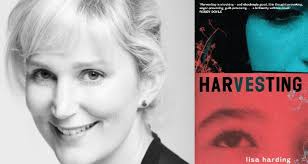
This book was given to me by a family member as a Secret Santa gift last year. I have been dying to read it for ages but it seemed to keeping slipping down the TBR list (does that happen to you too?) I determined to read it on my summer holiday, although in many ways it was rather a strange choice; not your traditional beach read! The subject matter is child sex trafficking and the author, a well-known actor in Ireland, came up with the idea after she became involved with a campaign to raise awareness of the issue in 2012.

Harvesting img

The book tells the parallel stories of two young girls, Nico and Sammy. Nico is from Moldova. She lives in a deprived rural setting, her family is poor and her father and two of her brothers are cruel and misogynistic. They have become brutalised by their poverty and by the systemic corruption and organised crime in their society. Nico’s mother is oppressed and powerless to stop the terrible fate that awaits her daughter. Nico has another brother, Luca, who disagrees with the family’s plans for her and wants to protect her, but he also cannot stand in their way. Lacking money for even a basic standard of living, Nico’s father sells his daughter for marriage to an older man, as soon as she starts her periods (so she is around 13). As far as the prevailing culture is concerned, she is a woman now and the family see no reason why they should continue to support her, so they seek to profit from her. Nico’s father believes that Petre, Nico’s future ‘husband’, will give Nico a good life in London and buy her all the things her family have been unable to give her. The two men are colluding in a mutual self-deception, one assumes because this is the only way that Nico’s father can justify selling his child in this way.

Nico is effectively kidnapped and it becomes very quickly apparent that she along with a number of other girls, is to be prepared for life as a prostitute. Nico is particularly valuable because she is so young and a virgin. The girls are drugged, abused, beaten and then trafficked across European borders until eventually they reach Ireland. Petre’s girlfriend Magda is the only person able to protect Nico even a little from the worst excesses of the gangsters and she is only able to do so on the basis that Nico is worth more if they treat her less cruelly than if she becomes ill through mistreatment. It is the only fragment of protection that Nico has.

The other main protagonist in the book is Sammy, a young Irish girl, of around 16, who represents a different side of sex slavery. She falls into a life of prostitution almost by accident. Problems at home (her mother is an alcoholic and her father can only cope by separating himself) and at school lead to her leaving home and falling into the hands of adults who exploit and abuse her. Sammy presents a more challenging character, firstly because, at a superficial level, her problems seem to be of her own making; she is rebellious, uncooperative and undisciplined. She puts herself in dangerous situations which have been interpreted as attention-seeking acts. She is a child out of control and has sacrificed the sympathy of those who might (should!) help her, such as the school authorities. What Harding does skilfully, though, is show us that, despite the fact that she is sassy and street-wise, Sammy is a child and no less deserving of protection than the more ‘innocent’ Nico.

What is also particularly chilling about Sammy’s story is that in a modern democratic western society, with liberal traditions, social services and proper policies and procedures in place to protect young people, even a young girl from a middle-class background can fall through the cracks and, worse, some of those who should be protecting her, are part of the problem.

The two girls eventually meet when they find themselves in the same suburban brothel and their fates become intertwined. This is not a book for the faint-hearted and some readers may find they are unable to bear the sex scenes. It is hard-hitting. Some aspects of it are almost unbelievable; as a frequent visitor to Ireland for many years now I find it difficult to accept that there is a huge underground network providing children for an illicit sex trade in a city I know and love. But the author has clearly researched the story extensively, and fact-checked with people who work and campaign in this field. This lends the book a shocking credibility. And we know from child sexual abuse cases of recent years that the worst perpetrators are often hiding in plain sight, and that the collective disbelief that people could act in such ways can blind us to the realities. This book will definitely shake you out of any complacency.

I recommend this book – it is hard to say it’s enjoyable, more that it is an important book, that is compelling, thought-provoking and necessarily shocking. It is well-written with strong characters.

Can you recommend any similarly hard-hitting but important books?

If you have enjoyed this post, do follow my blog and I owuld love for us to connect on social media. 

Book review: “Death on the Nile” by Agatha Christie

This is my second Agatha Christie this year. Having never in the past felt a particular desire to read her work, I have to say that I am completely won over! I chose this book for August in my Facebook reading challenge, which happened also to coincide with my summer holiday. When I stop and think, there is something a little odd about choosing books about death and misery for the kind of escapist material I usually seek for holiday reading, but there is a kind of unreality about the two books I have read, a kind of nostalgia for a bygone era. I do also love the sense of place that Christie evokes; I found this to be true also of Murder on the Orient Express, which I read in January, although in this novel, there are some anachronistic references to the Egyptians which make a modern reader wince slightly.

Death on the Nile imgIn some ways, there is not a great deal to say about Death on the Nile that you couldn’t say about any other Christie novel, I suspect: there is a situation, in this case, a Nile cruise, being undertaken by 10-15 characters, all for different reasons. Conflicts and tensions are set up amongst the different characters, mysterious aspects of their personality or behaviour are noted, one of their number dies and then there is a process of detection to work out whodunnit. I did largely guess the correct outcome in the case of this novel, although I didn’t with Orient Express.

Both the Christie novels I have read are Poirot novels (these make up a third of Christie’s impressive oeuvre) and he is, of course, a marvellous central character – quirky, consistent, charming, and with a brilliant mind. David Suchet played Poirot to great acclaim in the wonderful UK television series, and although I am familiar with them I have to confess I never actually watched them! Suchet was in my mind, however, as I was reading the book.

I found the book unputdownable. I was eager for each new chapter, each new revelation; you can argue until the cows come home about whether this is “great literature” or something more “popular” but you can’t ask for much more than that, in my view. Wonderful characterisation, brilliant plotting, vivid imagination and storytelling that keeps you gripped to the end.

2018-09-10 10.16.18
Quite a back catalogue!

Reading these two books this year has definitely made me want to read more Christie. I find the novels quite quick reads, just as well since there are nearly 70 of them! I feel the need now to start with the first Poirot novels, to see how his character begins and how the author develops it over time. I also fancy like to binge-watching all those Poirot television dramas – there must be a channel somewhere showing them! A project for when the nights start drawing in, perhaps.


Christie is such a clever writer and one who clearly understood her readership and gave them what they wanted. Yes, I suppose they are rather formulaic, but when the world feels rather unpredictable there is no harm in getting what you expect from a book!

Recommended.

What appeals to you about Agatha Christie?

If you have enjoyed this post, I would love for you to follow my blog and to connect with me on social media.

Book review: “American Pastoral” by Philip Roth

2018-08-08-16-30-02.jpg

The theme for July in my Facebook Reading Challenge was an American novel. It was a tough choice as I wanted to select something that captured the American ‘story’. I at first thought about The Color Purple, which had been on my shortlist for February (a work by a feminist writer) but I felt it was too similar to June’s choice of I Know Why The Caged Bird Sings, the first volume of Maya Angelou’s autobiography. I also thought about The Bonfire of the Vanities, but decided it was a bit long and my fellow readers on the Challenge would not thank me! So, I finally alighted on Philip Roth’s American Pastoral, which seemed appropriate in terms of both subject matter and timing, since Roth died just a couple of months ago. I’m not sure how other readers on the challenge got on, but I’m afraid I failed to complete it within the month – it’s not overly long at 423 pages, but the writing is so rich that it was almost impossible to read at any pace. I had to (and wanted to!) savour every word. That gives you an idea of my overall feeling about the book – it is tremendous, epic, glorious and tragic. If you want to understand anything about the American experience, especially the immigrant experience over the last hundred years or so and the effect that has had on the mindset of American-born second and third generation immigrants, it is essential reading.

2018-07-23 16.19.23The plot is not complicated: ‘Swede’ Levov is a third generation Jewish immigrant whose grandfather came to America from Europe. He was a glovemaker and set up a business in Newark, New Jersey which became highly successful. Swede’s father continued the business, which peaked in the 1950s and 1960s when glove-wearing for respectable women was the norm and most would have several pairs. (There is more information on gloves in this book than you will ever need to know, but it’s fascinating!) Swede inherited the business from his father, while his more wayward brother became a cardiac surgeon.
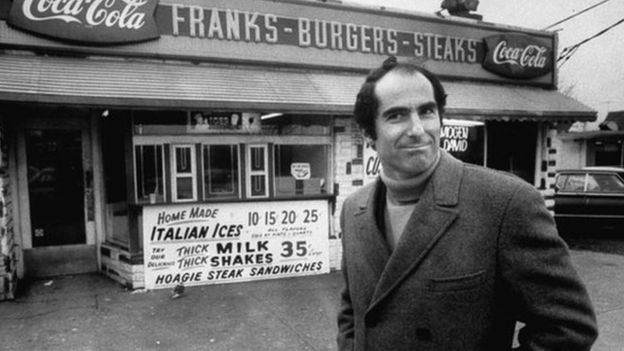
Swede Levov pursued the quintessential ‘American dream’ – he excelled in sports at school, served in the military, followed his father into the business, and learned the glove trade, married an Irish-American Catholic former beauty queen, with whom he had a daughter, Merry. From the outside everything seems perfect except for one small flaw – Merry has a stammer, which no amount of expensive medical or therapeutic treatment seems to be able to fix. This is the first indication that Merry perhaps represents some flaw which will undermine the Levovs and all that they represent.

Slight spoiler alert (though not really because you learn of the event quite early in the book): as a teenager Merry becomes obsessed with opposition to the Vietnam war. She becomes increasingly frustrated and rebellious. Her parents lose control and it culminates in her planting a bomb in the general store of Old Rimrock, the solid New Jersey semi-rural idyll in which the family has settled. The bomb kills the local doctor.

Swede’s world begins to fall apart; he cannot accept that his daughter has committed this crime, believing that she must have been put up to it by others, or indeed that others did it and are allowing her to take the blame. For a number of years Swede lives in the hope that he will be able to find his daughter, that the truth will come out and that she will be exonerated, and that their life will return to ‘normal’. For a time, it appears that he might find be able to find Merry, when a woman known as Rita Cohen contacts him saying she knows Merry’s whereabouts. Swede becomes convinced that she is in fact the real bomber because she is cruel and threatening and extorts money from him.

The Rita Cohen thread is all part of Swede’s self-deception, however, and this is the central theme of the book – Swede, his wife and his family, represent the ‘American dream’, which is in fact, just that, a fantasy, a mirage. Merry’s actions put Swede on a path where everything he held dear, which he believed to be real, unravels and is exposed as a sham.

As I have already said, the plot is not complex because it is not a novel so much about events as it is a deep exploration of the American psyche. The structure of the book is quite complex, however, but so brilliantly done that it is not hard to follow. It flits effortlessly between different stages, between different characters and their individual stories and the handling can only be described as masterful. No wonder it won the Pulitzer Prize (1998)! It explores notions of religion in America, particularly the Jewish experience as told through the Levov family, and through the eyes of our first narrator, former schoolmate of Swede’s and now author Nathan ‘Skip’ Zuckerman, the Catholic experience (through Dawn Levov) and the American Protestant experience through the residents of Old Rimrock. The decline of the glove industry and its craft, and also the city of Newark where the Levov family business was based, is a metaphor for the gradual collapse of the concept of the American dream which now seems to lie degraded and in ruins. A further metaphor is the Garden of Eden story, itself Old Testament fiction. The book is written in three parts (Paradise Remembered, The Fall and Paradise Lost) echoing Milton’s epic poem Paradise Lost, because for Swede Levov the experience is truly a destruction of all that he once understood to be real and to be good.

Philip roth
In American Pastoral Roth explodes the idea of the ‘American dream’.

This is the longest review I’ve written in a while and yet I feel I have only scratched the surface in telling you about this book. I have only just completed it so I may write more in a few weeks once it has had a chance to sit with me! Truly, as I savoured the last few pages I was open-mouthed at the unravelling. It is truly an American tragedy (the title is a kind of oxymoron), and it reminded me of Long Day’s Journey Into Night, Who’s Afraid of Virgina Woolf similar examples of the collapse of an American dream happening in slow motion before our very eyes. The final dinner party scene is quite spectacular.

Needless to say I recommend this book highly. It’s not an easy read but it rewards in spades.

If you have read this book I would love to hear your thoughts.

Book review: “How To Stop Time” by Matt Haig

How To Stop Time imgTom Hazard has an extremely rare condition called anageria which means he ages extremely slowly. He is one of a tiny group of people who live for many hundreds of years. Tom was born in London in 1581 and mixed with the likes of Shakespeare and Marlowe in his youth, worked for Captain Cook in the 1700s and was a jazz pianist in Paris in the 1920s where he met, among others, F Scott Fitzgerald and watched Josephine Baker dance. What an incredibly lucky guy, you might think, but his condition is a curse and does not go unnoticed. He is haunted by the fact that his mother was condemned as a witch in the small village in which they lived, because the locals suspected dark forces at play when her teenage son appeared never to age. In his ‘late teens’ he meets and falls in love with Rose, and they have a child, Marion. Rose is the love of Tom’s life and although they move around, trying to avoid staying in one place too long and attracting attention, he realises that his existence presents a danger to Rose and the child. He has no choice but to leave her. The last time Tom sees Rose is when she is in her 50s, on her death bed with the plague, while he still looks like the young man she fell in love with many years earlier.

Tom has to spend his long and eventful life dodging attention, changing location every eight years or so. He, and others with his condition, are part of a worldwide secret organisation known as Albatross, led by the slightly sinister now elderly Dutchman, Hendrick. ‘Albas’, as they are known, are committed to keeping their condition secret and thereby protecting themselves from scrutiny. They fear discovery by the scientific community and what this might mean. Superstition has treated them badly in the past. Hendrick rules the organisation and controls its members, cleverly maintaining their loyalty with a delicate balance of threat and the promise of protection.

But Tom is unhappy. His condition brings him nothing but pain and grief. He lost his mother in brutal circumstances and his wife and daughter, all because of anageria. Hendrick keeps him close by telling him that his daughter Marion has inherited the condition and assuring Tom that he will find her, but Tom becomes increasingly suspicious of Hendrick’s motives.

In the present day, Tom’s new role is as a history teacher in an east London secondary school. He is a success, bearing the uncanny ability to ‘bring history alive’ to even the most apathetic of his students. At the school Tom meets Camille, a young French teacher, to whom he is attracted. The feeling is mutual, but of course, Tom knows a relationship is impossible. Tom’s inconsistent behaviour towards Camille makes her suspicious.

Thus, the scene is set for a complex and fascinating plot. The novel jumps back and forth in time from present day east London to Shakespearean London, where Tom was a renowned lute player, to the 18th century where Tom sailed to the Indies with Cook, to more recent times when Tom has had to carry out certain international missions to serve the secret organisation.

Haig creates a huge range of interesting characters and it is quite an achievement that he gives them all a depth and uniqueness, which many writers could only achieve with a much smaller cast. The book was not at all difficult to follow, despite the frequent changes of era and setting. For me, my favourite sections were the present-day ones, though, as Tom explored with great poignancy the tragedy of his existence which means he cannot build intimate connection with anyone outside the organisation, for fear not only of exposing himself but of placing them in danger; bad things happen to people who find out about the Albas. Tom is lonely and alone. The people he has loved are all gone and so he fears love. The recounting of past events in Tom’s life help to create and augment the picture of his existence where an overly extended life is a curse not something to be striven for. The unnaturalness of Tom’s situation, the burden he must bear, is profoundly portrayed.

I listened to this book on audio and the narrator, Mark Meadows, was excellent, developing an impressive range of distinctive voices and accents to distinguish the different characters. He also conveyed well a sense of Tom’s building frustration and despair, so much so that his final actions in the book are not only plausible, but completely inevitable.

I recommend this book highly.

Have you read this or any of Matt Haig’s other books? He is everywhere at the moment!

If you have enjoyed this post, I would love for you to follow my blog for up to date notifications of future posts. 

Book review ‘Salt to the Sea’ by Ruta Sepetys

I saw Ruta Sepetys speak at the Hay Festival in May and I’m so glad I did, because otherwise this book may not have crossed my radar. It’s being marketed as a Young Adult novel (though DO NOT let that put you off) and there were many young people in the audience with whom Ruta was gracious, charming and generally lovely.

RutaThis book is magnificent and I urge you to read it. It was my book club read this month and we all loved it. It concerns a period in hsitory that is seldom openly discussed – the brutality of the Russian advance into Germany at the end of the WW2. One of the earliest books I reviewed on this blog was A Woman in Berlin (Anonymous author) which was an account, reputedly a true story, of the siege of that city and its final capture by Russian troops who, half-starved and brutalised themselves, set about rape and pillage of the native population (which by that stage was mostly women, children, older men and the infirm) on an industrial scale. It is tough reading. My WW2 history is not great so correct me if I’m wrong, but these events are not widely recognised and discussed because of course Stalin was part of the Allied group which defeated Hitler. There was, and, arguably, continues to be, a reluctance to openly acknowledge anything which might tarnish the glory of that victory. We all know that the Allies committed many atrocities in the name of war, but somehow these have been brushed over.

Enough of the political history because Salt to the Sea is so much more than that; it concerns an event that almost no-one knows about, the sinking of the civilian ship Wilhelm Gustloff in 1945 by a Russian submarine, resulting in the largest loss of life at sea in maritime history, My children at school know all about the Titanic, thanks to the movie and the 100th anniversary of its sinking in 2012. A little over 1,500 people died in that disaster. Nine thousand died on the Wilhelm Gustloff, over half of them children and almost all of them desperate refugees.

It is a story beautifully and skilfully told through the eyes of four characters – Joana, a young Lithuanian nurse, Florian, A Prussian who worked for but then subsequently fled from the Nazi art theft effort, Emilia, a Polish girl from Lwow, whose parents sent her away from home to live with a German family with whom they thought she would be safe, and Alfred, a young German soldier, conceited, inept and deluded. Joana, Florian and Emilia are part of a small group, which includes an elderly shoemaker nicknamed ‘Poet’, a young boy, Klaus, a young blind girl, Ingrid, and Eva, a bold and forthright German woman. The raggle-taggle group has come together on the road, along with thousands of others, and is making its way to Gotenhafen, fleeing the brutal Russian advance, in the hope of boarding a ship which will take them further west and to what they hope will be relative safety.

It is the end of the war and they all know the Nazi Reich is close to collapsing, but the military remains in charge and committed to the Fuhrer’s cause. The group is also well aware of the fates of others who have fallen into the hands of Russian soldiers, some of them having direct experience of Russian violence. The group is facing multiple threats, not just from the Nazis and the Russians, but also from starvation and sickness. We follow the group as they trek across Prussia, learning about their back-stories, and the relationships between the group’s members evolve.

2018-07-11 15.29.05
“Freedom” – my copy, signed by the author!

Once they reach Gotenhafen, they feel relief and begin to feel safe. Although the town has become a ghetto, with thousands of desperate people trying to escape on a handful of ships, they are hopeful and begin to imagine a future once again. Alfred is one of the sailors on the ship and by the time the group meets him we have learned much about his earlier life. He will become an important character in the events our group is about to face, and his back-story is important to understanding the motivation behind his actions.

For the reader, the tension here is excruciating because although the characters are hopeful and relieved, we know that tragedy will strike the ship. It is just a question of who, if any of them, will survive.

Sometimes, knowledge of the general outcome of a story can have a profound effect on your reading experience. This was very much the case for me here. The tentative joy, so long held-back and so fragile, that the characters experience, contrasted so deeply with the doom and dread that I felt for them.

This is a Young Adult novel and I would suggest that it is appropriate for 14 years and upwards. Even then, some younger teens might find it quite challenging. I would liken it to The Book Thief. The characters are fictional, but the events portrayed in this book are real and we have a duty to acknowledge what happened in the past rather than to airbrush it.

I cannot recommend this book highly enough.

Book review: “I Know Why The Caged Bird Sings” by Maya Angelou

When Maya Angelou died in 2014 at the age of 86, she was one of the towering figures of American culture and politics. Poet, author, civil rights activist, speaker, friend and advisor to figures of national and international importance, her career was, by any standards, glittering. And yet, her start was a decidedly inauspicious one. In the late 1960s she was persuaded to begin writing an autobiography and she went on to publish it in seven volumes, the latest one appearing in 2013, just a year before her death. I Know Why The Caged Bird Sings is the first volume and covers her childhood and coming of age. Her early life in Arkansas featured parental abandonment, overt racism, sexual abuse, discrimination and poverty. It is a sobering tale, and a testament to her immense ability, that someone with that kind of background could become such a great and important figure, well-known not just in the United States, but throughout the world.

I Know Why The Caged Bird Sings imgI chose this book for my 2018 Facebook Reading Challenge. The June theme was an autobiography, a tricky category since enjoyment can often depend on your feelings about the author. I also wanted to avoid titles that would most likely have been ghost-written. After thinking about it for some time, I chose this, the first volume in Angelou’s memoir series, and the one which is often considered to be the best. It can be read as a stand-alone.

I had read it myself many years ago; I have written on here before that at some point in my teens, I resolved to work my way along my local library bookshelves starting at ‘A’! I read the first five volumes (the fifth was published in 1986 when I would have been 18, so I imagine I did not read them all consecutively). I remember I enjoyed the book at the time, and parts of it were familiar, coming back to it so many years later, not least the horrific scene where she is raped by her mother’s lover. This aspect of Maya’s story, like all the other terrible instances of injustice she experienced, is told without self-pity (apart, perhaps from the toothache!) or sentimentality, and this, I think, is the mark of her greatness as a writer.

I loved also, the evocation of the setting – 1930s Arkansas is set out vividly before us, particularly the evangelical Christianity of the black community, the tense relations with their white neighbours on the other side of town, and the poverty of the community, scraping a meagre living in the most challenging of circumstances, from cotton-picking, domestic service or, in the case of Maya’s grandmother “Momma”, from running a small business.

I also loved the language – the Deep South comes across so profoundly in the words and phrases used by the author, such as the wonderful term “powhitetrash” to refer to the prejudiced white townspeople of Stamps who blight the lives of the black community with their bullying, their cruelty and their vulgar behaviour. And I loved the characters, from the young Maya, to her elder brother Bailey, whom she adored, to Momma, the starched Christian woman of steadfast values and brilliant business acumen. The author brings them alive so skilfully that they walk the pages of this book.

I Know Why The Caged Bird Sings is a must-read. I trust that it is on academic reading lists throughout the United States, but it should also form part of the historical context for any student of American history. It is not an easy read and the nature of the language definitely slows the pace (it took me twice as long to read as any other book of this size), but you would do well to read it slowly as the pace draws you into the languid lifestyle of the setting. Someone on the Facebook group listened to the audiobook, narrated by Angelou, herself, which sounds like a must-listen. Coincidentally, the book was also abridged for Radio 4’s book of the week recently, and that should still be available online. It was very good.

Highly recommended, should probably even be on everyone’s books bucket list.

If you have read Maya Angelou’s memoirs what impact did they have on you?

If you have enjoyed this post I would love for you to follow my blog and for us to connect on social media.

Book review: “Sight” by Jessie Greengrass

Sight is the debut novel from British author Jessie Greengrass and was shortlisted for the Women’s Prize for Fiction, which was won recently by Kamila Shamsie. This was the first novel I have read from this year’s Women’s Prize shortlist, and the one which appealed most strongly to my fellow book club members and I. We love the Women’s Prize and always try to get through a couple on the shortlist. We are all mothers, spend way too much time talking about our kids and so the blurb, about one woman’s journey to parenthood, spoke directly to us.

It is a very curious book. I had to keep reminding myself that it’s a novel as we become so deeply embedded in the internal world of the unnamed first person narrator that it feels as if it is an autobiography.

Sight img
Strange book, stranger cover!

We know very little of the narrator, except that she is a young woman of indeterminate age, though probably in her early thirties. Her partner is Johannes, whom she meets shortly after the death of her mother. The book begins with her account of her mother’s decline and death and the time she spent caring for her. It is clearly a traumatic time for her and she struggles with all the challenges it represents – emotional, physical and administrative. It is an account of what it is like to be a daughter and an only child and to lose your only parent, your only link with your birth, with your early life and with that part of your life of which you have no memory.


She seems to drift into the relationship with Johannes at a time when she is emotionally vulnerable. He seems to offer her stability and comfort. The issue of having a child is clearly something that looms large in their relationship and eventually she agrees, but she remains unsure about the wisdom of this step.

This is not a story. It is an internal monologue, an account of one woman’s ambivalence about having a child. In fact she seems very ambivalent about all her close relationships – with her mother, with Johannes and with the only other significant character in the book, her late grandmother, a psychotherapist who lived alone and practised in a large house in Hampstead, and with whom she spent a few weeks each summer as a child. I suppose this ambivalence is present because we are getting the narrator’s unfettered, unmediated thoughts, but I found it confusing to marry this with any notion of love. For me, love was missing from the book. I understand well that for many women, it is not easy to bond with the foetus they carry, even the baby they give birth to. I can also accept relationships with a parent can be fraught and complex, even where there is familial love on both sides. Our narrator is deeply moved by the suffering of her mother in the final stages of her life; the actions she takes, the things she tells us about, sleeping beside her in the hospice, reading to her, suggest deep love, but she does not seem to me to express it. And when she writes about her grief and her loss, it is more a loss of a role, or a relation, rather than a person. There is something very cold about her feelings, which are captured in the following quote:

“Then I was faced with the problem of what to do with all my mother’s things. I felt that I was expected, somehow, to keep them, to make myself curator, but the thought of storing this detritus of an ended lifetime, of dragging it behind me like a deadened limb, turning myself into little more than a conduit for memory, was horrifying; and so in the end I gave away what I could to anyone who wanted it and hired a skip for the weekend to deal with the rest.”

What I found most difficult was that there seemed to be little real love in her relationship with Johannes. This was the man she chose to be the father of her child and although she finds great comfort in their easy companionship, their shared interests and the great care he shows for her, there is also at times a kind of contempt.

Perhaps my reading of it is too simplistic or too literal – perhaps if my internal thoughts were this closely mapped they would also reveal ambivalences in my feelings for the people I love most in the world. Our thoughts are closed to everyone but ourselves, and even to ourselves sometimes.

This is not a linear narrative – it jumps back and forth from her childhood, to the present, the antenatal appointments, to her mother’s death. In that sense it bears similarities to a ‘stream of consciousness’ style. Woven through it are accounts of three scientific figures – Rontgen and his discovery of the X-ray, Sigmund Freud and his psychoanalytic relationship with his daughter Anna, and John Hunter and the development of early surgery in the 18th century.

What I liked about this book was the remarkable writing, the intensity of the observation, particularly of her relationship with her own young daughter:

“When my daughter throws her arms with thoughtless grace around my neck, I respond with an agonising gratitude that I must hide from her in case, feeling the heft of it, she might become encumbered and not do that she was born for, which is to go away from me.”

There is profound insight in this book, not necessarily to the human condition – there was much here that I could not empathise with – but I mean in terms of the self-awareness. The deep introspection has given her a powerful knowledge of her own nature, of the events that have shaped her existence and of the impact of her relationships upon her.

This is a long review for a book in which very little happens! It was not an easy read and it sometimes frustrated me. It’s an extraordinary achievement for a first novel and offers a fresh approach to much-explored themes, even if at times it feels rather dislocated.

Recommended if you prefer psychology to plot.

If you have read Sight, what did you make of it, and how does it compare to the other novels on the Women’s Prize shortlist?

If you have enjoyed this post, I would love for you to follow my blog and for us to connect on social media.