Apologies, I’m a little late with the new year message, but if like me you have a family you’ll know why! – two weeks of intense Christmas-ness. And with the kids having only just gone back to school, this may well be the first real breath I have taken for about a month! Ah well, I hope you had a good one and here’s to a happy and successful 2017.

Many of you will have made New Year’s resolutions this week. January doesn’t really work for me as a resolution-making month; I find I have a greater chance of success in September at the start of the new academic year. I also love Autumn more than I do Winter so I have more mental and physical energy. That said, I am looking out of my window at a cold but beautiful sunny day and I am feeling pretty good about life! So, rather than make new resolutions, I am resolving to consolidate and reaffirm my existing ones like making sure I swim at least once a week. I was doing pretty well but then December happened!
 We have also completed a rather intense phase of building work in our house so I’m itching to get things back under control domestically. When thinking about this I was reminded of a book I picked up a couple of years ago called The Happiness Project by Gretchen Rubin. I’ll give you the sub-title which more or less sums up what the book is about:
“Or, Why I Spent a Year Trying to Sing in the Morning, Clean My Closets, Fight Right, Read Aristotle, and Generally Have More Fun”
Gretchen is a mother of two young girls who lives in New York City. She wrote this book after thinking that perhaps she could squeeze more joy out of life by applying herself to a year-long programme of change. She breaks the areas of her life down into eleven different categories and focuses on a different one each month (December is the month for having everything in place and practicing it all in toto – she calls it “Boot Camp Perfect”). For each category she identifies five or six or so different ‘tasks’ that will help her to meet that month’s goal. So, for example, January’s goal is health-related and is to “Boost Energy”. The tasks are not only related to physical health (go to bed earlier, exercise better) but also to mental health (“toss, restore, organize”), linked to clearing the clutter in her home and unblocking energy.
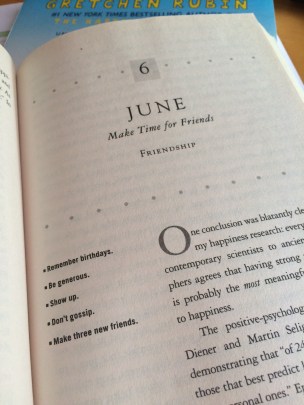 Other examples: June is a month to “Make Time for Friends” and September to “Pursue a Passion”. Her basic premise is that in order to implement change successfully you have to make things habitual. Once these habits are embedded in your lifestyle they are hard to break – for example, I manage to find 5-10 minutes each day to brush and floss my teeth, but found it really hard to find the same amount of time to drink enough water…until I got into the habit of drinking a glass at 10, 12, 2 and 4 o’clock each day. Sounds banal but it works.
Gretchen has an approach I can relate to – it’s systematic, involves planning and lists, and takes the pressure off the first week of the new year; I know that if I made a new year’s resolution to eat more healthily from January 1st I’d fail before the week was out as I still have half a Christmas cake and a mountain of fancy chocolate gifts in the house! You get a whole month to implement each new ‘set’ of tasks and a whole year to make the overall transformation. It’s all about changing habits, gradually.
The book is not a self-righteous instruction book, as I find so many titles in the self-help and ‘how-to-change’ genres are, it’s written very much as a diary of Gretchen’s own progress in implementing her programme. I embraced the book enthusiastically after I’d read it and it really did help me to embed some practical changes in my life which I would say have improved my happiness and wellbeing. The author also has a website, which you can access here, on the same theme where she writes regularly about happiness and habits and also about her passion for books (another reason why I like her!).
Since this book was published in 2009, she has also written and published Happier at Home which I picked up last summer while on my holiday in New York but haven’t yet read, and Better than Before. (I’m resolving now to read the former!)
I’d definitely recommend The Happiness Project. It’s for people who are serious about making change in their lives and who could benefit from a framework on how to do it.
What changes have you resolved to make this year?
Are there any books that you have found helpful in making change in your life?

 The Essex Serpent by Sarah Perry has been on my must-read list since I heard the author talking about it on BBC Woman’s Hour. (As an expatriated Essex girl, I’m also attracted to the fact that it is set in the county of my birth.) It is a historical novel set at the end of the nineteenth century and centres on the relationship between newly-widowed naturalist Cora Seaborne and local vicar William Ransome. The pair are in search of the truth about the eponymous serpent which local people believe exists and is a threat to their lives and their livelihoods. It looks like a fascinating tale and I can’t wait to read it. And the cover is gorgeous too!
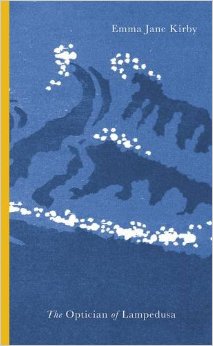 The Optician of Lampedusa by Emma Jane Kirby. Listeners to Radio 4’s PM programme will be familiar with this journalist and her reports from southern Italy on the human tragedy behind the migrant crisis. She reported extensively on the story and did a number of interviews with a local optician on the island who was deeply affected by what he witnessed. The story is told through his eyes. It’s a very affecting as well as a humbling book that will make anyone look at their children and loved ones and thank the Lord they are warm and safe.
 Bedtime Stories for Grown-Ups by Ben Holden is a wonderful anthology of classic and modern short stories, just long enough to get you off to sleep, but not so long that you have to remember what has gone before. It taps into a wonderful childhood ritual and may encourage the more reluctant adult reader who fears committing to a whole novel! It’s probably not the sort of book that most people would buy for themselves so will make a great gift.


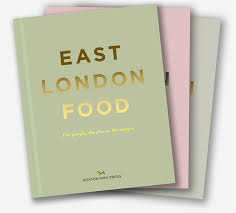 Finally, one of my most popular recent blogs was about cookery books – it seems many of you agree with me that it is an important genre. There are gazillions to choose from at Christmas, many of which, I fear, will be quite mediocre. This one caught my eye, however, East London Food: the people, the places, the recipes will be great for anyone who wants to be entertaining on trend in 2017. Independently published by Hoxton Mini Press it’s also available in three different colours to suit your gift recipient’s decor!


 Nadiya’s Bake Me A Story: Fifteen stories and recipes for children by Nadiya Hussein. My kids love baking and adore the Bake-Off and Nadiya’s victory in the competition last year was inspirational to many. Nadiya is a judge on the children’s Bake-Off on CBBC so kids will still be very familiar with her. This is a lovely book, and Nadiya is a lovely person who has qualities that naturally appeal to children. I love the idea that recipes here are combined with a quirky take on some classic fairy tales.

 The Usborne Creative Writing Book. Children are programmed to be creative, but modern life does not always allow them to exercise that muscle. Consequently, a blank page can be daunting for some children and they may need a little nudge or guidance to express their inner writer/artist/designer. There are a wide range of creative journals around just now; I bought this one because writing is the particular interest of the child I have in mind, but others are more gender-based or tailored towards different interests. They provide a great little tool for when kids say they are bored; boredom is good!
 Guinness World Records 2017: Gamer’s Edition. The Guinness World Record Book has been a staple for my son’s stocking since he was young, but at 15 he is no longer as interested as he once was. The Gamer’s Edition is a compromise, acknowledging his passion for computer gaming, whilst fulfilling his mother’s passion for the very un-tech world of books – sneaky!
 The 7 Habits of Highly Effective Teens by Sean Covey. Building on the success of his similarly titled books for adults, Covey has written a book for teenagers which encourages goal-setting, helps to build resilience and gives advice on managing relationships with family, friends, peers and authority figures. It is non-patronising and is written very much in the context of the digital age. Just don’t let them see you reading it!
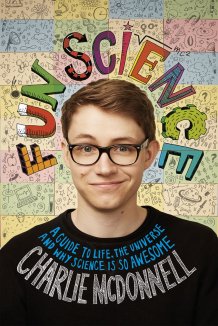 Fun Science: A guide to life, the universe and why science is so awesome by Charlie McDonnell. Charlie is a highly successful YouTuber who vlogs about science, in the linguafranca of the young people. He has over 2 million subscribers to his YouTube channel and clearly has a great passion for his subject, which is always to be admired. The look and feel of the book is a world away from a textbook, so I doubt it’s going to help much with GCSE revision, but the enthusiasm is quite infectious, which is half the battle. I could see this appealing to 11-13 year olds.
 My children’s Christmas stockings would be incomplete without at least one book – whether they want one or not! – and they can be sure that this family tradition will continue even when they are older. Call it my personal crusade. I am also the book-giver for all the little people in my family; with all their senses under assault at this time of the year, I love the idea of giving something that can provide a little space and calm, and a retreat into their own imaginations.
 This poem was first published in 1823, and is written by Clement C Moore. Despite its age, it is very accessible and is an absolute joy. We have been reading this to our kids on Christmas Eve since they were toddlers and they still look forward to it even though they are 10, 12 and 15! There are many versions available – ours is a rather quirky one (designed by William Wegman), where the models in the pictures are dogs dressed up! The pictures are key to the children’s enjoyment of it, so choose a version that is beautiful to look at and will become a family heirloom.

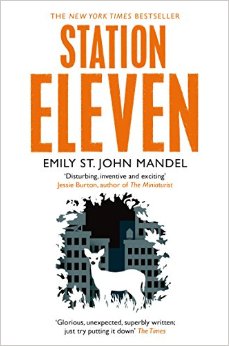 The book is set in Canada and the United States just 20 years after a catastrophic virus seemingly wipes out about 99% of humanity in a matter of days. The consequences of this are that, within a short space of time, electricity, running water and all the other basic services we take for granted, cease to exist. Vehicles are abandoned on motorways as their passengers leave their homes, to escape to…where? These people then die. Aircraft no longer fly and people are stranded pretty much wherever they happened to be at the moment the virus struck. And then mostly die. Whilst reading I recalled all those diseases in recent years that seemed to prefigure cataclysmic consequences (AIDS, Swine fever, SARS, Avian ‘flu, Ebola) fights which, for the most part, we eventually won; in this novel it is the disease (Georgian ‘flu) that prevails. And that’s scary.
 The author has quite a task managing this complexity: each of the four characters’ stories are told separately and in a non-linear way, but they are like pieces of a jigsaw gradually being pieced together until the overall picture becomes clear. The novel jumps back and forth in time and I found this quite difficult to follow. Also, for me, the drawing together of the strands was a little too contrived; it just did not seem entirely plausible that a tiny number of survivors could have such a connected past. I think this has been my problem with science-fiction generally (but perhaps I haven’t read enough); I get that you have to suspend disbelief but it’s too much for me when that means suspending credibility.
 There are so many books published that you may find people in your usual circle haven’t read the same things as you. But you will always find book review websites (whose authors would love you to post comments or engage in conversation, hint, hint!), or online reading communities, who have read your favourite most recent read. Sometimes, if I read a book I love (or loathe, though these are very few) I’m just bursting to talk about it with someone. I can always do that online.
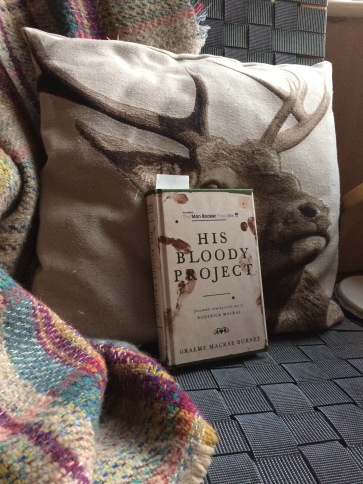 I have to say, though, that it’s a totally gripping story. Roddy Macrae is the 17-year old son of a crofter in a small village in the Scottish Highlands. The book begins with five short police statements from different witnesses who later testify in Roddy’s trial. They recount the incident, in August 1869, when Roddy murdered three other residents of the village: Lachlan Mackenzie, the village Constable and long-time foe of Roddy’s father, Mackenzie’s teenage daughter, Flora, and his young son Donnie. These witnesses observed Roddy walking through the village covered in blood and in addition to their account of the events they saw, they make observations on his character and background. Thus, there is little doubt that Roddy carried out the triple murder and the scene is set for an account of how these events came to pass.
 I have a friend with several shelves full of cookbooks and yet I know she rarely gets to use them. She and her partner both have full-time demanding jobs, three children and very busy lives, so why does she buy so many? I’m not quite as bad, my vice tends to be fiction, but we do also have quite a few cookery books, and yet we return to the same few recipes week in, week out.


