My most recent blogs have been about women, their power, resilience and resourcefulness. This week I want to share with you, my thoughts about a couple of books I read recently which are written by a man, Labour politician Alan Johnson, but which I think, are very much about the women in his life, their power, resilience and resourcefulness. His two volume memoir is very much a tribute to those women – his mother, his sister and his ex-wife.

I am an admirer of Johnson (for many the best leader the Labour party never had, very pertinent in the present circumstances!) and he was, in my view, one of the few honest, credible voices in the recent EU Referendum campaign. I read This Boy, the first volume of his memoir some time ago, and picked up Please, Mister Postman, the second volume, in my local Oxfam Bookshop earlier this year. This Boy covers Johnson’s childhood, growing up in abject poverty in derelict post-war west London, up to the age of 18, and is fascinating reading. Johnson has a warm conversational style that really draws you in. He paints a vivid picture of the hardships of his childhood and the squalor in which he and his irrepressible sister grew up.
The account is powerful without being emotional. Johnson has no self-pity, but you sense his deep resentment that his mother endured such hardship for so long and died tragically young, without having realised her, let’s be honest, very modest dream of her own front door. Whilst there is little hint here of the embryonic politician – he was more interested in music and football – there is a clear path from the deprived, urban upbringing, with its straitened circumstances and injustices, to the left-leaning politician he would become.
What comes through most strongly in the book is Johnson’s love and respect for the two women who dominated his early life. First, his mother, Lily, a humble woman neglected and then abandoned by her feckless husband (Johnson barely conceals his contempt for the man who was his father) and left to provide for two young children in London, hundreds of miles from her native Liverpool. Like many women of her generation, Lily’s ambitions were modest; simply getting through the daily travails of life took all her energy and willpower. Feminism will have meant very little to her despite the fact that she probably did more to demonstrate the resourcefulness and strength of the female than many of her modern counterparts. Lily’s poor health eventually got the better of her and she died prematurely, leaving her two teenage children tragically early. Second, Johnson’s phenomenally resourceful sister Linda, a tower of moral and emotional strength to the family. Linda is a remarkable presence and Johnson’s love and admiration for her shine through.
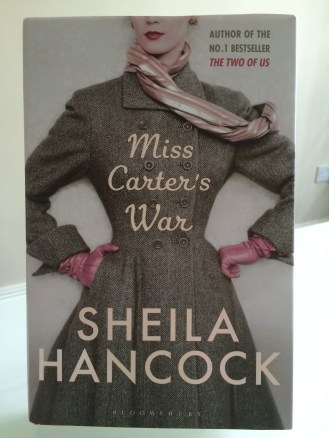 I had very mixed feelings reading Miss Carter’s War. I love Sheila Hancock: she published this, her first novel, at the age of 81 (which encourages me greatly!) and still has the energy to speak out for what she believes in – many of you will no doubt have seen her speak in the TV debates on the EU Referendum where she gave one of the most eloquent and passionate arguments for Remain that I saw throughout the entire campaign, and was one of the few people I saw truly engaging an audience. At 83 she is magnificent! However, I’m afraid I was disappointed with the book and had to work hard to keep going with it.


 With all the talk of “Independence” this week (don’t worry, I’m not going THERE) it will have escaped the notice of most people that it is Independent Bookshop Week (18-25 June).